
 Eva Lovia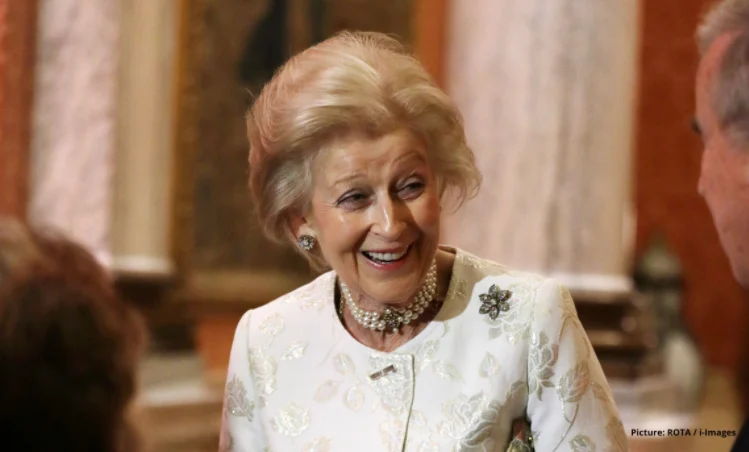
Princess Alexandra, a cherished member of the British Royal Family, has reached a significant personal milestone, becoming a great-grandmother for the first time. The joyous news was confirmed following the birth of her great-granddaughter, the first child of her granddaughter, Flora Vesterberg. The arrival of the new baby marks a new chapter for the extended Royal Family, adding a fresh generation to its lineage and continuing a familial tradition of significant namesakes.
Flora Vesterberg and her husband, Timothy Vesterberg, shared their happiness with the public via Instagram, announcing the birth of their daughter. The announcement, made on July 11th, allowed the new parents a few days to settle in and recover before sharing their news. The baby girl, who is now 62nd in line to the British throne, was born on July 8th, 2026.
The proud parents accompanied their announcement with a photograph of their newborn daughter. Dressed in a delicate white outfit with blue trim, the choice of colour subtly nods to a historical tradition where blue was a favoured hue for baby girls for many centuries. This detail, while seemingly small, connects the newest royal descendant to generations past and their sartorial customs.
Flora Vesterberg is the daughter of James Ogilvy, the only son of Princess Alexandra and her late husband, Sir Angus Ogilvy. This familial connection places the newborn baby within a direct line of descent from Princess Alexandra, solidifying her new status as a great-grandmother. Flora, aged 31 at the time of the birth, had announced her pregnancy earlier in the year. Her last public appearance prior to the birth was at the wedding celebrations of her cousin, Lady Marina Windsor, which took place at Hovingham Hall, just a few weeks before her own daughter arrived.
A Name Rooted in History and Meaning
The youngest member of the extended Royal Family has been christened Isabel Marina. The choice of name carries significant personal and historical weight for Flora and Timothy Vesterberg, as they explained when sharing their joyous news.
Flora elaborated on the significance of her daughter’s name, stating that "Isabel" translates to "of the sea." She further expressed that this name resonates deeply with the couple, as it is where they "always feel most at peace." This personal connection underscores the profound meaning behind their naming choice.
The second part of the name, "Marina," is a direct and touching tribute to Flora’s great-grandmother, Princess Marina of Greece and Denmark, a woman Flora never had the opportunity to meet. Princess Marina was a prominent and highly regarded figure within the Royal Family during her lifetime. She married Prince George, Duke of Kent, in 1934, and together they had three children: Edward, the current Duke of Kent (born 1935), Prince Michael of Kent (born 1942), and Princess Alexandra (born 1936). Notably, Princess Alexandra’s birth occurred on Christmas Day in 1936, a mere fortnight after the historic Abdication of King Edward VIII. Princess Marina remained a beloved member of the Royal Family until her passing in 1968, leaving behind a legacy of grace and dedication.
The name "Isabel," meaning "God is my oath," has seen a resurgence in popularity, particularly within royal circles in recent times. A notable example is Lord Frederick Windsor and his wife, Sophie, who named their second daughter Isabella. While the name and its variations were less common for several centuries, "Isabel" was a highly favoured royal name during the Middle Ages, with several English queens bearing forms of it.
Historical records reveal that Queen Isabella was the wife of King John. Edward II also married a French princess named Isabella, who became known in history as the "She-Wolf of France" for her role in orchestrating the deposition of her deeply unpopular husband. Another less fortunate bearer of the name was Isabelle of Valois, who was married to King Richard II at the tender age of six. She remained under close guard after her husband’s deposition in 1399 and later returned to France, where she died at a young age. Her sister, Katherine of Valois, married Henry V. Following his death, she wed Owen Tudor. Their grandson, Henry VII, became King of England, establishing the Tudor dynasty. It is through this lineage that King Charles III, and indeed Flora Vesterberg, are directly descended. The naming of Isabel Marina thus weaves a rich tapestry of familial history, personal sentiment, and enduring royal tradition.
A Glimpse into the Family Tree and Royal Succession
The birth of Isabel Marina, while a personal joy for Princess Alexandra and her family, also has implications for the broader context of the British Royal Family’s succession. As 62nd in line to the throne, her position is relatively distant, meaning she is unlikely to ever ascend to the throne. However, her inclusion in the line of succession signifies the continued expansion of the Royal Family and the enduring nature of the hereditary monarchy.
The current line of succession is headed by Prince William, Prince of Wales, followed by his children: Prince George, Princess Charlotte, and Prince Louis. After the direct heirs of the King, the line continues through other branches of the Royal Family. Princess Alexandra’s great-granddaughter’s place in this intricate order of precedence highlights the many individuals who, by birthright, hold a position within the constitutional framework of the United Kingdom and the Commonwealth realms.
Princess Alexandra herself holds a significant place in royal history, having been born during a pivotal period. Her birth on Christmas Day 1936, just two weeks after the abdication of her uncle, King Edward VIII, placed her within a generation that navigated profound constitutional shifts within the monarchy. She has since undertaken a distinguished career of royal service, representing the Crown at numerous engagements both domestically and internationally.
A Timeline of Royal Arrivals
The birth of Isabel Marina Vesterberg adds another event to a growing timeline of recent royal arrivals, underscoring a period of renewal and expansion within the British Royal Family. This recent surge in births reflects a trend observed across many families, but within the royal context, it carries added significance in terms of continuity and public interest.
- July 8th, 2026: Isabel Marina Vesterberg is born.
- July 11th, 2026: Flora and Timothy Vesterberg announce the birth of their daughter on Instagram.
- Early 2026: Flora Vesterberg announces her pregnancy.
- Late 2025/Early 2026: Lady Marina Windsor’s wedding celebrations at Hovingham Hall, attended by Flora Vesterberg.
- 2021: Princess Alexandra’s first great-grandchild is born, marking her transition to this new familial role.
- 1936: Princess Alexandra is born on Christmas Day.
- 1934: Princess Marina of Greece and Denmark marries Prince George, Duke of Kent.
This chronology demonstrates the intergenerational connections and the flow of royal lineage. Each birth is not only a personal event but also a point of interest for those who follow the British monarchy, reinforcing its presence and its future.
Broader Implications and Royal Continuity
The birth of Isabel Marina Vesterberg, while a private family occasion, also serves as a gentle reminder of the enduring nature of royal families and their traditions. In an era of rapid societal change, the continuation of royal lines through births and marriages provides a sense of stability and historical connection for many.
The naming conventions employed by Flora and Timothy Vesterberg are particularly illustrative. The choice of "Isabel," with its historical resonance within European royalty, and "Marina," a direct tribute to a beloved royal matriarch, demonstrates a conscious effort to connect the present generation with the past. This practice is common within royal families globally, where names often carry dynastic significance and serve as living links to historical figures.
Furthermore, the public sharing of such personal news, facilitated by social media platforms like Instagram, reflects the evolving relationship between modern royal families and the public. While maintaining a degree of privacy, these platforms allow for controlled and personal dissemination of information, fostering a sense of connection without compromising the intimacy of family life.
The birth of Princess Alexandra’s first great-grandchild is a testament to the ongoing vitality of her family line. It underscores the personal joys that even the most prominent royal figures experience, while simultaneously contributing to the larger narrative of royal continuity. As Isabel Marina grows, she will undoubtedly become a familiar face to followers of the Royal Family, representing a new generation poised to witness and perhaps one day participate in the evolving story of the British monarchy. Flora and Timothy Vesterberg are now reportedly at home with their new daughter, embracing the early days of parenthood and embarking on this new chapter of their lives.


 Yuyun Lusiyani
 Joko Widodo
 Pevita Pearce
 admin
admin
 Lina Irawan