
 Eva Lovia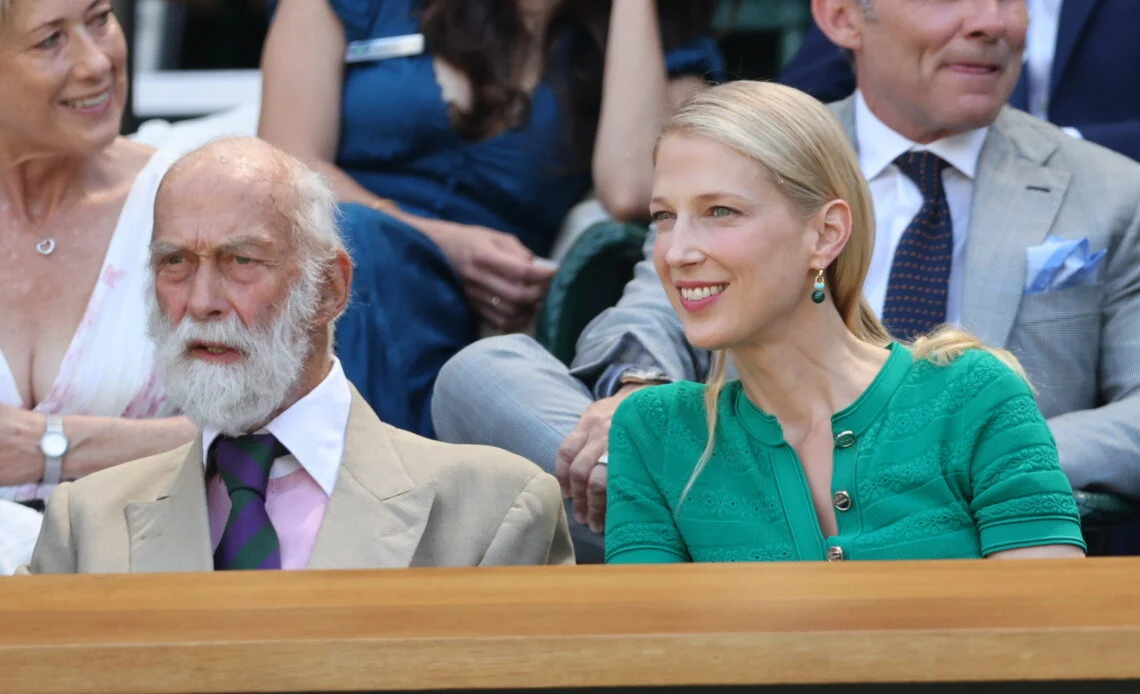
The hallowed grounds of the All England Club once again played host to a distinguished assembly of the British Royal Family on the penultimate day of the Wimbledon Championships, witnessing the thrilling Men’s Singles Final. Among the esteemed attendees were Prince Michael of Kent, accompanied by his children Lord Frederick Windsor and Lady Gabriella Kingston, alongside Lord Frederick’s wife, Sophie Winkleman. Their presence underscored the enduring connection between the monarchy and the prestigious sporting event, a tradition steeped in history.
A Familiar Royal Presence at the Championships
Prince Michael of Kent, who is soon to celebrate his 84th birthday, arrived with a degree of assistance, highlighting a recent reduction in his mobility. He was graciously supported by his son, Lord Frederick Windsor, as he navigated his way to his seat within the exclusive Royal Box. Lord Frederick, a familiar face at such high-profile events, provided a steadying presence for his father, who utilized a walking stick. Lady Gabriella Kingston, demonstrating familial care, also offered support, briefly steadying her father’s arm. This familial tableau, set against the backdrop of cheering crowds and the intense focus of the final match, underscored the personal as well as public dimensions of royal attendance.
The presence of Sophie Winkleman, Lord Frederick’s wife, further solidified the family’s united appearance. Her seating arrangement at the end of the row suggested a thoughtful consideration for the family’s comfort and ease of access.
The Prince and Princess of Wales and Their Children Join the Spectacle
Later, the arrival of the Prince and Princess of Wales, along with their elder children, Prince George and Princess Charlotte, added a further layer of royal significance to the day. The Princess of Wales, Kate, holds a particularly prominent role at Wimbledon, traditionally tasked with presenting the coveted trophy to the Men’s Singles champion, a duty she has fulfilled with grace and dedication in previous years. Her presence, therefore, was not merely as a spectator but as a key figure in the ceremony.
Prince George and Princess Charlotte, appearing visibly excited by the atmosphere, showcased the continuation of royal engagement with sporting events across generations. Their youthful enthusiasm was a notable contrast to the more measured demeanor of their elders.
Prince George’s Sporting Dedication and a Hint of Fatigue
An amusing observation was made regarding Prince George, who is on the cusp of his 13th birthday. Known for his keen interest in football, it was noted that the young prince appeared to be struggling to suppress yawns. This was widely interpreted as a potential consequence of staying up late to watch England’s World Cup match against Norway. The Lionesses’ progression in the tournament has captured significant national attention, and it is plausible that their young royal enthusiast was determined to follow their crucial fixture.
Prince William, also a vocal supporter of the England team, took to social media shortly after the match to congratulate the team on their advancement to the semi-finals, marking a significant achievement for the team. His congratulatory message, describing the hard-fought 2-1 victory as "never in doubt," conveyed his characteristic enthusiasm. He further indicated a potential commitment to travel to the United States should England reach the tournament’s final, although a trip for the upcoming semi-final against Argentina was deemed unlikely. This highlights the dual passions of the Prince of Wales, balancing his royal duties with his personal interests in national sporting endeavors.
Prince Michael of Kent’s Reduced Public Engagements and His Wife’s Recovery
Prince Michael of Kent’s public appearances have become less frequent in recent times, largely attributed to his reduced mobility. This shift in his public profile is a natural consequence of aging and is understood within the context of his advancing years. His wife, Princess Michael of Kent, has also experienced health challenges. Reports indicate that she has been recovering from a period of serious ill health, which included a stroke. This period of convalescence likely influences their joint public engagements.
The couple recently marked their 48th wedding anniversary, a milestone that offers a moment for reflection on their enduring partnership. Their marriage, which took place in Vienna on June 30th, 1978, was notable at the time due to Princess Michael of Kent’s Catholic faith and previous divorce, factors that presented certain complexities within the context of royal protocols and societal norms of the era.
Wimbledon: A Symbol of British Heritage and Royal Tradition
The Wimbledon Championships, first held in 1877, represent one of the oldest and most prestigious tennis tournaments in the world. Its enduring appeal lies not only in the elite level of competition but also in its unique traditions, including the predominantly grass court surface, the strict all-white dress code for players, and the iconic strawberries and cream served to spectators. The Royal Box, a symbol of the tournament’s esteemed status, has long been a venue for members of the Royal Family to patronize and support the event.
Historically, members of the Royal Family have been instrumental in supporting British sports, and Wimbledon is no exception. Their presence serves to elevate the profile of the tournament, attracting global attention and underscoring its importance within the sporting calendar. The tradition of royal attendance at Wimbledon dates back to the early 20th century, with various members of the monarchy gracing the stands over the decades.
The Significance of the Royal Family’s Presence at Sporting Events
The attendance of senior members of the Royal Family at significant sporting events like Wimbledon carries several implications. Firstly, it signifies royal patronage and support for national and international sporting achievements. This can inspire athletes and boost the morale of national teams. Secondly, it provides a valuable platform for public diplomacy, showcasing the UK’s commitment to culture, sport, and international relations. The presence of the Prince and Princess of Wales, in particular, highlights their evolving roles as key representatives of the Crown, engaging with the public and participating in national celebrations.
The inclusion of younger royals, such as Prince George and Princess Charlotte, in these public events is also a strategic element of royal communication. It serves to familiarize them with their future responsibilities and allows the public to witness their development, fostering a sense of continuity and connection with the institution of the monarchy.
Broader Context: Sporting Achievements and Public Engagement
The timing of the Royal Family’s attendance at Wimbledon coincided with a period of significant sporting interest for the nation. England’s performance in the World Cup, as well as the ongoing excitement of the Wimbledon Championships, created a palpable atmosphere of national pride and sporting fervor. The Royal Family’s participation in these events allows them to connect with the public on shared passions and experiences, reinforcing their role as figures who embody and celebrate national identity.
The fact that Prince William has publicly stated his intention to travel to the US for the World Cup final, should England reach it, demonstrates a willingness to go beyond symbolic gestures and actively participate in moments of national significance. This type of engagement is crucial for maintaining the relevance and public appeal of the monarchy in contemporary society.
Looking Ahead: The Evolving Role of Royal Engagement
As Prince Michael of Kent continues to manage his health and mobility, his appearances, while less frequent, remain significant. They serve as a reminder of his long-standing commitment to public service and his enduring connection to institutions like Wimbledon. The increasing visibility of the Prince and Princess of Wales, alongside their children, signals a deliberate and ongoing strategy to ensure the monarchy remains a dynamic and relatable institution. Their engagement with a diverse range of public events, from sporting spectacles to charitable initiatives, is essential for its continued resonance with the British public and the wider world. The Royal Family’s presence at Wimbledon, therefore, is more than just a social outing; it is a carefully orchestrated demonstration of tradition, continuity, and contemporary relevance.



 Yuyun Lusiyani
 Joko Widodo
 Pevita Pearce
 admin
admin
 Lina Irawan