
 Pevita Pearce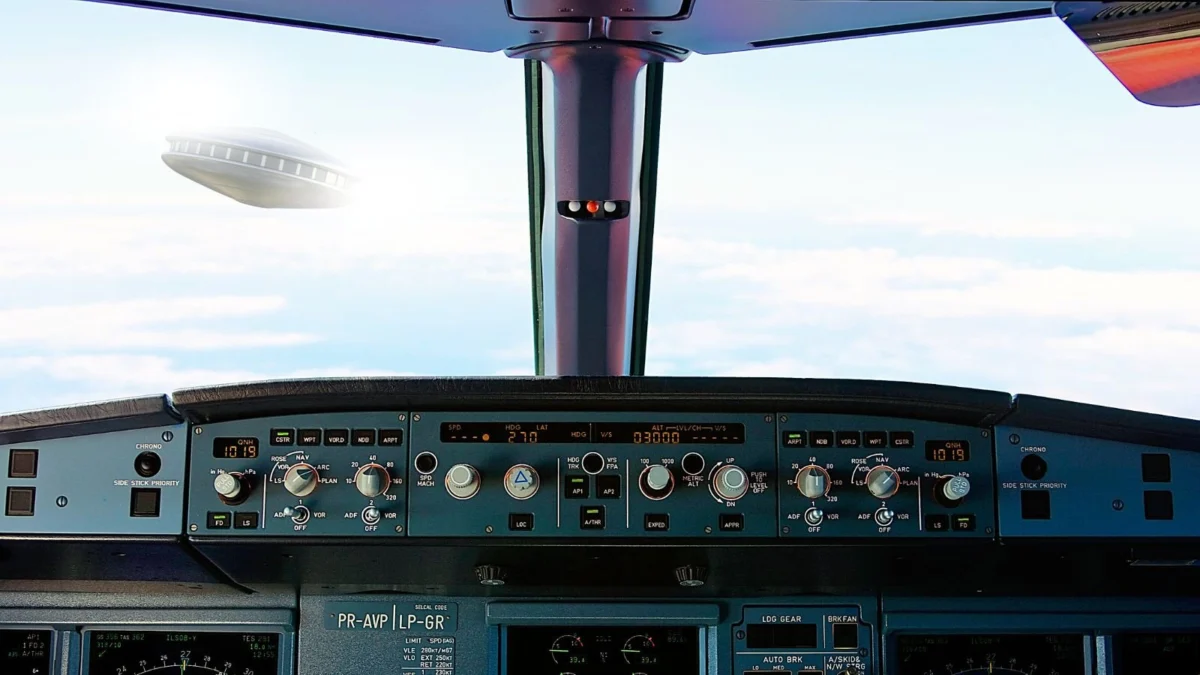
The UK Airprox Board (UKAB) has released a comprehensive report detailing a high-risk encounter between a commercial airliner and an unidentified disc-shaped object during a descent into London Gatwick Airport. The incident, which occurred in April, involved an Airbus A319 and has reignited concerns regarding the safety of controlled airspace as the proliferation of Unmanned Aerial Systems (UAS) continues to challenge traditional aviation security protocols. According to the official filing, the pilot of the Airbus reported a "flying saucer" passing within a few hundred feet of the aircraft’s wing, leading investigators to conclude that the safety of the flight had been significantly compromised.
The encounter took place while the Airbus A319 was in its terminal arrival phase, a critical stage of flight where pilots are managing speed, altitude, and configuration changes to align with the runway. As the aircraft was banking left into a turn at several thousand feet, the flight crew observed a disc-shaped object with "darker markings on the rim" traveling in the opposite direction. The object maintained the same altitude as the jet, passing the right wing at a distance estimated to be between 100 and 300 feet. Given the relative speeds of a descending jet and the stationary or counter-directional movement of the object, the window for observation was fleeting, yet the pilot was specific in the description of the craft’s geometry.
Chronology of the Gatwick Incident
The timeline of the event begins in the mid-afternoon of a clear April day. The Airbus A319 was operating under standard instrument arrival procedures for Gatwick, one of the world’s busiest single-runway airports. At the time of the sighting, the aircraft was established on its descent path, maneuvering through the crowded airspace of the London Terminal Control Area.
At approximately 14:30 local time, as the aircraft initiated a left-hand turn to align with the final approach course, the captain sighted the object. The "flying saucer" appeared suddenly on the right side of the cockpit. Due to the aircraft’s banking maneuver, the pilot had a clear line of sight toward the horizon where the object emerged. The pilot reported that no evasive action was taken because the encounter happened too rapidly for a physical response, and the aircraft’s existing turn path was already moving the airframe away from the object’s projected trajectory.
Upon landing safely at Gatwick, the flight crew filed a formal Airprox report. An Airprox is a situation in which, in the opinion of a pilot or air traffic services personnel, the distance between aircraft, as well as their relative positions and speed, have been such that the safety of the aircraft involved may have been compromised. The UK Airprox Board immediately initiated an investigation, cross-referencing radar data and secondary surveillance transponder logs to identify any authorized traffic in the area.
The UK Airprox Board Findings and Risk Categorization
The UK Airprox Board, a joint initiative between the Civil Aviation Authority (CAA) and the Ministry of Defence (MoD), is tasked with enhancing air safety by investigating near-miss incidents. In its final assessment of the Gatwick encounter, the Board categorized the incident as a "Category B" risk. Under the UKAB’s criteria, Category B signifies that safety was "not assured" and that the proximity of the objects resulted in a reduction in the standard safety margins.
Investigators noted that despite the pilot’s description of a "flying saucer," the most probable explanation was the presence of a high-altitude drone being operated illegally within the airport’s restricted flight zone. The Board’s report emphasized that while radar did not pick up a primary target—common with small, plastic-constructed drones—the pilot’s visual account was deemed credible and consistent with an encounter with a physical object. The report stated that the object’s proximity to a commercial jet carrying over 150 passengers represented a serious breach of aviation regulations.
Parallel Incident at Heathrow Airport
The Gatwick report was published alongside details of another alarming incident that occurred during the same month at London Heathrow Airport. In that case, the pilot of an Airbus A321 reported a near-collision with a drone that was so close the flight crew could identify the color of the chassis and the individual spinning propellers.
The Heathrow incident was classified as a "Category A" encounter, the highest level of risk, indicating a "definite risk of collision." The Board’s analysis of the Heathrow event concluded that "providence," or sheer luck, played a major role in avoiding a catastrophic mid-air strike. These dual reports highlight a growing trend of UAS incursions in the "London Basin," a geographical area that contains some of the most complex and densely packed airspace in the world.

Supporting Data: The Rising Threat of Drones in UK Airspace
Data provided by the Civil Aviation Authority shows a steady increase in the number of reported drone sightings near major UK transport hubs. While the total number of Airprox incidents involving manned aircraft has remained relatively stable over the last decade, the percentage of those incidents involving drones has surged.
In 2014, drone-related Airprox reports were nearly non-existent. By 2019, that number had risen to over 120 annually. Despite the introduction of stricter registration requirements and the "Drone Code," which prohibits flying above 400 feet or within 5 kilometers of an airport without specific permission, hobbyist and commercial drone usage continues to outpace enforcement capabilities.
Technical analysis of drone strikes suggests that the impact of a small UAS on a commercial airliner can be more damaging than a bird strike. While aircraft engines are tested to ingest birds, the lithium-ion batteries and metallic components of a drone can cause uncontained engine failure or penetrate the cockpit windshield, potentially incapacitating the flight crew.
Historical Context: The Gatwick Drone Crisis of 2018
The recent report is particularly sensitive given Gatwick Airport’s history with unidentified aerial objects. In December 2018, the airport was forced to shut down for three days following repeated reports of drone sightings near the runway. The disruption affected approximately 140,000 passengers and resulted in the cancellation of over 1,000 flights.
The 2018 crisis cost the aviation industry an estimated £50 million and exposed significant vulnerabilities in airport defense systems. In the years since, Gatwick and Heathrow have invested millions in counter-drone technology, including electronic jamming equipment and advanced radar systems designed to detect small, low-flying objects. However, as the April reports suggest, the technology is not infallible, particularly when drones are operated at altitudes where they blend with high-altitude winds or are shielded by the physical geometry of a descending aircraft.
Regulatory and Legal Implications
The legal consequences for endangering an aircraft in the United Kingdom are severe. Under the Air Navigation Order, individuals found guilty of operating a drone in a manner that endangers an aircraft can face up to five years in prison and unlimited fines.
The issue is not confined to the UK. The UKAB report mentions international precedents to illustrate the global nature of the problem. Specifically, it references the Federal Aviation Administration (FAA) in the United States, which recently handed a lifetime drone ban to a prominent YouTuber. The individual was found to have flown a drone within controlled airspace near Philadelphia International Airport, at one point losing control of the device over a densely populated urban area. This administrative action by the FAA signals a shift toward "zero-tolerance" policies for airspace violations.
Future Outlook and Airspace Management
As the aviation industry moves toward the integration of Advanced Air Mobility (AAM)—including air taxis and autonomous delivery drones—the need for a more robust "U-Space" or Unmanned Traffic Management (UTM) system has become urgent. Industry experts suggest that the current "see and avoid" principle used by pilots is insufficient for detecting small, fast-moving drones.
Proposed solutions include:
- Remote ID: A digital "license plate" for drones that broadcasts the operator’s location and the drone’s flight path in real-time.
- Geofencing: Software built into drones that prevents them from taking off or flying into restricted zones like airports.
- Enhanced Ground-Based Detection: Utilizing acoustic and optical sensors to supplement traditional radar in identifying UAS incursions.
The UK Airprox Board’s report serves as a stark reminder that even as technology advances, the human element in the cockpit remains the final line of defense. The pilot’s description of a "flying saucer" underscores the visual ambiguity of these encounters; while the terminology evokes science fiction, the physical reality is a tangible threat to the safety of hundreds of travelers. The Board concluded its report by urging drone operators to adhere strictly to the Drone Code, reminding the public that a moment of reckless hobbyism can lead to a lifetime of legal consequences or, worse, a tragedy in the skies.




 Yuyun Lusiyani
 Joko Widodo
 Eva Lovia
 admin
admin
 Lina Irawan