
 Pevita Pearce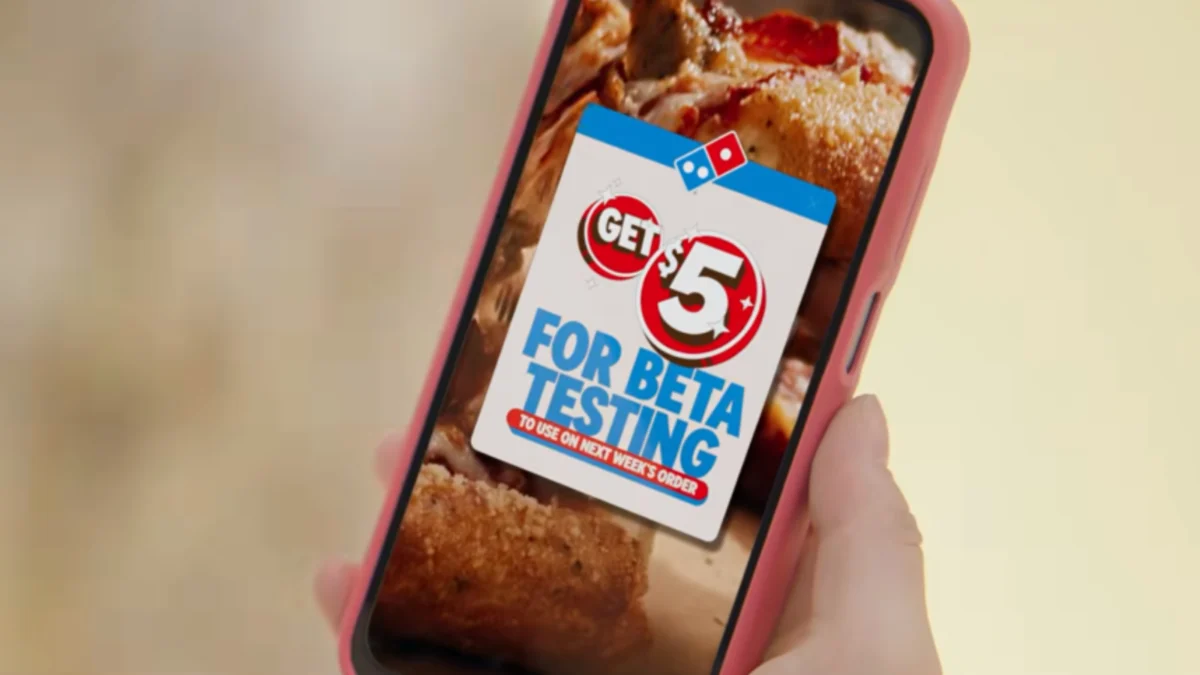
In an unconventional move to refine its digital infrastructure, Domino’s Pizza Inc. has announced a nationwide promotional campaign that invites its entire customer base to serve as "beta testers" for its revamped website and mobile application. Between August 3 and August 30, the global pizza giant is offering a $5 incentive to patrons who engage with their newly redesigned digital storefronts. This initiative represents a significant push by the company to stress-test its latest technological updates while simultaneously incentivizing repeat business through a strategic couponing system.
The campaign, which the company has colloquially dubbed the "best side gig ever," seeks to bridge the gap between traditional quality assurance (QA) testing and real-world consumer behavior. By positioning the promotion as a "hiring" event, Domino’s is leveraging the gig-economy narrative to encourage users to explore the interface, identify potential friction points, and provide direct feedback on the ordering journey.
The Mechanics of the Beta Testing Incentive
The participation process for the beta testing program is designed to be frictionless, mirroring the "streamlined" experience the company aims to promote. To qualify for the $5 reward, customers must place a digital order through the redesigned Domino’s website or mobile app during the specified window of August 3 to August 30.
Upon the successful completion of an order, the system triggers a prompt inviting the customer to share their thoughts on the new interface. While the company highly encourages feedback to help refine the user experience, providing a critique is not a mandatory requirement for receiving the compensation. The "payment" is delivered in the form of a $5 digital coupon, which is intended for use on a subsequent digital order placed the following week.
The distribution of these rewards is integrated into the existing Domino’s Rewards ecosystem. Registered members will find their $5 credits automatically deposited into the “My Deals” section of their accounts. For customers who are not currently enrolled in the loyalty program, the coupon is dispatched via the email address associated with their order. This dual-track delivery system ensures that the promotion captures both long-term brand enthusiasts and casual, one-time diners.
Strategic Objectives: A Bolder and Brighter Digital Storefront
The redesign of the Domino’s digital platform is not merely an aesthetic update; it is a calculated effort to modernize the brand’s interaction with an increasingly tech-savvy demographic. Mark Messing, Domino’s Vice President of Global Digital Marketing, emphasized the intent behind the overhaul, stating that the company sought to make the platforms "bolder, brighter, more modern, and engaging."
The primary goal of the redesign is to reduce the time from "hunger to home," a metric the company has long optimized. By streamlining navigation and enhancing the visual appeal of the menu, Domino’s hopes to increase conversion rates and average order values. The "beta test" period allows the company to gather massive amounts of data on how users navigate the new layout, where they might encounter confusion, and how the new design influences their purchasing decisions. Messing noted that the company is specifically looking for insights into what worked seamlessly and what areas of the digital experience could benefit from further refinement.
Historical Context: Domino’s as a Technology-First Enterprise
To understand the significance of this beta testing campaign, it is necessary to view it through the lens of Domino’s long-standing identity as a "tech company that sells pizza." For over a decade, Domino’s has consistently outpaced its competitors in the Quick-Service Restaurant (QSR) sector by prioritizing digital innovation.
The company’s digital journey reached a turning point in the late 2000s under the leadership of then-CEO Patrick Doyle, who famously admitted the product needed improvement and simultaneously doubled down on technological convenience. This led to the creation of the "Domino’s Tracker," a revolutionary tool at the time that allowed customers to follow their order’s progress in real-time. Since then, the company has introduced "AnyWare" ordering, allowing customers to buy pizza via text, Twitter (now X), smartwatches, and even voice-activated assistants.
By 2023, digital sales accounted for the vast majority of Domino’s total global retail sales. This heavy reliance on digital channels means that even minor bugs or suboptimal user interfaces can result in millions of dollars in lost revenue. Consequently, the current beta testing initiative is a risk-mitigation strategy disguised as a consumer promotion, ensuring that the new platform can handle high traffic volumes and diverse user behaviors before it becomes the permanent standard.
The Role of Marketing: Positioning Feedback as a ‘Side Gig’
The promotion is supported by a comprehensive marketing campaign developed by Domino’s agency of record, WorkInProgress. The creative strategy leans heavily into the irony of being "paid" to eat pizza, contrasting the ease of the task with the technical rigors usually associated with software testing.
Matt Talbot, co-founder and chief creative officer at WorkInProgress, highlighted the accessibility of the program in a statement to Marketing Dive. "You get paid for ordering pizza. No coding, debugging, or QA reports required," Talbot said. "Domino’s Beta Tester is the easiest job ever."

This marketing angle serves a dual purpose. First, it humanizes the brand by inviting the public to participate in its development. Second, it creates a sense of exclusivity and "insider" status for the customer. By framing the promotion as a job, Domino’s effectively gamifies the feedback process, potentially leading to more honest and detailed user responses than a standard post-purchase survey would elicit.
Financial Implications and the Digital Sales Mix
From a financial perspective, the $5 coupon serves as a powerful tool for driving frequency. By requiring the coupon to be used the following week, Domino’s is essentially securing two orders from a single customer within a fourteen-day period. This strategy is particularly effective in the QSR industry, where customer loyalty is often fleeting and driven by convenience and value.
Industry analysts note that while the $5 is a cost to the company, the value of the data collected during the beta period is significantly higher. Traditional third-party UX testing can be expensive and limited in scope. By crowdsourcing this process to hundreds of thousands of actual customers, Domino’s obtains a diverse data set that includes various device types, internet speeds, and regional ordering habits.
Furthermore, the promotion comes at a time when the pizza industry is facing increased pressure from third-party delivery aggregators like DoorDash and UberEats. By strengthening its proprietary app and website, Domino’s maintains control over the customer relationship and avoids the high commission fees associated with third-party platforms.
The Competitive Landscape of the Quick-Service Restaurant Industry
Domino’s is currently locked in a fierce battle for market share with major rivals such as Pizza Hut and Papa John’s, as well as burgeoning fast-casual brands. In this environment, the "ordering experience" has become as important as the food itself.
Competitors have also been investing heavily in tech. Pizza Hut has experimented with AI-driven ordering, while Papa John’s has revamped its loyalty program to better compete with Domino’s Rewards. However, Domino’s move to "hire" its customers for beta testing is a unique tactical maneuver that blends promotional marketing with software development. It reinforces the brand’s image as a transparent, customer-centric innovator.
Product Innovation and Cross-Promotional Synergy
The timing of the beta testing promotion also aligns with the introduction of new menu items, providing a perfect opportunity for cross-promotion. One such item is the S’mores Lava Cakes, a new dessert featuring a marshmallow filling that aims to capitalize on the popularity of the brand’s existing Chocolate Lava Crunch Cakes.
The $5 coupon provides an easy entry point for customers to try these new additions at a reduced cost. Additionally, the company recently made headlines for a more experimental product: Garlic & Herb ice cream. While this item was a more niche, limited-time offer, it reflects Domino’s broader strategy of using "viral" or "outlandish" products to maintain brand relevance in social media conversations. The beta testing campaign serves as the functional backbone to these flashy product launches, ensuring that when customers flock to the site to try a new dessert or a free ice cream, the infrastructure is robust enough to provide a seamless transaction.
Analysis of Implications and Future Outlook
The "Domino’s Beta Tester" campaign may set a new precedent for how consumer-facing companies handle large-scale digital transitions. By incentivizing the "beta" phase, Domino’s is effectively turning its customer base into a massive, decentralized QA department.
The implications of this move are twofold:
- Consumer Empowerment: Customers feel a sense of ownership over the platforms they use. If a suggestion made during the beta period is implemented, it fosters a deeper brand connection.
- Data-Driven Iteration: Domino’s can move toward a model of "continuous deployment," where the website and app are constantly evolving based on real-time user feedback rather than static, periodic updates.
As the promotion concludes on August 30, the focus will shift to how Domino’s integrates the feedback received. If successful, this model could be adopted by other sectors of the retail and hospitality industries, where the digital interface is increasingly the primary point of contact between the brand and the consumer.
In the long term, Domino’s remains committed to its "Hunger to Home" philosophy. Whether through drone delivery, autonomous vehicles, or "bolder and brighter" mobile apps, the company continues to signal that its future is inextricably linked to technological convenience. The $5 beta test is simply the latest chapter in a decades-long narrative of digital disruption in the pizza industry. For the consumer, it is a rare opportunity to be compensated for a routine task; for Domino’s, it is a high-stakes investment in the reliability of its digital future.




 Yuyun Lusiyani
 Joko Widodo
 Eva Lovia
 admin
admin
 Lina Irawan