
 admin
admin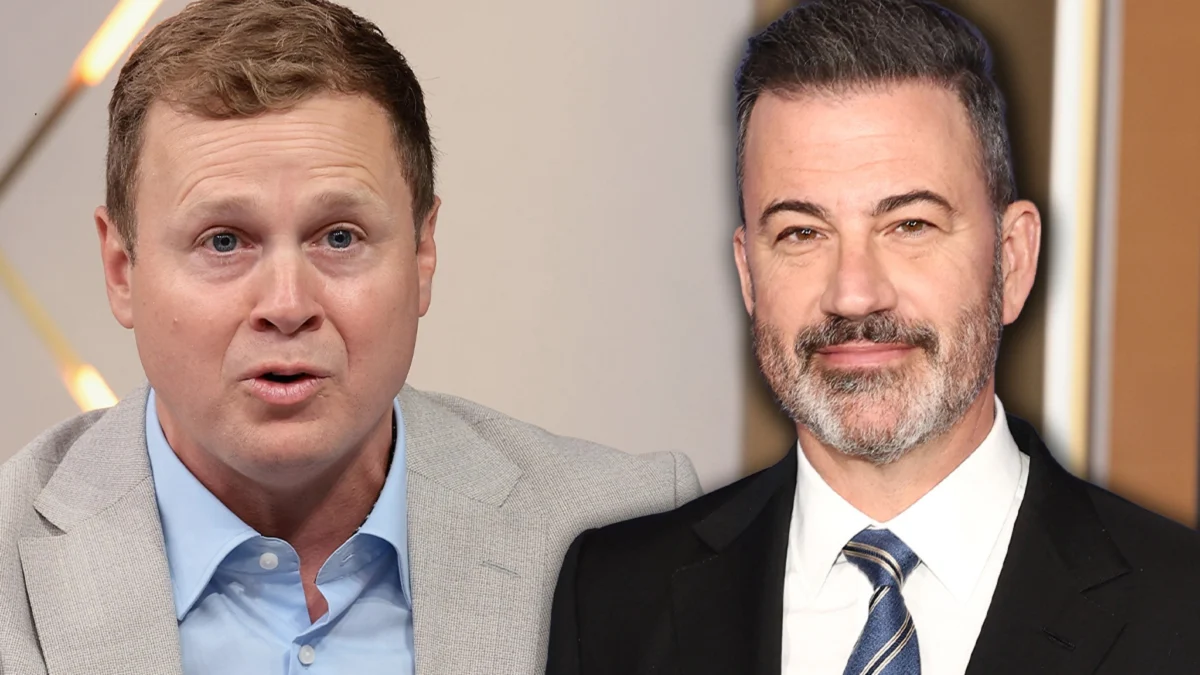
Pratt’s jubilant declaration, posted on a prominent social media platform, read: "Newsom AND Kimmel gone next year?? Be still, my laughing heart! Things are looking UP fam." The tweet not only targeted Kimmel but also included California Governor Gavin Newsom, signaling Pratt’s broader anti-establishment leanings that fueled his recent political campaign. This statement positioned the rumored cancellation as a personal triumph, ostensibly overshadowing his recent electoral setback and marking, in his estimation, a significant L.A.-based victory. The public pronouncement from Pratt serves as a potent reminder of the volatile interplay between celebrity personas, media narratives, and the shifting dynamics of traditional broadcast entertainment.
The Genesis of a Celebrity Feud: Pratt’s Political Ambitions and Kimmel’s Critique
To fully grasp the intensity of Spencer Pratt’s reaction, one must delve into the history of the public animosity between the reality star and the late-night host. The feud reached a fever pitch during Pratt’s unconventional bid for Mayor of Los Angeles. In the lead-up to the June 2026 election, Pratt launched a campaign that, while ultimately unsuccessful, garnered significant media attention due to his celebrity status and often-unorthodox policy proposals. Pratt, best known for his role alongside his wife Heidi Montag on the MTV reality series "The Hills," had cultivated a public image built on a blend of entrepreneurial ventures, social media engagement, and a penchant for generating controversy. His mayoral platform, though not widely detailed in mainstream political discourse, often centered on populist appeals and a critique of established political figures.
Throughout Pratt’s mayoral campaign, Jimmy Kimmel, a prominent voice in late-night television and a long-time resident of Los Angeles, frequently used his platform to comment on, and often lampoon, Pratt’s political aspirations. Kimmel, whose show "Jimmy Kimmel Live!" has a history of engaging with local and national politics through satire, viewed Pratt’s candidacy as ripe for comedic material. These segments were not merely lighthearted jabs; they often carried a tone of skepticism regarding Pratt’s seriousness and suitability for public office. The dynamic between the two escalated as Pratt, known for his adept use of social media to control his own narrative and engage with critics, reciprocated with online barbs aimed at Kimmel.
The culmination of this political-comedic sparring came with the results of the Los Angeles mayoral election. Pratt, as he himself acknowledged with the phrase "took a fat L," did not secure the mayoral seat. Following Pratt’s electoral defeat, Jimmy Kimmel famously orchestrated a public stunt that further solidified the rivalry. As reported previously, Kimmel arranged for a U-Haul moving truck to be decorated with celebratory messages, ostensibly to help Pratt "pack his bags" and leave the city. This public spectacle, widely covered by entertainment news outlets, was a direct and pointed taunt, designed to underscore Pratt’s loss and Kimmel’s perceived victory in the cultural skirmish. For Pratt, who thrives on media attention and often frames perceived slights as fuel for his public persona, Kimmel’s U-Haul stunt was not just a joke but a direct challenge, cementing a rivalry that now finds new life in the context of the late-night host’s professional future.
Jimmy Kimmel Live!: A Late-Night Institution Facing an Uncertain Future
"Jimmy Kimmel Live!" first debuted on ABC in January 2003, making it one of the longest-running late-night talk shows in American television history. By the time Kimmel’s current contract is set to expire in May 2027, the program will have graced screens for an impressive 24 years, a testament to Kimmel’s enduring appeal and the show’s consistent performance for the network. Kimmel’s journey to late-night prominence was somewhat unconventional, having co-hosted the raucous and often irreverent "The Man Show" on Comedy Central before transitioning to a more mainstream format. Over two decades, "Jimmy Kimmel Live!" has evolved significantly, moving from its initial edgy persona to a more polished, politically engaged, and family-friendly show, particularly after Kimmel began incorporating personal stories and heartfelt monologues into his broadcast.
The show has become a staple of ABC’s programming, known for its celebrity interviews, popular comedic segments like "Mean Tweets" and "I Told My Kids I Ate All Their Halloween Candy," and Kimmel’s increasingly prominent role in national conversations, particularly on healthcare and gun control. His emotional monologues following personal family health crises resonated deeply with audiences, showcasing a depth and sincerity that cemented his place as more than just a comedian. "Jimmy Kimmel Live!" occupies a competitive slot in the late-night landscape, vying for viewership against established giants like "The Tonight Show Starring Jimmy Fallon" on NBC and "The Late Show with Stephen Colbert" on CBS, as well as newer entrants and digital-first content. Its longevity has been a source of stability for ABC, providing a consistent lead-out for local news and a platform for network promotion.
The potential departure of a host with such a long tenure would represent a significant shift for ABC. Late-night television, as a genre, has faced considerable challenges in recent years. Traditional linear viewership has been in steady decline, impacted by the proliferation of streaming services, on-demand content, and the fragmentation of audience attention. While clips from late-night shows often go viral on social media, the live broadcast model struggles to capture the broad, consistent audiences it once commanded. The costs associated with producing a nightly talk show are substantial, and networks are constantly evaluating the return on investment in an era where younger demographics increasingly consume content through non-traditional channels. This broader industry context provides a crucial backdrop to the rumors surrounding Kimmel’s future, suggesting that even established institutions are not immune to the economic and technological pressures reshaping the media landscape.
Unpacking the Cancellation Rumors and ABC’s Official Response
The speculation surrounding the end of "Jimmy Kimmel Live!" gained significant traction following reports suggesting that ABC was "not expected to renew" Jimmy Kimmel’s contract once his current deal concludes in May 2027. These reports, which emerged from various entertainment news sources, indicated a growing uncertainty within the industry regarding the show’s future beyond its current contractual obligations. While the specific origins of these initial reports remain somewhat fluid, their rapid spread through media channels highlighted a palpable sense of anticipation and concern within Hollywood circles.
Further fueling the speculation were internal whispers among the show’s staff. A source close to the production indicated that there had been ongoing discussions among the crew about Kimmel actively "pitching other shows and podcasts around town." This detail, if accurate, suggests that Kimmel himself may be exploring alternative professional avenues, potentially signaling his own readiness to transition away from the demanding daily grind of late-night television. The nature of these potential new projects remains undisclosed, but the very act of a high-profile host like Kimmel exploring other opportunities while still under contract for a major network show is often interpreted as a precursor to a significant career shift. It raises questions about creative fatigue, the desire for new challenges, or a strategic move to adapt to the evolving media consumption habits of audiences.
In response to the mounting rumors, ABC, the network that has been home to "Jimmy Kimmel Live!" for over two decades, issued an official denial. A network spokesperson categorically dismissed the reports, characterizing them as "speculation." This official stance is a standard practice for major networks facing unconfirmed reports about their marquee talent and programming. The denial serves to maintain stability, reassure advertisers, and avoid prematurely influencing public perception or internal morale. However, in the fast-paced world of entertainment news, such denials are often met with a degree of skepticism, particularly when multiple, independent reports suggest a different reality. The tension between official statements and persistent industry whispers creates a fertile ground for continued media scrutiny and public debate, leaving the ultimate fate of "Jimmy Kimmel Live!" an open question as the May 2027 contract expiration date draws closer.
The Newsom Connection: A Political Aside in Pratt’s Tweet
Spencer Pratt’s social media declaration did not solely target Jimmy Kimmel; it also included California Governor Gavin Newsom, stating: "Newsom AND Kimmel gone next year??" This inclusion is significant, providing insight into Pratt’s political leanings and his continued engagement with the political landscape, even after his mayoral campaign defeat. Governor Newsom, a prominent figure in the Democratic Party, has been the Governor of California since 2019. His term is slated to run through January 2027, following his re-election in 2022. While he would be term-limited from seeking a third consecutive term as governor, the phrase "gone next year" from Pratt’s perspective likely reflects either a general anti-establishment sentiment, a desire for a change in political leadership, or perhaps a reference to Newsom’s potential future political ambitions (such as a presidential run) which would necessitate a departure from his current office.
Pratt’s decision to group Newsom with Kimmel underscores his broader critique of established figures, whether in politics or media. During his mayoral campaign, Pratt often positioned himself as an outsider, challenging the status quo and appealing to a segment of the electorate disillusioned with traditional politicians. Governor Newsom, as a high-profile, long-serving political leader in California, naturally represents the very establishment Pratt has often railed against. The casual linking of the two figures in a single celebratory tweet suggests that for Pratt, their potential "departure" from their respective influential roles—one from a long-running late-night show, the other from a powerful governorship—would signify a positive shift, aligning with his own populist worldview and desire for disruption. This political dimension adds another layer to Pratt’s public persona, reinforcing his image as a provocateur who is unafraid to challenge perceived bastions of power, whether they are in entertainment or governance.
Spencer Pratt’s Calculated ‘Victory’ and its Broader Implications
For Spencer Pratt, the rumored cancellation of "Jimmy Kimmel Live!" transcends mere gossip; it represents a deeply personal and public vindication. After taking what he termed a "fat L" in the Los Angeles mayoral race, a contest in which Kimmel publicly mocked him, the potential end of Kimmel’s 24-year late-night tenure is being framed by Pratt as his "biggest L.A.-based victory to date." This framing is highly strategic for Pratt’s brand. Known for his ability to generate headlines and maintain relevance through calculated provocations and a distinctive online presence, this rumored event provides him with a potent narrative: that of the underdog who, despite political defeat, outlasts his celebrity detractor.
This "victory," however symbolic, allows Pratt to pivot from his mayoral loss with a new point of engagement, reminding his audience and critics alike of his enduring presence in the celebrity ecosystem. It feeds into his established persona as a resilient, often controversial, figure who thrives on public attention and is unafraid to call out his perceived adversaries. For Pratt, whose career has been built on reality television and the cultivation of a specific, sometimes polarizing, image, this moment is not just about Kimmel; it’s about reinforcing his own narrative of defying expectations and overcoming public ridicule.
The broader implications of this celebrity feud, set against the backdrop of late-night television’s uncertain future, are significant. It highlights the increasingly intertwined nature of entertainment, politics, and social media. Celebrities now have direct channels to engage with their audiences and rivals, often bypassing traditional media filters. Pratt’s tweet, a direct jab at a mainstream media figure, exemplifies this new dynamic. It also underscores the evolving power dynamics, where a reality star, once the subject of late-night jokes, can claim a public "win" over a venerable talk show host, albeit over a rumored event. This incident reflects a cultural moment where public personas are fluid, rivalries are played out in real-time online, and the line between genuine news and celebrity-driven spectacle continues to blur.
The Evolving Landscape of Late-Night Television and Looking Ahead
The rumors surrounding "Jimmy Kimmel Live!" are not isolated incidents but rather symptomatic of a larger transformation within the late-night television genre. For decades, late-night talk shows were a cornerstone of network programming, serving as cultural barometers, political commentators, and platforms for celebrity promotion. Hosts like Johnny Carson, David Letterman, and Jay Leno defined eras, commanding massive, loyal audiences. However, the media landscape has dramatically fragmented in the 21st century. The rise of streaming services, YouTube, TikTok, and other digital platforms has fundamentally altered how audiences, particularly younger demographics, consume entertainment and news.
Traditional linear television viewership has been in a steady decline, impacting the ratings of even the most popular late-night shows. Audiences often prefer to watch curated clips of interviews or viral segments on YouTube the next day, rather than tuning in for the entire broadcast. This shift presents a significant challenge for networks like ABC, which must balance the prestige and cultural relevance of a long-running show with the economic realities of declining live viewership and escalating production costs. The talk of Kimmel potentially "pitching other shows and podcasts" is indicative of this adaptation. Podcasting, in particular, offers a more flexible, less resource-intensive format that allows hosts to maintain their voice and audience without the constraints of a nightly broadcast schedule.
Should "Jimmy Kimmel Live!" indeed conclude its run in May 2027, it would mark the end of a significant chapter for ABC and late-night television. It would prompt a re-evaluation of the network’s strategy for the post-11:30 PM slot, potentially leading to innovative programming choices that better align with contemporary viewing habits. For Jimmy Kimmel himself, such a transition would likely open new avenues, allowing him to explore different creative projects, potentially leveraging his established brand and audience in new media formats. The entertainment industry is in a constant state of flux, and the potential departure of a long-standing fixture like Kimmel would serve as a powerful reminder that even the most enduring institutions must evolve or risk being left behind in the relentless march of technological and cultural change. The ongoing saga of Spencer Pratt’s celebratory gloating only adds a uniquely personal and public dimension to these broader industry shifts, highlighting how individual narratives often intersect with the larger currents of media evolution.




 Yuyun Lusiyani
 Joko Widodo
 Jia Lissa
 Pevita Pearce

