
 Jia Lissa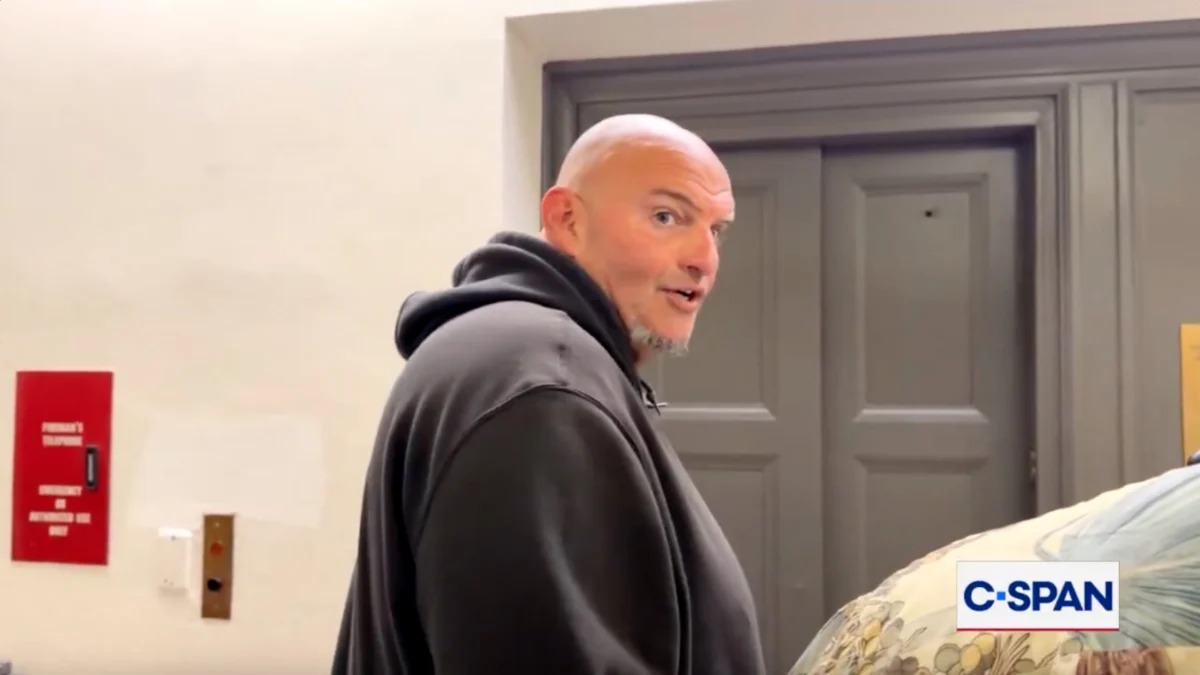
The political atmosphere on Capitol Hill reached a point of visible tension on Tuesday as United States Senator John Fetterman (D-PA) engaged in a sharp exchange with members of the press corps. The confrontation, which occurred as the Senator was attempting to board an elevator, followed a series of events that have raised questions regarding his legislative commitment and his future within the Democratic Party. As reporters pressed for clarity on his political identity and recent conduct, Fetterman dismissed suggestions of a party switch, characterizing the inquiries as premature and unfounded.
The primary catalyst for the heightened media interest was a multifaceted set of controversies involving the Senator’s recent public appearances and a critical investigative report concerning his office’s internal operations. Fetterman, who has increasingly positioned himself as an independent-minded voice within the Democratic caucus, found himself defending his record against allegations of absenteeism and a perceived pivot toward Republican-aligned interests.
The Capitol Hill Exchange and the Question of Party Loyalty
As Senator Fetterman moved through the halls of Congress on Tuesday, he was pursued by a group of reporters seeking comment on a recent Wall Street Journal report and his surprise participation in a Republican-led event. Initially maintaining silence, Fetterman’s composure shifted when a reporter asked directly if there was a possibility of him joining the Republican Party, citing the current trajectory of the Democratic platform.
"I’m not going to be a Republican!" Fetterman responded with visible frustration. He urged the press to refocus their attention on the upcoming midterm elections rather than speculating on his personal political status. "Why can’t you guys just wait till the midterms? And if I turn a Republican, then I’ll be a liar, then."
Fetterman further emphasized that he is not currently seeking reelection, as his term does not expire until 2028. "My name is not on the ballot. Like, chill and wait for the midterm here!" he added. "I’ve always been a Democrat. It’s like no matter how many times I say that, I’m still getting asked just getting into the elevator."
The Wall Street Journal Investigation and Staff Allegations
The confrontation in the Capitol followed the publication of an extensive report by the Wall Street Journal that cast a shadow over Fetterman’s daily legislative activities. The report, which cited interviews with several former staffers and individuals familiar with the Senator’s office, alleged that Fetterman has shown "little interest" in the traditional day-to-day responsibilities associated with his office.
Among the specific allegations were claims that the Senator frequently skipped committee hearings, canceled scheduled meetings with constituents, and remained largely disengaged from the granular aspects of policy-making. These claims were particularly sensitive given Fetterman’s high-profile recovery from a stroke suffered during his 2022 campaign and a subsequent period of hospitalization for clinical depression in early 2023.
In response to these allegations, Fetterman has been steadfast in his denials. He previously characterized the Wall Street Journal piece as a collection of "lies, half-truths, innuendos, and smears," attributing the negative accounts to "disgruntled staffers." His office has maintained that the Senator remains fully committed to his duties, though the report has provided ammunition for political critics who question his effectiveness in representing the Commonwealth of Pennsylvania.
Controversy Over the Republican Midterm Convention Appearance
Adding to the friction within his own party was Fetterman’s unexpected appearance via video at the Republican midterm convention held in Dallas, Texas. In a move that shocked many of his Democratic colleagues, Fetterman used the platform to introduce Senator Dave McCormick (R-PA) and expressed a willingness to collaborate with former President Donald Trump on specific economic issues.
The video, filmed against the industrial backdrop of the Mon Valley Works steel mill in Western Pennsylvania, featured Fetterman advocating for a bipartisan approach to protecting the domestic steel industry. "I and McCormick would work with Trump to fight and defend the steel way of life right here in the Steel Valley," Fetterman stated in the clip.
This appearance was viewed by political analysts as a significant departure from standard partisan protocol. While Fetterman has often championed the "blue-collar" roots of his constituency, his public endorsement of a working relationship with the Republican presidential nominee—and his praise for McCormick, a frequent critic of the Biden administration—has created a rift with the progressive wing of the Democratic Party.
Chronology of Fetterman’s Shifting Political Positioning
To understand the current tension, it is necessary to examine the timeline of Fetterman’s political evolution since taking office in January 2023:
- January 2023: Fetterman is sworn in as the junior Senator from Pennsylvania.
- February – March 2023: Fetterman undergoes a six-week inpatient treatment for clinical depression at Walter Reed National Military Medical Center, receiving widespread bipartisan support for his transparency regarding mental health.
- Late 2023: Fetterman begins to distinguish himself from the progressive "Squad" in the House, particularly on issues of foreign policy. He becomes one of the most vocal supporters of Israel following the October 7 attacks, rejecting calls for a permanent ceasefire—a stance that alienated some of his younger, more progressive supporters.
- Early 2024: The Senator adopts a more conservative rhetorical stance on border security, stating that the situation at the U.S.-Mexico border is a crisis that needs to be addressed through stricter enforcement, a position traditionally held by Republicans.
- Late 2024: The Wall Street Journal report is published, followed shortly by Fetterman’s video appearance at the GOP convention in Dallas, leading to the current questions regarding his party affiliation.
Data and Policy Analysis: Rhetoric vs. Voting Record
Despite the optics of his recent appearances and his public disagreements with the left wing of his party, legislative data suggests that Fetterman remains a reliable vote for the Democratic caucus. According to voting records from the 118th Congress, Fetterman has voted in alignment with President Joe Biden’s stated positions approximately 95% to 99% of the time.
This disparity between his "maverick" public persona and his actual voting record is a point of contention for both his critics and his defenders. Supporters argue that Fetterman is successfully navigating a "purple" state by using populist rhetoric to appeal to working-class voters who may feel abandoned by the modern Democratic Party. Critics, however, suggest that his public flirtations with Republican figures and his dismissive attitude toward party orthodoxy serve to undermine Democratic unity during a critical election cycle.
On specific policy fronts, Fetterman’s shifts have been notable:
- Energy: Once a critic of fracking during his 2016 Senate run, Fetterman has since become a defender of the natural gas industry in Pennsylvania, citing its importance to the state’s economy and energy independence.
- Trade and Manufacturing: His alignment with the "America First" economic rhetoric regarding steel tariffs and the prevention of foreign acquisitions of American industrial assets (such as the proposed Nippon Steel purchase of U.S. Steel) places him closer to the protectionist wing of the GOP than the traditional neoliberal wing of the Democratic Party.
Reactions from Party Leadership and Political Analysts
The reaction from Democratic leadership has been largely measured, with most senior officials choosing to focus on Fetterman’s voting consistency rather than his public outbursts or unconventional appearances. However, off-the-record comments from Democratic strategists indicate a growing concern that Fetterman’s "unpredictability" could complicate the party’s messaging in Pennsylvania, a critical swing state.
On the Republican side, figures like Dave McCormick have welcomed Fetterman’s bipartisan overtures, using them to bolster the argument that even prominent Democrats recognize the validity of Republican concerns regarding trade and industrial policy. The Republican National Committee has leveraged Fetterman’s comments about Trump and the steel industry in promotional materials, highlighting the perceived cracks in the Democratic coalition.
Political analysts suggest that Fetterman may be attempting to model himself after previous "independent" senators who maintained their party affiliation while frequently bucking leadership. However, unlike figures who represent smaller or more ideologically homogeneous states, Fetterman’s actions in Pennsylvania—a state essential for any Democratic path to the White House—carry outsized national implications.
Broader Implications for the Democratic Party and the 2028 Cycle
The friction between Senator Fetterman and the press—and by extension, the public—highlights a broader identity crisis within the Democratic Party as it attempts to balance the demands of its progressive base with the need to retain working-class voters in the Rust Belt. Fetterman’s insistence that he is a Democrat, despite his recent actions, suggests he believes there is still room for his brand of populism within the party’s "big tent."
However, the allegations of professional disengagement remain a significant hurdle. If the claims of skipped meetings and legislative apathy persist, they could undermine his credibility when he eventually seeks reelection in 2028. For now, Fetterman appears content to challenge the status quo of political communication, preferring direct, often blunt, interactions over the polished diplomacy typical of the Senate.
As the midterm elections approach, the focus will remain on whether Fetterman’s bipartisan outreach helps or hurts his party’s chances in Pennsylvania. While he may not be on the ballot, his presence and his rhetoric will undoubtedly influence the political landscape of the Commonwealth for the foreseeable future. For the time being, the Senator’s message to the media and his colleagues is clear: he remains a Democrat, but he will not be confined by the traditional expectations of the role.




 Yuyun Lusiyani
 Joko Widodo
 Eva Lovia
 Pevita Pearce