
 Eva Lovia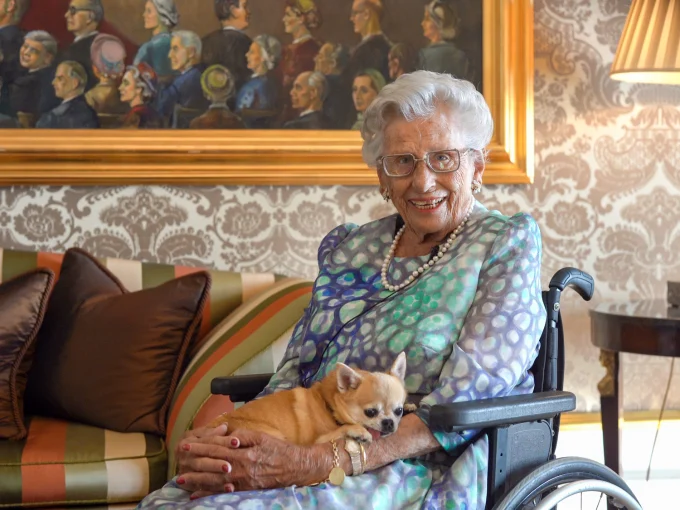
The profound sorrow that enveloped Norway’s Royal Family in the wake of Princess Astrid’s death has been compounded by the passing of her cherished canine companion, Wilma. The Norwegian Royal Court confirmed that Wilma, a loyal dog who was 12 years old, died just days after Princess Astrid, who herself passed away at the age of 94. This poignant event marks the end of a deeply intertwined chapter for the princess and her beloved pet, who was a constant fixture by her side throughout her later public engagements.
Wilma’s death, confirmed to Norwegian media outlet NRK, occurred shortly after Princess Astrid was laid to rest in a moving ceremony at Ris Church in Oslo. The princess’s funeral, held on September 9th, was attended by close family and dignitaries, a solemn occasion marked by the nation’s grief. The subsequent passing of Wilma, often seen as an extension of Princess Astrid’s public persona, has underscored the depth of the bond between the princess and her dog, and the sense of loss that now permeates the Royal House.
A Loyal Companion Through the Years
Wilma was more than just a pet; she was a visible symbol of Princess Astrid’s enduring spirit and her approachability. Frequently accompanying the princess to official engagements, Wilma became a familiar and heartwarming presence for the Norwegian public. It was not uncommon for birthday portraits of Princess Astrid to feature Wilma, a testament to their inseparable connection. The princess, known for her warmth and engaging personality, often appeared with Wilma resting in her lap, even when utilizing a wheelchair for mobility in her later years. This simple act conveyed a sense of comfort and normalcy, humanizing the royal presence and reflecting Princess Astrid’s own genial nature.
The princess’s dedication to including Wilma in her public life spoke volumes about the dog’s importance to her. This inclusion offered a glimpse into Princess Astrid’s private world, a world where her animal companion played a significant role. The presence of Wilma at events, from formal gatherings to more informal occasions, provided a gentle reminder of the everyday joys that Princess Astrid cherished.
A Period of Profound Royal Mourning
Princess Astrid’s death on September 11th followed closely on the heels of another significant loss for the Norwegian Royal Family: that of her younger brother, King Harald V, who passed away on August 28th at the age of 89. The siblings shared a particularly close bond, and Princess Astrid had been a steadfast source of support for King Harald throughout his 35-year reign. Her presence at his funeral at Oslo Cathedral on September 9th was a public display of their deep affection and mutual respect.
The period leading up to Princess Astrid’s death was one of immense sorrow and transition for the Royal Family. King Harald’s passing left a void, and Princess Astrid, having witnessed his final days and funeral, experienced a further decline in her own health shortly thereafter. Her peaceful passing on September 11th, just two days after her brother’s funeral, underscores the profound emotional toll of this period of mourning. The loss of both King Harald and Princess Astrid within such a short timeframe represents a significant moment in Norwegian royal history, marking the end of an era defined by their long-standing presence and service.
A Life Dedicated to Royal Service
Princess Astrid’s life was one of remarkable dedication to the Norwegian monarchy, spanning nearly nine decades. Her public life began at a tender age, with her presence alongside her family at significant national events soon after her birth in 1932. The family’s wartime experiences, including their exile in the United States during the Nazi occupation of Norway, forged a resilience that would characterize their lives and their service to the nation. Following the Allied victory, Princess Astrid returned to Norway and, after completing her education at Oxford University, fully embraced her public duties.
Her role as the de facto First Lady of Norway, a position she held for 15 years beginning in 1954, was a significant period of her public service. This responsibility arose from the untimely death of her mother, Crown Princess Märtha, and saw Princess Astrid undertake crucial ceremonial and representational duties. She served in this capacity during the final years of her grandfather, King Haakon VII’s, reign, and the initial period of her father, King Olav V’s, reign. She relinquished this formal role only upon the marriage of her brother, King Harald V, to Sonja Haraldsen, who then assumed the duties of Queen. Despite stepping aside from the primary role, Princess Astrid continued to be an active and engaged member of the Royal Family, undertaking numerous engagements well into her nineties, a testament to her unwavering commitment.
A Legacy of Warmth and Dignity
Princess Astrid was known for her sharp wit, her engaging sense of humor, and her inherent warmth. These qualities, combined with her dignified bearing, made her a beloved figure in Norway. Her willingness to embrace her dog, Wilma, as a part of her public persona further endeared her to the public, showcasing a relatable and compassionate side to royalty. This approachability, coupled with her lifelong dedication to service, has left an indelible mark on the nation.
The princess’s final resting place is Ris graveyard in Oslo, where she was laid to rest next to her late husband, Johan Martin Ferner. The question of whether Wilma will be interred with them remains a poignant detail, symbolizing the enduring connection between the princess and her faithful companion. The passing of Princess Astrid, and now her beloved Wilma, marks the closing of a significant chapter in the history of the Norwegian Royal Family, a chapter characterized by resilience, dedication, and a profound personal warmth.
Broader Context and Royal Succession
The passing of King Harald V and Princess Astrid within a short span has naturally brought discussions about the future of the Norwegian monarchy into sharper focus. King Harald’s son, Crown Prince Haakon, is the heir apparent, and his transition to the throne will mark a new era for the nation. The prolonged reign of King Harald, marked by stability and a deep connection with his people, set a high standard. Princess Astrid’s consistent presence and support throughout his reign, and indeed throughout much of the 20th century, provided a continuity that was invaluable to the Royal House.
The presence of Princess Astrid, a direct link to earlier generations of the monarchy, offered a tangible connection to Norway’s history. Her long life of service, from the wartime years to her active role in recent decades, provided a consistent and reassuring presence. The passing of both King Harald and Princess Astrid leaves a void in the institutional memory and the immediate public face of the monarchy, necessitating a period of adjustment for the nation and the Royal Family as they navigate this transition. The younger generation of royals, led by Crown Prince Haakon and Crown Princess Mette-Marit, are now poised to carry the torch, drawing upon the legacy of dedication and service established by their predecessors. The enduring image of Princess Astrid, often accompanied by her loyal dog Wilma, will undoubtedly remain a cherished memory for many Norwegians.




 Yuyun Lusiyani
 Joko Widodo
 Pevita Pearce
 admin
admin
 Lina Irawan