
 Yuyun Lusiyani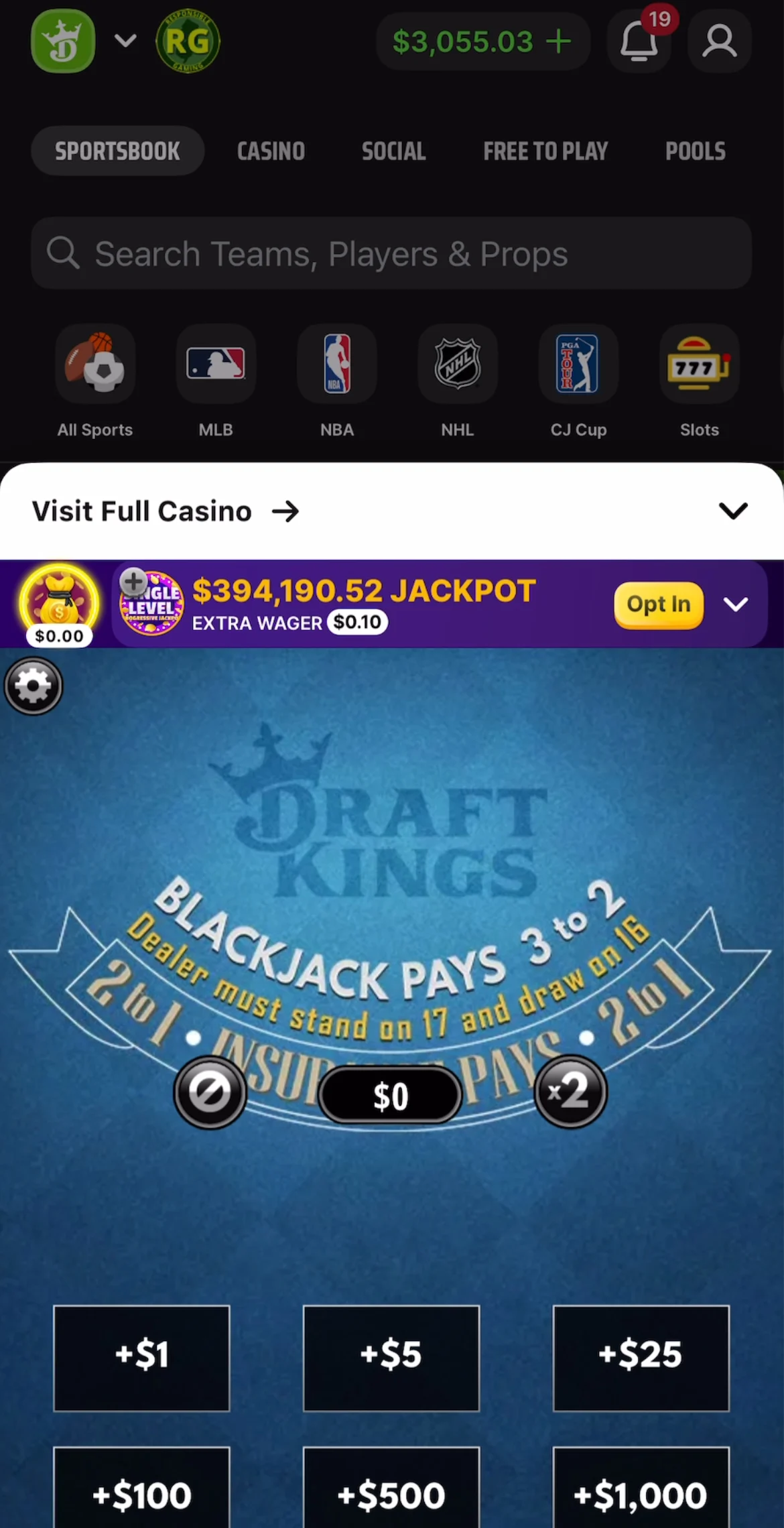
A ten-week investigative experiment by a ProPublica reporter has cast significant doubt on the efficacy of "responsible gaming" safeguards employed by leading online sports betting platforms, particularly DraftKings. The investigation, which involved the reporter mimicking the behavior of a compulsive gambler, revealed that despite exhibiting numerous red flags associated with problem gambling, the platform primarily responded with escalating promotions, VIP status invitations, and easily dismissible warnings, often encouraging further high-stakes betting. This raises critical questions about consumer protection in America’s rapidly expanding online gambling market.
The investigation, bankrolled by ProPublica, saw the reporter open an account under his own name, disclosing his profession, and linking it to his debit card. A panel of addiction specialists, recovering gamblers, and professional sports bettors advised the reporter on the telltale signs of spiraling gambling behavior. Over the course of the experiment, the reporter systematically adopted these habits, aiming to determine if DraftKings would intervene proactively, even if it meant sacrificing potential revenue. The findings suggest a system designed more to appear protective than to genuinely safeguard vulnerable users.

The Experiment Begins: A Rapid Descent into "Degen" Status
The reporter’s journey began in late May, amidst the French Open, where DraftKings immediately pushed promotions like "BET & GET" to encourage tennis wagers. What started as a "prudent, just-for-fun $40 bettor" quickly devolved into a "degen" – sports betting slang for a degenerate gambler – casually placing $1,500 on a single game. The reporter’s initial two-hour spree on Parisian clay courts involved 64 wagers, with rapid losses. Bets like $75 on Claire Liu to win the fifth point of a tiebreak or $300 on Francisco Comesana to win the first game of a set were quickly lost. The reporter acknowledged that this was less about sports acumen and more about "scratching an itch."
Within six weeks, the reporter had lost approximately $12,500 on DraftKings, equivalent to six months of mortgage payments. During one 24-hour period, he lost $4,500, continuously transferring money from his bank to his DraftKings account. It was at this point that DraftKings sent an in-app notification: "Take a loss? Now take a beat." Following the prompt, the reporter visited the platform’s "responsible gaming" center, setting a two-hour daily app limit and a $100 daily deposit cap. Yet, just 30 minutes later, his phone buzzed with the first of four promotional alerts that day, touting new betting opportunities. This "wink-and-a-nod dynamic" became a recurring theme throughout the experiment.

Escalation and the Allure of VIP Status
The reporter’s betting patterns escalated, mirroring the advice of experts like Joshua Grubbs, who studies gambling disorders at the University of New Mexico. Grubbs predicted an increase in betting frequency, longer app sessions, jumping between sports for fast action, and experimentation with "exotic" betting products like parlays and prop bets. The reporter embraced parlays, multi-event wagers with low probability but high potential payouts, often called "sucker’s bets" by experts. DraftKings actively promoted these with "profit boosts," creating the "near miss" effect where almost winning tricks the brain into believing in skill.
Microbets, wagers on specific, fast-paced events like the next point in a tennis match or the outcome of a single baseball pitch, were also heavily explored. Natasha Schull, an anthropologist at New York University and author of "Addiction by Design: Machine Gambling in Las Vegas," likened microbetting to playing slots, one of the most addictive forms of gambling, due to the minimal lag time between wager and result. The reporter experienced this firsthand at a Yankees game, rapidly losing a $95 win on microbets within minutes.

Despite these clear signs of escalating risk, DraftKings continued its promotional efforts. Just three days after the Yankees game, and following numerous parlay losses, the reporter received another "responsible gaming" pop-up. He clicked "Maybe Later." Hours later, DraftKings sent a promotion offering a 20% profit boost on "unlimited live microbets on baseball plate appearances" up to $250 each. The push notification read: "Bet, settle, repeat!" This direct encouragement for the very behavior that led to rapid losses highlighted the conflict between the platform’s stated commitment to responsible gaming and its profit-driven marketing strategies.
A crucial turning point came when the reporter, after a night of significant losses, received an email: "Welcome to the DraftKings VIP Showcase." His "loss chasing" had been rewarded. This three-week tryout was designed to assess if he was a "whale" (big spender) or a "sharp" (professional bettor who exploits mispriced odds). For "squares" like the reporter – long-term losers – these limits do not apply. The VIP loyalty program explicitly incentivized "full send" long-odds wagers, accelerating the accumulation of credits needed to climb tiers from bronze to Onyx, unlocking increasingly desirable perks.
Regulatory Gaps and "Dark Patterns"

The investigation revealed that while some responsible gaming prompts were triggered, they were often easily bypassed or mandated by state law, rather than being a proactive intervention by DraftKings. For instance, an alert about hitting $2,500 in total deposits was a New York state requirement. The prompt offered a choice to set limits or click "I Understand" and move on, which the reporter did, keen to continue betting.
Experts highlighted the use of "dark patterns" in the app’s design. As the reporter’s wagering increased, the quick-tap deposit buttons automatically increased from small amounts to $500, $750, and $950, making it frictionless to transfer large sums. This user design, computer scientists note, subtly tricks users into spending more. The constant barrage of push notifications – sometimes six a day – promoting "BOOSTS" further fueled the betting impulse, even after the reporter had opted into responsible gaming limits.
DraftKings’ Chief Responsible Gaming Officer, Lori Kalani, stated that the company’s 51-person team manually reviews accounts for suspected problem gambling. However, the reporter, despite exhibiting "just about every sign of compulsive gambling there is," never received a direct intervention from this team. Kalani suggested that the reporter wasn’t playing during the "wee-est hours" (1:30 a.m. to 5:30 a.m.), implying a narrow definition of "problem" behavior that triggers manual review. When pressed on how often accounts are closed based purely on betting history without self-disclosure, DraftKings declined to provide specific numbers.

FanDuel’s Approach and the iGaming Expansion
The reporter replicated his behavior on DraftKings’ major competitor, FanDuel. While FanDuel also offered promotions, its "Reality Check" reminders, which appeared six times in one night, showed the user’s session time and wagered amount, offering a slightly more direct, though still interruptible, acknowledgment of activity. FanDuel also reportedly limited a large, late-night wager on a cricket match, though it didn’t specify if this was due to responsible gaming concerns or risk management. Unlike DraftKings, FanDuel did not extend a VIP invitation to the reporter after a week of similar aggressive betting. FanDuel stated its program "is designed to identify potential risk early and empower customers with real-time information," and that "trained specialists" may intervene, but also did not provide specific data on such interventions. The New York Times reported that FanDuel uses third-party firms to gauge problem gambling risk, a practice DraftKings has not adopted, claiming its own tools are superior.
The investigation also touched on the push by companies like DraftKings to legalize "iGaming" (online casino games) in more states. DraftKings CEO Jason Robins publicly stated, "Customers want it. The tax revenue potential is real." When the reporter traveled to New Jersey, where iGaming is legal, he found instant access to blackjack and roulette. The app cross-promoted iGaming to sports bettors, even offering "baseball blackjack" and "basketball blackjack" immediately after sports bets, further blurring the lines between sports entertainment and traditional casino gambling. The "Double" button in blackjack was highlighted, making it easy to double down in a millisecond, another "dark pattern" facilitating rapid loss chasing.

The Peril of Wins and the Unyielding Cycle
Midway through the experiment, the reporter experienced a "hot streak," winning $3,869 on parlays and later $10,000 on a Knicks NBA championship bet, erasing previous losses and netting a profit. This "variance," or luck, brought his account to $25,350. Experts warned that big wins can be particularly dangerous for problem gamblers, instilling false confidence and validating their behavior. Rob Minnick, a recovering gambling addict and industry watchdog, advised: "all wins are just future losses because when you don’t stop, it eventually gets given back."
True to this warning, the reporter, feeling "like Superman," continued betting, fueled by the "house money." He dove into World Cup betting, initially winning an additional $16,000. During this period of intense wagering ($3,000 to $7,000 daily), DraftKings once again ramped up push notifications and even increased the qualifying bet amount for profit boosts from $250 to $500 and $1,000, explicitly rewarding high-volume play. Despite these lavish expenditures, responsible gaming prompts were served on only one of ten days.

Ultimately, the reporter’s winnings vanished, and he ended the experiment with $10,702 in losses, deciding "enough was enough." His final act was to test DraftKings’ limits one last time: he asked his VIP rep about a match for a hypothetical $25,000 deposit. The response: the rep could "look into the account and see what is available to add in." This willingness to incentivize an even larger deposit, even after a recent "cool-off" period and a pattern of heavy losses, underscored the core finding: the platform’s primary objective remained maximizing engagement and revenue.
Broader Implications and Public Policy Debate
The investigation highlights a fierce public policy debate. Since the Supreme Court legalized sports betting in 2018, Americans have wagered over $600 billion. Sports betting is now legal in 39 states and Washington, D.C. This explosive growth has come with significant consequences: a Siena Research Institute survey found that approximately a quarter of active sportsbook account holders had lost enough to struggle meeting financial obligations. A 2024 study in Connecticut revealed that 1.8% of problem gamblers accounted for 51% of sports betting revenue.

Critics argue that the current framework, which largely entrusts consumer protection to publicly traded companies driven by profit, is inherently flawed. Brianne Doura-Schawohl, a gambling reform advocate, argues that responsible gaming tools should be opt-out, not opt-in, especially given research showing gambling can impair decision-making. Other countries have implemented stricter regulations on marketing and problematic products, but in the U.S., the industry actively opposes such reforms, even seeding a political action committee with $41 million to influence elections.
The data from Massachusetts regulators is particularly telling: only 0.64% of gamblers were limited as of December 2024, and winning bettors were more likely to have their maximum bets lowered than losing ones. This suggests a focus on protecting the house from "sharps" rather than protecting "squares" from themselves. The New York Times previously reported that DraftKings’ data scientists developed a tool to identify customers heading towards problem gambling but the company did not adopt it, citing a "better methodology."
Minnick summarized the prevailing sentiment among advocates: the industry’s "responsible gaming" system is "built to appear to be doing something good while giving them basically like a free pass to do everything bad by saying, ‘Hey, we told you, you know, you have a responsibility, it’s your fault.’" The ProPublica investigation offers compelling evidence that, for many users, the siren song of promotions and the seamless design of betting apps far outweigh the easily dismissed whispers of responsible gaming.




 Jia Lissa
 Joko Widodo
 Eva Lovia

 Pevita Pearce