
 Jia Lissa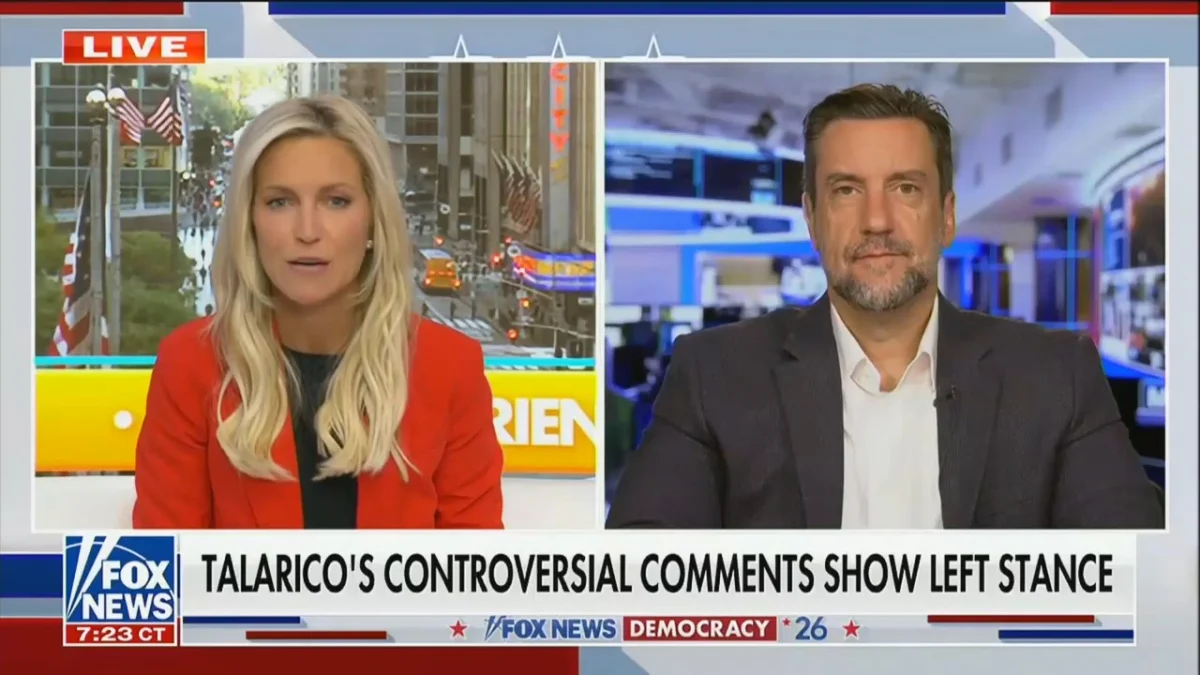
The political landscape in Texas, long considered a bastion of Republican dominance, is facing a significant tremor following the release of a new Fox News poll showing Democratic challenger James Talarico leading incumbent Republican Ken Paxton by seven percentage points. This unexpected shift in polling data became a central topic of discussion on Friday morning’s broadcast of Fox & Friends, where co-host Ainsley Earhardt and conservative commentator Clay Travis analyzed the factors contributing to what many observers view as a potential sea change in the Lone Star State’s electoral dynamics. The poll, which places Talarico in a commanding position in a state that has not elected a Democrat to statewide office in decades, has sparked intense debate regarding Republican complacency, the influence of out-of-state fundraising, and the efficacy of late-stage campaign spending.
The Fox News Poll and the Fox & Friends Analysis
During the Friday morning segment, Ainsley Earhardt expressed visible surprise at the polling results, questioning how a Democratic candidate could achieve such a substantial lead in a traditionally red state. The Fox News poll indicates that James Talarico is currently leading Ken Paxton by seven points, a margin that falls outside the typical margin of error for such surveys and suggests a genuine momentum shift among Texas voters. Earhardt’s inquiry to Clay Travis, the founder of OutKick and a frequent Fox News contributor, centered on the mechanics of this polling lead and whether it represents a permanent shift or a temporary fluctuation.
Clay Travis responded by issuing a warning to Texas Republicans, suggesting that decades of consecutive victories may have led to a sense of electoral invulnerability that is now being challenged. Travis noted that while he remains confident in an eventual Republican victory, the current numbers serve as a "wake-up call." He argued that the perceived gap is a result of a massive, early-stage financial investment by the Democratic platform, which allowed Talarico to define his image before the Republican counter-offensive began in earnest. Travis’s analysis highlighted a strategic divide: a Democratic "early-burn" strategy versus a Republican "late-blitz" approach.
Financial Disparity and the Ad Blitz Strategy
One of the most striking elements of the race is the massive disparity in fundraising and spending that occurred during the early months of the campaign cycle. According to data discussed by Earhardt, James Talarico had raised a staggering $68.6 million by June, a figure that dwarfed Ken Paxton’s $9.2 million during the same period. This nearly seven-to-one financial advantage allowed the Talarico campaign to saturate the Texas airwaves with television advertisements during a window when Paxton was relatively quiet on the media front.
Earhardt noted that this early spending allowed Talarico to run essentially unopposed in the court of public opinion for several months. By the time the Republican Party and Paxton’s supporters mobilized, Talarico had already established a narrative of being a "moderate voice." To counter this, Republican organizations recently announced a $122 million ad blitz, a massive infusion of capital intended to reclaim the narrative and erode Talarico’s seven-point lead. Travis characterized this as the Republican "proverbial cash" being held until the final, most critical moments of the election cycle, a tactic often used by incumbents to preserve resources for the "home stretch."
Candidate Profiles: Ken Paxton and James Talarico
The race between Ken Paxton and James Talarico represents a clash of two very different political identities. Ken Paxton, the incumbent, is a well-known figure in conservative politics, recognized for his staunch support of former President Donald Trump and his aggressive legal challenges against federal policies. However, Paxton’s tenure has also been marked by significant legal and political controversies, including a high-profile impeachment trial and ongoing legal battles that have provided his opponents with substantial political ammunition. Despite these challenges, Paxton remains a favorite among the Republican base, who view him as a defender of Texas’s sovereignty.
James Talarico, on the other hand, represents a younger, more progressive wing of the Democratic Party, though he has campaigned on a platform of moderation and bipartisan cooperation. A former teacher and state representative, Talarico has gained national attention for his articulate defense of Democratic values in the Texas Legislature. During the Fox & Friends segment, Travis accused Talarico of presenting a "dual identity"—claiming to be a moderate to Texas voters while allegedly telling donors in New York, California, and Illinois that he would be a "progressive ally" dedicated to obstructing the agenda of Donald Trump. This accusation of "political maneuvering" is likely to become a central theme of the Republican ad blitz as the election nears.
The Evolution of the Texas Electorate
The seven-point lead for Talarico must be viewed within the broader context of Texas’s shifting demographics and political climate. For the past decade, political analysts have debated whether Texas is "turning purple." Rapid population growth in urban and suburban hubs like Austin, Dallas, Houston, and San Antonio has introduced a more diverse and younger electorate that leans more toward the Democratic Party than the rural regions of the state.
Historical data shows a narrowing gap in statewide races. In 2018, Beto O’Rourke came within three percentage points of defeating Senator Ted Cruz, a result that stunned the political establishment and signaled that Texas was no longer a "safe" state for Republicans. While Republicans swept the 2022 midterm elections in Texas, the margins in certain suburban districts continued to tighten. The current Fox News poll suggests that the trend of Democratic competitiveness is not only persisting but may be accelerating, particularly when an incumbent faces significant personal or political headwinds.
Timeline of the Campaign Cycle
To understand how the race reached its current state, a review of the campaign timeline is essential:
- Early Year Fundraising (January–June): James Talarico launches an aggressive national fundraising campaign, tapping into donor networks in progressive strongholds across the United States. He amasses over $68 million.
- The Media Vacuum (July–August): With Paxton focusing on legal defense and internal party matters, Talarico utilizes his war chest to run statewide TV ads. These ads focus on his background in education and his "moderate" approach to governance.
- The Fox News Poll Release (September): The poll showing a seven-point lead for Talarico is released, sending shockwaves through the Republican donor class.
- The Republican Counter-Attack (Late September): The GOP announces a $122 million expenditure. This includes a massive buy for television, digital, and grassroots outreach intended to "define" Talarico as a radical progressive.
- The Final Stretch (October–November): Both candidates are expected to focus heavily on voter turnout, with a particular emphasis on the "I-35 corridor," which has become the primary battleground for Texas elections.
National Implications and Party Strategies
The outcome of the Paxton-Talarico race carries significant implications for national politics. If a Democrat were to win a statewide office in Texas, it would fundamentally alter the Electoral College map for future presidential elections. Texas’s 40 electoral votes are currently the cornerstone of the Republican path to the White House. A Democratic victory at the state level would force the Republican National Committee (RNC) to divert hundreds of millions of dollars from other battleground states like Pennsylvania or Florida to defend Texas.
Furthermore, the race serves as a test case for the "nationalization" of state-level elections. Clay Travis’s comments about Talarico’s out-of-state fundraising highlight a growing trend where local races are funded by a national donor base. Republicans argue that this allows "coastal elites" to influence Texas policy, while Democrats contend that it is a necessary response to the massive corporate and PAC funding that often supports Republican incumbents.
Analysis of Potential Outcomes
As the election enters its final phase, several factors will determine whether Talarico can maintain his lead or if Paxton will successfully close the gap:
- Voter Turnout: High turnout in urban centers typically favors Democrats, while high turnout in rural counties favors Republicans. The "enthusiasm gap" mentioned by Travis will be a critical metric to watch.
- The "Trump Factor": As a vocal ally of Donald Trump, Paxton’s fate may be tied to the former president’s popularity in the state. If Trump supporters turn out in record numbers, Paxton is likely to benefit.
- Effectiveness of the Ad Blitz: The $122 million Republican investment is designed to shift the perception of Talarico. Whether voters believe the "moderate" image presented by Talarico or the "radical" image presented by the GOP will be the deciding factor for undecided suburban voters.
- Legal Developments: Any new developments in Paxton’s ongoing legal issues could provide a last-minute "October surprise" that could either galvanize his base or alienate moderate Republicans.
The Fox News poll has undeniably changed the narrative of the Texas election. What was once seen as a routine re-election for an entrenched incumbent has transformed into a high-stakes battleground that could redefine the political identity of the second-largest state in the union. While Clay Travis and other conservative analysts believe the Republican "money machine" will eventually secure the win, the seven-point lead currently held by James Talarico suggests that the era of uncontested Republican dominance in Texas may be drawing to a close. Regardless of the final result, the 2024 race between Paxton and Talarico will be remembered as a pivotal moment in the state’s political history, reflecting the broader tensions and transformations occurring within the American electorate.


 Yuyun Lusiyani
 Ana Megawati
 Joko Widodo
 Eva Lovia
 Pevita Pearce