
 Jia Lissa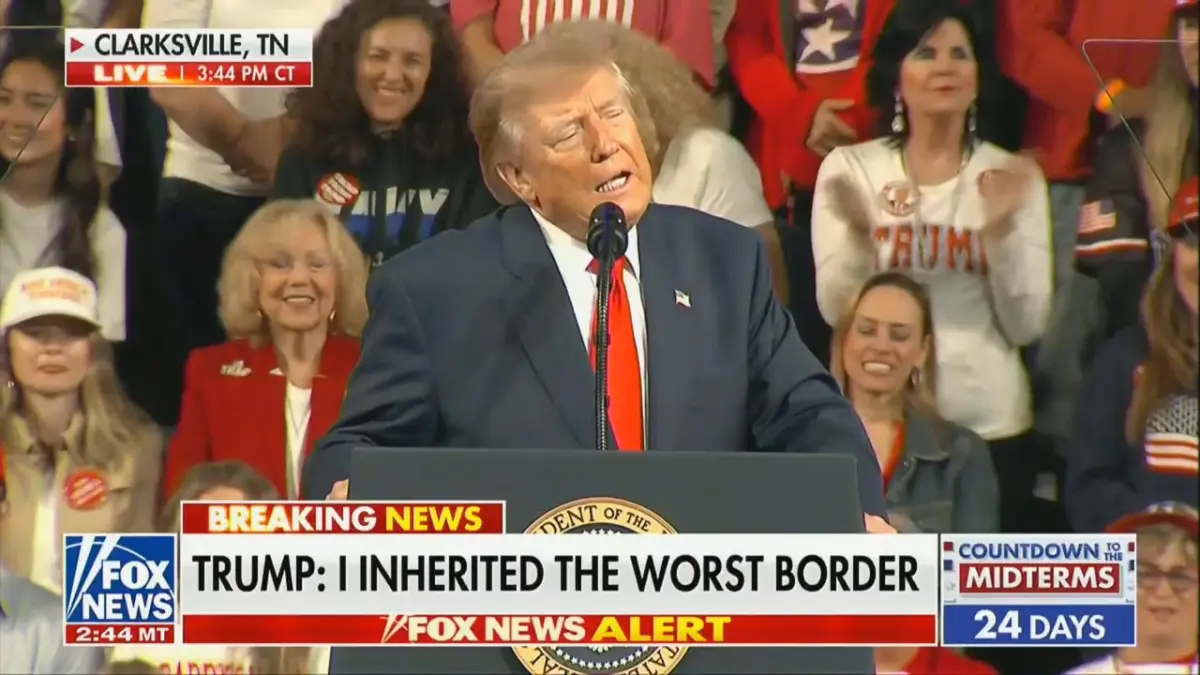
Former President Donald Trump traveled to Tennessee on Saturday, delivering a wide-ranging speech that emphasized the deep-seated loyalty of his political base and his vision for a "common sense" national agenda. Speaking before an enthusiastic crowd, the former president touched upon themes of election integrity, the strength of local Republican leadership, and the unique emotional connection he maintains with his supporters. The event, which coincided with high-profile regional activities including a major collegiate athletic gathering, served as a platform for Trump to reinforce his influence over the Republican Party and his priorities for a potential second term.
During the address, Trump made headlines with a candid observation regarding the unwavering support of his audience. Reflecting on the atmosphere of the room, he remarked that the level of devotion from his followers was so significant that he could effectively say "the stupidest things" and still receive thunderous applause. While the comment was delivered with a sense of levity that resonated with the crowd, it underscored a long-standing characteristic of the Trump political movement: a bond between the candidate and the voter that transcends traditional rhetorical boundaries.
The Dynamics of the Tennessee Visit
The former president’s appearance in Tennessee was framed by the state’s current political landscape. Tennessee remains a stronghold for the Republican Party, with a leadership structure that has remained closely aligned with Trump’s "Make America Great Again" (MAGA) movement. During his remarks, Trump specifically cited the performance of Senator Bill Hagerty and Senator Marsha Blackburn, as well as the state’s gubernatorial leadership, as reasons why his presence in the state might not have been strictly necessary for electoral victory.
"What am I doing in Tennessee?" Trump asked rhetorically, pointing to the high polling numbers and political stability of his allies in the region. He noted that while the state is reliably "Red," he felt it was important to appear in person to express gratitude to the electorate. This visit highlights a broader strategic pattern in the Trump campaign: maintaining visibility in deep-red states to energize the base and ensure high voter turnout, which is critical for down-ballot races and national momentum.
The backdrop of the visit was also notable for its cultural timing. Trump’s arrival in Tennessee coincided with "College GameDay," a major cultural and sporting event that draws tens of thousands of visitors. By appearing in this context, the former president was able to leverage the high-energy environment of a Southern football weekend to amplify his message, reaching a demographic that aligns closely with his core supporters.
Rhetorical Analysis: Loyalty and the "Common Sense" Branding
One of the most discussed segments of the speech involved Trump’s description of his relationship with his audience. He recounted a conversation with a friend who suffered from stage fright, who had asked how Trump managed to speak before large crowds daily. Trump explained that the task was made easy by the "love" present in the room. This emotional appeal has been a cornerstone of his rallies since 2016, creating a communal atmosphere that supporters often describe as more akin to a movement than a standard political campaign.
However, Trump was quick to pivot from his comment about saying "stupid things" to a defense of his actual platform. He argued that his policy positions are not merely "conservative" in the traditional sense but are rooted in "common sense." This rhetorical shift is significant as it attempts to broaden the appeal of his platform beyond partisan labels, framing his ideas as logical solutions to national problems rather than ideological experiments.
"We don’t say the stupidest things, we say things of common sense," Trump clarified. He listed several pillars of this "common sense" approach, including:
- Border Security: The demand for a physical wall and stricter immigration enforcement.
- Economic Policy: A focus on low taxes and deregulation to stimulate domestic growth.
- Military Strength: Rebuilding and maintaining what he describes as a "great military" to ensure global deterrence.
By categorizing these issues as "common sense," Trump seeks to position his critics as being opposed to fundamental logic, a tactic that has proven effective in consolidating his base and appealing to independent voters who are frustrated with political gridlock.
Election Integrity and Historical Claims
As has been a staple of his public addresses since the 2020 election, Trump dedicated a portion of his Tennessee speech to questioning the results of previous contests. He asserted to the crowd that he had won "the big election three times," referring to 2016, 2020, and the ongoing 2024 cycle. He repeated claims that the 2020 election was marred by "cheating," despite numerous court rulings, audits, and statements from election officials—including those within his own administration—finding no evidence of widespread fraud that would have altered the outcome.
The persistence of this narrative remains a central theme of his campaign. For his supporters, these claims reinforce a sense of grievance and a belief that the political establishment is working to disenfranchise them. For his detractors, the rhetoric is viewed as a challenge to the foundations of democratic processes. In Tennessee, the crowd’s response to these claims was overwhelmingly supportive, with chants of "Trump, Trump, Trump" echoing through the venue, illustrating the degree to which his version of recent political history has been accepted by his followers.
Supporting Data: The Political and Economic Context
To understand the resonance of Trump’s message in Tennessee and similar regions, it is necessary to examine the supporting data regarding voter sentiment and regional priorities. Tennessee has seen a consistent Republican trend over the last two decades. In the 2020 election, Trump carried the state with approximately 60.7% of the vote, a margin of over 23 points.
Data from recent economic reports in the South indicates that while the region has seen job growth, inflation remains a primary concern for residents. Trump’s focus on "low taxes" and "common sense" economics directly addresses these anxieties. According to polling from the Middle Tennessee State University (MTSU) Poll, Tennessee voters frequently rank the economy and immigration as their top concerns, aligning closely with the "seven, eight, 10" points Trump alluded to in his speech.
Furthermore, the influence of Senators Blackburn and Hagerty cannot be understated. Both have maintained high approval ratings among Tennessee Republicans. Senator Blackburn, known for her vocal support of border security and conservative social values, and Senator Hagerty, with his focus on trade and foreign policy, provide a local framework that reinforces Trump’s national messaging.
Chronology of the Visit
The former president’s visit followed a structured itinerary designed to maximize media exposure and voter engagement:
- Morning Arrival: Trump arrived in Tennessee, greeted by local officials and supporters at the airport.
- Midday Engagement: He attended events surrounding the "College GameDay" atmosphere, engaging with fans and local personalities.
- Afternoon Address: The main speech took place in the afternoon, where he addressed the crowd regarding his platform and the state of the 2024 race.
- Media Interaction: Following the speech, clips were circulated via Fox News and other media outlets, where the "stupidest things" remark quickly became a point of analysis for political commentators.
- Evening Departure: Trump concluded the visit with a series of private meetings with local GOP donors and strategists before departing the state.
Official Responses and Political Implications
The reaction to the Tennessee speech was divided along predictable partisan lines. Local Republican leaders praised the former president for his energy and his commitment to the state. Senator Marsha Blackburn released a statement via social media shortly after the event, emphasizing the importance of the "common sense" policies Trump discussed, particularly regarding border security.
Conversely, Democratic spokespeople and critics of the former president pointed to the "stupidest things" comment as evidence of a "cult-like" dynamic within the MAGA movement. They argued that such rhetoric diminishes the seriousness of the political discourse and ignores the substantive policy debates required for national leadership.
From an analytical perspective, the Tennessee visit confirms that Trump’s strategy for 2024 relies heavily on his personal brand and his ability to command a room. By framing his platform as "common sense" rather than strictly "conservative," he is attempting to reclaim the center of the political spectrum on his own terms. This branding is particularly effective in a media environment where voters are often overwhelmed by complex policy details and are looking for clear, decisive leadership.
Broader Impact on the 2024 Campaign
The implications of Trump’s Tennessee address extend beyond the borders of the Volunteer State. As the 2024 election cycle intensifies, the former president’s ability to maintain high levels of enthusiasm in "safe" states is a vital component of his overall strategy. It allows him to use these venues as laboratories for new rhetorical strategies—such as the "common sense" rebrand—before taking them to more competitive battleground states.
Additionally, the speech highlights the ongoing tension within the Republican Party regarding its identity. By distancing himself from the label of "conservative" and opting for "common sense," Trump is signaling a move toward a more populist, nationalist platform that prioritizes immediate results and voter perception over traditional ideological purity.
As the campaign progresses, the "love" that Trump described in the Tennessee room will likely remain his most potent political asset. Whether this emotional connection can be translated into a broad enough coalition to win a general election remains the central question of the 2024 cycle. For now, in states like Tennessee, the former president’s influence remains unchallenged, and his message—unfiltered and unapologetic—continues to resonate with millions of Americans who see his "common sense" as the only path forward for the country.


 Yuyun Lusiyani
 Ana Megawati
 Joko Widodo
 Eva Lovia
 Pevita Pearce