
 Eva Lovia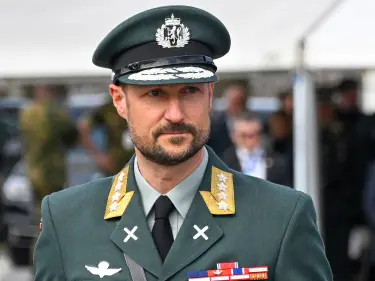
Norway’s Royal Family has officially signaled a return to public duties following a period of national mourning for the late King Harald V, who passed away on August 28th at the age of 89. The suspension of all public engagements by the Royal House in the immediate aftermath of the monarch’s death underscored the deep sense of loss felt across the nation. Now, as the country begins to navigate this new era, the Royal Court has confirmed that official responsibilities are set to resume, albeit with a significantly altered composition and operational dynamic within the Royal Family.
Resumption of Public Duties and Evolving Royal Engagements
King Haakon, who ascended to the throne on August 28th, will recommence his official duties on October 9th. His mother, Queen Sonja, a seasoned figure in Norwegian public life, will also resume her public engagements. Their return marks a crucial step in restoring the rhythm of royal representation and state functions. However, the operational landscape of the Norwegian monarchy has been reshaped by a confluence of recent events, including personal health challenges and academic pursuits of other key royal figures.
Queen Mette-Marit, wife of the new King Haakon, will not be undertaking any public engagements for the foreseeable future. This decision stems from her recent lung transplant in June, necessitating a period of continued recuperation at her home. The Royal Court has indicated that her return to public duties is not expected until at least the summer of next year, underscoring the importance of her recovery. This extended absence places additional responsibility on King Haakon and Queen Sonja.
The Next Generation: Academic Pursuits and Future Roles
The younger generation of the Royal Family is also undergoing significant transitions. Crown Princess Ingrid Alexandra, the heir presumptive to the Norwegian throne, is preparing to resume her university studies in Sydney, Australia, in February. Her academic path has seen some adjustments; she had briefly relocated her university course to Oslo when her mother, Queen Mette-Marit, underwent surgery. This move to Australia signifies a new chapter in her development as she prepares for her future role.
Meanwhile, the second in line to the throne, 20-year-old Prince Sverre Magnus, is currently pursuing his studies in Lisbon. The academic commitments of both Crown Princess Ingrid Alexandra and Prince Sverre Magnus mean that they will not be actively participating in day-to-day royal engagements in Norway.
A Streamlined Royal Agenda: Impact of Recent Losses
The impact of recent losses on the operational capacity of the Royal Family is substantial. In addition to the passing of King Harald V, Princess Astrid, the 94-year-old sister of the late King, died in September, just two days after her brother’s funeral. Princess Astrid was a dedicated working royal who consistently supported the monarchy through her public engagements for many years. Her passing, alongside that of King Harald, has removed two significant figures from the active royal roster.
These combined circumstances mean that King Haakon will be shouldering the majority of the royal agenda, either independently or with the steadfast support of his 89-year-old mother, Queen Sonja. The reduced number of active working royals, coupled with the ongoing recovery and academic pursuits of others, will undoubtedly lead to a notably different cadence and scope of royal activities.
Implications for the Royal Calendar and State Functions
The immediate implication of these changes is a significantly altered royal calendar. The Royal House has already announced that there will be no State Visits planned for the foreseeable future. State Visits are high-profile events that involve extensive planning, diplomatic engagement, and significant public presence. Their postponement suggests a strategic recalibration of the Royal Family’s capacity to host and participate in such elaborate functions.
King Haakon’s immediate responsibilities will be extensive. He will be tasked with overseeing critical state functions, including Councils of State and government meetings, in addition to carrying out his official public duties. Given the current circumstances, it is unlikely that any extensive travel will feature in his immediate plans. His focus will be on maintaining the continuity of royal service and upholding the constitutional role of the monarchy within Norway.
The New Reign: Continuity and Constitutional Duties
King Haakon’s ascension to the throne on August 28th marked the beginning of a new chapter for Norway. He has already fulfilled a crucial constitutional step by swearing an oath in the Norwegian parliament. In the future, he is also slated to participate in an official enthronement service, a ceremony that traditionally marks the formal installation of a monarch. This service, while ceremonial, holds significant symbolic importance in the transfer of royal authority and the public affirmation of the monarch’s role.
The new King’s reign begins at a time of significant transition for the nation and the monarchy. His leadership will be instrumental in guiding the Royal Family through these changes and ensuring the continued relevance and public trust in the institution. The coming months will likely see a period of adjustment as King Haakon settles into his new role and the Royal Family navigates its revised operational structure.
Historical Context: The Norwegian Monarchy and Succession
The Norwegian monarchy, a constitutional monarchy, has a long and established history, with the current Royal House of Glücksburg tracing its lineage back to the 19th century. King Harald V’s reign, spanning from 1991 to 2024, was characterized by his dedication to public service and his role as a unifying figure for the nation. His father, King Olav V, also reigned for an extended period, demonstrating the continuity and stability often associated with monarchies.
The line of succession in Norway is absolute, meaning that the eldest child, regardless of gender, inherits the throne. This was a significant reform enacted in 1990, placing Crown Princess Ingrid Alexandra firmly as the heir presumptive. Her position underscores the modernizing trajectory of the Norwegian monarchy, preparing for a future where a female monarch will lead the nation.
Royal Family’s Health and Public Engagement: A Balancing Act
The health of members of the Royal Family has historically played a role in their public engagements. Queen Mette-Marit’s public discussion of her chronic health conditions, including chronic obstructive pulmonary disease (COPD) and her recent lung transplant, has brought a degree of openness to the personal challenges faced by royals. This transparency, while personal, also informs the public’s understanding of the constraints on their ability to fulfill public duties.
Queen Sonja, despite her age, has consistently maintained a robust schedule of public appearances. Her continued engagement is a testament to her dedication and serves as a vital source of experience and continuity for the monarchy, particularly during this transitional period. Her presence alongside King Haakon will be crucial in providing a sense of stability and experienced leadership.
The Broader Impact on Norwegian Society
The passing of a monarch is a profound event for any nation, and Norway is no exception. King Harald V was a widely respected figure, and his death has prompted national reflection and mourning. The resumption of royal duties, even in a modified capacity, signals a move towards normalcy and a reaffirmation of national identity and tradition.
The reduced scale of public engagements, particularly the absence of State Visits, may also have broader implications for Norway’s international relations and diplomatic outreach, at least in the short term. However, the focus on King Haakon’s constitutional duties and the continued presence of Queen Sonja will ensure that the monarchy remains a visible and active institution within the Norwegian state. The coming months will be a period of adaptation for the Royal Family and the nation as they forge ahead under new leadership and with a reshaped royal presence. The resilience and adaptability of the Norwegian Royal Family will be key in navigating these unprecedented times.


 Yuyun Lusiyani
 Ana Megawati
 Joko Widodo
 Jia Lissa
 Pevita Pearce