
 Eva Lovia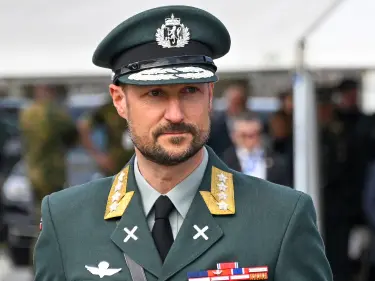
The Norwegian Royal Family has officially announced the resumption of their public engagements following a period of national mourning after the passing of His Majesty King Harald V. The King died on August 28th at the age of 89, an event that led to the immediate suspension of all royal duties. While the family is returning to its public service, the landscape of its operations has been significantly reshaped by recent events and ongoing personal circumstances.
A New Era Dawns for the Norwegian Monarchy
The resumption of official duties, scheduled to commence on October 9th, marks a pivotal moment for the Norwegian monarchy. His Majesty King Haakon, who ascended to the throne immediately upon his father’s death, will be at the forefront of these renewed efforts. He will be supported in his public engagements by his mother, Her Majesty Queen Sonja. This partnership between the new King and his experienced mother underscores a period of transition and continuity for the nation.
However, the operational capacity of the royal family has been notably impacted by other factors. Her Majesty Queen Mette-Marit will not be undertaking any public duties at this time. Her ongoing recuperation following a lung transplant in June necessitates her continued focus on her health. It is anticipated that she will not be able to resume her public engagements until at least the summer of next year, a timeline that significantly influences the royal calendar.
The next generation of the monarchy is also navigating distinct paths. Crown Princess Ingrid Alexandra, the heir presumptive to the Norwegian throne, is preparing to recommence her university studies in Sydney, Australia, in February. Her academic pursuits had seen a brief relocation to Oslo during her mother’s hospitalisation, highlighting the personal challenges faced by the family alongside their public roles. Meanwhile, the second in line to the throne, 20-year-old Prince Sverre Magnus, is currently pursuing his studies in Lisbon, Portugal.
This confluence of circumstances means that King Haakon will bear a substantial portion of the royal agenda, either independently or with the crucial support of his 89-year-old mother. This concentration of responsibility points to a more streamlined, albeit perhaps more demanding, approach to royal duties in the immediate future.
Furthermore, the passing of Princess Astrid, the sister of the late King Harald, in September, further reduces the active working contingent of the royal family. The 94-year-old Princess died just two days after her brother’s funeral, a poignant testament to the profound loss experienced by the family and the nation.
Navigating a Restructured Royal Calendar
The implications of these changes are far-reaching, particularly concerning the scheduling and nature of royal engagements. The Royal Court has already indicated that there will be no State Visits planned for the foreseeable future. This decision reflects the current capacity and priorities of the monarchy as it adapts to its new operational framework.
King Haakon’s immediate responsibilities will be extensive. He is expected to preside over Councils of State and government meetings, essential constitutional functions that demand his presence and attention. Alongside these governmental duties, he will also be undertaking official public engagements across the country. It is highly unlikely that extensive international travel will feature in his immediate plans, given the need to manage domestic responsibilities and the current operational constraints.
His Majesty King Haakon officially became King of Norway on August 28th, the same day of King Harald V’s passing. He has already taken the constitutional oath before Norway’s parliament, the Storting. While his ascension to the throne was immediate, a formal enthronement service, a significant ceremonial event, is planned for the future, signifying his full investiture and acceptance by the nation.
Background and Historical Context
King Harald V’s reign, spanning from 1991 until his death in August 2023, was characterized by a commitment to modernizing the monarchy and remaining accessible to the Norwegian people. He inherited the throne from his father, King Olav V, and continued a tradition of democratic and constitutional monarchy that has been a cornerstone of Norwegian governance for over a century.
The Norwegian monarchy, established in 1905 when Prince Carl of Denmark was elected King of Norway as Haakon VII, has always maintained a close relationship with its citizens. The royal family’s role is largely ceremonial and representative, serving as a symbol of national unity and tradition. Their public engagements, therefore, play a vital role in connecting the monarchy with the populace.
The recent succession marks the first change in the sovereign since King Harald V ascended the throne. This transition, coupled with the personal health challenges faced by Queen Mette-Marit and the passing of Princess Astrid, presents a unique set of circumstances for the new reign.
Supporting Data and Demographic Considerations
The Norwegian Royal Family’s public duties typically involve a range of activities, from official receptions and state banquets to visits to various regions and institutions across the country, as well as representing Norway on the international stage. The number of engagements undertaken by working royals is often a key indicator of their visibility and engagement with the public.
Prior to the recent changes, the working members of the Norwegian Royal Family included King Harald V, Queen Sonja, Crown Prince Haakon, Crown Princess Mette-Marit, Princess Märtha Louise, Princess Astrid, and occasionally Prince Sverre Magnus and Princess Ingrid Alexandra in supporting roles. The current situation significantly streamlines this group, placing a greater emphasis on the King and Queen Sonja.
Queen Mette-Marit’s absence from public duties for an extended period means a significant reduction in the number of engagements that can be undertaken by female members of the senior royal family. Her lung transplant, a major medical procedure, underscores the serious nature of her health condition and the necessity for a prolonged recovery. Lung transplants, while life-saving, require extensive rehabilitation, often involving months of physical therapy and monitoring to ensure full recovery and to prevent complications.
Crown Princess Ingrid Alexandra’s relocation to Australia for her studies further reduces the pool of readily available royals for domestic engagements. Her studies in Sydney, a major international city, are indicative of the modern educational paths being pursued by younger royals, balancing their future responsibilities with personal development and global exposure.
Prince Sverre Magnus’s education in Lisbon also positions him further from Norway for a significant portion of the year. While these young royals are undoubtedly being prepared for future roles, their current academic pursuits mean their direct involvement in day-to-day royal duties is limited.
Broader Impact and Implications
The reduced number of active working royals, particularly the absence of Queen Mette-Marit and the geographical distance of the younger royals, will undoubtedly shape the perception and execution of the monarchy’s public role. The emphasis on King Haakon and Queen Sonja suggests a period of consolidation and focused effort.
The cancellation of State Visits signifies a strategic recalibration. These visits are crucial for diplomatic relations and international representation. Their absence, even if temporary, could have subtle implications for Norway’s diplomatic engagements and international profile. It also suggests that the primary focus will be on domestic duties and ensuring the smooth functioning of the constitutional monarchy within Norway.
The concentration of duties on King Haakon highlights the immense personal and professional demands placed upon the new monarch. He must not only embody the sovereign but also actively participate in the governance and ceremonial functions of the state, all while navigating the early stages of his reign. His mother’s continued participation is a valuable asset, providing him with experience and continuity during this transitional phase.
The Norwegian monarchy has a strong tradition of adapting to changing times. The current circumstances, while presenting challenges, also offer an opportunity to redefine the monarchy’s engagement with the public. The focus may shift towards more localized and personal interactions, showcasing the King and Queen Sonja’s dedication to their duties and their connection with the Norwegian people.
The coming months will be a period of observation as the Norwegian Royal Family settles into its new rhythm. The resilience and adaptability of the monarchy will be tested, but its historical ability to connect with the nation, coupled with the commitment of its members, suggests a continued and relevant presence in Norwegian society. The focus will remain on the constitutional duties and the symbolic representation of the nation, adapted to the present realities.


 Yuyun Lusiyani
 Ana Megawati
 Joko Widodo
 Jia Lissa
 Pevita Pearce