
 Jia Lissa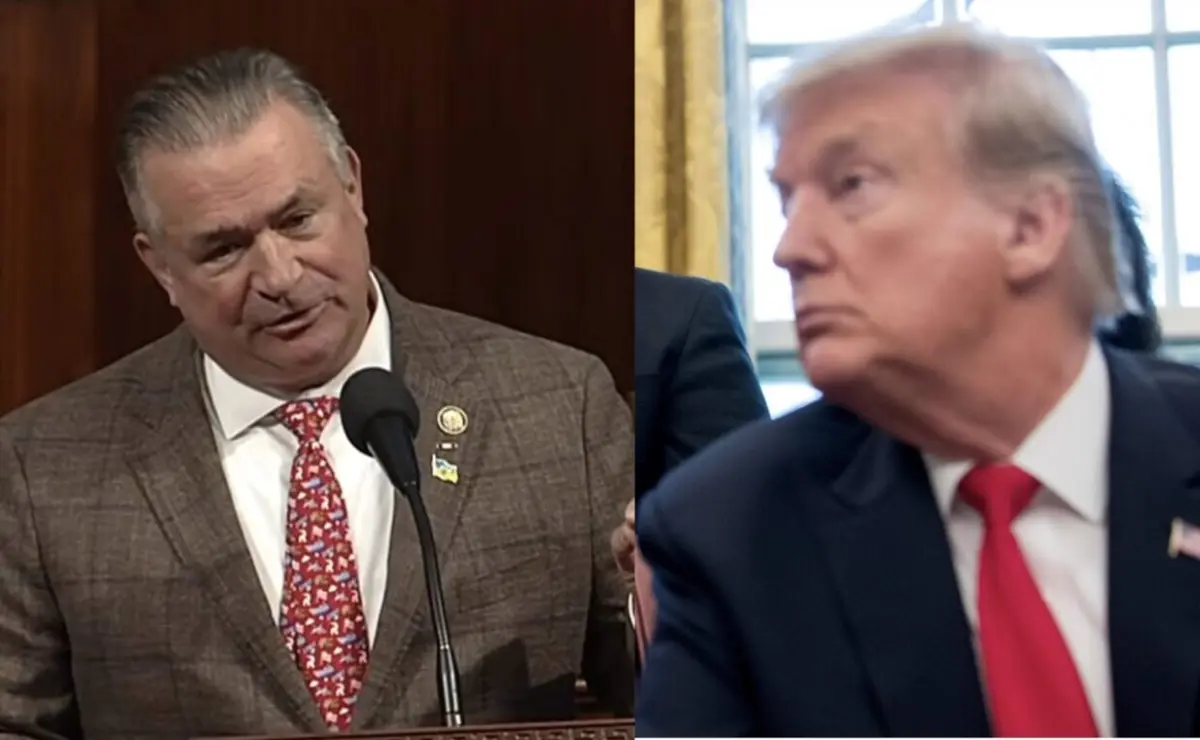
The internal rift within the Republican Party over foreign policy and the United States’ role in global security reached a fever pitch on Saturday, October 10, 2026, as Representative Don Bacon (R-NE) launched a scathing critique of Donald Trump. The Nebraska congressman, a retired Air Force brigadier general and a prominent voice on the House Armed Services Committee, condemned the former president’s latest remarks regarding the ongoing conflict in Ukraine. Bacon’s comments followed a public statement by Trump in which he called for the removal of Ukrainian President Volodymyr Zelenskyy, an assertion that Bacon labeled as "disgusting" and a "capitulation" to Russian President Vladimir Putin.
The confrontation marks a significant escalation in the ideological battle between the traditional internationalist wing of the GOP and the "America First" faction. As the 119th Congress navigates a complex geopolitical landscape, the public spat highlights deep-seated anxieties regarding the future of the North Atlantic Treaty Organization (NATO) and the stability of the post-World War II international order.
The Catalyst: Trump’s Comments Outside the White House
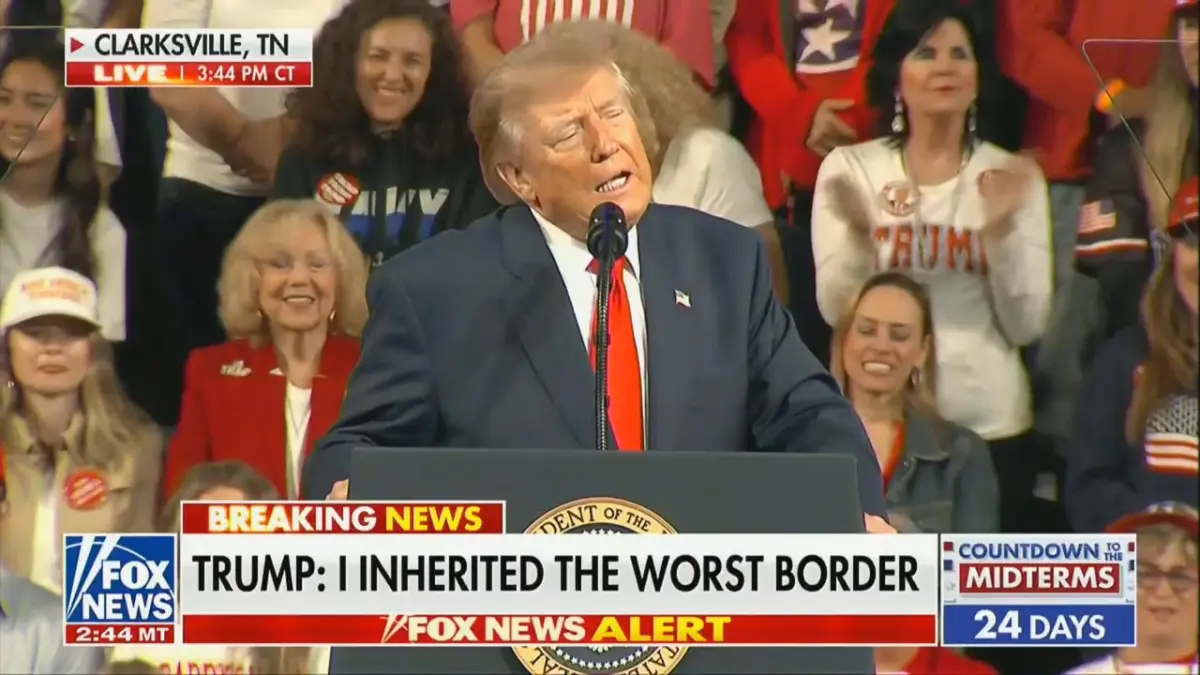
The controversy began on Saturday morning when Donald Trump, speaking to reporters outside the White House, addressed the stalemate in the Russo-Ukrainian War. Trump, who has frequently claimed he could end the conflict within 24 hours if returned to power, took aim at President Zelenskyy’s leadership and his refusal to concede territory to Moscow in exchange for a ceasefire.
"I suggest they get a new leader who can make a deal because he could have made many deals and for some reason he never does," Trump stated, referring to Zelenskyy. "And let me go a step further. If I were president, you wouldn’t have ever had that war. That war would have never started. There was no reason that that war with Ukraine and Russia started. It started due to incompetence. It should have never started."
Trump went on to provide a grim assessment of Ukraine’s current standing, claiming the nation had already lost 30% of its sovereign territory and suffered over a million casualties. "That’s a war that should have never started and I think it’s time for Ukraine to get a new president," he concluded. These remarks were widely interpreted by foreign policy experts as an invitation for a regime change in Kyiv that would favor Russian strategic interests.
Representative Don Bacon’s Rebuttal
The reaction from Representative Don Bacon was swift and uncompromising. Taking to the social media platform X, Bacon issued a series of posts that questioned Trump’s fitness for office and his historical stance toward the Kremlin.
"We need a President who is up to the task of leading the Free World," Bacon wrote, directly challenging the notion that Trump’s transactional approach to diplomacy is suitable for the current global crisis. He followed this by stating, "Let’s be honest. Trump is and always has been weak on Putin."
When prompted by users on the platform to elaborate on his stance, Bacon did not mince words, describing Trump’s suggestion that Zelenskyy be replaced as "disgusting." He argued that such rhetoric undermines a democratic ally while emboldening an aggressor that has been accused of numerous war crimes since the full-scale invasion began.
Bacon’s critique is particularly notable given his military background. As a veteran who served 30 years in the Air Force, Bacon has consistently advocated for a robust U.S. presence in Europe and the maintenance of strong alliances to deter Russian expansionism. His remarks suggest that for a segment of the Republican Party, Trump’s rhetoric has crossed a line from isolationism into active subversion of U.S. foreign policy goals.
Historical Context: A Pattern of Controversy
To understand the weight of Bacon’s "weak on Putin" accusation, it is necessary to look at the timeline of Donald Trump’s interactions with the Russian leader and his administration’s policies regarding Ukraine.
- The 2018 Helsinki Summit: One of the most frequently cited examples of Trump’s perceived deference to Putin occurred during a joint press conference in Finland. Trump appeared to side with Putin over U.S. intelligence agencies regarding Russian interference in the 2016 election, stating, "President Putin says it’s not Russia. I don’t see any reason why it would be."
- The 2019 Impeachment: Trump’s first impeachment centered on a phone call with President Zelenskyy, in which Trump allegedly withheld Congressionally approved military aid to Ukraine while asking for a "favor"—an investigation into his political rival, Joe Biden. Critics argue this event signaled to Moscow that U.S. support for Ukraine was conditional and politically motivated.
- Withdrawal Rhetoric: Throughout his presidency and subsequent campaigns, Trump has repeatedly questioned the value of NATO, at one point suggesting that the U.S. might not defend allies who do not meet spending targets.
- The 2022 Invasion and Aftermath: Since Russia’s full-scale invasion in February 2022, Trump has oscillated between calling the invasion a "mistake" and praising Putin’s tactical "genius." His recent calls for Zelenskyy to step down represent the latest iteration of this pattern.
Representative Bacon’s assertion that Trump is "not up to the task" reflects a growing concern among GOP hawks that a second Trump term would result in the abandonment of Ukraine and the fracturing of the Western alliance.
Polling Data and Public Sentiment
Bacon also touched upon a sensitive point for the former president: public popularity. In his social media thread, the congressman pointed to polling data suggesting that President Zelenskyy remains a more sympathetic figure to the American public than Trump.

"It must really hurt seeing polls showing Americans have higher favorables towards Zelenskyy than they have Trump," Bacon wrote. "You should honestly ask yourself why."
Recent data from non-partisan organizations such as the Pew Research Center and Gallup have consistently shown that a majority of Americans—including a significant portion of Republicans—view the defense of Ukraine as vital to U.S. national interests. While "Ukraine fatigue" has grown in some sectors of the electorate, Zelenskyy is still widely perceived as a Churchillian figure defending his nation against an unprovoked onslaught. Conversely, Trump’s favorability ratings remain deeply polarized, often hovering below 45% in aggregate national polls.
The Political Reality: Retirement and the 120th Congress
The timing of Bacon’s outburst is also tied to his personal political trajectory. In June 2026, Bacon announced that he would not seek re-election to the 120th Congress. This decision followed years of navigating a difficult political tightrope in Nebraska’s 2nd Congressional District, a "purple" area that has become increasingly difficult for moderate Republicans to hold.
By announcing his retirement, Bacon effectively insulated himself from the threat of a Trump-backed primary challenger. In recent election cycles, Trump has successfully used his endorsement power to oust incumbent Republicans who have voted for his impeachment or publicly criticized his policies. Figures like Liz Cheney and Adam Kinzinger saw their congressional careers end after taking stances similar to Bacon’s.
Freed from the constraints of a re-election campaign, Bacon appears to have joined a small but vocal group of "lame duck" Republicans who feel empowered to speak candidly about the direction of the party. His willingness to use words like "disgusting" and "weak" suggests a desire to leave a legacy as a defender of traditional GOP principles, even if those principles are currently out of favor with the party’s base.
Broader Implications for the Republican Party
The clash between Bacon and Trump is emblematic of a broader struggle for the soul of the Republican Party as the 2028 presidential cycle begins to take shape. The GOP is currently split into three primary camps regarding foreign policy:
- The Internationalists: Represented by figures like Don Bacon and Senate Minority Leader Mitch McConnell, this group believes in the "Peace Through Strength" doctrine and views the defense of Ukraine as essential to preventing a larger European conflict.
- The Restrainers: A middle-ground group that supports Ukraine but seeks to limit the scope of U.S. involvement and demands more oversight and burden-sharing from European allies.
- The Isolationists/Nationalists: Led by Donald Trump and his closest allies in the House Freedom Caucus, this group views foreign aid as a waste of resources and advocates for a rapid withdrawal from global commitments to focus on domestic issues like border security.
Bacon’s comments suggest that the Internationalists are unwilling to go quietly. By framing the argument around "leading the Free World," Bacon is attempting to reclaim the moral high ground that defined the Republican Party during the Cold War era.
Reactions and Geopolitical Impact
While the White House has not officially commented on the exchange between Bacon and Trump, Democratic leaders were quick to amplify the congressman’s remarks. General consensus among diplomatic circles in Washington is that Trump’s call for Zelenskyy’s removal is highly damaging to U.S. credibility abroad.
International reactions have been equally pointed. Officials in Kyiv, while generally avoiding direct interference in U.S. domestic politics, have expressed "deep concern" over rhetoric that suggests a major U.S. political party might withdraw support. In Moscow, state-controlled media outlets have frequently used Trump’s comments to bolster their narrative that Western support for Ukraine is crumbling.
The implications of this rhetoric extend to the battlefield. Uncertainty regarding future U.S. military aid can affect Ukrainian strategic planning and morale. If the "Free World’s" leading power appears divided on the legitimacy of Ukraine’s leadership, it provides an opening for Russia to press its advantage through both military and hybrid warfare means.
Conclusion: A Divided Path Forward
Representative Don Bacon’s decision to "destroy" Donald Trump’s foreign policy stance serves as a stark reminder of the volatility within the American political system. As the war in Ukraine continues with no clear end in sight, the debate over U.S. leadership will only intensify.
For Bacon, the issue is one of character and competency. By suggesting that Trump is not "up to the task," he is questioning the fundamental ability of the former president to navigate the existential threats of the 21st century. Whether Bacon’s critique will resonate with the broader Republican electorate remains to be seen, but for now, his words stand as a significant challenge to the dominance of the MAGA movement’s foreign policy agenda.
As the 119th Congress draws to a close, the departure of voices like Bacon’s may leave the internationalist wing of the GOP further diminished, potentially paving the way for the very "capitulation" that the Nebraska congressman so vehemently fears. For the moment, however, the "disgusting" label remains a potent symbol of the internal resistance Trump faces from within his own party ranks.


 Yuyun Lusiyani
 Ana Megawati
 Joko Widodo
 Eva Lovia
 Pevita Pearce