
 Jia Lissa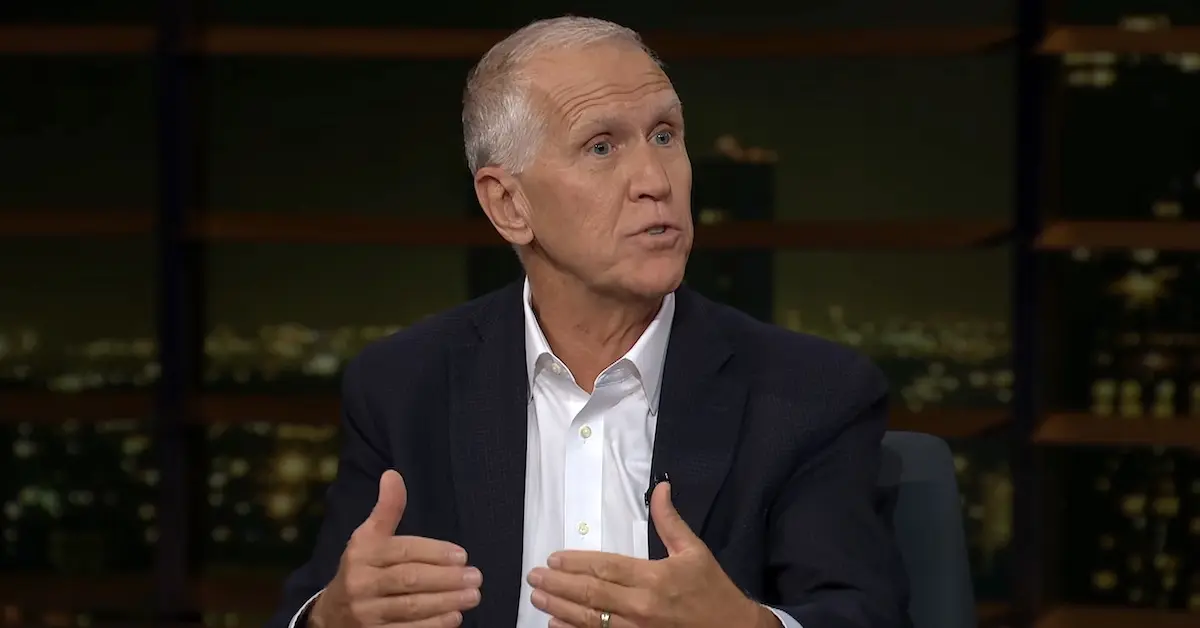
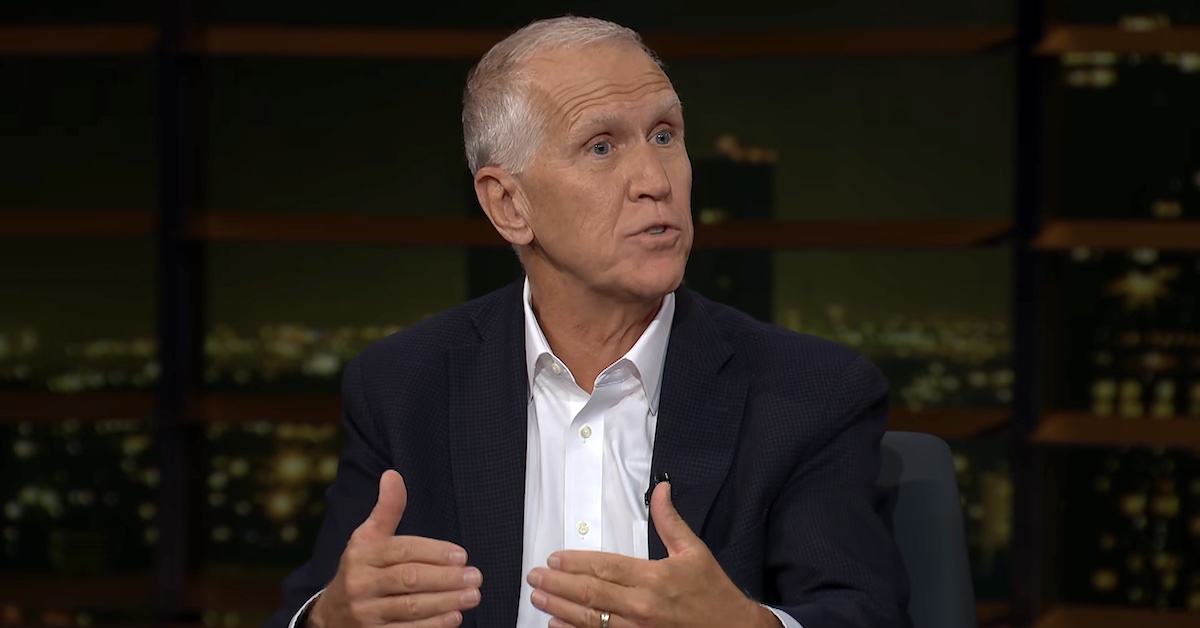
Senator Thom Tillis, a North Carolina Republican known for his occasionally independent streak within the GOP, made a striking admission during a high-profile appearance on HBO’s Real Time with Bill Maher. While promoting his recently released memoir, How to Lose Friends and Antagonize Presidents, Tillis conceded that his vote to confirm Pete Hegseth as Secretary of Defense was a mistake, stating bluntly that he "f*cked up." The admission comes as Tillis prepares to conclude his tenure in the United States Senate, a period marked by both loyalty to the Republican platform and public friction with the administration of Donald Trump.
The interview, which aired on Friday, served as a platform for Tillis to address the growing divide between his voting record and his public rhetoric. Maher, known for his direct questioning, challenged the senator on his "maverick" reputation, pointing out that despite expressing private reservations, Tillis had ultimately voted to confirm a series of controversial nominees, including Tulsi Gabbard for Director of National Intelligence, Kristi Noem for Secretary of Homeland Security, and Robert F. Kennedy Jr. for Secretary of Health and Human Services. The conversation highlighted the internal tensions of a retiring lawmaker attempting to reconcile party loyalty with personal conviction.
The Hegseth Confirmation and the Admission of Error
The focal point of the discussion centered on Pete Hegseth, the former Fox News host and Army National Guard officer whose nomination for Secretary of Defense was met with significant scrutiny from both sides of the aisle. Critics had long pointed to Hegseth’s lack of high-level administrative experience and various personal controversies as disqualifying factors for leading the world’s most powerful military.
When Maher pressed Tillis on why he chose to confirm Hegseth despite these concerns, Tillis explained that his initial decision was rooted in a traditional view of executive privilege. "At the end of the day, presidents have to form a government," Tillis said, noting that he had historically given the benefit of the doubt to nominees from both parties, including those put forward by Presidents Barack Obama and Joe Biden. However, Tillis revealed that his perspective on Hegseth had shifted following the confirmation process and subsequent developments.
"I voted with the unanimous vote out of the Senate Armed Services Committee," Tillis told Maher. "Now I’m telling you, I f*cked up and he needs to go." This reversal is particularly notable given the Senate Armed Services Committee’s role in vetting the Pentagon’s leadership. Tillis’s admission suggests a breakdown in the vetting process or a rapid reassessment of Hegseth’s fitness for the role after he assumed office.
The "Maverick" Label and the Philosophy of Confirmation
The exchange between Maher and Tillis touched on a broader debate regarding the role of the Senate in the "advice and consent" process. Maher questioned how Tillis could justify the discrepancy between his vocal criticisms of certain nominees and his eventual votes in their favor. Tillis defended his record by arguing that his influence was often exercised behind the scenes rather than through public "no" votes.
Tillis cited the case of former Representative Matt Gaetz, who was initially tapped for Attorney General before withdrawing his name amid intense pressure and an ongoing ethics investigation. Tillis claimed he played a pivotal role in signaling to Gaetz that he lacked the necessary support to clear the Senate. "Matt Gaetz is one that came to mind that I worked with him to make him recognize he couldn’t do it," Tillis said. By positioning himself as a quiet arbiter of nominee viability, Tillis sought to frame his "maverick" status as a matter of internal negotiation rather than public grandstanding.
However, Maher’s critique underscored the frustration felt by many who believe the Senate has become too deferential to executive appointments. The confirmation of Robert F. Kennedy Jr. and Tulsi Gabbard, both of whom held views that veered sharply from traditional Republican and Democratic orthodoxy, has been cited by political analysts as evidence of a shifting landscape where ideological alignment with the president outweighs traditional qualifications.
Chronology of Tillis’s Political Alignment and Departures
To understand Tillis’s current position, it is necessary to examine the timeline of his relationship with the Trump administration and the broader Republican establishment:
- 2014–2020: Tillis generally maintains a standard conservative voting record, supporting the vast majority of Trump’s judicial appointments and the 2017 Tax Cuts and Jobs Act.
- 2019: Tillis briefly opposes Trump’s national emergency declaration regarding the southern border in a Washington Post op-ed, only to reverse his position and vote with the president weeks later, drawing criticism for indecision.
- January 6, 2021: Following the Capitol riot, Tillis acknowledges the severity of the event but ultimately votes against the second impeachment of Donald Trump. On Real Time, he defended this by accusing Democrats of failing to take the constitutional process "seriously."
- 2023–2024: As he approaches the end of his term, Tillis becomes increasingly vocal about the "performative" nature of modern politics. He begins work on his memoir, which details his frustrations with both the populist wing of his party and the legislative gridlock in Washington.
- Present Day: Tillis uses his book tour to distance himself from specific administration policies while maintaining that he acted in good faith during his time in the Senate.
Condemnation of the Fort Hood Execution Livestream
Beyond the discussion of cabinet confirmations, Tillis addressed a controversial Pentagon plan regarding the execution of Nidal Malik Hasan. Hasan, a former Army psychiatrist, was convicted of killing 13 people and wounding more than 30 others during the 2009 mass shooting at Fort Hood (now Fort Cavazos), Texas. He was sentenced to death by a military jury in 2013.
Recent reports suggested a plan to livestream the execution via firing squad, a move that Tillis vehemently condemned. While the senator clarified that he supports the execution of Hasan for his crimes, he characterized the idea of broadcasting it as "bullsh*t" and "performative at the worst level."
"We’ve got to stop that," Tillis told Maher. "There’s no way we should be doing that." He further mocked Secretary Hegseth’s involvement in the Pentagon’s current culture, stating he was "shocked" that Hegseth hadn’t personally volunteered to be part of the firing squad. This critique highlights a growing concern among traditionalist Republicans regarding the potential "spectacularization" of justice and the politicization of the military’s highest functions.
Supporting Data and Political Context
Tillis’s admission reflects a broader trend of "lame-duck" candor often seen in retiring senators. According to data from the Lugar Center and Georgetown University’s McCourt School of Public Policy, Tillis has consistently ranked as one of the more bipartisan members of the Senate, particularly in his work on the Judiciary and Armed Services Committees.
However, North Carolina’s shifting political demographics have placed Tillis in a precarious position for years. As a purple state, North Carolina requires its representatives to balance a conservative base with a growing population of moderate and independent voters in urban centers like Charlotte and Raleigh. Tillis’s decision not to seek re-election may have afforded him the political capital to speak more freely about his regrets regarding the Hegseth vote and his frustrations with the Trump administration’s influence over the GOP.
Official Responses and Implications
While the White House has not issued a formal response to Tillis’s comments on Real Time, the admission is expected to resonate within the Senate Armed Services Committee. Tillis’s public statement that a sitting Secretary of Defense "needs to go" creates a rare instance of a senior member of the president’s own party calling for a cabinet-level resignation shortly after confirmation.
Political analysts suggest that Tillis’s remarks may embolden other Republicans who have harbored private doubts about the administration’s personnel choices but feared political retribution. By framing his vote as a procedural "benefit of the doubt" that was ultimately betrayed by the nominee’s performance or subsequent revelations, Tillis provides a blueprint for other lawmakers to distance themselves from controversial figures without appearing to abandon the party entirely.
Broader Impact on the Republican Party
The interview underscores the ongoing identity crisis within the Republican Party as it navigates the post-2024 landscape. Tillis represents a fading "institutionalist" wing of the GOP—lawmakers who prioritize the traditional functions of government, such as the confirmation of a functioning cabinet, over ideological purity tests.
His critique of "performative" politics, specifically regarding the Hasan execution and the Hegseth appointment, signals a deep-seated worry that the party is prioritizing media optics over substantive governance. As Tillis exits the Senate, his departure leaves a void in the middle of the Republican caucus, raising questions about who will fill the role of the "internal critic" in future administrations.
In the final analysis, Tillis’s appearance on Real Time serves as a post-script to a career defined by the tension between institutional duty and the volatile demands of modern partisanship. His admission regarding Pete Hegseth may be remembered as a rare moment of public accountability in an era of rigid political alignment, suggesting that even within the halls of power, the weight of a single vote can eventually lead to a profound sense of "f*cking up."


 Yuyun Lusiyani
 Ana Megawati
 Joko Widodo
 Eva Lovia
 Pevita Pearce