
 Lina Irawan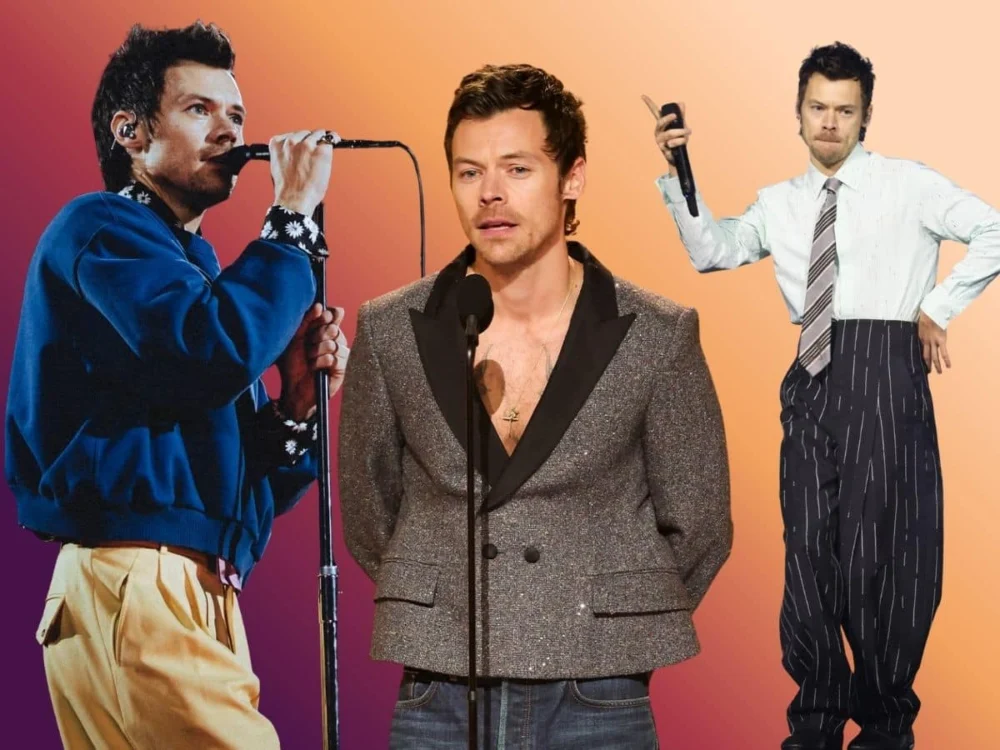
The trajectory of Harry Styles’ public image from a regional talent show contestant to a global arbiter of menswear represents one of the most significant brand evolutions in contemporary pop culture. In 2010, Styles was positioned as a conventional member of the British-Irish boy band One Direction, characterized by the preppy, mass-market aesthetics of the era. By 2026, he has fundamentally altered the landscape of male celebrity dressing, moving beyond simple trend-following to become a primary driver of high-fashion discourse. With the release of his fourth studio album, Kiss All The Time. Disco, Occasionally, Styles has initiated a "refined era" defined by archival references, gender-neutral silhouettes, and a calculated departure from the maximalism of his previous cycles.
This new stylistic chapter is characterized by a sophisticated interplay between understated luxury and avant-garde risks. Collaborating closely with longtime stylist Harry Lambert, Styles has moved away from the sequined jumpsuits of the Harry’s House tour toward a more curated, historically informed wardrobe. This evolution is not merely a change in clothing but a strategic shift in how male celebrities engage with heritage fashion houses like Prada, Dior, and Chanel.
The 2026 Aesthetic: Archival Prada and the Rise of the Sneakerina
The visual launch of Styles’ current era began in January 2026 with the music video for the lead single, "Aperture." Filmed within the brutalist architecture of Los Angeles’ Westin Bonaventure Hotel, the video served as a manifesto for his new direction: "geek chic" grounded in deep fashion history. The central garment was a custom Prada button-down featuring a red lips motif. This print was a direct reference to Miuccia Prada’s Spring 2000 collection, where it originally appeared on pleated skirts. By repurposing this archival feminine motif for a modern masculine silhouette, Styles and Lambert signaled a move toward intellectualized fashion.

The footwear choice in "Aperture" became an immediate focal point for industry analysts. Styles wore the Prada Collapse Mixed Media Low Top Sneaker, a slime-green hybrid that merges the structural elements of a trainer with the silhouette of a ballet flat. Retail data following the video’s release indicated an immediate surge in "torpedo sneaker" and "ballet flat for men" searches, with the $975 Prada model selling out across major luxury platforms within 48 hours. Vogue and other trade publications have since identified this as the "sneakerina" trend, a movement that prioritizes slim, low-profile footwear over the "chunky" sneaker trends that dominated the early 2020s.
Red Carpet Milestones: Dior Men and Chanel
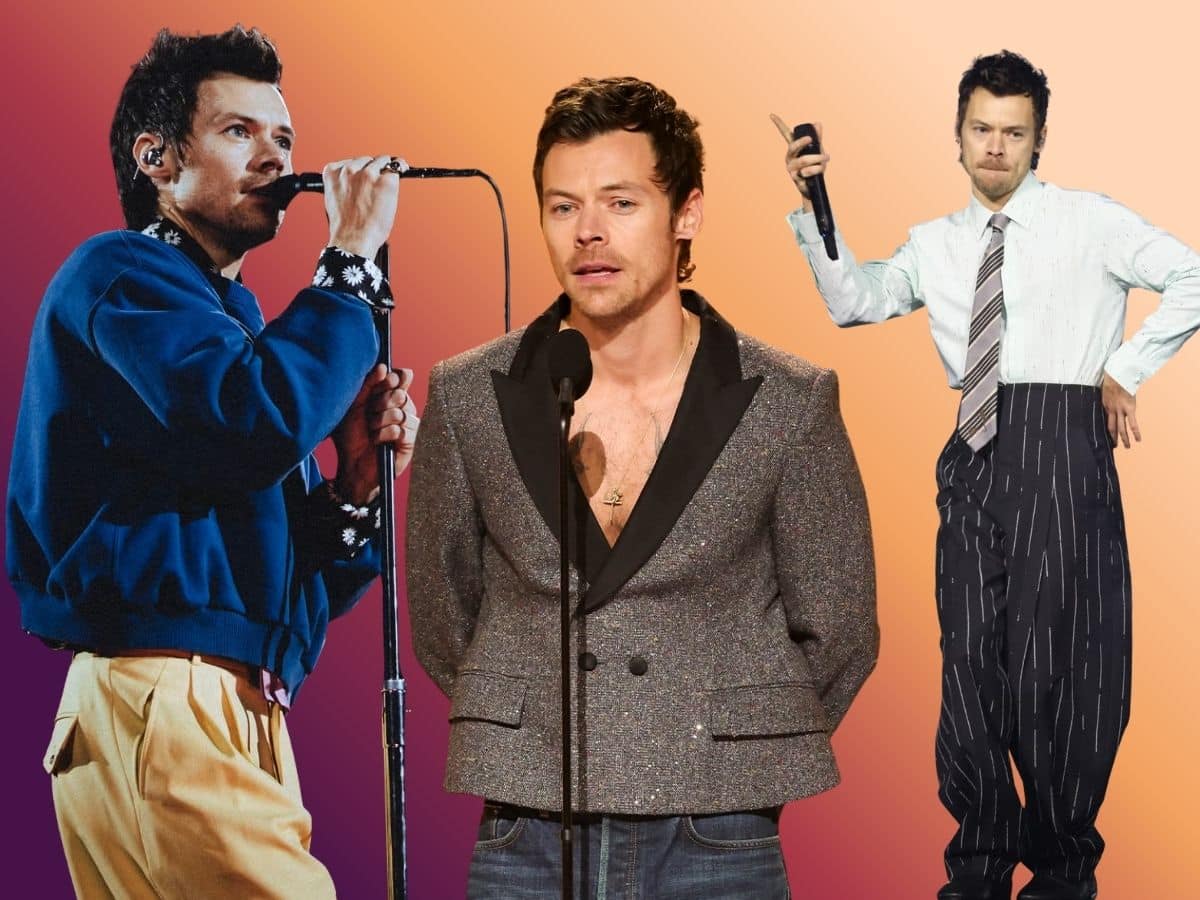
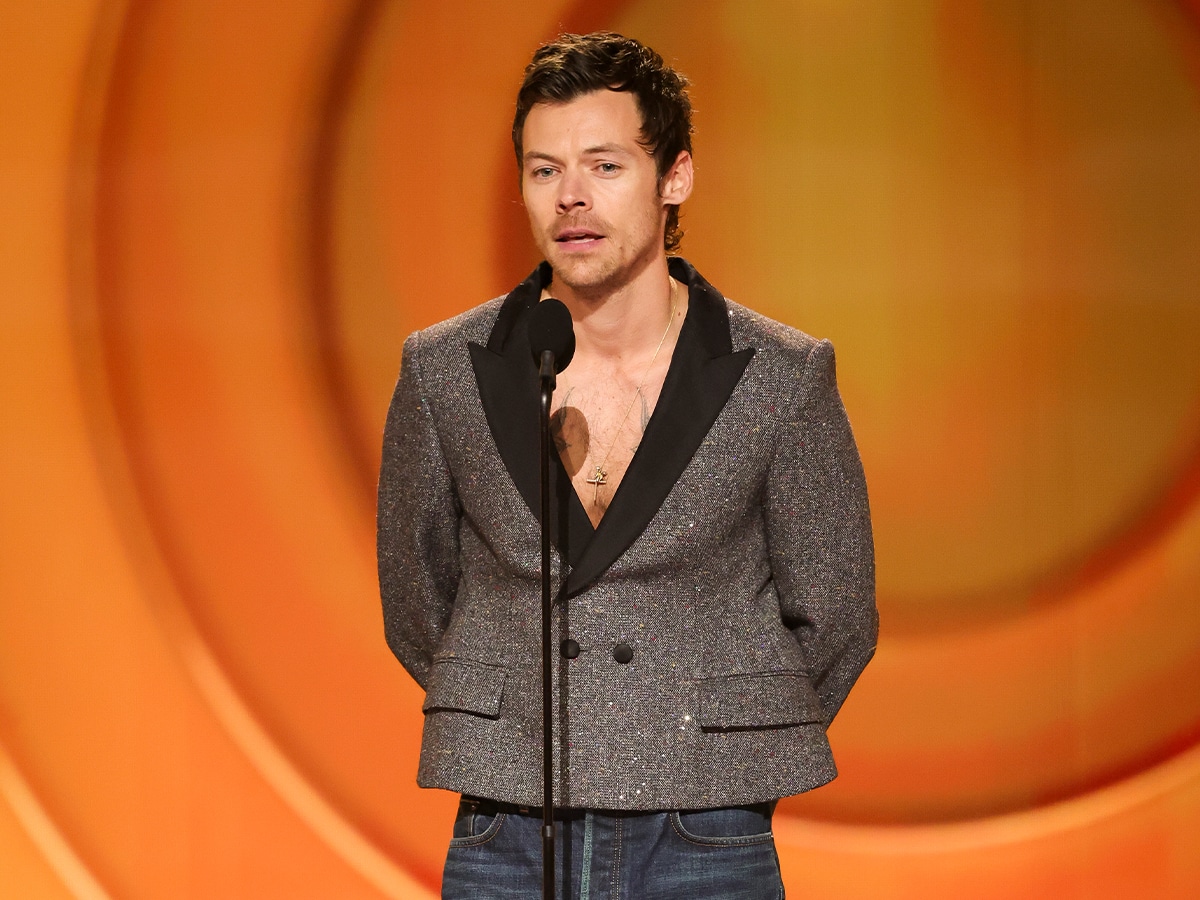
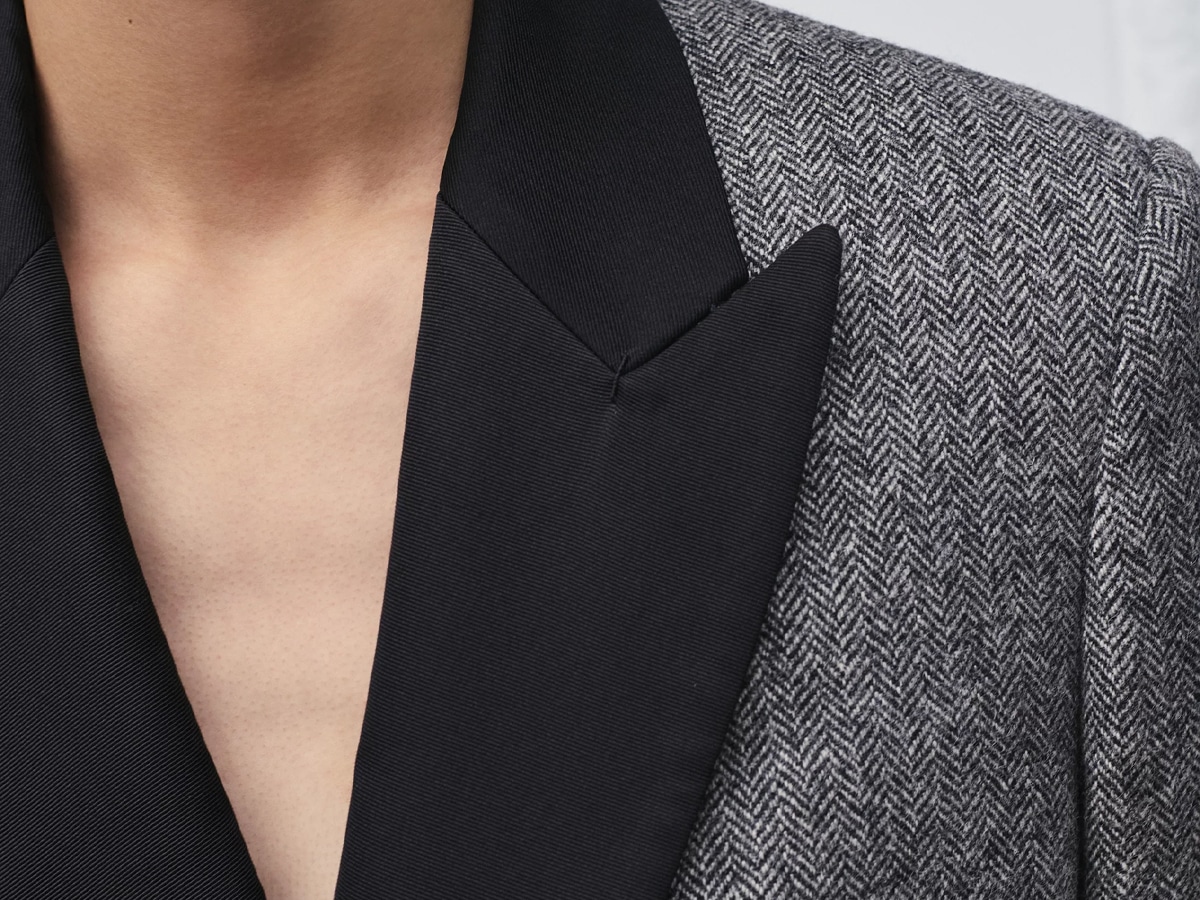
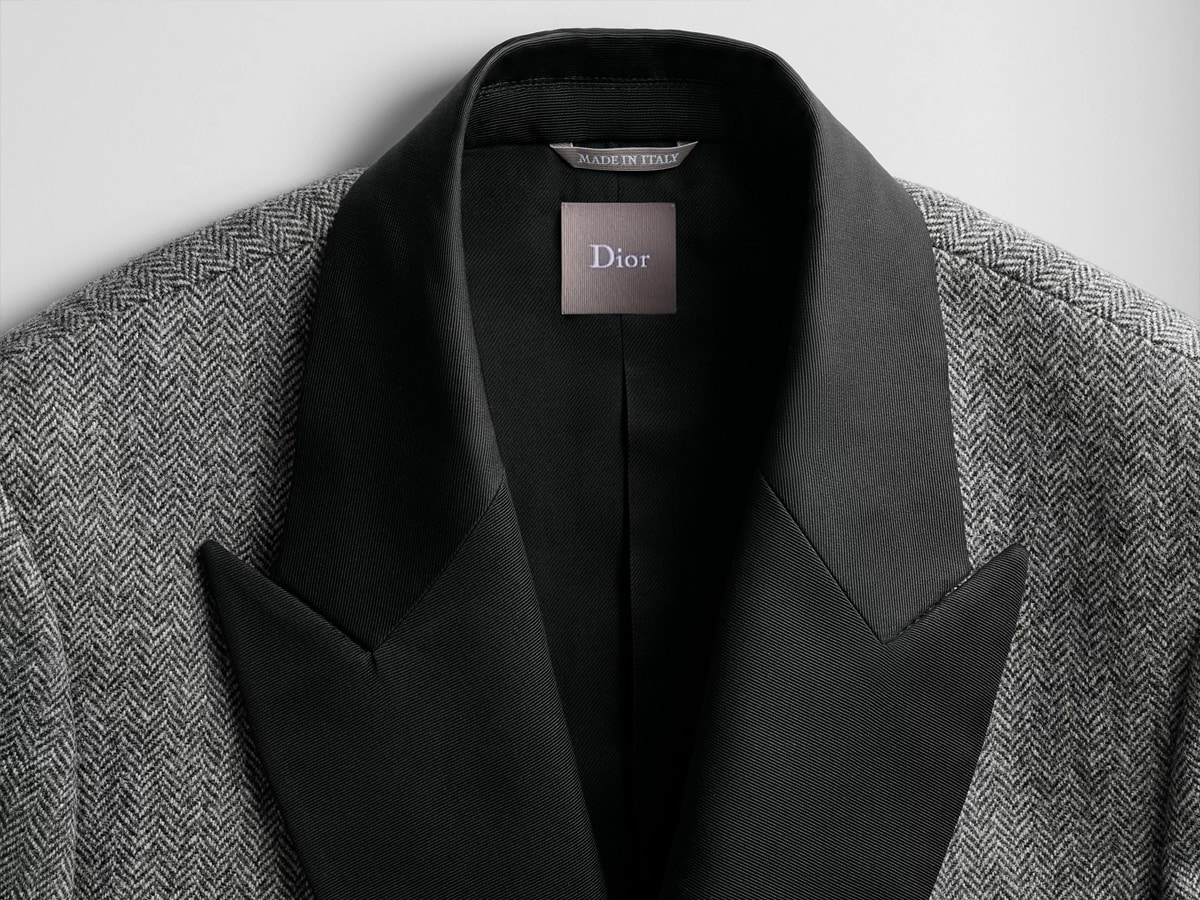
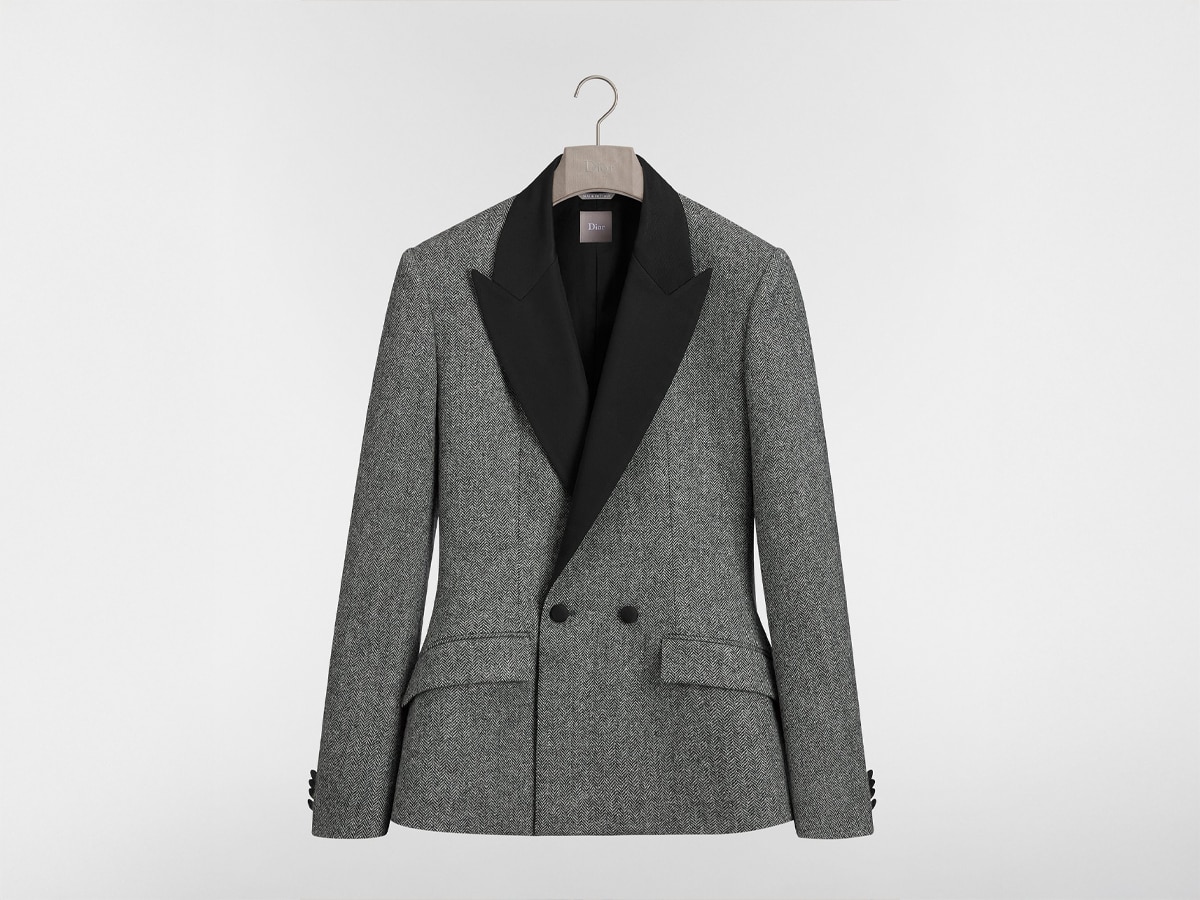
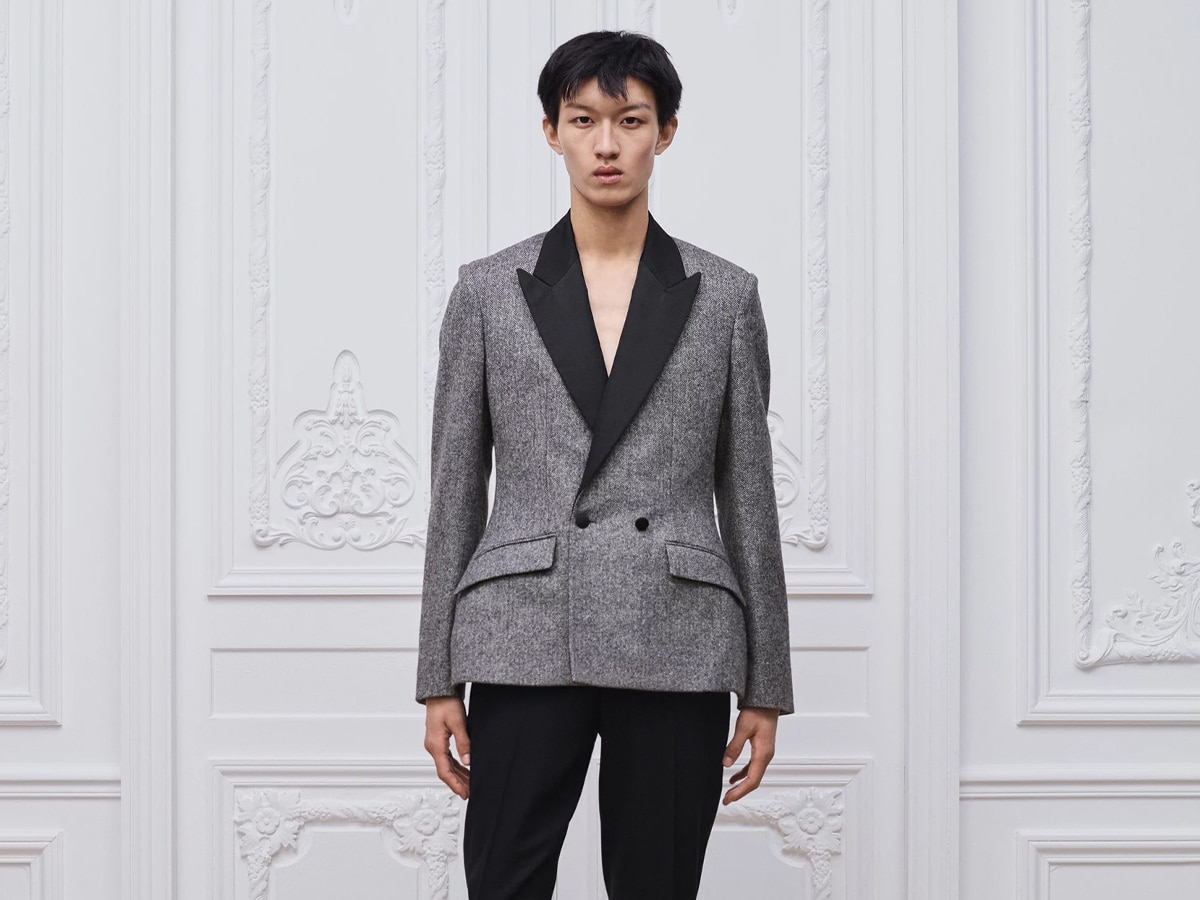
The 68th Annual Grammy Awards in 2026 provided further evidence of Styles’ refined sartorial strategy. Eschewing the traditional red carpet entrance, Styles appeared during the ceremony to present Album of the Year wearing a custom ensemble by Jonathan Anderson for Dior Men. The look—a cropped, double-breasted blazer in matte-finish tweed—was notable for being worn shirtless, emphasizing a sculptural, gender-neutral form. The inclusion of mint green leather mules with bow accents further cemented his commitment to subverting traditional masculine footwear.
This was followed by a landmark appearance at the BRIT Awards, where Styles wore a full Chanel ensemble. While figures like A$AP Rocky and Pharrell Williams have previously integrated Chanel into menswear, Styles’ use of a black-and-white bouclé pinstripe suit with spat-effect ballet flats marked a more formal adoption of the house’s classic codes. The look combined wide-leg trousers and an oversized jacket with a traditional shirt and tie, leading to a resurgence in "sartorialism with a twist." According to market analysis by The Times, this specific appearance contributed to a 14% increase in searches for "men’s pinstripe tailoring" in the weeks following the event.
A Chronological History of Style Evolution
To understand Styles’ current standing, one must examine the decade-long progression of his visual identity. This timeline reveals a deliberate move away from corporate pop styling toward personal creative agency.
2010–2012: The Pop Foundation
During the initial years of One Direction, Styles’ wardrobe was dictated by the requirements of a teen-pop brand. This era was defined by Jack Wills hoodies, slim-fit chinos, and coordinated group outfits. While commercially successful, this period offered little indication of the fashion icon he would eventually become.
2013–2016: The Saint Laurent Influence
As Styles matured, he began to adopt a "rock-and-roll" aesthetic heavily influenced by Hedi Slimane’s tenure at Saint Laurent. This phase introduced foundational elements that remain in his wardrobe today: black skinny jeans, Chelsea boots, and unbuttoned Cuban-collar shirts. This period marked his first foray into "Indie Sleaze," a style that emphasized a slim, high-fashion silhouette inspired by 1970s rock icons.
2017–2019: The Gucci Muse
The launch of Styles’ solo career coincided with a deep creative partnership with Alessandro Michele, then-creative director of Gucci. Styles became the face of the brand’s tailoring campaigns and its first gender-neutral fragrance. Iconic looks from this era include the purple paisley Alexander McQueen suit worn at the 2017 ARIAs and the frequent use of pussy-bow blouses. This era was crucial in establishing Styles as a leader in the gender-fluid fashion movement.
2020–2022: Maximalism and the Vogue Cover
The release of Fine Line and Harry’s House saw Styles embrace a maximalist approach. This culminated in the December 2020 cover of American Vogue, where he became the first solo male to appear on the cover, famously wearing a Gucci dress. The era was defined by bold colors, sequins, and a complete rejection of traditional menswear boundaries.
2023–2025: The Quiet Transition
Following the conclusion of his world tour, Styles retreated from the public eye. His few appearances during this time—notably a shaved head in 2023 and a micro-mullet in 2024—indicated a period of aesthetic recalibration. This "off-the-radar" phase was essential for shedding the maximalist baggage of his previous tour cycle in preparation for the refined 2026 era.
Strategic Styling: The Role of Harry Lambert
The consistency of Styles’ evolution is largely attributed to his collaboration with Harry Lambert. Lambert, who also styles Eddie Redmayne and Troye Sivan, is credited with moving Styles away from the "boy band" template and toward archival fashion. Lambert’s approach is characterized by a "research-first" methodology, often pulling references from 1970s Mick Jagger, 1980s David Bowie, and 1990s Japanese street style.
Industry experts note that Lambert’s strategy involves "visual storytelling," where each outfit serves as a clue to the musical themes of Styles’ current work. For the 2026 album cycle, Lambert has focused on "restrained impact"—achieving a memorable look through silhouette and texture rather than excessive ornamentation.
Grooming and the "Cropped Mullet" Trend
Styles’ influence extends beyond apparel into grooming. His hair has undergone several high-profile changes, from the signature curls of his youth to a buzzed head in 2023. In 2026, he debuted what stylists call a "cropped mullet"—a textured cut with tapered sides and a slightly longer, tousled nape. This hairstyle has sparked significant social media discourse and a documented increase in "short mullet" requests at high-end barbershops.
Additionally, his tattoos remain a constant visual anchor. With over 50 pieces of ink, including the prominent butterfly on his torso and the "Papillon" inspired stomach piece, the tattoos provide a rugged contrast to the often soft, archival fabrics he wears. They serve as a permanent bridge between his rock-and-roll roots and his high-fashion present.
Market Implications and the Future of Menswear
The "Harry Styles effect" has tangible economic consequences for the fashion industry. Analysis of retail trends suggests that Styles is a primary driver of the "feminization" of menswear, which has seen luxury brands increase their offerings of jewelry, handbags, and traditionally feminine fabrics for male consumers.
His adoption of the ballet flat in 2026 is expected to be a watershed moment for the footwear industry. Traditionally a gender-coded shoe, the ballet flat’s appearance on Styles at the BRIT Awards and in "Aperture" has prompted brands from Zara to Balenciaga to fast-track similar silhouettes for their men’s collections.
Furthermore, Styles’ focus on archival pieces has bolstered the secondary luxury market. Searches for "vintage Prada 2000" and "archival Dior" have seen marked increases on platforms like Vestiaire Collective and The RealReal. This shift reflects a broader consumer interest in sustainability and fashion history, moving away from the "fast fashion" cycles that dominated previous decades.
Summary of Impact
Harry Styles’ 2026 era represents the pinnacle of a decade-long metamorphosis. By successfully navigating the transition from a pop product to a fashion authority, he has provided a blueprint for how modern celebrities can leverage personal style to enhance their artistic narrative. His current preference for archival Prada, Dior Men, and Chanel suggests a future where menswear is defined not by rigid categories of "masculine" or "feminine," but by a sophisticated appreciation for history, silhouette, and creative risk. As the Kiss All The Time. Disco, Occasionally cycle continues, the industry expects Styles to remain at the forefront of the conversation, consistently redefining what it means to be the most interesting man in menswear.



 Yuyun Lusiyani
 Joko Widodo
 Eva Lovia
 Pevita Pearce
 admin
admin