
 Yuyun Lusiyani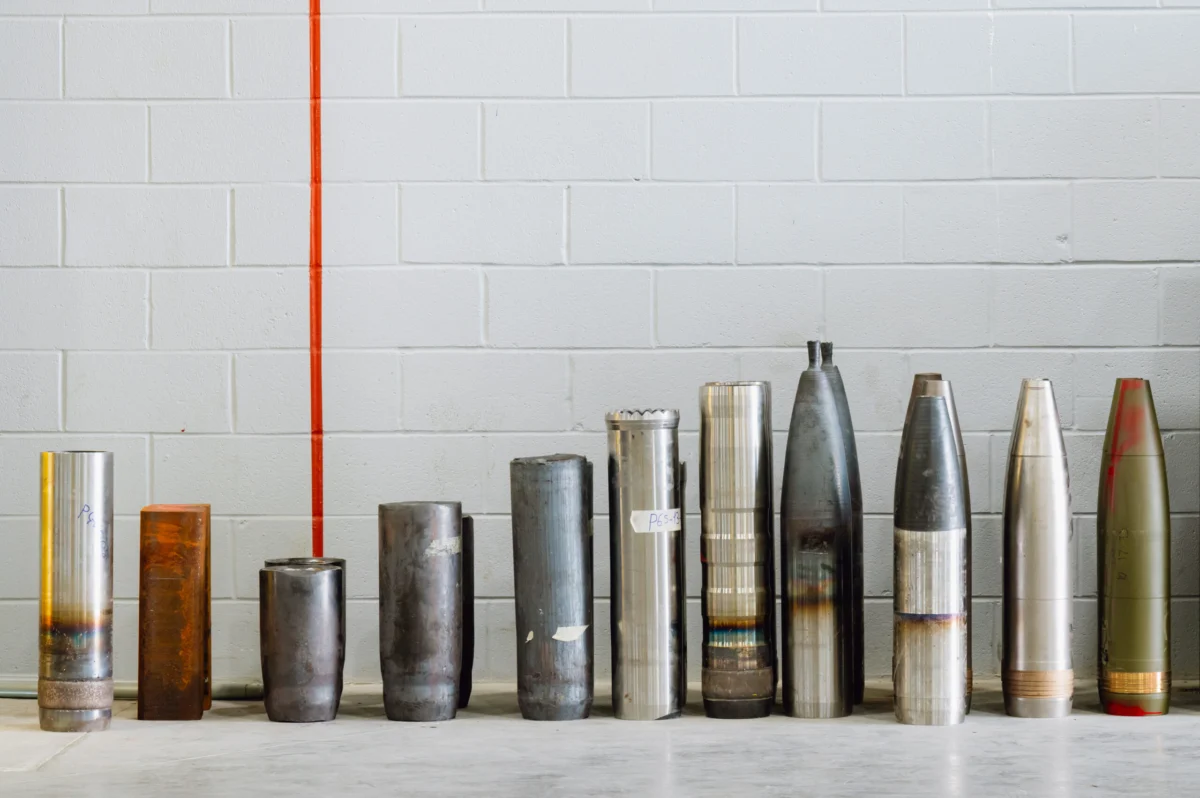
In the sweltering summer of 2024, at a state-of-the-art artillery factory near Dallas, a robot was engulfed in flames. This wasn’t an isolated incident; it was a recurring nightmare inside General Dynamics’ facility, which had been tasked with a critical mission: producing desperately needed 155mm artillery shells for Ukraine. Four former workers at the Mesquite plant recounted a litany of failures, including giant metal robotic arms, drenched in oil, combusting as they maneuvered steel blocks heated to a scorching 1,800 degrees Fahrenheit. One particularly fierce blaze melted a robot’s cables, rendering it inoperable for a week.
Just weeks prior, defense officials and General Dynamics executives had celebrated the factory’s grand opening, touting its innovative, Turkish-imported machinery. Yet, employees were already accustomed to a bewildering array of mishaps. "After the second, third, fourth time, it just became almost normal," one former worker stated, expressing a sentiment of resignation that permeated the facility. "It got to the point where I was not surprised by anything that happened there."
The Urgent Call for Artillery
The genesis of this ambitious, yet ultimately disastrous, project lay in the geopolitical tremors unleashed by Russia’s full-scale invasion of Ukraine in February 2022. The conflict quickly escalated into a brutal artillery war, with both sides expending thousands of shells daily. The United States, a staunch ally of Ukraine, found its own artillery industrial base—decimated by decades of underinvestment and a strategic shift towards asymmetric warfare—struggling to meet the sudden, immense demand. The 155mm shell, a military workhorse for over a century, became a symbol of this urgent need.
In March 2022, Congress responded by allocating billions of dollars to bolster Ukraine-related defense production, including artillery. President Joe Biden pledged to rapidly supply shells to Ukraine, creating immense pressure to accelerate manufacturing. General Dynamics, already the sole domestic producer of 155mm metal shell bodies, primarily from a century-old plant in Scranton, Pennsylvania, was positioned as the obvious solution.
General Dynamics’ Vision: Innovation or Overreach?

Instead of merely replicating Scranton’s traditional, Korean War-era manufacturing methods, Firat Gezen, then-president of General Dynamics Ordnance and Tactical Systems, presented an audacious alternative to Pentagon officials in the fall of 2022. Gezen, a finance executive known for his strategic acumen and aggressive sales tactics, proposed a cutting-edge production line leveraging a relatively unproven technique called "flow-forming."
Central to this proposal was Repkon, a Turkish company virtually unknown within the American defense sector. Repkon specialized in "turnkey production facilities" for metal forming, and its flow-forming process involved a fast-spinning machine that squeezed and rolled metal like clay, offering the supposed advantage of producing shells of various calibers with the same equipment. Crucially, Repkon claimed to have a production line readily available, promising faster deployment than traditional procurement.
However, significant warning signs were present from the outset. Army officials discovered that Repkon’s proposed production line was designed for an older, simpler 155mm shell model made from different steel. There was no clear evidence that the Turkish equipment could handle the steel required for the newer, more complex 155mm model, as it had never actually produced it. Repkon cited "customer privacy" when asked to allow inspections of active production lines in other countries supposedly using their machines.
Despite these glaring uncertainties, the Army, under intense pressure to "go fast," pushed forward. In November 2022, General Dynamics received the first of what would become a series of no-bid contract awards, potentially totaling nearly $600 million if fully realized. The following month, Congress further removed traditional government contracting safeguards, such as competitive bidding requirements and restrictions on undefinitized contracting actions (UCAs), which allow work to begin before contract terms are finalized. This regulatory streamlining, intended to accelerate Ukraine aid, inadvertently paved the way for lax oversight.
The Army, "enamored" with the proposal, even expanded on Gezen’s initial pitch, contracting for three Repkon production lines without any prior demonstration that any of them would work. Due diligence was reportedly inadequate; staff sent to Turkey inspected machinery but not a full production line in action, and experts capable of spotting defects were scarce. The Army later stated that "formal testing could not occur prior to full machinery installation," a justification that critics argue highlighted a fundamental flaw in the expedited process.
A Grand Opening, A Troubled Reality
The mood on May 29, 2024, at the Mesquite factory’s opening ceremony was one of triumph. Then-Army Secretary Christine Wormuth lauded the facility as vital to national defense, thanking General Dynamics CEO Phebe Novakovic and Firat Gezen. Yet, beneath the veneer of success, the reality was starkly different. Artillery shells displayed for dignitaries were reportedly shipped in from other locations, with one worker even discovering a "fake," seemingly plastic, shell. General Dynamics had already failed a scheduled "first article test," a crucial benchmark meant to prove the facility could produce shells meeting Army specifications. The machines were barely functional.

The contrast between public pronouncements and the chaotic factory floor only deepened. "Soon problems seemed to explode out of every corner," according to interviews with 12 former factory workers. The flaming robotic arms, dubbed "Johnny 5" by some after a rogue military robot from a 1980s film, routinely swung out of control, smashing into expensive computer numerical control machines, bending doors, knocking over shells, and breaching safety fences.
Even simpler equipment proved unreliable. Conveyor belts constantly broke down, automated carts frequently got lost, and safety gates failed to activate. A pipe burst, spraying water across the ceiling. Workers even discovered that parts on Repkon machines were made with Chinese steel, potentially violating federal regulations—a claim the Army said it had no evidence to support.
Chaos and Distrust on the Factory Floor
The factory environment itself became a hazard. Acrid smoke, rolling off press machines lubricated by robots, hung thick in the air. Workers reported black mucus after shifts, prompting an Occupational Safety and Health Administration (OSHA) investigation in October 2024 for a "respirable hazard." However, during the inspector’s visit, the smoke-spewing machines were mysteriously not running, leading to no penalties.
The Texas summer heat compounded the misery. Temperatures inside the plant often reached "Sahara Desert" levels, with critical machine drive cabinets regularly hitting 140 degrees Fahrenheit. An outside inspector warned in an email, "you would not only have drives failing but also human lives failing" at such temperatures.
Productivity ground to a halt. The factory’s signature "flow-forming" device, intended to precisely stretch steel, frequently cracked shells beyond repair. Giant press machines required regular pounding with sledgehammers to function, yet still botched the shaping of nearly every shell. "We really didn’t have any standardized practice," said former employee Quantel White. "It was just a bunch of guys taking turns going at the machine with a sledgehammer every night." With so few shells passing inspection, many workers were left idle, resorting to crossword puzzles, phone use, and even sleeping, prompting supervisors to remove chairs and restrict personal items. "It was a waste of government money, and it was a waste of our time," lamented former production technician Natashia Passmore.
Tensions flared between General Dynamics’ American workforce and the Turkish Repkon team, who seemed equally perplexed by the machinery. Repkon workers were reportedly evasive, providing curt English responses before engaging in lengthy Turkish conversations during frequent smoke breaks. A carelessly discarded cigarette even ignited a real-life dumpster fire.

Repkon’s secrecy about the flow-forming machines fueled paranoia. They refused to share critical passwords, and workers observed machines moving autonomously, controlled remotely from Turkey. Spooked, General Dynamics employees resorted to tearing out hardware to cut off remote access. Rumors of sabotage and espionage circulated, prompting General Dynamics to assign a staffer to shadow Repkon workers. The Army, however, maintained it had no evidence of such activities.
Even the factory buildings themselves showed signs of distress. Walls cracked, daylight seeped through window frames, doors dragged on concrete, and heavy rains caused "tsunami-like" floods. The foundations appeared to be shifting or sinking, giving the impression that the entire dysfunctional operation was slowly being consumed by the earth. Despite the mounting problems, General Dynamics management’s directive remained unwavering: "Production is the only thing that mattered."
Public Optimism vs. Private Disaster
The chasm between public statements and the factory’s reality grew wider. In April 2024, General Dynamics CEO Novakovic confidently told investors, "In the U.S., we are rapidly increasing ammunition production with the opening of our Texas facility." That same month, the company failed its first scheduled article test in Mesquite. By July, Novakovic claimed the "first line is running and producing as we anticipated," a statement contradicted by six former plant workers who confirmed no usable shells were being produced.
In September, Doug Bush, then the Army’s acquisition czar, downplayed issues, telling reporters there were "no major delays" and describing problems as merely "adjusting a machine." The very next day, a Mesquite laborer photographed shells mangled by a machine designed to create smooth noses, instead producing metal that resembled "soft-serve ice cream." Army Secretary Wormuth continued to tout the Mesquite plant’s role in the artillery ramp-up in September. Yet, by October, an Army contracting officer sent General Dynamics a letter of concern, and the company missed the deadline for completing the first production line in November.
Firat Gezen, despite the mounting evidence, remained optimistic through late 2024, viewing the issues as mere delays. "If Firat’s guilty of something, it’s not wanting to see the truth in the matter," a former colleague observed. Gezen retired in January 2025, with some industry insiders speculating his departure was linked to the Mesquite debacle. Gezen denied this, maintaining the Repkon equipment was "the fastest option available."
The cycle of missed deadlines and rosy public comments continued into 2025. In April, General Dynamics missed the completion date for the second production line, while Novakovic reiterated to investors that the company was "rapidly increasing munitions capacity and production." Another first article test was failed in June.

Accountability Eludes a Half-Billion Dollar Failure
As failures mounted, a grim realization settled within Army offices. An internal assessment revealed little confidence in a fix. Finally, in June 2025, the Army signaled it was considering terminating the contracts. Two months later, work on two of the factory’s three production lines was officially halted.
Yet, the Army did not unilaterally terminate the contracts. A former Army official explained, "A termination for default would’ve taken years through the legal system, because General Dynamics wasn’t going to accept that. Nobody wins except the lawyers." This reluctance to engage in protracted legal battles meant General Dynamics escaped a default termination.
In a stunning display of continued generosity, the government paid General Dynamics $26.3 million in "progress payments" for the second and third production lines in December 2025, despite neither line having produced a single usable shell. The Department of Defense’s inspector general report in July 2026 laid bare the fiasco, confirming the plant never produced a usable shell and costing taxpayers $533 million. However, the report offered few specifics, avoiding naming the companies or individuals responsible, and issued tepid recommendations for the Army to merely "determine whether the contract was appropriately issued" and "how the money was spent."
Publicly, the Army stated it would recover funding through "unspecified discounts" on future General Dynamics orders. General Dynamics, for its part, maintained it "met or exceeded requirements," with spokesperson Jeff Davis accusing ProPublica’s reporting of "fundamentally mischaracterizing the circumstances and falsely impugning our record of employee safety and truthfulness with our customer." He declined to specify alleged errors.
The Cycle Continues: AI and New Contracts
Two months ago, General Dynamics announced a "novel solution" to the factory’s persistent problems: Artificial Intelligence. Partnering with a new company named Deterrence, General Dynamics proclaimed that "AI-enabled capabilities" would "transform production facilities into strategic assets" that "learn, adapt, and scale in real time." This announcement baffled former Mesquite workers. "What are they talking about? There’s nothing to learn or adapt or scale," one said, "It’s all broken."

The irony is that General Dynamics is simultaneously replacing most of the Repkon equipment with traditional machines, similar to those used in Scranton. How AI will miraculously improve decades-old technology remains unclear. Deterrence, established only three years prior with no prior defense experience or manufacturing track record, represents yet another unproven partner.
General Dynamics pledged $200 million of its own funds, a modest sum for a company that generated over $50 billion in revenue last year and awarded its CEO more than $25 million in compensation. Meanwhile, most Mesquite workers were furloughed or laid off.
Despite the $533 million taxpayer loss and the Mesquite debacle, General Dynamics continues to be showered with contracts. Since the Army halted work on two production lines a year ago, General Dynamics Ordnance and Tactical Systems has received an additional $2.5 billion in contract awards for "distinct production lines and critical national defense requirements" unrelated to Mesquite.
Repkon, the original Turkish subcontractor, has also seen its American offshoot, formerly Repkon USA and now rebranded as Paligen Technologies, secure a $435 million no-bid contract from the Army to set up a TNT factory. Paligen claims to be "different and wholly separate companies" from Repkon Turkey, a move some interpret as an attempt to distance itself from the Mesquite failure.
Systemic Failures and Future Warnings
The Mesquite fiasco underscores a profound and costly problem within the U.S. defense procurement system. As defense budget researcher William Hartung articulated, "Too often the contractors have no accountability for their mistakes." The project’s hurried inception, the bypassing of competitive bidding and contracting safeguards, the inadequate due diligence, and the subsequent lack of consequences for the companies involved are symptomatic of a deeper, entrenched culture at the Pentagon and in Congress where expensive failures often lead to more spending rather than accountability.
The financial cost of this particular debacle, while substantial at $533 million, pales in comparison to the multi-billion-dollar budgets of other Pentagon projects. However, critics warn that such "extreme cases" could become more common if, for example, the Trump administration succeeds in boosting the defense budget from $1 trillion to $1.5 trillion, while simultaneously pressuring for rapid weapons production.

Former Army acquisition chief Doug Bush, peering from his half-closed front door, tersely stated, "All of this was done through appropriate procedures." Firat Gezen, the architect of the Repkon deal, maintained his "sunny optimism" that the equipment was the "fastest option available." Others involved, speaking anonymously, engaged in mutual finger-pointing: the White House demanded too much too fast, General Dynamics and Repkon overpromised, the Army failed its due diligence, and Congress underwrote the entire process by removing crucial safeguards.
The ultimate consequence is that the United States is still far from producing the promised 100,000 shells per month for Ukraine, despite other investments showing better progress. And as attention shifts to other geopolitical flashpoints, particularly in the Middle East, the focus of defense spending is already pivoting to other munitions like interceptors and missiles, which the Trump administration has rapidly "burned through" in its war with Iran. General Dynamics, ironically, manufactures components for those too, ensuring the cycle of lucrative contracts, innovation claims, and potential accountability gaps continues unabated. "Conventional ammo is back on the back burner," a former Army official concluded, "Everything now is about interceptors, missiles."



 Joko Widodo
 Eva Lovia
 Pevita Pearce
 admin
admin
 Lina Irawan