
 Yuyun Lusiyani
The highly pathogenic avian influenza (HPAI) strain, H5N1, which has ravaged American barns for the past four years, has been linked to two human fatalities, yet its ability to spread efficiently between people remains limited. This virus has largely remained a "bird" flu, adept at binding to avian cells but not typically invading human respiratory tracts where coughing and sneezing facilitate widespread transmission. However, a ProPublica investigation has revealed a critical and alarming scenario unfolding in Utah that could fundamentally alter this precarious balance, potentially sparking a pandemic more deadly than COVID-19. For over two months, an H5N1 outbreak has raged unchecked on a Utah farm raising thousands of mink for fur, creating what experts describe as a "perfect petri dish" for the virus to mutate into a human-transmissible form. Despite the severe public health implications, state and federal officials have been criticized for their puzzling inaction, amounting to a "cascade of missteps" that flu experts have labeled "irresponsible" and akin to "playing with fire."
The Silent Threat: Bird Flu’s Looming Pandemic Potential
The H5N1 virus, while devastating to poultry and increasingly prevalent in various mammal species, has, thus far, presented a low risk of sustained human-to-human transmission. Its current structure primarily targets avian cell receptors. However, scientific consensus warns that a single genetic mutation could fundamentally change this, granting the virus a dangerous foothold in human populations and triggering a global health crisis. Experts, reflecting on the lessons of past pandemics, fear such an event could eclipse the severity and death toll of COVID-19. The key to this dangerous evolutionary leap lies in an intermediate host – an animal susceptible to viruses from both avian and human origins. These hosts, particularly when housed in crowded conditions, become viral melting pots where genetic recombination and mutation rates accelerate dramatically, increasing the odds of a new, more dangerous strain emerging.
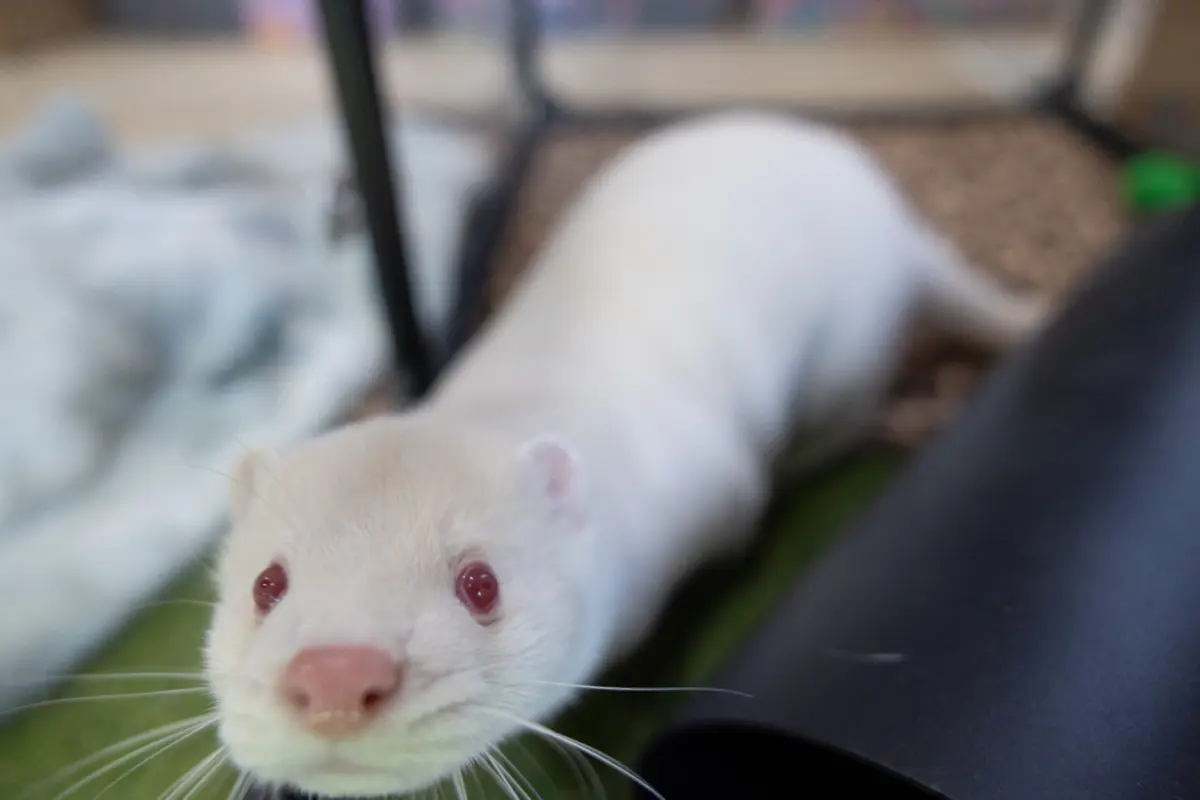
Mink, carnivorous mammals farmed extensively for their fur, fit this profile with chilling precision. Their respiratory systems, on a cellular level, bear a remarkable resemblance to those of humans, possessing an abundance of receptors that seasonal human influenza viruses exploit. This biological similarity makes mink exceptionally vulnerable to cross-species viral infection and, critically, to facilitating viral adaptation. They have a documented history of contracting and spreading various flu strains, and even infected some humans with COVID-19 during earlier outbreaks, underscoring their potential as viral bridge species.
A Brewing Crisis in Utah: The Uncontrolled Outbreak on C&T Fenn Farms
The alarming situation centers on C&T Fenn Farms, a mink fur operation located approximately an hour south of Salt Lake City, Utah. ProPublica’s investigation revealed that an H5N1 outbreak has been active on this farm for over two months, affecting thousands of mink. Utah agriculture officials were first alerted to mink deaths from bird flu in mid-August, as documented in communications released under the state’s public records law. This discovery should have triggered an immediate and robust public health response, but instead, it has been met with what critics call a dangerous level of complacency.

The established protocol for avian influenza outbreaks in poultry farms is starkly different and highly aggressive: if even a single chicken tests positive for the virulent H5N1 strain, U.S. government regulations mandate the immediate culling of the entire flock to prevent further spread and protect public health. Farmers are typically compensated for their losses. However, for mink, a species with demonstrated pandemic potential, no such federal mandates exist. This regulatory vacuum has left state officials scrambling and, ultimately, failing to implement decisive action.
A "Puzzling" and "Irresponsible" Official Response
The official handling of the Utah mink farm outbreak has drawn widespread condemnation from infectious disease experts. State Veterinarian Amanda Price, tasked with managing Utah’s response, sought guidance from the U.S. Department of Agriculture (USDA), the federal agency that typically leads bird flu responses in poultry and cattle. However, USDA officials informed Price that they do not regulate mink and possess no approved vaccine for the species. Furthermore, while officials from the Centers for Disease Control and Prevention (CDC) communicated with Price’s counterparts in the state health department, direct contact with Price, who was central to the outbreak management, never occurred. Price, in turn, did not proactively reach out to the CDC.
Flu experts reviewing the ProPublica findings expressed profound dismay. Terms like "irresponsible," "puzzling," and "playing with fire" were used to describe the state and federal failure to act decisively. Tom Peacock, an avian influenza researcher at the Pirbright Institute, highlighted the international precedent: "Every other country that I’m aware of that has had H5N1 in fur farms, depopulation has happened pretty quickly. The fact that the first instinct wasn’t just to depopulate and figure stuff out later is very concerning to me." Countries like Finland and Spain have previously ordered mass culls of mink and fox populations in response to H5N1 outbreaks, precisely to mitigate pandemic risks.
However, Utah officials never seriously considered a culling order. Communications reveal that a representative from the fur trade warned Price that such a measure would devastate the farm’s owner and, by extension, the entire industry, given the decades-long investment in breeding unique mink genetic lineages. Price echoed this sentiment to ProPublica, emphasizing the "devastating" impact on the farm owner and appealing to the "humanity behind this situation," implying that the economic well-being of the fur operation took precedence over broader public health concerns. She stated that with no federal guidance or urgency from the USDA regarding mink risk, the state’s approach was essentially "sitting and waiting and seeing what happens."
Human Exposure and Unmonitored Risk
Compounding the inaction on the farm itself, officials neglected to monitor mink workers for potential symptoms, directly contravening explicit guidance from the CDC. Mink are notoriously aggressive and solitary creatures. Workers, often referred to as "minkeros" in the Spanish-speaking community, face significant occupational hazards, frequently sustaining bites and scratches, as evidenced by scars shown to a ProPublica reporter by a worker from a nearby farm. Mink also sneeze, and their ability to escape their enclosures is well-documented, further increasing potential exposure pathways.

This lack of active surveillance is not an isolated incident but a troubling shift in Utah’s public health policy. In contrast to Washington state, where officials actively track contacts of symptomatic individuals exposed to bird flu in dairy cattle, Utah public health officials discontinued proactive monitoring after receiving complaints from their agriculture department colleagues that farmers found it "annoying." Pamela Gomez Pinedo, a respiratory disease epidemiologist for Utah’s health department, confirmed that this pressure made it "pretty difficult time" to obtain details from agriculture officials. A 2025 agreement formalized this policy, with the Utah Department of Agriculture and Food agreeing to share outbreak information only if health officials refrained from tracking workers’ health. Pinedo explicitly stated to a CDC epidemiologist that active monitoring would only occur "in the case of evidence of human-to-human transmission," a reactive stance that prompted concerns from CDC officials about how any infection would be detected without testing.
The potential consequences of this policy were starkly illustrated when a ProPublica reporter located two workers from the Utah mink farm. One exhibited a visibly red eye, a telltale sign of bird flu infection present in over 90% of human cases and often the sole symptom. Despite CDC guidance explicitly urging testing for this symptom, when the farm owner, Chad Fenn, contacted the Utah County Health Department about the worker’s red eye (which had cleared by Monday, according to Fenn, who attributed it to dust), the department did not recommend testing. "They said they don’t see that there’s a need," Fenn reported, stating that testing was only advised if other symptoms like cough or sore throat developed. This response left flu experts aghast. "It’s amazing to me," remarked Gail Hansen, a former Kansas state public health veterinarian and epidemiologist. "Utah doesn’t want to be the epicenter of the next human flu outbreak, right?"
The "One Health" Failure: Broader Systemic Issues
The unfolding situation in Utah is a stark example of a systemic failure to implement a "One Health" approach to infectious disease threats. The "One Health" concept, championed by organizations like the World Health Organization (WHO), recognizes that the health of humans, animals, and the environment are interconnected, advocating for collaborative, multisectoral efforts to address zoonotic diseases. Yet, as experts observed, this integrated strategy is conspicuously absent in Utah’s response, with both state and federal agencies bearing responsibility. Erin Sorrell, a senior scholar at the Johns Hopkins Center for Health Security, lamented the lack of leadership: "There’s no leader of this ‘one health’ team to take charge. That is going to allow the virus to continue to circulate, potentially adapt and potentially spill over into another host, whether it’s avian, mammalian or human."
The current H5N1 strain has already demonstrated its alarming adaptability, jumping successfully to a range of mammalian species. In 2024, it took hold in dairy cows, subsequently running rampant through numerous dairies across the country. Federal guidance for mink farms, however, has failed to acknowledge cows as a potential threat. Farmers are typically advised to prevent wild birds from entering barns and avoid feeding raw poultry, but nothing is said about feeding beef parts to mink – a common practice in summer months to promote weight gain. This oversight is critical because while dairy cows are not "depopulated" when exposed to bird flu and their meat can still be sold, researchers have found the virus in the tissues of sick cows. Although USDA officials maintain that beef for human consumption is safe, citing the virus’s concentration in parts of the cow not typically consumed, Fenn confirmed that his mink are routinely fed raw organs of livestock, including cows. Genomic data from the Utah mink samples sent to a USDA lab indeed show that the mink were infected with the same strain prevalent in dairy herds, though officials could not definitively confirm contaminated beef as the transmission route.
The Evolution of a Threat: Mutation and Reassortment
The crowded conditions of a mink farm, coupled with the mink’s human-like respiratory receptors, create an ideal environment for the H5N1 virus to evolve rapidly. A 2024 study on the dairy strain of bird flu revealed that a single mutation could switch the virus’s preference from avian-type to human-type receptors. Further research using ferrets, close relatives of mink, has shown that the virus can acquire mutations that enable it to target human-type cell receptors. While scientists cannot predict the exact evolutionary leap required for sustained human-to-human transmission, or definitively state if mink are the definitive host for this transition, the risk is undeniably present. As Meghan Davis, an epidemiologist at Johns Hopkins University, cautioned, "We might get lucky, and a response that is not robust may not have dire consequences. But we may get unlucky."

Adding another layer of concern is the risk of "reassortment." This phenomenon occurs when a cell is co-infected by two different flu viruses, allowing them to swap large segments of genetic code. If an H5N1 virus were to infect a mink already carrying a seasonal human flu virus, it could acquire human-adapted genetic material, accelerating its ability to spread among people. This risk is amplified by the fact that September saw one of the earliest starts to flu season on record, compared to the typical November onset. Jennifer Nuzzo, director of the Pandemic Center at the Brown University School of Public Health, warned, "The most likely scenario for a pandemic is that we have a virus that reassorts with another virus. Obviously, having this circulate amid human flu season is not great."
Lessons Unlearned: A Stark Contrast to COVID-19 Response
The current lack of urgency and proactive measures stands in stark contrast to Utah’s response to COVID-19 outbreaks on mink farms in 2020 – including the very same C&T Fenn Farms. At that time, Utah officials proactively invited federal experts to research how SARS-CoV-2 adapted and spread among mink. Wildlife experts deployed traps around infected farms, frequently capturing escaped and wild mink carrying COVID-19. Extensive testing of both mink and farmworkers meticulously tracked the virus’s spread and mutation patterns. These efforts, mirrored in other states and countries, led to the identification of humans infected by mink with COVID-19 and, ultimately, human-to-human transmission.
No such comprehensive efforts are underway for the H5N1 bird flu. A USDA spokesperson explained that their greater involvement in 2020 was due to COVID-19’s "significant" potential for two-way transmission between humans and animals. While initial genomic data from the first dead mink samples sent to a USDA lab showed no particularly concerning mutations, experts warn that the virus has undoubtedly continued to mutate over the past two months of uncontrolled spread. John Korslund, a retired USDA official who coordinated the COVID-19 response on mink farms, stressed the critical need for updated genetic samples: "I really want to know what the virus has done, from when it started to today. Are we getting accumulated mutations making the virus more dangerous?"
Secrecy, Industry Influence, and the Path Forward
ProPublica’s investigation further exposed a troubling pattern of secrecy surrounding the Utah outbreak. The USDA quietly updated its bird flu dashboard to show positive mink cases but issued no public statements. State officials, as revealed in public records, actively sought to protect the farm’s privacy, specifically choosing not to declare an emergency to avoid alerting "animal rights groups." Willy Lanier, a public health veterinarian with the state health department, instructed colleagues to maintain a "closer hold" on information than for poultry or dairy outbreaks, a policy so effective that even the spokesperson for the Utah County Health Department was unaware of the bird flu outbreak.
State Veterinarian Amanda Price’s deference to the farm owner was evident in her decision not to visit the property, relying instead on conversations with the owner and his veterinarian. She described the farm owners as "a very private bunch" and expressed confidence that the virus would not spread beyond the farm, citing the lack of animal movement and the owner’s assurances about recapturing escaped mink. However, experts like Sorrell countered this, stating, "If you’re not looking for something, you won’t find it. Unless you’re doing active surveillance, you can’t claim that you haven’t had cases."

Farm owner Chad Fenn, influenced by state officials who initially told him "you don’t need to worry too much," admitted to not wearing protective gear, unlike his workers. He expressed a desire to vaccinate his mink but found no federal program. He also dismissed concerns about mink as a high-risk host, attributing them to "anti-fur activists" and criticizing European countries for "scared" reactions when culling their farms. Price acknowledged awareness of these international culling efforts but stated she "didn’t really look much further into it," focusing only on outbreak management lessons, not the rationale for depopulation.
The financial implications underscore the complex interplay of public health and economic interests. A USDA spokesperson noted that Congress would need to specifically fund a program for mink depopulation, contrasting it with the over $1 billion spent since 2022 to cull poultry flocks. Neil Vora, executive director for the Preventing Pandemics at the Source Coalition, condemned the situation: "Fur farms are to produce pelts purely for luxury goods, to make fancy coats. It’s absurd that we’re willing to gamble with the lives of millions of people just to keep an industry alive." Despite declining consumer demand for fur, legislative efforts, such as those within the latest Farm Bill, are paradoxically seeking to expand market opportunities for mink farmers by undoing a federal prohibition on subsidizing the fur trade.
As the H5N1 virus continues to spread on the Utah farm, albeit at a slower pace, the risk persists. Experts remain deeply concerned about the unmonitored viral evolution. Peacock’s stark warning encapsulates the gravity of the situation: "I would want a full on hazmat suit if I were on that farm. Or, preferably, I’d rather not to be on that farm." The Utah mink farm stands as a critical test case for global pandemic preparedness, highlighting the urgent need for a unified, proactive "One Health" strategy that prioritizes public safety over industry interests and secrecy, to prevent a potential global catastrophe.




 Nila Kartika Wati

 Eva Lovia

 Lina Irawan

 Ana Megawati

 Joko Widodo
