
 Eva Lovia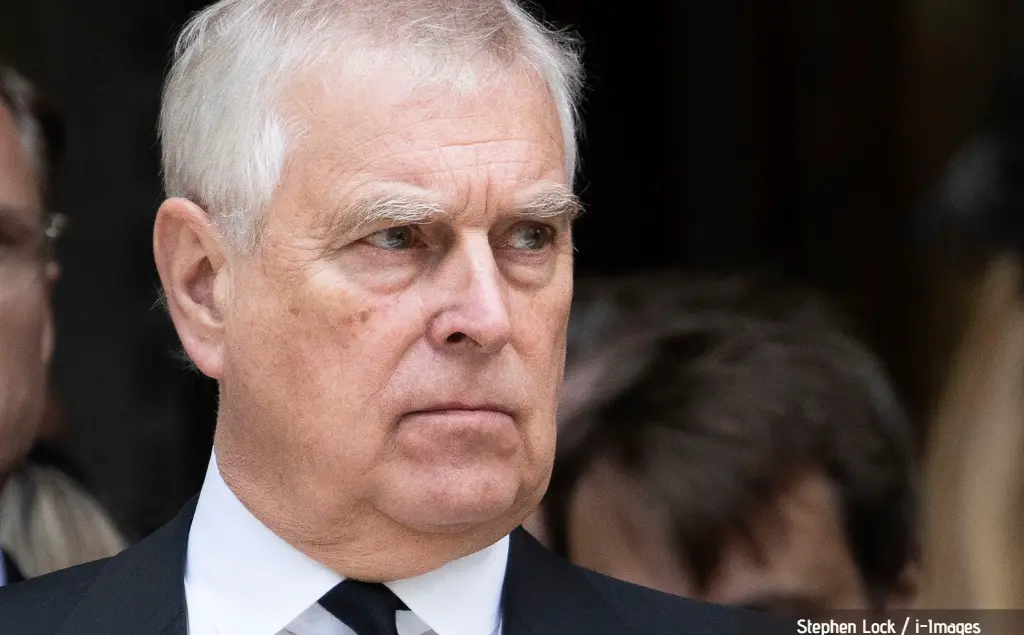
Andrew Mountbatten-Windsor has initiated significant legal proceedings, launching a judicial review against Thames Valley Police and the Central Criminal Court concerning search warrants executed earlier this year following his arrest. The former Prince Andrew is contesting the legality of these warrants, which authorised searches of properties connected to him in February. A crucial High Court hearing is scheduled for Thursday, marking the commencement of this intricate legal process. This development follows a period of intense scrutiny surrounding Mountbatten-Windsor’s associations and his alleged involvement in misconduct.
The Genesis of the Legal Challenge
The core of Mountbatten-Windsor’s legal action lies in his lawyers’ assertion that the search warrants obtained by Thames Valley Police prior to his arrest were unlawful. These warrants were reportedly issued by a judge at the Central Criminal Court on February 18th, a mere day before Mountbatten-Windsor was apprehended. The legal documents granted police the authority to search several properties with links to him, including Marsh Farm on the Sandringham estate and Royal Lodge within the Windsor estate.
Mountbatten-Windsor is seeking a judicial review of the actions undertaken by both Thames Valley Police and the Central Criminal Court in relation to the issuance and execution of these warrants. A High Court judge has already granted him permission to proceed with this challenge, indicating that the court deems his arguments sufficiently arguable to warrant further examination.
It is crucial to underscore that this legal challenge does not directly address whether Mountbatten-Windsor has committed any criminal offence. Instead, the court’s focus will be on the procedural and substantive legality of the warrants themselves. The outcome will hinge on whether the police and the court adhered to the requisite legal standards when authorising the searches.
A Chronology of Events Leading to the Legal Action
The legal battle stems from a sequence of events that unfolded in early 2024.
- February 18th: A judge at the Central Criminal Court issues search warrants authorising police to search properties connected to Andrew Mountbatten-Windsor.
- February 19th: Mountbatten-Windsor, on his 66th birthday, is arrested at his home and taken to Aylsham police station. He is interviewed under caution.
- Post-Arrest: Following his release under investigation, police execute the search warrants at properties such as Marsh Farm and Royal Lodge. Officers are observed at these locations.
- Legal Challenge Initiated: Mountbatten-Windsor, through his legal representatives, seeks a judicial review of the search warrants.
- Permission Granted: A High Court judge grants Mountbatten-Windsor permission to bring his challenge, setting the stage for Thursday’s hearing.
The Scope of the Investigation and the Searches
The police investigation that precipitated the warrant issuance centres on allegations of misconduct in public office. This inquiry gained momentum following the release of materials in the United States related to the Jeffrey Epstein scandal. These publicly accessible documents reportedly contained emails that appeared to suggest Mountbatten-Windsor had shared official information with Jeffrey Epstein and others during his tenure as the UK’s trade envoy.
Thames Valley Police has previously indicated that allegations of sexual misconduct could also be examined within the scope of their investigation. Misconduct in public office is a wide-ranging common-law offence, encompassing a spectrum of alleged behaviours, including the improper disclosure of confidential information, corruption, dishonesty, wilful neglect of duty, and certain forms of sexual misconduct. It is important to note that the existence of an investigation or an arrest does not equate to a finding of guilt or proof of an offence.

When police officers executed the search warrants, they were observed at Marsh Farm on the Sandringham estate and at Royal Lodge, his former residence on the Windsor estate. These searches were conducted as part of the broader investigation. The precise nature of the material seized during these searches has not been publicly disclosed.
The Court Proceedings: What to Expect
The High Court hearing scheduled for Thursday is expected to be initially held in private. Mr. Justice Hilliard will preside over the proceedings and is anticipated to first address an application concerning the confidentiality of certain documents pertinent to Mountbatten-Windsor’s judicial review challenge. This initial focus on privacy suggests a complex legal battle where sensitive information may be involved.
Both Thames Valley Police and the Central Criminal Court are actively opposing Mountbatten-Windsor’s legal challenge. The Central Criminal Court, widely known as the Old Bailey, is the judicial body from which the warrants were originally issued. Therefore, the proceedings are fundamentally examining the legal basis upon which these warrants were sought and granted.
Mountbatten-Windsor’s primary objective is to have the search warrants quashed. His legal team is essentially asking the court to scrutinise whether the warrants were lawfully obtained and issued in accordance with legal precedent and statutory requirements.
However, even if Mountbatten-Windsor’s challenge is successful, it does not automatically mandate the return of all items seized during the searches. Nick Vamos, a seasoned criminal lawyer and former head of special crime at the Crown Prosecution Service, explained to the BBC that challenges to warrants are not an uncommon occurrence. He elaborated that, depending on the specific circumstances and the grounds for seizure, police could potentially apply to the Crown Court to retain materials if they can demonstrate renewed grounds for their confiscation. A more fundamental flaw in the granting of the warrants would likely be required before any seized material would be automatically returned.
Clarifying the Scope: Not a Challenge to the Investigation Itself
It is imperative to distinguish this legal action from a direct challenge to the ongoing criminal investigation. The current proceedings are narrowly focused on the legality and procedural integrity of the search warrants and the processes that led to their issuance. Thames Valley Police’s broader investigation into suspected misconduct in public office continues unabated.
The force has previously stated its commitment to cooperating with the United States Department of Justice to acquire further information that may be relevant to their inquiry. Consequently, a successful challenge to the warrants would not automatically halt the police investigation. The legal challenge is, in essence, an attempt to scrutinise the methods employed by law enforcement, rather than an attempt to impede the overall inquiry.
Official Responses and Statements
Thames Valley Police has formally acknowledged that legal proceedings are underway. A spokesperson for the force stated: "While our investigation into misconduct in public office continues, we are engaged in legal proceedings in relation to warrants previously obtained from the central criminal court. As these legal proceedings are currently ongoing, it would be inappropriate for us to comment further." This statement confirms the existence of the legal challenge and the police’s involvement while maintaining a reserved stance due to the ongoing nature of the case. The force has not provided specific details regarding the grounds of Mountbatten-Windsor’s legal challenge.

Broader Implications and Historical Significance
This legal challenge carries considerable weight and historical significance. Reports from The Guardian and the Daily Telegraph suggest that this could represent the first instance in centuries where a member of the Royal Family has formally challenged the lawfulness of criminal proceedings directed against them. The Telegraph has drawn a historical parallel, albeit with significant caveats, to the trial of Charles I in 1649.
However, the current circumstances are markedly different. Mountbatten-Windsor is contesting the legality of search warrants issued as part of an ongoing investigation, not facing a criminal trial in the traditional sense. The proceedings are judicial in nature, focused on administrative and legal propriety rather than guilt or innocence.
The case also arrives at a time of considerable reputational damage and a diminished public profile for Mountbatten-Windsor. Following sustained scrutiny of his association with Jeffrey Epstein, he was stripped of his remaining royal titles and his Dukedom of York by King Charles III last year. This led to his withdrawal from public duties and a growing distance from numerous organisations and charities with which he was previously associated.
Potential Impact on the Police Investigation
The outcome of this legal challenge could potentially influence the ongoing police investigation, although the extent of this influence will depend entirely on the court’s decision. If the court rules that the warrants were unlawful, it could trigger further legal arguments regarding the admissibility of any material seized during the searches and whether it can continue to be used as evidence.
Nonetheless, a successful challenge to the warrants would not automatically compel the police to abandon their investigation. The legal proceedings could become a critical procedural element within the broader case, shaping its trajectory without necessarily dictating the ultimate resolution of the investigation itself.
The Path Forward
The immediate next step in this unfolding legal saga is the High Court hearing scheduled for Thursday. The judge is expected to first deliberate on the question of whether documents related to the judicial review proceedings should be kept private, a common procedural step in such sensitive cases. Following this, the substantive challenge to the legality of the search warrants will proceed through the court system.
Meanwhile, Thames Valley Police has reiterated that its investigation into suspected misconduct in public office remains active. Andrew Mountbatten-Windsor continues to be under investigation following his arrest. To date, no criminal charges have been formally laid against him in relation to this inquiry, and he consistently maintains his innocence concerning any wrongdoing linked to his association with Jeffrey Epstein.
The High Court proceedings are therefore poised to be the next significant development in a case that has already profoundly altered Andrew Mountbatten-Windsor’s public standing and continues to attract considerable public and media attention. The legal battle over the warrants promises to be a complex and closely watched examination of due process and law enforcement powers.


 Yuyun Lusiyani
 Ana Megawati
 Joko Widodo
 Jia Lissa
 Pevita Pearce