
 Jia Lissa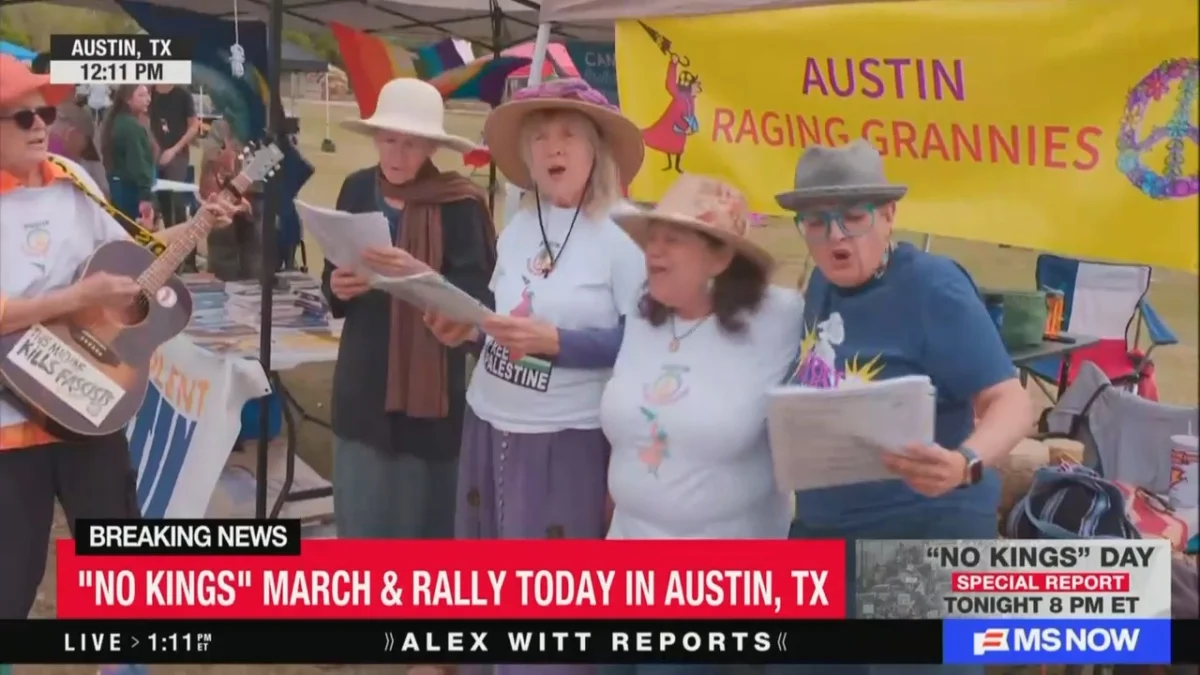
The "No Kings" movement reached a significant milestone on Saturday as tens of thousands of demonstrators gathered in Austin, Texas, and other major metropolitan areas across the United States, in what organizers are characterizing as one of the largest coordinated protest actions in American history. Amidst a backdrop of high-stakes political tension, MS NOW reporter Rosa Flores provided live coverage from the Texas capital, capturing the atmosphere of a movement that seeks to bridge the gap between street-level activism and long-term electoral participation. The rally, specifically themed around the rejection of unchecked executive power, featured a blend of emotional personal testimonies and organized performances by long-standing activist groups, most notably the Austin chapter of "The Raging Grannies."
The Austin demonstration was part of a broader national "No Kings" initiative, a response to recent judicial and executive developments that critics argue have expanded presidential authority beyond constitutional limits. While the primary focus of the day was a rejection of the political platform and persona of former President Donald Trump, the event served as a broader clearinghouse for a variety of progressive grievances, ranging from immigration policy and judicial appointments to international conflict and domestic economic concerns.
The Scene in Austin: Grassroots Activism and Emotional Appeals
Reporting from the heart of the Austin protest, Rosa Flores highlighted a sea of tents and makeshift information centers that had transformed the local landscape. These structures, according to organizers, were not merely for temporary shelter but represented the "infrastructure of a movement" intended to persist well beyond a single day of marching. Flores noted that the "No Kings" organizers are pivoting toward a model of sustained civic education, aiming to convert the energy of the protest into a surge of voter registration and turnout for the upcoming November elections.
"The protesters are still making their way here," Flores reported during a live segment with host Alex Witt. "But here’s the thing about this particular protest, why you see all these tents. Because the protests and the movement doesn’t start and end today with ‘No Kings.’ This is—according to the organizers—about getting more people involved civically so that they can do more tomorrow, so that they can vote in November."
The emotional weight of the event was underscored during an interview Flores conducted with a local demonstrator who became visibly moved when discussing the current state of the nation. The woman cited a litany of concerns, including the operations of Immigration and Customs Enforcement (ICE), the ideological shift of the Supreme Court, the escalating threat of war in Iran, and the rising cost of living reflected in gas prices.
"It’s important that other people know that we’re all together, we’re all human beings," the protester told Flores. "And oh my gosh, you know, what’s happening in the world is horrible. And it’s all because of one guy who has a stupid ego and thinks he’s above everyone else. And I don’t think that’s cool." When asked by Flores to elaborate on her emotional state, the woman added, "I’m sitting at home and I’m going, ‘I gotta do something, I gotta do something.’ So I came… it just hurts your heart, because I love people. And I don’t want to see other people hurt."
Musical Resistance: The Raging Grannies and the Tradition of Protest Folk
A highlight of the Austin rally was the performance by The Raging Grannies, an international network of social justice activists who use satire and traditional folk music to convey political messages. Dressed in their signature satirical "grandmotherly" attire—often including ornate hats and aprons—the group performed for the MS NOW cameras, delivering a song focused on resilience and unity in the face of perceived tyranny.
The lyrics, "So you can’t scare us, we’re sticking together. We’re sticking together, forever and ever. Oh, you can’t scare us, we’re sticking together from now on," resonated with the crowd, echoing the labor movement anthems of the early 20th century. The inclusion of The Raging Grannies highlights the intergenerational nature of the "No Kings" movement, which has sought to unite older activists from the Vietnam War era with younger generations mobilized by social media and contemporary climate and economic concerns.
A Nationwide Phenomenon: Measuring the Scale of the Movement
While Austin served as a focal point for regional reporting, the "No Kings" protests were mirrored in major cities including Washington D.C., New York, Chicago, and Los Angeles. Early estimates from city municipal offices and permit filings suggest that total national participation could rival the historic turnouts seen during the 2017 Women’s March and the 2020 social justice protests.
In Washington D.C., the National Mall was reportedly filled to capacity, with speakers focusing heavily on the "No Kings" slogan—a direct reference to the "No Kings Act" introduced in the Senate, which seeks to clarify that U.S. presidents are not immune from criminal prosecution for official acts. This legal and legislative backdrop has provided the movement with a specific policy goal beyond general political opposition.
Data from the "No Kings" organizing committee suggests that over 400 satellite protests were held across all 50 states. Analysts point out that the scale of these protests is particularly significant given the timing, occurring mid-way through a primary cycle where political fatigue often sets in. The high turnout suggests a motivated base that is reacting to recent Supreme Court rulings regarding executive immunity, which many in the legal community have described as a "tectonic shift" in American constitutional law.
Timeline of the "No Kings" Mobilization
The road to Saturday’s nationwide protests was marked by several key legislative and judicial milestones:
- July 2024: The Supreme Court issues a landmark ruling on presidential immunity, sparking immediate backlash from constitutional scholars and progressive advocacy groups.
- August 2024: The "No Kings Act" is formally introduced in the U.S. Senate, garnering dozens of co-sponsors within the first week.
- September 2024 – February 2025: Grassroots organizations begin a digital mobilization campaign, using the "No Kings" branding to link various issues—immigration, reproductive rights, and foreign policy—under the umbrella of "accountability."
- Early March 2025: Organizers announce a coordinated day of action to coincide with the anniversary of several key civil rights milestones.
- Saturday’s Rally: The culmination of months of planning, resulting in what MS NOW and other outlets are calling a historic level of public assembly.
Core Grievances and Geopolitical Concerns
The "No Kings" movement is notable for its broad platform. While the central theme is the limitation of executive power, the protesters in Austin and elsewhere expressed a complex web of anxieties.
The Supreme Court and Judicial Appointments: Many demonstrators expressed a profound lack of trust in the current makeup of the Supreme Court. The sentiment that the court has become "politicized" was a recurring theme, with many calling for term limits or an expanded bench to counteract what they perceive as a shift toward authoritarian-friendly rulings.
Foreign Policy and Iran: The mention of the "war in Iran" by protesters highlights a growing concern regarding American military involvement in the Middle East. As tensions in the region fluctuate, the "No Kings" movement has absorbed anti-war sentiment, arguing that a president with "king-like" powers could unilaterally lead the nation into a catastrophic conflict without sufficient congressional oversight.
Economic Pressures: Despite various macroeconomic indicators showing growth, the "kitchen table" issue of gas prices remains a potent motivator for protesters. The Austin interviewee’s mention of fuel costs underscores the reality that for many Americans, political ideology is inextricably linked to daily economic survival.
Official Responses and Counter-Perspectives
The response from the opposing political camp has been characterized by a dismissal of the protests as "partisan theater." Spokespersons for the Trump campaign and several Republican lawmakers have argued that the "No Kings" movement is a distraction from the current administration’s policy failures.
In a statement released late Saturday, a spokesperson for the Republican National Committee (RNC) characterized the rallies as "astroturfed events funded by elite interests to intimidate the judiciary and distract from the inflation and border crises." Supporters of the former president argue that the immunity rulings are necessary to ensure that future presidents can perform their duties without the constant threat of "political lawfare" from opposing parties.
This divide illustrates the deepening polarization of the American electorate, where the very definition of "the rule of law" is currently a matter of intense public debate. While one side views the "No Kings" movement as a necessary defense of democracy, the other views it as an assault on the constitutional separation of powers and the executive’s ability to govern.
Broader Impact and the Road to November
As the tents in Austin remain standing, the true impact of the "No Kings" protest will likely be measured by its ability to influence the ballot box. The transition from "protest to politics" is a difficult one, yet the organizers’ focus on civic engagement suggests a sophisticated understanding of political power.
Political analysts suggest that if the "No Kings" movement can maintain its momentum, it could significantly impact voter turnout among key demographics, particularly suburban women and younger voters who expressed high levels of motivation during Saturday’s events. The emphasis on "sticking together," as sung by The Raging Grannies, serves as a rallying cry for a coalition that is often fractured by internal policy debates but remains united in its opposition to the current trajectory of executive authority.
As the sun set on the Austin rally, the message from the "No Kings" organizers was clear: the day’s events were not a conclusion, but a commencement. With the November elections approaching, the infrastructure built in the streets of Austin and DC is now being redirected toward a massive, nationwide get-out-the-vote effort that could define the next chapter of American political history.


 Yuyun Lusiyani
 Joko Widodo
 Eva Lovia
 Pevita Pearce
 admin
admin
 Lina Irawan