
 Jia Lissa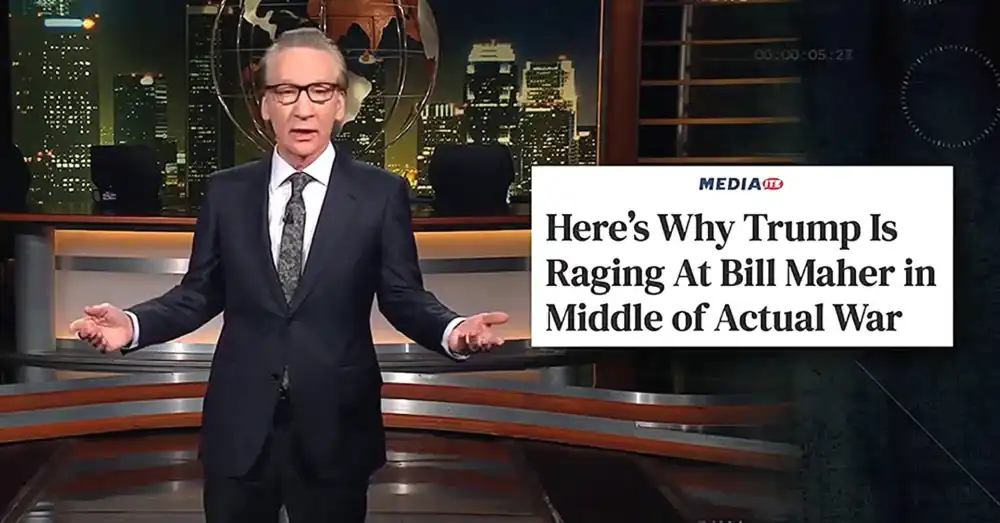
Comedian and political commentator Bill Maher utilized his platform on HBO’s Real Time with Bill Maher to address a series of social media attacks directed at him by former President Donald Trump, questioning the former commander-in-chief’s priorities as global conflicts continue to escalate. During the Friday night broadcast, Maher highlighted the frequency and timing of Trump’s "Truth Social" posts, which oscillated between updates on military movements in the Middle East and personal grievances against the television host. The exchange marks a significant escalation in a long-standing feud between the two figures, occurring against a backdrop of domestic political campaigning and international instability.
The episode, which aired following a brief hiatus, featured a panel consisting of United States Senator Adam Schiff, a Democrat from California and a prominent figure in the impeachment proceedings against Trump, and Don Lemon, the veteran journalist and founder of the Lemon Media Network. Additionally, Maher interviewed Annabelle Gurwitch, a New York Times bestselling author, regarding her upcoming memoir. Despite the presence of high-profile political and literary guests, the narrative of the evening was largely shaped by Trump’s digital activity throughout the preceding morning, which Maher characterized as an obsessive fixation on his program.
The Chronology of the Digital Exchange
The friction between the two men intensified on the Friday morning leading up to the broadcast. According to social media logs, the former president began a "rage-posting" session early in the day, specifically targeting Maher in anticipation of the comedian’s return to the air. Two weeks prior, Maher had promised his audience that he would "drop the hammer" on Trump to address a previous "screed" from the former president, while also attempting to demonstrate that his critiques were not the result of what is colloquially termed "Trump Derangement Syndrome."
The timeline of Trump’s Friday morning activity revealed a pattern of rapid-fire shifts in focus. At one moment, the former president was posting about the strategic repositioning of thousands of personnel within the Middle East—a matter of significant national security and international concern. However, within fifteen minutes of these updates, Trump returned to posting disparaging remarks about Maher’s viewership and relevance. This juxtaposition formed the core of Maher’s monologue, during which he displayed a headline from the news outlet Mediaite that sought to analyze why Trump was focusing on a television feud during a period of actual warfare.
Maher’s response was pointed, highlighting the absurdity of the situation. "I’m not joking! An hour later! And what happened with the Valentine’s Day Massacre and his tweet about that, which I’ll be talking about at the end of the show," Maher told his audience. He continued by referencing the Mediaite headline: "The people at Mediaite wrote a headline that said, ‘Here’s why Trump is raging at Bill Maher in the middle of an actual war.’ Why? Tell ME! This is getting weird."
Historical Context of the Maher-Trump Feud
The animosity between Bill Maher and Donald Trump is not a recent development but rather a decade-long conflict that has occasionally entered the legal realm. One of the most famous instances occurred in 2013, when Maher jokingly offered to donate $5 million to a charity of Trump’s choice if the then-businessman could prove he was not the "spawn of an orangutan." Trump responded by producing his birth certificate and subsequently filing a lawsuit against Maher for the $5 million when the comedian did not pay. Although the lawsuit was eventually withdrawn, it established a precedent for the litigious and highly personal nature of their public interactions.
In recent years, the nature of their disagreement has shifted toward the political. While Maher has remained a staunch critic of Trump’s rhetoric and his actions surrounding the 2020 election, he has also faced criticism from the left for his increasingly vocal opposition to "woke" culture and certain Democratic Party strategies. This has created a complex dynamic where Trump occasionally praises Maher when the comedian critiques the left, only to return to vitriolic attacks when Maher turns his satirical focus back toward the Republican frontrunner.
Analysis of the Panel and Political Climate
The inclusion of Senator Adam Schiff and Don Lemon on the panel added a layer of political gravity to the evening’s proceedings. Schiff, who is currently campaigning for a U.S. Senate seat in California, has been a primary target of Trump’s "Truth Social" posts for years. As the former chair of the House Intelligence Committee, Schiff led investigations into Russian interference in the 2016 election and served as a lead impeachment manager. His presence on the show alongside Maher—at the very moment Trump was attacking the host—underscored the centralized role that media and late-night television play in modern political warfare.
Don Lemon’s appearance was also noteworthy, as it marked one of his first major televised panel discussions since his departure from CNN and the subsequent announcement of his new independent media venture. Lemon’s insights into the media landscape provided a framework for understanding how Trump uses social media to bypass traditional journalistic filters, even when the content of those posts appears to conflict with the gravity of current world events.
Supporting Data on Social Media Engagement
Data regarding social media engagement suggests that Trump’s strategy of targeting media figures remains a potent tool for mobilizing his base. According to analysis of Truth Social metrics, posts involving direct attacks on high-profile critics often receive higher engagement rates (shares and "truths") than standard policy statements. On the Friday in question, the posts regarding Maher garnered significant traction among Trump’s followers, serving as a distraction from or a supplement to the more serious news regarding military movements in the Middle East.
Furthermore, the "attention economy" of the 2024 election cycle has made these interactions more valuable for both parties. For Maher, the feud provides a direct link to the central figure of the Republican party, ensuring that his commentary remains relevant in a crowded media environment. For Trump, attacking "elite" media figures in New York and Los Angeles reinforces his narrative of being a Washington outsider fighting against a hostile establishment.
Broader Impact and Implications for the 2024 Campaign
The ongoing dispute between a leading presidential candidate and a prominent late-night host reflects a broader trend in American politics: the blurring of lines between entertainment, news, and governance. The fact that a former president—and current candidate—allocates significant time to monitoring and responding to a cable comedy show suggests a preoccupation with media optics that could have implications for his campaign strategy.
Political analysts suggest that Trump’s focus on Maher may be a calculated effort to reclaim the narrative among moderate or independent voters who watch Real Time. Maher’s audience is unique in that it consists of traditional liberals, disaffected centrists, and even some libertarians. By engaging with Maher, Trump may be attempting to interject his perspective into a forum that is often critical of his platform but occasionally skeptical of the modern Democratic party.
However, the critique leveled by Maher—that such focus is inappropriate during a time of international crisis—strikes at a perennial concern regarding Trump’s temperament. The "war" Maher referenced includes the ongoing tensions in the Middle East and the conflict in Ukraine, both of which require sustained diplomatic and military attention. Critics argue that the inability of a political leader to ignore personal slights in favor of national security concerns is a liability.
Conclusion and Future Outlook
As the 2024 election cycle progresses, the intersection of late-night satire and presidential politics is expected to become even more volatile. Maher’s promise to "address the screed" and his subsequent "Tell ME why!" plea highlights the frustration of media figures who find themselves at the center of a candidate’s digital focus. Meanwhile, the former president’s continued use of Truth Social as a primary means of communication ensures that personal grievances will remain a central component of the political discourse.
The Friday night episode of Real Time served as a microcosm of the current American political landscape: a mix of high-stakes geopolitical discussion, personal vendettas played out in the digital sphere, and the ongoing struggle to define the boundaries of "presidential" behavior. With Senator Schiff and Don Lemon providing a backdrop of traditional political and journalistic institutionalism, Maher’s direct confrontation of Trump’s digital habits offered a stark reminder of how much the medium of political communication has changed over the last decade. Whether this feud will impact polling data or voter sentiment remains to be seen, but it undoubtedly confirms that for the 2024 candidates, the battle for the airwaves is as intense as the battle for the ballot box.

 Yuyun Lusiyani
 Joko Widodo
 Eva Lovia
 Pevita Pearce