
 Jia Lissa
Bishop Robert Barron, a prominent figure in American Catholicism and a member of President Donald Trump’s Religious Liberty Commission, issued a rare and pointed rebuke of the commander-in-chief on Monday. The criticism followed a series of provocative statements made by the President on his Truth Social platform regarding Pope Leo XIV. Barron, who has frequently appeared on Fox News and contributed to Fox News Digital, described the President’s remarks as “entirely inappropriate and disrespectful,” marking a significant moment of friction between the administration and its high-profile Catholic allies.
The conflict centers on a Sunday evening tirade in which President Trump attacked the pontiff’s leadership, foreign policy stances, and domestic influence. Bishop Barron, while acknowledging his long-standing support for the administration’s focus on religious freedom, emphasized that the President’s rhetoric had crossed a line, damaging the potential for constructive dialogue between the White House and the Holy See.
The Catalyst: President Trump’s Sunday Tirade
The controversy began late Sunday evening when President Trump utilized his Truth Social account to unleash a multi-paragraph critique of Pope Leo XIV. In the posts, the President characterized the Pope as “weak on crime” and “terrible for foreign policy,” specifically citing the Vatican’s concerns regarding the Trump administration’s recent military and diplomatic actions.
A central theme of the President’s attack was the Pope’s recent expressions of “fear” regarding the current direction of the U.S. administration. Trump countered by invoking the grievances of the COVID-19 era, a recurring theme in his political rhetoric. He accused the Catholic Church and other Christian organizations of failing to sufficiently protest the arrest of clergy and the closure of houses of worship during the pandemic, contrasting that period with the Pope’s current vocal opposition to the administration’s policies.
The President also introduced a personal and theological comparison, praising the Pope’s brother, “Louis,” whom he described as “all MAGA.” Trump asserted that Louis “gets it,” whereas the Pope does not. Furthermore, the President took aim at the Pope’s stance on global security, stating he did not want a pontiff who supported the nuclear ambitions of Iran or criticized the United States’ military intervention in Venezuela—a campaign the President defended as a necessary response to drug trafficking and the release of violent criminals into the U.S.
In one of the most striking portions of the post, the President claimed credit for the Pope’s election, suggesting that the Church chose an American pontiff specifically as a strategic move to manage his administration. “If I wasn’t in the White House, Leo wouldn’t be in the Vatican,” Trump claimed, adding that the Pope should focus on being a “Great Pope, not a Politician.”
Bishop Barron’s Public Response and Call for Mediation
Bishop Robert Barron, who has served as an influential bridge between the Republican establishment and the Catholic hierarchy, responded on Monday via the social media platform X (formerly Twitter). His statement was carefully calibrated to balance his official role in the administration with his ecclesiastical duty.
“The statements made by President Trump on Truth Social regarding the Pope were entirely inappropriate and disrespectful,” Barron wrote. “They don’t contribute at all to a constructive conversation. It is the Pope’s prerogative to articulate Catholic doctrine and the principles that govern the moral life.”
Barron’s response highlighted the distinction between the articulation of moral principles—which falls under the Pope’s authority—and the concrete application of those principles in the political sphere, where he acknowledged that “people of good will can and do disagree.” However, he maintained that the President’s method of disagreement was unacceptable.
Significantly, Barron called upon the high-ranking Catholics within the Trump administration to intervene and repair the relationship. He specifically named Secretary of State Marco Rubio, Vice President J.D. Vance, and Ambassador Brian Burch as individuals who should facilitate a formal meeting with Vatican officials. “This is far preferable to the statements on social media,” Barron noted.
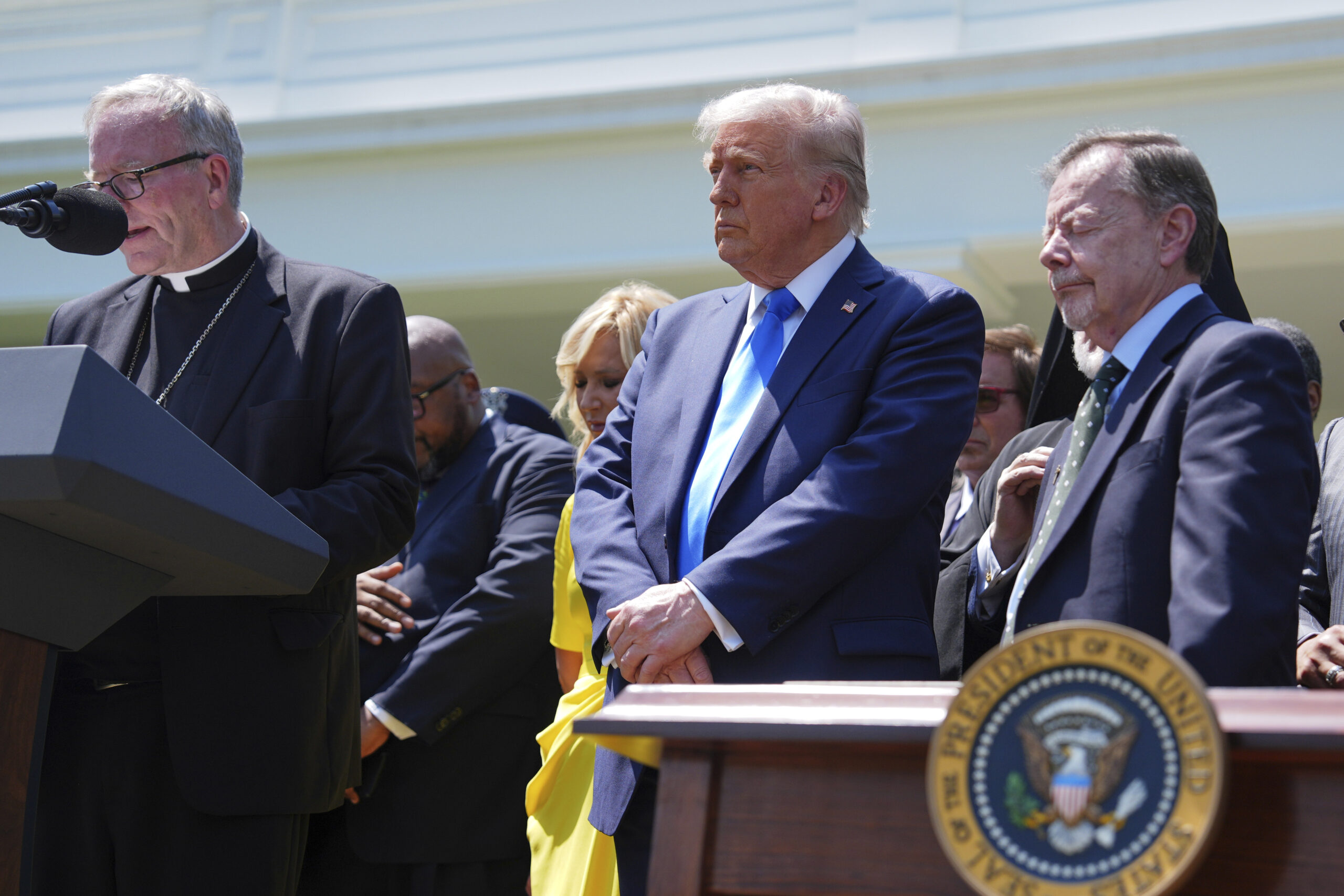
Despite the sharp criticism, Barron attempted to preserve his working relationship with the White House by praising the President’s record on religious liberty. He described his service on the Religious Liberty Commission as a “high honor” and stated that no President in his lifetime had shown a greater dedication to defending the “first liberty.” Nevertheless, he concluded his statement with a firm demand: “All that said, I think the President owes the Pope an apology.”
Chronology of the Escalating Tension
The exchange on Monday was the culmination of several months of simmering tension between the Vatican and the White House. The following timeline outlines the key events leading to the current rift:
- January 2026: Pope Leo XIV issues a papal encyclical focusing on global diplomacy and the "ethics of intervention," which many analysts interpreted as a veiled critique of the Trump administration’s "America First" posture in South America.
- February 2026: The U.S. administration initiates a series of targeted strikes in Venezuela. The Vatican Press Office issues a statement expressing "grave concern" over the humanitarian impact of the military action.
- March 15, 2026: President Trump meets with a group of evangelical leaders, where he reportedly questions the Pope’s understanding of border security and international crime syndicates.
- April 10, 2026: Reports surface that Pope Leo XIV met privately with David Axelrod and other figures associated with the American political left, fueling the President’s narrative that the Pope is "catering to the Radical Left."
- April 12, 2026 (Sunday Evening): President Trump posts his extensive critique of the Pope on Truth Social.
- April 13, 2026 (Monday Morning): Bishop Robert Barron issues his public demand for an apology.
- April 13, 2026 (Monday Afternoon): Pope Leo XIV briefly addresses reporters in Rome, stating he has “no fear” of the administration and will continue to speak the "message of the Gospel."
Analysis of Policy Disagreements: Iran, Venezuela, and COVID-19
The President’s grievances touch upon three specific policy areas where the Vatican and the U.S. executive branch have historically and recently diverged.
1. Nuclear Diplomacy and Iran
The Vatican has long supported the Joint Comprehensive Plan of Action (JCPOA) and general nuclear non-proliferation. Pope Leo XIV has advocated for diplomatic engagement with Tehran to prevent regional escalation. President Trump, conversely, has maintained a "maximum pressure" campaign, viewing any conciliatory gestures from the Holy See as a sign of weakness that emboldens the Iranian government.
2. Intervention in Venezuela
The President’s defense of the American military presence in Venezuela is rooted in a "law and order" framework, citing the flow of narcotics and the migration of individuals with criminal records. The Vatican’s critique stems from a "Just War" doctrine perspective, emphasizing the sovereignty of nations and the protection of civilian populations from the fallout of foreign military operations.
3. Religious Liberty and the COVID-19 Legacy
The President’s mention of the pandemic highlights a lingering resentment among conservative religious groups regarding the restriction of services in 2020 and 2021. By framing the Pope’s current activism as hypocritical, Trump is appealing to a base that feels the institutional Church was too compliant with government mandates during the health crisis.
The Role of the "Catholic Cabinet"
Bishop Barron’s mention of Rubio, Vance, and Burch underscores the unique composition of the current administration. Both Vice President J.D. Vance and Secretary Marco Rubio are practicing Catholics who have frequently spoken about the intersection of their faith and their public service.
Ambassador Brian Burch, the President of CatholicVote and a key advisor on Catholic outreach, also plays a pivotal role. The involvement of these figures suggests that the President’s comments have placed his own inner circle in a difficult position, forced to navigate the space between loyalty to the President and their religious identity. Political analysts suggest that if the rift persists, it could alienate a crucial segment of the Catholic electorate ahead of the 2026 midterm elections.
Broader Implications for Church-State Relations
The public nature of this dispute marks a departure from the traditional diplomatic channels usually employed between the U.S. and the Holy See. While previous presidents, including Joe Biden and Barack Obama, had policy disagreements with the Vatican on issues such as abortion or economic theory, the tone of the current rhetoric is unprecedented.
The Vatican’s response, characterized by Pope Leo’s statement that he has “no fear,” suggests that the Holy See is prepared to maintain a confrontational stance if it perceives moral principles are at stake. For the Trump administration, the risk lies in the potential fragmentation of the religious coalition that has been a cornerstone of its political strength.
As of Monday evening, the White House has not issued a formal response to Bishop Barron’s request for an apology. The Religious Liberty Commission is scheduled to meet next month, and it remains unclear whether Barron’s continued participation will be affected by his public dissent. What is certain is that the relationship between the United States and the Vatican has entered its most volatile period in decades, with significant implications for both domestic politics and international diplomacy.


 Yuyun Lusiyani
 Joko Widodo
 Eva Lovia
 Pevita Pearce
 admin
admin
 Lina Irawan