
 Jia Lissa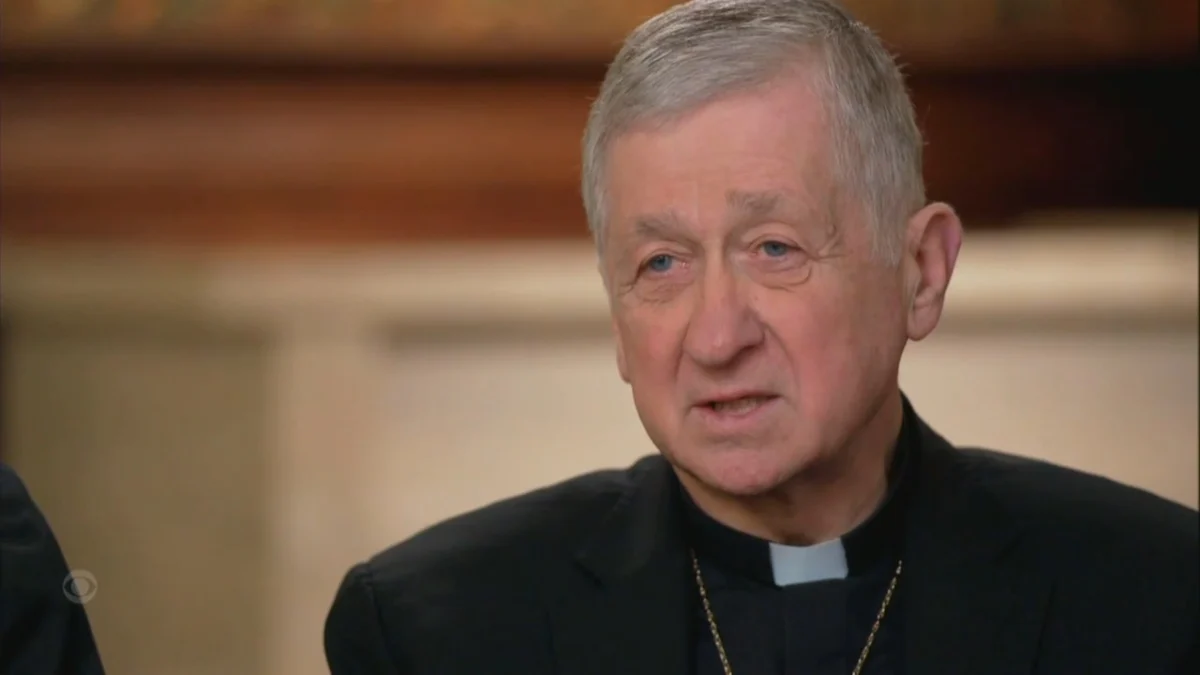
In a wide-ranging and sharply critical interview broadcast on CBS’s 60 Minutes, Cardinal Blase Cupich of Chicago joined fellow high-ranking American prelates to denounce the Trump administration’s handling of the ongoing conflict with Iran. The discussion, led by correspondent Norah O’Donnell, centered on what Cupich described as the "sickening" and "dehumanizing" use of social media to frame military operations as entertainment. The intervention marks a significant escalation in the public rift between the United States government and the Catholic hierarchy, following a series of increasingly pointed critiques from the Holy See regarding the moral trajectory of American foreign policy in the Middle East.
The interview featured Cardinal Cupich alongside Cardinal Joseph Tobin of Newark and Cardinal Robert McElroy of San Diego. The appearance of three of the most influential Catholic leaders in the United States on a single national platform underscores the gravity with which the Church views the current geopolitical crisis. Their comments come on the heels of a sharpened rhetorical stance from Pope Leo XIV, the first American-born pontiff, who recently characterized the administration’s threats of total cultural destruction against Iran as "truly unacceptable."
The Gamification of Modern Warfare
The centerpiece of Cardinal Cupich’s critique was the White House’s social media strategy, which he termed the "gamification" of war. This strategy involves the production of short, high-energy video clips shared on platforms such as X (formerly Twitter), which intersperse actual footage of military strikes and drone surveillance with iconic scenes from Hollywood blockbusters.
During the broadcast, 60 Minutes highlighted a specific post from March that went viral. The video featured rapid-fire edits of Tom Cruise in "Top Gun: Maverick" and Mel Gibson in "Braveheart," spliced with thermal-imaging footage of missiles striking targets in Iranian territory. The aesthetic of the content mirrors that of video game trailers or action movie teasers, a choice the administration has defended as a necessary tool for maintaining public morale and demonstrating military prowess.
Cardinal Cupich, however, argued that such messaging erodes the moral fabric of the nation. "We’re dehumanizing the victims of war by turning the suffering of people and the killing of children and our own soldiers into entertainment," Cupich told O’Donnell. He reiterated his previous private descriptions of the content as "sickening," telling the national audience, "To splice together movie cuts with actual bombing and targeting of people for the purposes of entertainment is sickening. This is not who we are. We’re better than this."
The Cardinal’s remarks tap into a broader ethical debate regarding the psychological impact of digital propaganda. Critics argue that by framing lethal force through the lens of pop culture, the government risks desensitizing the electorate to the human cost of combat, effectively lowering the political threshold for sustained military engagement.
A Timeline of Escalation and Religious Friction
The friction between the Vatican and the White House has intensified in direct proportion to the escalating military maneuvers in the Persian Gulf. The following timeline outlines the key events leading to the Cardinals’ recent public intervention:
- January 2026: Tensions spike following a series of maritime incidents in the Strait of Hormuz, leading to the initial deployment of additional U.S. carrier strike groups to the region.
- February 2026: The Trump administration initiates a "maximum pressure" social media campaign, utilizing high-production-value videos to showcase military readiness.
- March 2026: Norah O’Donnell travels to Rome to interview Pope Leo XIV. The Pope expresses his "hopes for the Middle East," calling for an immediate ceasefire and a "solution for all parties."
- Late March 2026: President Trump issues a controversial statement suggesting that if a deal is not reached, the U.S. possesses the capability to "wipe out a whole civilization" in Iran, targeting sites of significant cultural and historical importance.
- April 7, 2026: Pope Leo XIV issues a formal statement via the Holy See Press Office, calling the threat to destroy a civilization "truly unacceptable" and contrary to the tenets of international law and Christian morality.
- May 2026: Cardinals Cupich, Tobin, and McElroy appear on 60 Minutes to provide a unified American Catholic response to the administration’s rhetoric and digital strategy.
Theological Perspectives on a "War of Choice"
While the Cardinals were unanimous in their criticism of the administration’s messaging, they also addressed the underlying geopolitical reality of the Iranian regime. Cardinal Robert McElroy acknowledged the complexity of the situation, describing the Iranian leadership as an "abominable regime" that "should be removed" in an ideal moral order. However, McElroy’s primary concern lay in the nature of the conflict itself and the precedent it sets for American global leadership.
"This is a war of choice that we went to," McElroy stated during the interview. He cautioned that the current trajectory suggests a shift toward a state of "perpetual war," where military force becomes the primary instrument of diplomacy rather than a last resort.
The distinction between a "war of necessity" and a "war of choice" is a cornerstone of Catholic Just War Theory. Traditionally, the Church teaches that for a war to be considered "just," it must be a last resort, have a reasonable chance of success, and utilize proportional force. By labeling the conflict a "war of choice," the Cardinals are signaling a belief that the administration has bypassed diplomatic avenues in favor of a confrontation that may not meet these rigorous moral criteria.
The Role of Pope Leo XIV
The involvement of Pope Leo XIV adds a unique dimension to this diplomatic rift. As the first American-born Pope, hailing from Chicago—the same city where Cardinal Cupich currently serves—Leo XIV possesses a deep understanding of the American political psyche. His "sharpened" tone, as noted by O’Donnell, indicates that his initial calls for peace have transitioned into a more direct challenge to the White House’s specific tactical and rhetorical choices.
Vatican observers note that Leo XIV’s Chicago roots may provide him with a distinct advantage in communicating with the American public, but they also place him in a delicate position. His criticism of an American president is viewed by some as a defense of universal human rights and by others as an unprecedented intervention in the sovereign affairs of his home country.
During his March interview in Rome, the Pope emphasized the need for "respect for all parties" to find a solution that has eluded the region for decades. His later condemnation of the "civilization" threat was particularly significant, as it invoked the protection of non-combatants and cultural heritage, both of which are protected under the Geneva Conventions.
Implications for U.S. Foreign Policy and Domestic Sentiment
The 60 Minutes interview is expected to resonate deeply within the American Catholic community, which comprises roughly 20% of the U.S. population and remains a pivotal swing demographic in national elections. The alignment of the domestic hierarchy with the Vatican creates a powerful moral bloc that challenges the administration’s narrative of a "righteous" and "cinematic" conflict.
Furthermore, the critique of "gamification" raises questions about the future of government communications. As military technology becomes increasingly digitized—utilizing drones, remote-operated vehicles, and AI—the distance between the operator and the target grows. When this distance is further bridged by entertainment-style media, the risk of "moral injury" to both the personnel involved and the public at large becomes a primary concern for religious and ethical leaders.
Data from media watchdog groups suggest that the "gamified" posts targeted by Cardinal Cupich have reached over 100 million views across various platforms, with high engagement rates among younger demographics. The Cardinals’ intervention seeks to counter this digital influence by re-centering the conversation on the "suffering of people" and the "killing of children," moving the focus away from the screen and back to the battlefield’s reality.
Official Responses and the Path Forward
While the White House has not issued a formal rebuttal to the 60 Minutes interview at the time of this report, administration officials have previously defended their social media presence as a way to "speak the language of the modern era" and ensure that the American public remains engaged with the military’s mission. Proponents of the strategy argue that it project’s strength and deters adversaries by showcasing the precision and technological superiority of U.S. forces.
However, the unified front presented by Cupich, Tobin, and McElroy suggests that the Catholic Church in America is prepared to act as a vocal opposition to the current administration’s military ethics. As the conflict with Iran continues with no clear diplomatic resolution in sight, the influence of these religious leaders may play a crucial role in shaping public perception and international pressure.
The broader impact of this confrontation extends beyond the current war. It touches upon the soul of national identity—as Cardinal Cupich noted, "This is not who we are." The coming months will determine whether the administration heeds these moral warnings or continues its path of digital and military escalation, further straining the historic relationship between the United States and the Holy See. For now, the message from the American Cardinals is clear: war is a human tragedy that cannot be sanitized by Hollywood imagery, and the cost of "entertainment" may be the very civilization the nation claims to protect.


 Yuyun Lusiyani
 Joko Widodo
 Eva Lovia
 Pevita Pearce
 admin
admin
 Lina Irawan