
 admin
admin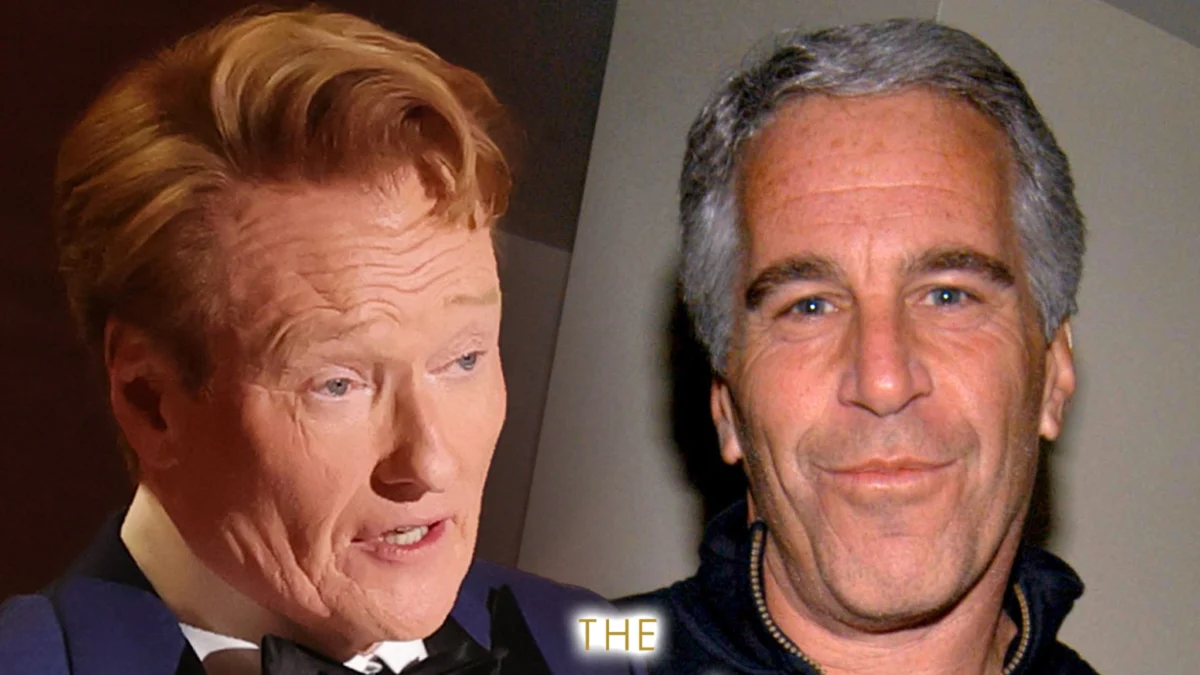
The 98th Academy Awards, held on Sunday, March 15, 2026, at the Dolby Theatre in Hollywood, were marked by a particularly sharp and politically charged monologue from host Conan O’Brien, whose opening remarks swiftly turned from traditional Hollywood banter to pointed social commentary. O’Brien, a veteran of late-night television known for his incisive wit, wasted no time in addressing contemporary socio-political issues, delivering a biting zinger that contrasted the British and American approaches to prosecuting individuals accused of sexual offenses, particularly those involving minors. The comment immediately reverberated through the auditorium and across social media, setting a distinct tone for the evening and reaffirming the Oscars’ evolving role as a platform for more than just cinematic celebration.
A Host’s Provocative Opening
Conan O’Brien began his hosting duties by acknowledging the customary pomp and glamour of the Academy Awards, a spectacle traditionally celebrating the pinnacle of film artistry. However, he quickly signaled his intent to steer the narrative beyond mere accolades. His initial comments were framed around the lack of British representation in the major acting categories for the first time in 14 years, a seemingly innocuous observation that served as a deliberate setup for his more controversial punchline.
"It’s the first time since 2012," O’Brien quipped, addressing the audience, "there are no British actors nominated for Best Actor or Best Actress." The statement itself, while factual, created a moment of anticipation, as audiences familiar with O’Brien’s style understood a twist was imminent. He then delivered the impactful follow-up, attributing a fictional retort to a "British spokesperson": "’Yeah, well, at least we arrest our pedophiles.’" The joke, delivered with O’Brien’s characteristic deadpan delivery, elicited a palpable reaction in the room, a mixture of nervous laughter, gasps, and applause, underscoring its immediate and profound impact.
The Context: British Absence and a Stark Comparison
The premise of O’Brien’s joke—the absence of British nominees in the lead acting categories—was factually accurate for the 2026 ceremony, marking a significant shift from previous years where British talent often dominated these prestigious nominations. For instance, the 2025 Oscars saw several British performers among the nominees, including Dame Emma Thompson for Best Actress and Tom Hardy for Best Actor, continuing a strong tradition. The last time neither category featured a British nominee was indeed in 2012, highlighting a rare occurrence that allowed O’Brien to craft his satirical setup.
However, the core of the joke lay not in cinematic representation but in a stark, uncomfortable comparison of judicial systems and societal accountability regarding sexual misconduct. By contrasting the perceived inaction in the United States with the recent legal developments in the United Kingdom, O’Brien tapped into a deeply sensitive and widely discussed public frustration. The implication was clear: while American cinema might be thriving, its justice system, particularly concerning high-profile figures accused of heinous crimes, faces significant public scrutiny.
The Undercurrents of the Joke: The Epstein Scandal
O’Brien’s controversial remark directly alluded to the ongoing public discourse surrounding the Jeffrey Epstein scandal and its extensive network of alleged accomplices and beneficiaries in the United States. Jeffrey Epstein, a financier and convicted sex offender, was arrested in July 2019 on federal charges of sex trafficking minors. His subsequent death by suicide in August 2019 while awaiting trial in a federal prison in New York sparked widespread conspiracy theories and public outrage, fueled by the perception that powerful individuals were shielded from justice.
The subsequent release and ongoing revelations from the so-called "Epstein Files" have kept the issue firmly in the public consciousness. These documents, derived from civil lawsuits and investigations, have named a multitude of high-profile individuals across various sectors of American society—from entertainment and business to politics and academia—who allegedly associated with Epstein or were implicated in his illicit activities. The breadth of these connections, combined with a perceived lack of comprehensive legal action against many of the named individuals, has fostered a pervasive sense of impunity among the elite. Public opinion polls consistently show a significant portion of the American populace believes that powerful figures involved in such scandals often escape meaningful legal consequences, leading to a deep erosion of trust in the justice system. This long-standing frustration formed the critical backdrop against which O’Brien’s joke landed, resonating with a segment of the audience that felt these issues remained unresolved and unaddressed.
Prince Andrew’s Legal Woes: A UK Counterpoint
The "British spokesperson’s" fictional retort in O’Brien’s monologue drew a direct parallel to the recent legal developments surrounding Andrew Mountbatten-Windsor, commonly known as Prince Andrew, the former British prince. The original article stated that Prince Andrew, who had been accused of sexual misconduct and had publicly acknowledged his association with Jeffrey Epstein, was "taken into custody on suspicion of misconduct in public office following the release of emails he exchanged with Jeffrey Epstein." This development, reportedly occurring shortly before the 2026 Oscars broadcast, provided the immediate and potent real-world context for O’Brien’s joke.
Prince Andrew’s association with Epstein had been a source of intense public and legal scrutiny for years. He faced a civil lawsuit in the United States brought by Virginia Giuffre, who alleged she was trafficked by Epstein and sexually abused by the Prince when she was a minor. Although he settled the civil case in 2022, the allegations continued to haunt him, leading to his withdrawal from public life and the relinquishing of his military titles and royal patronages. The "release of emails" mentioned in the article, presumably a more recent development in the ongoing investigation into Epstein’s network, would have provided new impetus for legal action in the UK, culminating in his reported arrest.
This arrest, if accurately reported and timely in relation to the Oscars broadcast, represented a significant moment in the UK. It would have demonstrated a legal system willing to pursue even the most highly placed individuals based on new evidence, thus providing a stark contrast to the perceived stalled investigations and lack of prosecutions against many high-profile figures in the US related to the Epstein case. The timing of this development would have made O’Brien’s joke particularly salient and impactful, highlighting a perceived disparity in judicial accountability between the two nations.
Conan’s Signature Style: Pushing Boundaries
Conan O’Brien’s decision to use the Academy Awards stage for such pointed social commentary is consistent with his long-standing comedic persona and approach to late-night television. Throughout his decades-long career, from "Late Night with Conan O’Brien" to "The Tonight Show" and "Conan," he has cultivated a reputation for intelligent, often surreal humor that frequently veers into satire. While his style is often characterized by absurdity and self-deprecation, he has never shied away from using his platform to critique societal norms, political figures, or systemic injustices.
His hosting of the Oscars was anticipated by many to include elements of his signature wit, but the directness of his opening joke surprised some, even those familiar with his work. It underscored his willingness to prioritize making a significant statement over merely entertaining, leveraging the immense global viewership of the Oscars to amplify a critical social issue. This approach aligns with a growing trend among awards show hosts to utilize their stage for commentary that transcends the typical celebratory atmosphere, reflecting broader cultural anxieties and discussions.
Immediate Reactions and Social Media Buzz
The impact of O’Brien’s "pedophile" joke was instantaneous and widespread. Inside the Dolby Theatre, the initial shock gave way to a mixture of applause and murmurs, indicating a divided, yet engaged, audience. On social media platforms, the joke quickly became a trending topic worldwide. Users on X (formerly Twitter) and other platforms debated the appropriateness and effectiveness of the humor.
Many lauded O’Brien for his bravery and for speaking an "uncomfortable truth" that resonated with their own frustrations regarding the Epstein scandal. Hashtags such as #ConanOscars and #EpsteinFiles quickly gained traction, with users praising the host for using his platform to highlight perceived injustices. Accounts dedicated to film and political commentary, like @DiscussingFilm and @SpencerAlthouse (as referenced in the original article’s embedded tweets), shared clips and quotes from the monologue, further fueling the discussion.
Conversely, some critics argued that the joke was insensitive, crude, or too serious for an event meant to celebrate artistic achievement. Others questioned whether the Oscars stage was the appropriate venue for such heavy political and legal commentary. However, even these criticisms acknowledged the joke’s undeniable impact, demonstrating that O’Brien had successfully sparked a significant public conversation, regardless of individual approval. The viral nature of the moment ensured that the core message, however controversial, reached a vast global audience.
Another Jab: The "Has a Small Penis" Theatre
Later in the telecast, O’Brien delivered another politically charged joke, further cementing his role as a host unafraid to tackle sensitive subjects. Referring to the iconic Dolby Theatre, where the ceremony was being held, he humorously rebranded it as the "Has a Small Penis" Theatre. He then added, "Let’s see him put his name in front of that."
This joke was widely interpreted as a veiled, yet unmistakable, reference to former President Donald Trump. Throughout his career and political life, Trump has been known for his practice of affixing his name prominently to buildings and properties he owns or develops, often in large, gold lettering. Furthermore, he has engaged in public disputes and rhetoric concerning perceived virility and physical attributes. O’Brien’s quip cleverly played on these well-known aspects of Trump’s public persona, challenging the former president’s penchant for self-aggrandizement with a demeaning and unpalatable label.
This second joke reinforced the evening’s theme of direct, unapologetic political satire. It demonstrated O’Brien’s commitment to using humor to critique power and influence, whether in the context of judicial accountability or political ego. The combination of these two jokes solidified the perception that O’Brien’s hosting stint was not merely a lighthearted affair but a deliberate attempt to inject serious social commentary into one of Hollywood’s most prestigious nights.
The Broader Role of Satire at Major Events
Conan O’Brien’s provocative monologue at the 2026 Oscars highlights a growing trend in major awards shows, where hosts and presenters increasingly use their platforms for social and political commentary. What was once primarily a celebratory event has evolved into a significant cultural moment where statements, both subtle and overt, are made about pressing global issues.
This shift reflects a broader societal expectation that public figures and prominent platforms should address contemporary challenges. In an era of heightened political polarization and social activism, the entertainment industry is no longer seen as immune to these discussions. From environmental concerns to civil rights, gender equality, and systemic injustices, awards shows have become a stage for advocacy and critique. Previous Oscars ceremonies have seen hosts and winners address issues ranging from #MeToo and Black Lives Matter to climate change and immigration policies, often sparking both praise and controversy.
O’Brien’s jokes, particularly the one concerning judicial accountability, fit squarely within this evolving tradition. They serve not only to entertain but also to provoke thought, challenge complacency, and underscore uncomfortable truths that mainstream media might sometimes shy away from. By doing so, O’Brien transformed a segment of the Oscars into a powerful moment of cultural reflection, demonstrating the enduring power of satire to hold a mirror up to society.
Conclusion: A Night of Unflinching Commentary
The 98th Academy Awards, under the stewardship of Conan O’Brien, will likely be remembered as much for its unflinching social commentary as for its cinematic achievements. From his pointed jab at the disparity in prosecuting high-profile individuals accused of sexual misconduct to his thinly veiled critique of political ego, O’Brien ensured that the evening was anything but a mere celebration of film.
His monologue, particularly the "pedophile" joke, served as a stark reminder of the ongoing public frustration with systemic injustices and the perceived lack of accountability for powerful elites, both in the United States and globally. By referencing the recent legal action against Prince Andrew in the UK, O’Brien masterfully underscored a perceived contrast in judicial integrity. The immediate and widespread reactions across traditional and social media confirmed the potency of his message, sparking widespread debate and reinforcing the idea that humor, when wielded with precision and courage, can be a powerful tool for social critique. Conan O’Brien, true to his reputation, did not come to merely entertain; he came to provoke, to challenge, and to ensure that the global spotlight of the Oscars shone brightly on some of society’s most uncomfortable truths.

 Jia Lissa
 Yuyun Lusiyani
 Joko Widodo
 Eva Lovia

 Pevita Pearce