
 Jia Lissa
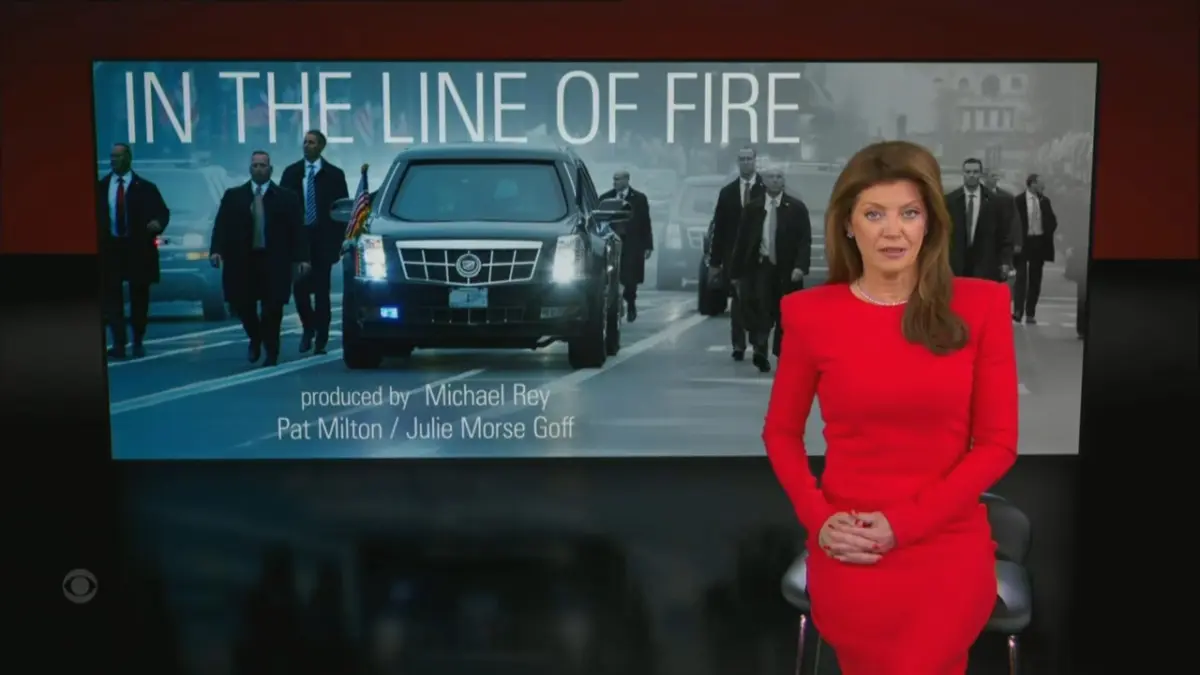
United States Secretary of Defense Pete Hegseth, in a wide-ranging and consequential interview on CBS’s 60 Minutes, stated that the Biden-Trump transition’s military posture toward the Islamic Republic of Iran has reached a critical juncture, noting that the administration is prepared to deploy "boots on the ground" if necessary to dismantle the nation’s theocratic government. Speaking with correspondent Major Garrett on Sunday evening, Hegseth emphasized that President Donald Trump and the Department of Defense are committed to a policy of total success in the ongoing military campaign known as Operation Epic Fury. The Secretary’s remarks represent one of the most explicit acknowledgments to date that the United States is weighing a full-scale ground invasion or targeted land-based incursions as part of its strategy to neutralize Iran’s nuclear capabilities and leadership structure.
During the interview, Hegseth maintained a posture of strategic ambiguity regarding the current presence of American personnel within Iranian borders. When pressed by Garrett on whether the United States currently employs overt or covert forces inside the country, Hegseth declined to provide a definitive denial. Instead, he suggested that disclosing such information would be counterproductive to national security interests, adding with a noted level of reserve that he would not reveal the presence of such forces even if they were active. This stance underscores a broader administration philosophy of keeping adversaries off-balance, a tactic Hegseth attributed directly to the Commander-in-Chief.
The Objectives of Operation Epic Fury
Operation Epic Fury, the code name for the current U.S.-led military initiative in the region, has been characterized by the administration as a multi-domain effort to eliminate Iran’s "nuclear ambitions" once and for all. While the operation has largely been viewed by the public as an aerial and cyber-centric campaign, Hegseth’s latest comments suggest the scope is significantly broader. He argued that the U.S. would be "completely unwise" to take any military option off the table, including the deployment of conventional ground forces.
The Secretary’s rhetoric points toward a shift from containment to a policy of regime dismantlement. Hegseth noted that the administration’s willingness to "go as far as we need to go" is fueled by a desire to end what the U.S. describes as decades of state-sponsored destabilization and nuclear blackmail. The primary objective, according to the Department of Defense, remains the verified and permanent destruction of Iran’s nuclear infrastructure, which includes the Fordow and Natanz enrichment sites, as well as the research facilities associated with their ballistic missile programs.
Strategic Ambiguity and Military Secrecy
A recurring theme in Hegseth’s interview was the rejection of public timelines or operational limits. In response to media inquiries regarding the duration of Operation Epic Fury—specifically whether it would last weeks or months—Hegseth insisted that providing such details would empower the Iranian leadership. He stated that neither he nor President Trump believes in signaling the "limits" of an operation to the enemy or the press. This approach marks a departure from the more transparent, timeline-based strategies seen in previous decades, such as the troop withdrawal schedules in Iraq and Afghanistan.
By refusing to rule out a ground invasion, the Pentagon is attempting to force Iranian military planners to spread their defensive resources thin. Military analysts suggest that the threat of "boots on the ground" necessitates Iran maintaining large standing forces near its borders and urban centers, potentially leaving their nuclear and command-and-control sites more vulnerable to specialized aerial strikes. However, the logistical reality of a ground campaign in Iran—a country with a population of over 88 million and a rugged, mountainous geography—would represent one of the largest military undertakings in modern history.
Casualties and the Human Cost of Conflict
The interview took a somber tone when Garrett addressed the human cost of the escalating conflict. On the day of the interview, the Pentagon confirmed the death of a seventh U.S. service member in the Middle East theater. Hegseth acknowledged the loss, stating that these deaths were not in vain and were an inherent, if tragic, part of a high-stakes military engagement. He noted that his generation of veterans is uniquely acquainted with the sight of American caskets returning home, yet he insisted that these losses "stiffen the spine" of the administration’s resolve rather than weakening it.
The conflict’s impact on civilians was also a point of intense scrutiny. Hegseth addressed a recent strike on a school that resulted in approximately 160 fatalities. The incident has drawn international condemnation and calls for an independent investigation. While the Iranian government has blamed U.S. ordnance for the tragedy, Hegseth stated that the Department of Defense is still investigating whether the strike was a result of U.S. action, an Iranian misfire, or a deliberate "false flag" operation. The Secretary maintained that the U.S. military takes extraordinary measures to avoid collateral damage, but he reiterated that the complexities of urban warfare in a high-intensity conflict environment make such incidents difficult to analyze in real-time.
Chronology of Recent Escalations
The current state of hostilities is the culmination of several months of escalating tensions. To understand the context of Hegseth’s comments, one must look at the timeline of events leading to Operation Epic Fury:
- Late 2025: Intelligence reports indicated that Iran had reached a 90% enrichment level of Uranium-235 at several clandestine sites, bringing them to the threshold of "breakout" capacity for a nuclear weapon.
- January 2026: The Trump administration announced a "Maximum Pressure 2.0" campaign, involving total maritime blockades and the designation of the entire Iranian government as a terrorist entity.
- February 2026: Following a series of drone attacks on U.S. regional assets attributed to Iranian proxies, the U.S. launched Operation Epic Fury, beginning with precision strikes on IRGC (Islamic Revolutionary Guard Corps) command centers.
- March 2026: The conflict intensified with the targeting of Iranian air defense systems and the reported use of "bunker buster" munitions on hardened nuclear facilities.
- Current Status: The U.S. has confirmed seven service member fatalities, while Iranian state media reports significant infrastructure damage and high civilian and military casualties.
Supporting Data and Geopolitical Context
The prospect of a ground war in Iran carries massive implications for global stability. According to data from the Energy Information Administration (EIA), a full-scale conflict in the Persian Gulf risks closing the Strait of Hormuz, through which approximately 21 million barrels of oil pass daily—roughly 21% of global petroleum liquids consumption. Economists warn that a prolonged ground engagement could see global oil prices surge well beyond $150 per barrel, triggering inflationary pressures worldwide.
Furthermore, the regional balance of power remains precarious. U.S. allies, including Israel and Saudi Arabia, have expressed varying degrees of support for the neutralization of the Iranian nuclear threat. Israel has reportedly coordinated closely with U.S. Central Command (CENTCOM) on intelligence sharing, while Saudi Arabia has opened its airspace for logistics, though it has remained cautious about direct involvement in a ground campaign. Conversely, the "Axis of Resistance"—comprising Hezbollah in Lebanon, the Houthis in Yemen, and various militias in Iraq—has vowed to expand the theater of war if American troops set foot on Iranian soil.
Domestic and International Reactions
The Secretary’s comments have already sparked a firestorm of reaction on Capitol Hill. While many Republican lawmakers have signaled support for Hegseth’s "peace through strength" approach, several Democrats and a handful of non-interventionist Republicans have raised concerns about the lack of a formal Declaration of War or a specific Authorization for Use of Military Force (AUMF) tailored to a ground invasion of Iran.
Legal experts point out that while the President has broad powers as Commander-in-Chief to respond to imminent threats, the War Powers Resolution of 1973 requires the President to consult with Congress before introducing U.S. armed forces into hostilities. Hegseth’s refusal to define "limits" has led to calls for the administration to provide a classified briefing to the "Gang of Eight" regarding the endgame of Operation Epic Fury.
Internationally, the reaction has been one of deep concern. The United Nations Secretary-General has called for an immediate de-escalation, citing the potential for a humanitarian catastrophe. European allies, particularly those formerly involved in the JCPOA (Joint Comprehensive Plan of Action), have urged a return to diplomatic channels, though the Hegseth interview suggests the U.S. administration views the window for diplomacy as having firmly closed.
Broader Implications and Tactical Analysis
Hegseth’s interview signals a definitive end to the era of "strategic patience." By framing the conflict as a "fight we will finish," the administration is signaling to both the Iranian leadership and the American public that they are prepared for a high-intensity, potentially long-term engagement. The tactical shift toward considering ground troops suggests that aerial bombardment alone may not have achieved the desired degradation of Iran’s deeply buried nuclear assets.
Military analysts suggest that if "boots on the ground" were to manifest, they would likely take the form of Joint Special Operations Command (JSOC) units tasked with "direct action" missions—specifically seizing or neutralizing nuclear material—rather than a traditional multi-divisional occupation. However, Hegseth’s refusal to rule out any option means the Pentagon is keeping the door open for a more comprehensive military presence.
As the investigation into the school strike continues and the death toll of U.S. service members rises, the pressure on the Pentagon to deliver a clear victory will mount. For now, Secretary Hegseth has made it clear: the United States is operating without a self-imposed "ceiling" on its military efforts, and the regime in Tehran is being warned that the full weight of the American military machine is on the table. The coming weeks will likely determine whether Operation Epic Fury remains an offshore campaign or evolves into the most significant ground conflict of the 21st century.


 Yuyun Lusiyani
 Joko Widodo
 Eva Lovia
 Pevita Pearce