
 Lina Irawan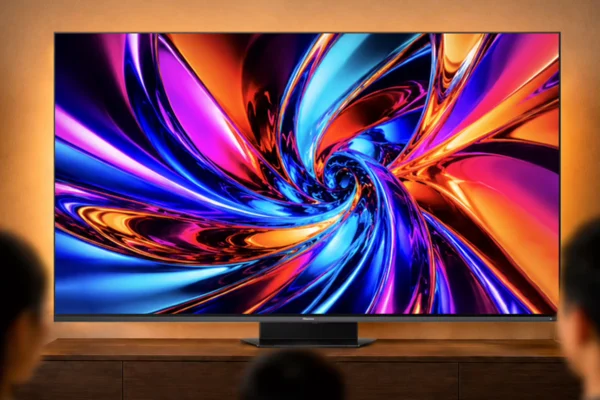
The landscape of home entertainment is undergoing a significant shift as Dolby Laboratories officially rolls out Dolby Vision 2, the most sophisticated iteration of its High Dynamic Range (HDR) technology to date. Designed to eliminate the need for manual picture calibration, Dolby Vision 2 introduces an automated ecosystem where the television hardware, the content metadata, and the ambient environment work in unison to deliver an optimized visual experience. This new standard made its commercial debut in late 2026, spearheaded by Chinese electronics giant Hisense, marking a pivotal moment in the ongoing evolution of display technology.
For years, the primary barrier to optimal home viewing has been the complexity of television settings. While enthusiasts often spend hours adjusting brightness, contrast, color temperature, and motion smoothing, the average consumer frequently settles for "out-of-the-box" settings that may not suit their specific environment or the content being viewed. Dolby Vision 2 addresses this by utilizing "Content Intelligence," a system that allows the television to effectively "think for itself," making real-time adjustments based on the specific capabilities of the panel and the lighting conditions of the room.
The Evolution of High Dynamic Range Standards
To understand the significance of Dolby Vision 2, it is necessary to examine the decade-long progression of HDR standards. High Dynamic Range technology was developed to move beyond the limitations of Standard Dynamic Range (SDR), which was constrained by the technical specifications of older cathode-ray tube (CRT) monitors. HDR allows for a much wider range of luminance (brightness) and a broader color gamut, closer to what the human eye perceives in the real world.
The timeline of this evolution highlights the rapid pace of innovation in the sector:
- 2014: Dolby Vision is introduced, utilizing dynamic metadata to provide scene-by-scene instructions to the display.
- 2015: HDR10 is established as an open standard, using static metadata (one setting for the entire film).
- 2016: Hybrid Log-Gamma (HLG) is standardized for HDR broadcasting.
- 2017: HDR10+ is launched by Samsung and Amazon, introducing dynamic metadata to the open-source format.
- 2020: Dolby Vision IQ is released, incorporating ambient light sensors to adjust picture quality based on room brightness.
- 2025: Dolby Vision 2 is officially announced, promising deeper integration of AI and shot-specific motion control.
- 2026: The first Dolby Vision 2 compatible televisions, led by Hisense, enter the global market.
While previous versions of Dolby Vision provided the "recipe" for how a scene should look, Dolby Vision 2 provides the "chef." It doesn’t just deliver data; it manages the execution based on the specific constraints and strengths of the individual TV.
Technical Innovations: Image Engine and Content Intelligence
At the core of Dolby Vision 2 are two primary technological pillars: the New Image Engine and Content Intelligence. The New Image Engine is a processing framework that allows for more granular control over the display’s backlighting and pixel-level color reproduction. By interpreting both legacy Dolby Vision metadata and the enhanced data streams of the new standard, the engine can optimize contrast and brightness with higher precision than previously possible.

Content Intelligence acts as the analytical layer of the system. It categorizes content types—such as live sports, cinematic films, or high-intensity gaming—and applies specific logic to each. For example, in a gaming context, the system prioritizes low latency and shadow detail to ensure competitive parity, whereas, in a cinematic context, it prioritizes color accuracy and "Authentic Motion."
A significant addition to this suite is "Precision Black," a feature designed to enhance the performance of MiniLED and OLED screens. By analyzing the metadata, the TV can more effectively manage local dimming zones, reducing "blooming" (where light from a bright object bleeds into a dark background) and ensuring that black levels remain deep and inky even in high-contrast scenes.
Differentiating Dolby Vision 2 and Dolby Vision 2 Max
Following the industry trend of tiered feature sets, Dolby has bifurcated the new standard into two categories: Dolby Vision 2 and Dolby Vision 2 Max. This allows the technology to be implemented across a wider range of hardware while reserving the most demanding features for flagship displays.
Dolby Vision 2 (Standard Tier):
- Image Engine: Enhanced processing for all Dolby Vision content.
- Content Intelligence: Automatic detection of genre and environmental lighting.
- Intensity Slider: A simplified user control that allows viewers to adjust the "depth" of the HDR effect without diving into complex sub-menus.
- Bi-directional Tone Mapping: A more efficient way for the TV to translate the brightness of the original master to the specific peak brightness of the TV panel.
Dolby Vision 2 Max (Premium Tier):
- Light Sense 2: An advanced version of ambient light compensation that tracks not just brightness but also the color temperature of the room’s lighting.
- Pro Controls: Advanced calibration tools for professional installers or dedicated hobbyists.
- Authentic Motion: The most anticipated feature of the Max tier, designed to solve the long-standing "soap opera effect" associated with motion smoothing.
Solving the Motion Smoothing Dilemma: Authentic Motion
One of the most contentious issues in modern television technology is motion interpolation. To combat "judder"—the stuttering effect seen when 24-frame-per-second (fps) film is displayed on 60Hz or 120Hz screens—manufacturers developed motion smoothing. However, this often results in an unnaturally fluid look that many directors and cinephiles despise.
Authentic Motion, exclusive to Dolby Vision 2 Max, aims to provide a middle ground. Unlike traditional smoothing, which is a "blanket" setting applied to the entire movie, Authentic Motion allows creators to embed shot-by-shot instructions. A fast-paced action sequence might receive a slight amount of processing to maintain clarity, while a slow, dramatic close-up remains untouched to preserve the cinematic texture.

This feature requires content to be "newly authored" in Dolby Vision 2. Consequently, while the hardware is arriving now, the full benefits of Authentic Motion will only be realized as major Hollywood studios and streaming platforms like Netflix, Disney+, and Apple TV+ begin updating their mastering workflows to include these specific motion instructions.
The Role of Hisense and MediaTek
The decision for Hisense to lead the rollout of Dolby Vision 2 is a strategic one, rooted in hardware partnerships rather than mere branding. The 2026 Hisense lineup, including the premium UX, UR9S, and UR8 RGB MiniLED series, is powered by the MediaTek Pentonic 800 chipset.
The Pentonic 800 is the first dedicated Smart TV SoC (System on a Chip) designed with native support for the Dolby Vision 2 Image Engine. This integration allows the processing to happen at the hardware level with minimal latency. MediaTek’s dominance in the TV chip market—powering over 60% of the world’s smart TVs—suggests that while Hisense is first, other manufacturers like Sony, Philips, and TCL are likely to follow suit as they refresh their product lines using the same silicon.
In a statement regarding the launch, Hisense representatives noted that the "picture thinks for itself" philosophy is central to their 2026 strategy. By automating the most difficult aspects of TV setup, they aim to capture a larger share of the premium market that values both high performance and ease of use.
Market Competition and the HDR10+ Alternative
The arrival of Dolby Vision 2 intensifies the ongoing competition with HDR10+, the royalty-free alternative backed primarily by Samsung. Simultaneously with the Dolby launch, Samsung introduced "HDR10+ Advanced," which also focuses on ambient light adaptation and automated calibration.
The industry remains divided:
- The Dolby Camp: Sony, LG, Hisense, TCL, and Vizio generally support Dolby Vision, citing its widespread adoption in cinema and high-end streaming.
- The HDR10+ Camp: Samsung remains the primary holdout against Dolby Vision, preferring to refine its own dynamic metadata standard.
- The Neutral Camp: Brands like Panasonic and Philips often include both formats to ensure maximum compatibility for the consumer.
For the consumer, the "format war" is less about which is superior and more about which ecosystem their favorite content resides in. With Disney and Netflix firmly in the Dolby camp, Dolby Vision 2 enters the market with a significant content advantage.
Implications for Consumers: To Upgrade or Not?
A critical question for current TV owners is whether their existing hardware can be upgraded. The answer, unfortunately, is negative. Because Dolby Vision 2 relies on the specific processing architecture found in new chips like the Pentonic 800, it cannot be added to older TVs via a firmware update.
However, Dolby has ensured total backwards compatibility. A Dolby Vision 2 television will play older Dolby Vision content perfectly, often improving it through the New Image Engine’s enhanced upscaling and tone mapping. Conversely, if a consumer buys a Dolby Vision 2 disc or streams a new title, an older Dolby Vision TV will simply ignore the new metadata and play the content as a standard Dolby Vision file.
Industry analysts suggest that while Dolby Vision 2 is a major technical leap, it is not necessarily a reason to discard a high-end OLED or MiniLED TV purchased within the last two years. The most significant gains will be felt by those upgrading from older SDR or basic HDR10 sets, where the jump in automated intelligence and motion handling will be most apparent.
Conclusion: The Future of Autonomous Viewing
The launch of Dolby Vision 2 represents a shift from "High Dynamic Range" to "Intelligent Dynamic Range." As display technology hits plateaus in terms of raw brightness and resolution (with 8K adoption remaining slow), the frontier of innovation has moved toward software and AI-driven optimization.
By placing the burden of calibration on the "Content Intelligence" system rather than the user, Dolby and Hisense are moving toward a future where the creative intent of the filmmaker is preserved regardless of the viewer’s technical expertise or the lighting in their living room. As more manufacturers adopt the MediaTek Pentonic 800 and studios begin authoring in the new standard, Dolby Vision 2 is set to become the new benchmark for the premium home cinema experience.




 Yuyun Lusiyani
 Joko Widodo
 Eva Lovia
 Pevita Pearce
 admin
admin