
 admin
admin
A federal judge has delivered a significant legal victory to major news organizations, ruling that the Trump administration unlawfully revoked the White House press credentials of reporters from CNN, MS NOW, and Politico. The decision, handed down by Judge Timothy J. Kelly, mandates the immediate reinstatement of the "hard pass" credentials for the affected journalists, citing a violation of constitutionally adequate due process. This ruling, issued on September 23, 2026, at 10:42 PM PDT, marks a pivotal moment in the ongoing tensions between the executive branch and the press, underscor underscoring the judiciary’s role in safeguarding journalistic access to centers of power.
The Landmark Ruling and Its Immediate Impact
Judge Timothy J. Kelly, of the U.S. District Court for the District of Columbia, sided unequivocally with the plaintiff media outlets in a ruling filed early Thursday morning. At the heart of his decision was the finding that the Trump administration failed to provide the journalists with "constitutionally adequate due process" before revoking their credentials. This legal standard, rooted in the Fifth Amendment, requires that individuals receive notice and an opportunity to be heard before the government deprives them of a protected interest.
"The ‘general rule’ is that ‘individuals must receive notice and an opportunity to be heard before the Government deprives them’ of a constitutionally protected interest," Judge Kelly stated in his filing. He further elaborated that the White House’s actions ran contrary to established precedent by denying reporters this fundamental procedural safeguard. The immediate consequence of the ruling is that the "hard pass" press credentials for employees of CNN, MS NOW, and Politico are to be "immediately" returned, reinstated, and restored. This order will remain in effect for 14 days, functioning as a temporary restraining order (TRO), pending further court proceedings or the expiration of this initial period.
The "hard pass" is a crucial credential, granting journalists regular and unescorted access to the White House complex, including the press briefing room, West Wing, and other areas vital for daily reporting. Its revocation effectively bars a journalist from performing their duties at the highest level of government, making its restoration a significant win for press freedom and operational journalism.
Background to the Dispute: A Deepening Rift
The judicial intervention comes amidst a protracted and often acrimonious relationship between the Trump administration and a segment of the news media. President Donald Trump has frequently labeled news organizations he deems critical as "fake news," "enemies of the people," and purveyors of "LIES" and "FICTION." This rhetoric has often escalated into concrete actions, including the restriction or revocation of press credentials.
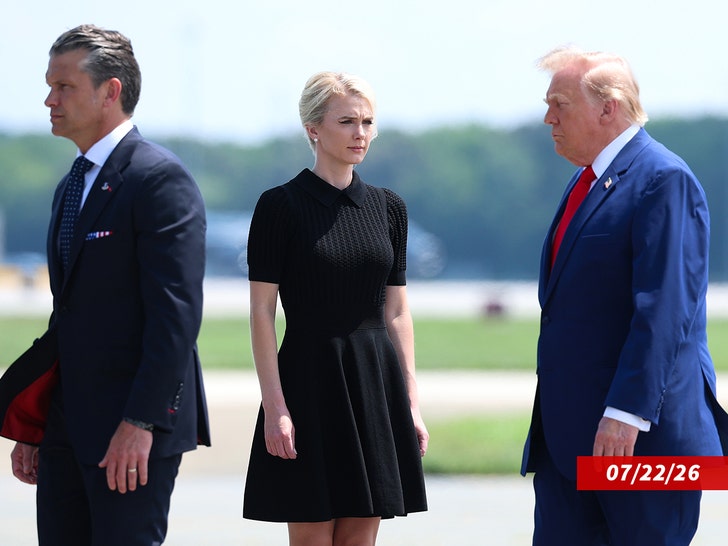
The specific incidents leading to this lawsuit involved the booting of reporters from CNN, MS NOW, and Politico from the White House grounds. While the administration did not always provide explicit reasons for each individual revocation, the broader context of the President’s public statements strongly suggested that the actions were retaliatory responses to critical coverage. Reports circulating at the time indicated that Natalie Harp, a presidential aide known for her close relationship with President Trump, may have played a significant role in advocating for these bans. Her alleged involvement highlighted concerns that credentialing decisions were being influenced by personal or political grievances rather than established journalistic conduct rules.
The administration’s justification, often articulated by President Trump himself, centered on the belief that these organizations published "LIES" and "FICTION" and therefore should not be afforded the privilege of reporting from the White House briefing room. This stance presented a direct challenge to the traditional understanding of press access as a vital component of a functioning democracy, rather than a privilege to be granted or withheld based on the perceived favorability of coverage.
Legal Arguments and Constitutional Foundations
The legal challenge mounted by CNN, MS NOW, and Politico was primarily predicated on two core constitutional principles: the First Amendment’s guarantee of freedom of the press and the Fifth Amendment’s due process clause.
First Amendment – Freedom of the Press: The media outlets argued that revoking their credentials without a valid, content-neutral reason constituted an infringement on their First Amendment rights. While the First Amendment does not guarantee unlimited access to government property, courts have historically recognized that the government cannot arbitrarily restrict access for the purpose of suppressing unfavorable speech or punishing critical reporting. The White House, as a traditional forum for public information and a central hub of government activity, holds a unique status in this regard. Arbitrary denial of access, especially when based on the content of reporting, can be seen as an unconstitutional chilling effect on the press’s ability to inform the public.
Fifth Amendment – Due Process: This was the cornerstone of Judge Kelly’s ruling. The Fifth Amendment states, in part, that no person shall "be deprived of life, liberty, or property, without due process of law." In the context of White House press credentials, a "hard pass" is considered a significant liberty interest, or at least a property interest, for professional journalists whose livelihoods and ability to perform their duties depend on such access. The legal standard of "due process" typically requires notice of the specific reasons for an adverse action and an opportunity for the affected party to respond and challenge those reasons. The court found that the Trump administration failed to provide this essential procedural fairness, effectively denying the journalists their right to challenge the revocations before they occurred.
The plaintiffs contended that the administration’s actions were arbitrary, capricious, and retaliatory, lacking any clear, objective criteria for the revocations. By failing to offer a clear justification or a chance for the journalists to defend themselves, the White House bypassed a fundamental tenet of American legal fairness.
Broader Media Reaction and Solidarity
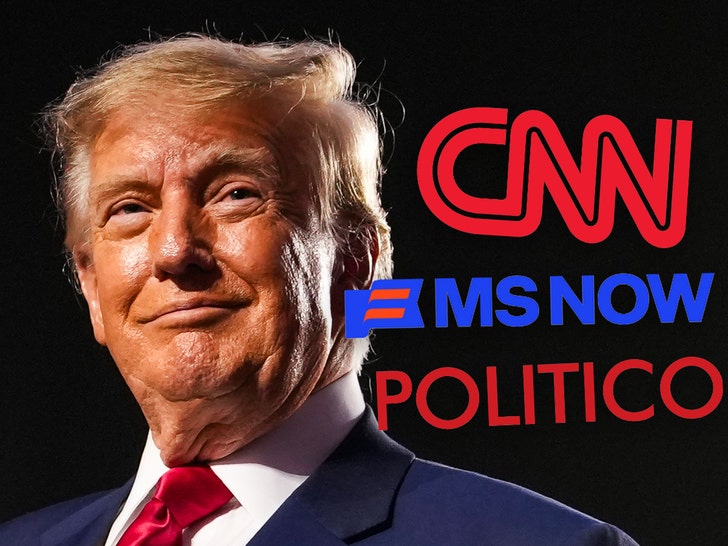
The move by the Trump administration to revoke credentials prompted widespread condemnation across the media landscape, transcending typical ideological divides. CNN, MS NOW, and Politico each released strong statements, asserting that the removals were a clear violation of the First Amendment and an attack on the free press. They stood firmly behind their reporters, emphasizing the importance of independent journalism, even when it is critical of those in power.
Crucially, the reaction was not limited to the directly affected organizations. Other prominent media outlets, including Fox News and The New York Times – often on opposing ends of the political spectrum and subjects of the administration’s ire – signed a joint statement supporting their fellow journalists. This display of solidarity highlighted a shared understanding within the journalistic community that unrestricted access, regardless of political leanings, is fundamental to their collective mission. Even news organizations that might have benefited from the exclusion of rivals recognized the dangerous precedent set by allowing the executive branch to arbitrarily control access based on perceived journalistic bias or unfavorable coverage. This unity underscored the principle that an attack on one media outlet’s access is an attack on the entire institution of the free press.
Press freedom advocacy groups, both domestic and international, also weighed in, expressing alarm over the administration’s actions. Organizations like the Committee to Protect Journalists and Reporters Without Borders condemned the revocations as an attempt to stifle dissent and control the narrative, which they argued is characteristic of authoritarian regimes rather than democratic governments.
Implications for Press Freedom and Executive Power
Judge Kelly’s ruling carries significant implications for the future of press freedom, the boundaries of executive power, and the relationship between the government and the media in the United States.
Reinforcing Due Process and First Amendment Rights: The decision strongly reaffirms that even the President of the United States cannot arbitrarily deny journalists access to the White House. It establishes that "hard passes" are not mere privileges granted at the whim of an administration but carry constitutional protections, requiring due process before they can be revoked. This sets an important precedent, potentially making it more difficult for future administrations to use credentialing as a tool for censorship or retaliation against critical reporting.
Checks and Balances: The ruling serves as a powerful reminder of the judiciary’s role as a check on executive power. In an era where the executive branch has frequently challenged the legitimacy of news organizations, the courts have stepped in to uphold constitutional principles. It demonstrates that while political disputes between the White House and the press are common, fundamental rights and procedures must still be respected.
The Role of the White House Press Corps: The ruling validates the traditional role of the White House press corps as independent observers and questioners, rather than extensions of the government’s public relations apparatus. Maintaining consistent access for a diverse range of journalists, even those deemed hostile by the administration, is seen as essential for robust public discourse and governmental accountability.
Potential for Future Challenges: While a victory for the media, the ruling also highlights the ongoing fragility of press access. The 14-day temporary restraining order suggests that the legal battle is far from over. The administration could potentially appeal the decision, attempt to establish new, more stringent (but constitutionally compliant) procedures for revoking credentials, or seek other avenues to limit access. This case may embolden future administrations to craft more sophisticated, legally defensible, but still restrictive, policies regarding media access.
What’s Next?
The immediate future involves the reinstatement of the affected journalists’ credentials for the 14-day period of the Temporary Restraining Order. During this time, the legal teams for both the media outlets and the Trump administration will likely be preparing for the next phase of the legal battle. This could involve arguments for a more permanent injunction, or the administration might choose to implement new, clearly defined procedures for credential review and revocation that aim to satisfy due process requirements.
Should the administration appeal Judge Kelly’s decision, the case could ascend to the U.S. Court of Appeals for the D.C. Circuit and potentially even the Supreme Court, setting a more enduring national precedent regarding press access and executive authority. The outcome of these subsequent legal challenges will significantly shape the operational landscape for White House correspondents for years to come.
This ruling also forces the administration to consider its approach to press relations. While President Trump is known for his confrontational style, the judiciary has now imposed a legal constraint on how far that confrontation can extend in terms of physical access. This might lead to a re-evaluation of tactics, though it is unlikely to fundamentally alter the President’s public rhetoric regarding "fake news."
The federal judge’s decision in favor of CNN, MS NOW, and Politico represents a crucial affirmation of constitutional rights in the face of executive pressure. It underscores the enduring importance of due process and freedom of the press as foundational pillars of American democracy, even amidst intense political polarization and an often-contentious relationship between the government and the journalists tasked with holding it accountable. The eyes of the nation, and indeed the world, will remain fixed on the White House and the courts as this vital legal and constitutional drama continues to unfold.




 Jia Lissa
 Yuyun Lusiyani
 Joko Widodo
 Eva Lovia

 Pevita Pearce