
 Pevita Pearce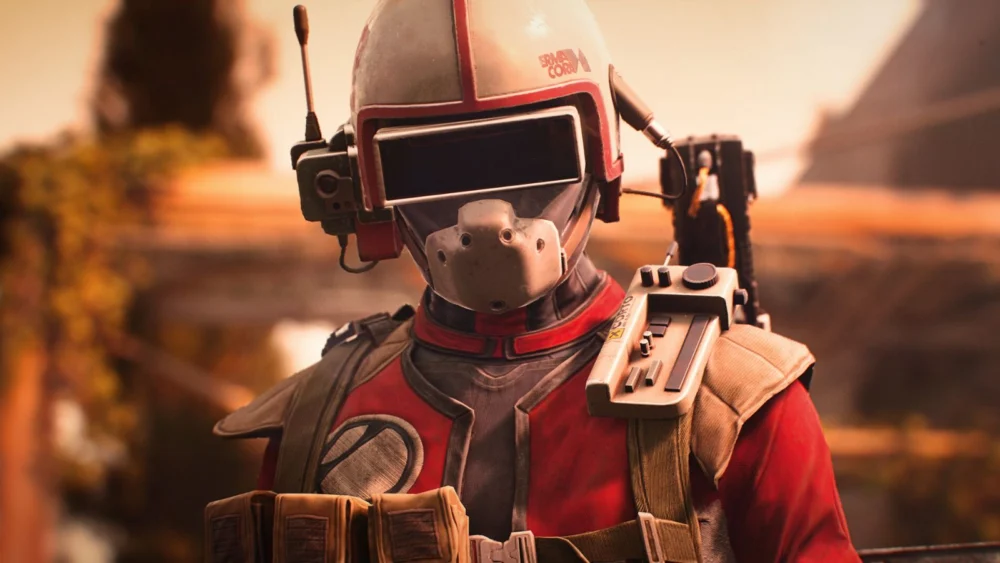
Patrick Soderlund, the chief executive of Embark Studios, has publicly clarified the developer’s stance on the use of artificial intelligence in game production, stating that professional human voice actors remain fundamentally superior to AI-generated alternatives. This revelation comes following the post-launch update of Arc Raiders, the studio’s highly anticipated extraction shooter, which saw several previously AI-generated voice lines replaced by recordings from human performers. In a comprehensive interview with GamesIndustry.biz, Soderlund detailed the studio’s evolving philosophy regarding generative technology, emphasizing that while AI served as a vital tool for rapid iteration and budget management, it cannot yet replicate the nuanced fidelity of a professional human performance.
The shift in strategy highlights a growing tension within the interactive entertainment industry as studios attempt to balance the efficiency of emerging technologies with the creative standards expected by modern audiences. Embark Studios, founded by former Electronic Arts and DICE executives, has long positioned itself as a pioneer in utilizing advanced technology to streamline development. However, the decision to re-record specific assets indicates a recognition that the "uncanny valley" of AI-generated audio may detract from the immersive experience required for a competitive multiplayer title.
The Strategic Use of AI in Arc Raiders Development
Arc Raiders, which recently launched to a significant player base on Steam, was developed under a philosophy of extreme efficiency. Soderlund noted that the project was completed on approximately one-quarter of the budget typically allocated to a traditional AAA blockbuster. To achieve this, Embark Studios leaned heavily into procedural tools and AI-assisted workflows. During the production phase, the studio utilized AI-generated voices to fill the game’s world with dialogue, a move that initially drew scrutiny from the voice acting community and gaming enthusiasts alike.
The primary advantage of using AI during development, according to Soderlund, was the ability to iterate at a pace that traditional recording sessions do not allow. "We look at AI first and foremost as a production tool," Soderlund explained. "We can test 15 different lines without recording them, and then we know what to record." This methodology allowed the narrative and design teams to experiment with dialogue placement, timing, and script changes in real-time, effectively using AI as a high-fidelity placeholder system.
Despite the technical benefits, the studio’s leadership eventually concluded that the final product required a human touch. Following the game’s release, the development team identified specific sequences where the emotional weight or technical clarity of the AI lines fell short of the desired quality. This led to the decision to bring professional actors into the studio to replace those segments. Soderlund was blunt in his assessment of the results, stating, "There is a quality difference. A real professional actor is better than AI; that’s just how it is."
Chronology of Arc Raiders and the AI Discourse
The journey of Arc Raiders has been marked by significant pivots, both in its gameplay loop and its technological implementation. Originally announced in 2021 as a free-to-play cooperative third-person shooter, the game was delayed as Embark Studios shifted its focus toward its other major project, The Finals. During this hiatus, the developers decided to retool Arc Raiders into a premium extraction shooter, a move intended to capitalize on the growing popularity of the genre while distinguishing it from the chaotic, physics-based combat of The Finals.
When the game eventually entered its testing phases, players and industry observers quickly noted the presence of AI-generated voices. In 2023, the studio faced a wave of criticism after a podcast featuring Embark developers revealed that many of the "barks" (short tactical voice commands) and ambient dialogue in The Finals and Arc Raiders were created using text-to-speech software. Critics argued that this practice devalued the work of human performers and resulted in a "flat" or "robotic" auditory experience.
The recent update to Arc Raiders, which replaces those controversial lines with human performances, represents the latest chapter in this timeline. It marks a transition from purely experimental use of AI to a hybrid model where technology serves the creative process rather than dictating the final output. This chronological shift mirrors a broader industry trend where studios are retreating from "AI-only" promises in favor of "AI-assisted" workflows that still prioritize human talent for front-facing content.

Economic Context and the AAA Budget Challenge
The context of Soderlund’s comments is deeply rooted in the current economic realities of the gaming industry. As development costs for flagship titles from major publishers like Sony, Microsoft, and Ubisoft soar toward the $300 million mark, Embark Studios is attempting to prove that a mid-sized team can produce a high-fidelity "AAA" experience for a fraction of the cost.
By utilizing AI for prototyping and procedural tools for environmental design, Embark has managed to keep its overhead low. However, the studio’s recent pivot back to human actors suggests that "quality" is a non-negotiable variable in the extraction shooter market. In a genre defined by high stakes and intense atmosphere, the auditory feedback provided to players—such as the sound of a teammate’s voice or the taunts of a rival—is crucial for maintaining tension. If those voices sound artificial, it risks breaking the player’s immersion, which can be fatal for a game’s long-term retention rates.
Industry analysts suggest that Embark’s experience serves as a case study for the "hybrid" future of game development. While AI can drastically reduce the time spent on "grunt work" or early-stage drafting, the final 10% of polish—the elements that players interact with directly—still requires the unique creative intuition of human professionals.
Broader Industry Implications and Labor Relations
The admission from Soderlund that human actors outperform AI is likely to be welcomed by organizations such as SAG-AFTRA, which has been vocal in its opposition to the unregulated use of generative AI in voice acting. The union recently engaged in industrial action against major gaming companies to secure protections for its members, specifically regarding the digital replication of their voices and likenesses.
Embark’s decision to re-record lines underscores the argument that human creativity is not easily replaceable. Professional actors provide subtext, emotional cadence, and improvisational flourishes that current AI models struggle to replicate. Furthermore, the "human-in-the-loop" approach adopted by Embark may provide a blueprint for how other studios can navigate the ethical minefield of AI. By using AI as a "production tool" for internal testing rather than a "replacement tool" for final assets, developers can maintain efficiency without alienating the creative workforce.
Competitive Landscape: Arc Raiders vs. Marathon
The timing of these updates is critical as Arc Raiders enters a more crowded market. While it has established a strong foothold on Steam, it faces looming competition from Bungie’s Marathon, another high-profile extraction shooter that emphasizes a distinct visual style and narrative depth. Bungie, known for its world-class sound design and voice direction in the Halo and Destiny franchises, sets a high bar for auditory excellence.
For Arc Raiders to compete, it must match its rivals not just in gameplay mechanics, but in overall production value. The decision to invest in human voice acting post-launch is a clear signal that Embark is committed to the longevity of the game. Soderlund’s comments suggest that the studio is listening to feedback and is willing to adjust its technological strategies to ensure the game remains a "go-to" title for the genre’s dedicated player base.
Conclusion and Future Outlook for Embark Studios
As Embark Studios continues to refine Arc Raiders, the conversation surrounding AI in development is likely to shift from "if" it should be used to "how" it should be implemented. Patrick Soderlund’s recent statements provide a candid look at the limitations of current technology. While AI can help a studio build a game on a "quarter of a budget," it cannot yet replace the soul of a performance.
The studio’s future strategy appears to be one of pragmatic innovation. Embark will likely continue to develop proprietary AI tools to handle the vast, systemic complexities of their games, but the "human" elements—the writing, the acting, and the core creative vision—will remain at the forefront. For the players of Arc Raiders, this means a more immersive and emotionally resonant experience as the game evolves. For the wider industry, it serves as a reminder that in the quest for technological efficiency, the human element remains the ultimate benchmark of quality.




 Yuyun Lusiyani
 Joko Widodo
 Eva Lovia
 admin
admin
 Lina Irawan