
 Eva Lovia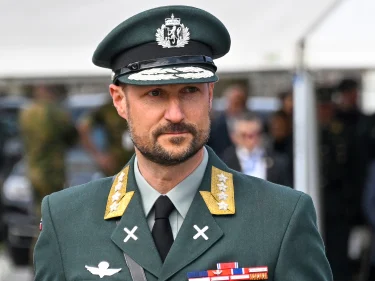
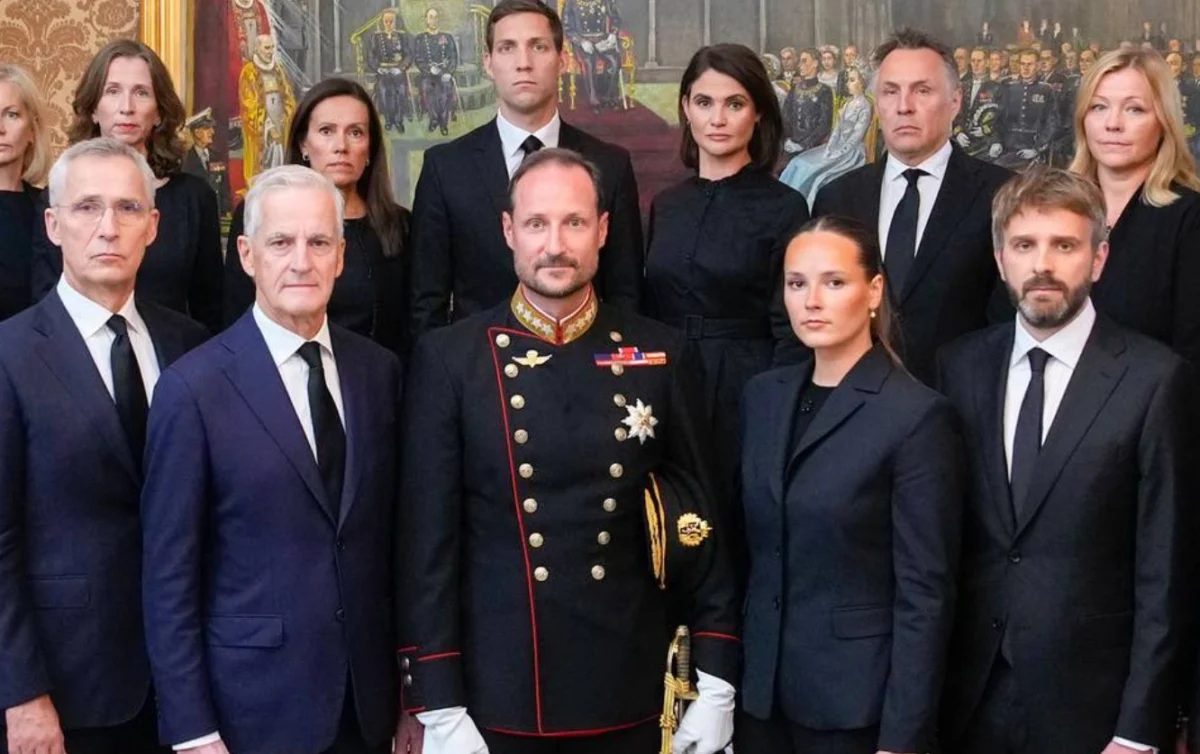
The Royal Palace in Oslo became the focal point of a nation’s solemn transition as King Haakon VIII arrived for the first time as monarch, marking the formal commencement of his reign. His arrival followed the passing of his father, King Harald V, at dawn on August 28th, a moment that saw the immediate and seamless succession of the Crown Prince to the throne. The ceremony of the Extraordinary Council of State, held at 11:30 AM local time, officially declared the end of one era and the beginning of another, ensuring Norway, by constitutional design, is never without a Head of State.
The scene outside the Royal Palace was one of profound respect and burgeoning anticipation. As King Haakon VIII’s motorcade made its way towards the historic gates, crowds of citizens gathered, their presence a silent testament to the enduring significance of the monarchy. A wave of applause, a sound that resonated with both sorrow for the departed King and hopeful acknowledgment of the new sovereign, broke out as the vehicle, its windows subtly tinted, drew nearer. Though glimpses of the new King were fleeting, the palpable emotion of the assembled public underscored the deep connection Norwegians share with their royal family.
The immediate circumstances leading to this accession were marked by personal grief and unwavering duty. King Haakon VIII had spent the preceding night at Rikshospitalet, the national hospital, keeping a bedside vigil with his father, King Harald V, whose health had been in decline. This period of intense personal strain underscores the profound commitment to service that defines the Norwegian monarchy. The transition, while constitutionally immediate, was preceded by a period of intense personal experience for the new King, who had already been serving as regent in the final days of his father’s life. This role, automatically appointed when a monarch is on holiday or unwell, provided him with invaluable experience and preparedness for the responsibilities now fully vested in him.
The Formal Proclamation: A Constitutional Cornerstone
The Extraordinary Council of State, convened at the Royal Palace, served as the formal legal and constitutional instrument for the transfer of power. This council, comprised of the reigning monarch, government ministers, and other key figures, convened at precisely 11:30 AM. During this pivotal meeting, the death of King Harald V was officially announced, and Haakon VIII was formally proclaimed King of Norway. This procedure is a cornerstone of the Norwegian constitution, guaranteeing continuity of leadership and preventing any vacuum in the Head of State’s office.
Norway’s constitutional monarchy operates on a system of pre-arranged succession and regency, designed to ensure stability. In instances of monarchical incapacity, such as illness or absence, the Crown Prince or Princess automatically assumes the role of regent. This practice has been integral to the smooth functioning of the Norwegian state for generations, most recently demonstrated by Crown Prince Haakon’s tenure as regent. His prior experience in this capacity has equipped him with a deep understanding of the governmental processes and the demands of the royal office, facilitating a seamless transition.
A Legacy of Service: King Harald V
King Harald V, who reigned for 33 years, was a deeply respected figure, known for his approachable demeanor and his unwavering dedication to Norway. His reign, which began in 1991 upon the death of his father, King Olav V, spanned a period of significant social and economic change in Norway. He was celebrated for modernizing the monarchy while retaining its traditional gravitas, often appearing at public events and engaging with citizens across the nation. His commitment to representing Norway on the international stage, alongside his support for various charitable causes and national institutions, cemented his legacy as a beloved sovereign.
Born in 1937, Harald was the first Norwegian-born prince since the Middle Ages. His early life was marked by the tumultuous events of World War II, during which he and his mother, Crown Princess Märtha, lived in exile in Sweden and the United States. He returned to Norway after the war and ascended to the throne following his father’s death, inheriting a nation that had undergone profound development since the establishment of its modern constitutional monarchy in 1905.
The New Era: King Haakon VIII and Crown Princess Ingrid Alexandra
King Haakon VIII, now at the helm of the Norwegian monarchy, brings with him a wealth of experience as Crown Prince and Regent. His understanding of the constitutional framework and his established public profile are expected to ensure a continuation of the monarchy’s role as a unifying force within Norwegian society. His personal journey has been one of preparation, marked by education in international relations and military service, alongside extensive public engagements.
The immediate heir to the throne is his 22-year-old daughter, Crown Princess Ingrid Alexandra. Her position as the next in line signifies the continuation of the Glücksburg dynasty in Norway. Crown Princess Ingrid Alexandra has been progressively integrated into public life, undertaking royal duties and participating in events that prepare her for the eventual responsibilities of a reigning monarch. Her youth and her modern perspective are seen by many as a symbol of the monarchy’s adaptability and its connection to younger generations. Her education and upbringing have been geared towards equipping her with the knowledge and understanding necessary to uphold the traditions of the Norwegian crown while embracing the future.
Broader Implications and National Sentiment
The succession of King Haakon VIII occurs at a time when the Norwegian monarchy, while not facing existential threats, continues to navigate its place in a modern, democratic society. Polls consistently show strong support for the institution, with the royal family often viewed as a symbol of national identity and continuity. The seamless transfer of power, facilitated by the constitution, reinforces public confidence in the monarchy’s stability.
The passing of King Harald V and the accession of King Haakon VIII will undoubtedly evoke a period of national reflection. The new King faces the immediate task of leading the nation through a period of mourning while simultaneously embracing his new role with a forward-looking vision. His public engagements in the coming weeks and months will be closely watched as he begins to articulate his priorities and connect with the Norwegian people as their sovereign.
The Norwegian monarchy, since its establishment in 1905 with the election of Prince Carl of Denmark as King Haakon VII, has been characterized by a commitment to constitutional principles and a close relationship with its citizens. The current transition upholds this tradition, demonstrating the resilience and adaptability of the institution. The reign of King Haakon VIII promises to be one of continued service, guided by the legacy of his predecessors and the evolving needs of contemporary Norway. The public’s warm reception, despite the somber occasion, suggests a strong foundation of goodwill upon which the new monarch can build.
Official Reactions and International Acknowledgement
While the immediate focus remains on the internal affairs of Norway, the accession of a new monarch typically garners international attention. Leaders from other European monarchies and heads of state are expected to offer their condolences and congratulations. These formal acknowledgments serve to underscore Norway’s place within the broader community of nations and to reaffirm the enduring significance of monarchical traditions on a global scale. The Norwegian government, through its official statements, will also play a crucial role in disseminating information and guiding the nation through this period of transition. The coming days will see a series of official pronouncements and events designed to honor the late King and to formally introduce the new sovereign to his people and the world.


 Joko Widodo
 admin
admin
 Nila Kartika Wati
 Lina Irawan
 Yuyun Lusiyani
 Pevita Pearce