
 Lina Irawan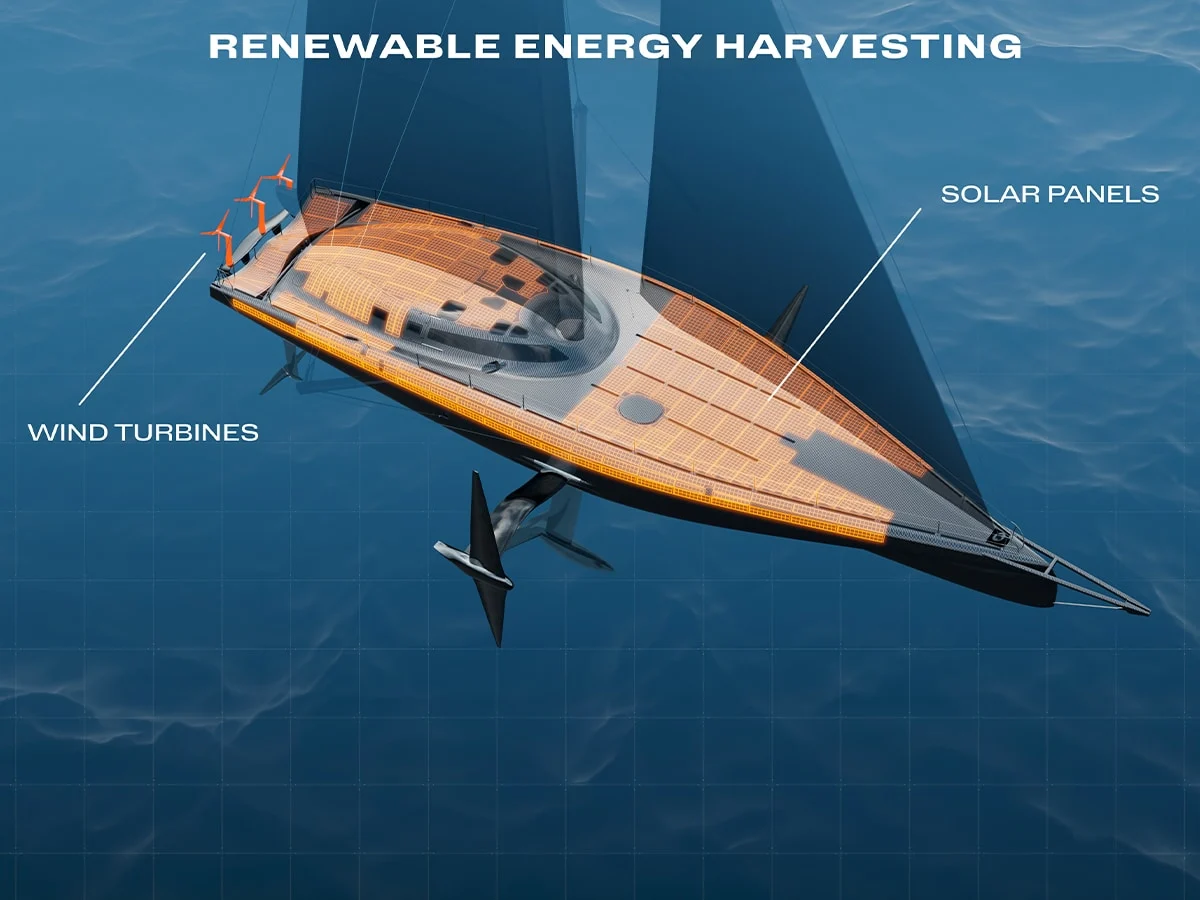
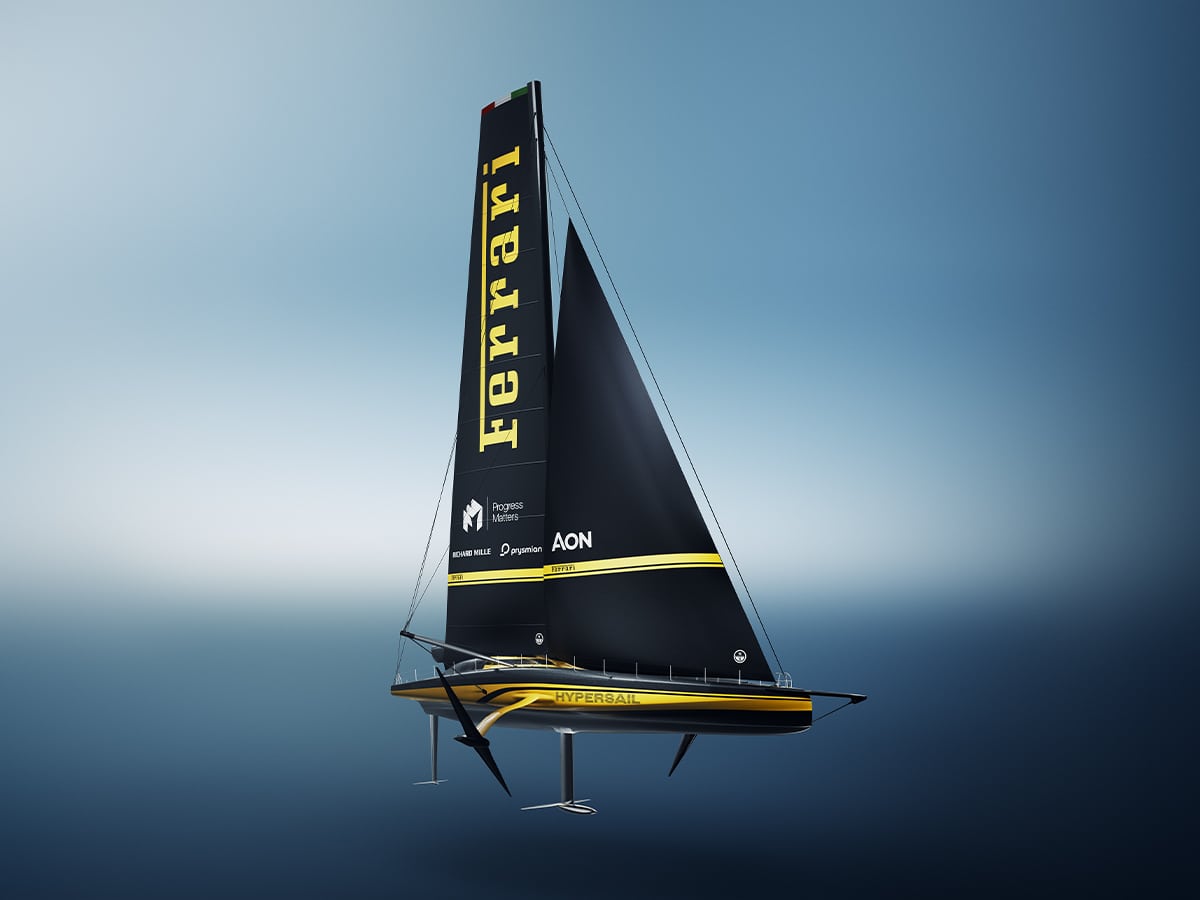
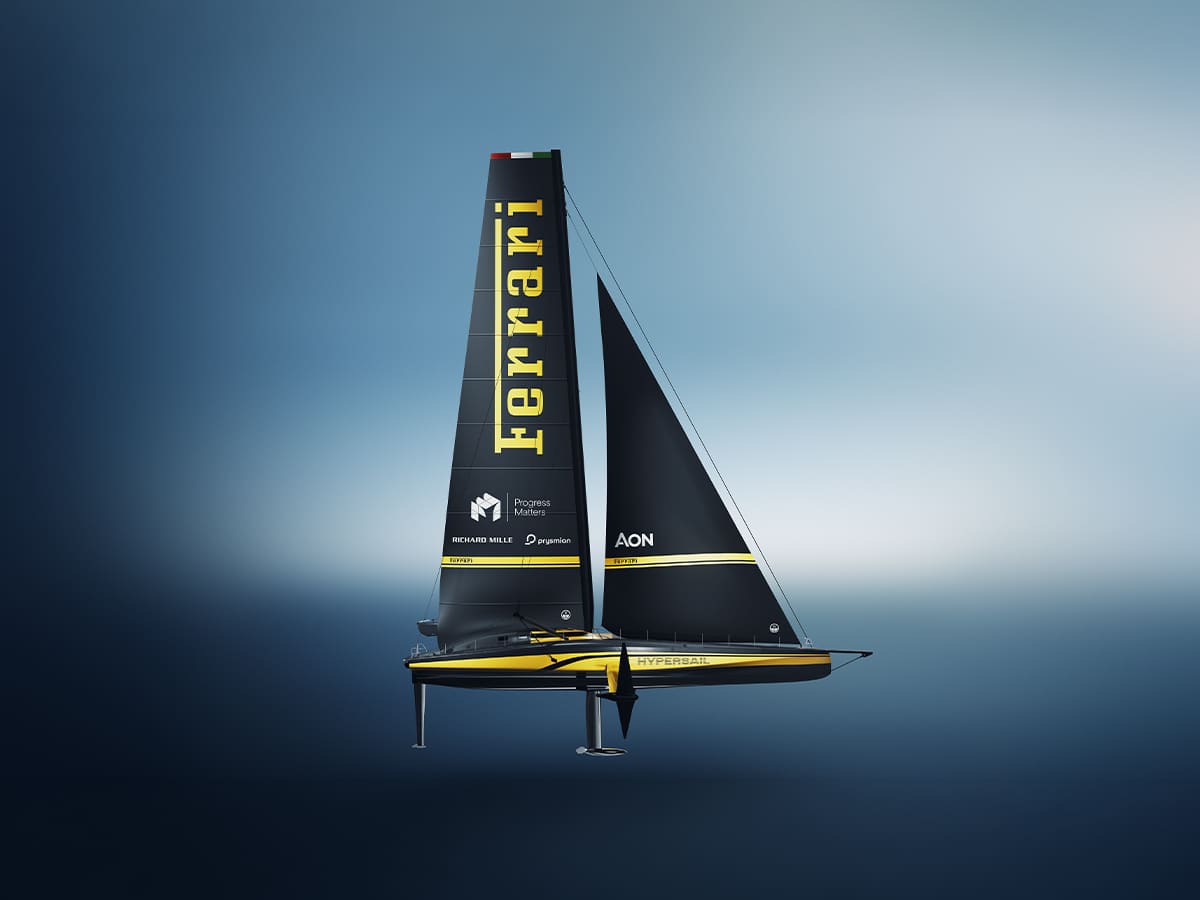
The Ferrari Hypersail represents a significant departure from traditional luxury automotive brand extensions, signaling a sophisticated entry into the maritime sector that prioritizes engineering substance over superficial branding. Developed in a strategic partnership with the acclaimed naval architect Guillaume Verdier, this 100-foot "flying" ocean monohull serves as a mobile laboratory for Maranello’s most advanced research and development. Unlike previous collaborations between car manufacturers and boat builders that focused primarily on aesthetic alignment, the Hypersail is a functional innovation platform designed to port Formula 1 and high-performance supercar technologies directly into the challenging environment of open-ocean racing. The vessel’s recent unveiling highlights its central technological achievement: a sophisticated onboard Energy Management system that facilitates 100 percent energy autonomy, making it the first foiling ocean racer of its scale to operate entirely without fossil fuels.
A New Paradigm in Maritime Propulsion and Energy Autonomy
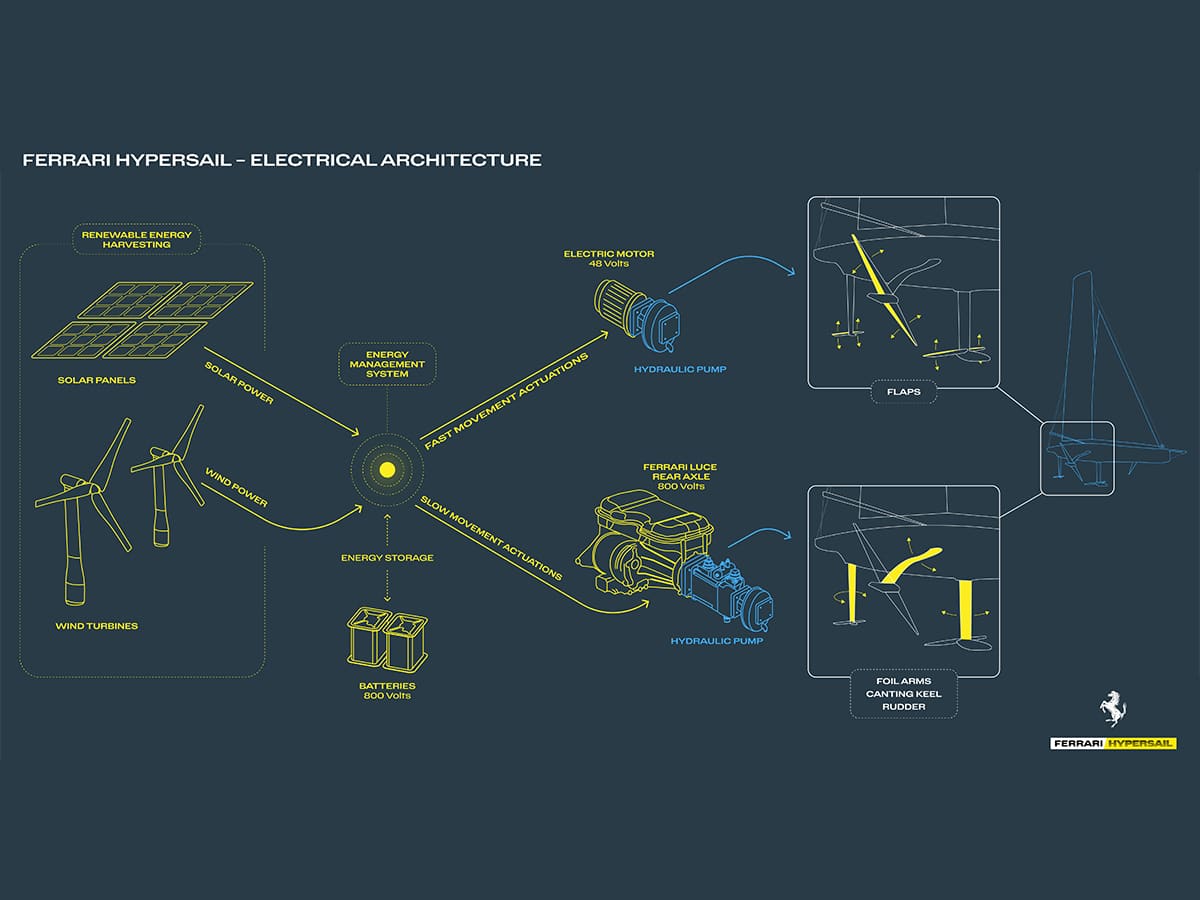
The Ferrari Hypersail’s operational philosophy centers on the elimination of the internal combustion engine and traditional diesel generators. To achieve this, Ferrari engineers have integrated a multi-source energy harvesting ecosystem that combines human mechanical input, solar radiation, and wind energy. This energy is managed through a complex 800V electrical architecture borrowed from the brand’s upcoming electric vehicle (EV) lineup. The vessel utilizes a "Winch-by-Wire" system, where the physical effort of the crew—traditionally known as "grinders"—is not used to turn mechanical gears directly but is instead converted into electrical energy.
This energy, along with power harvested from a 100-square-meter solar array and stern-mounted wind turbines, is stored in high-density 800V battery packs. The integration of these systems allows the Hypersail to maintain all onboard functions, including the high-load hydraulic systems required for foiling, without ever needing to refuel. This achievement marks a milestone in maritime engineering, demonstrating that the energy demands of a 100-foot racing vessel can be met through sustainable, regenerative means when coupled with ultra-efficient power management hardware.

Chronology of Development: From Maranello to the High Seas
The journey toward the Ferrari Hypersail began with a strategic assessment of Ferrari’s long-term innovation goals. While Ferrari has a historical connection to the water—most notably the 1953 Timossi-Ferrari Arno XI hydroplane powered by a Grand Prix engine—the modern Hypersail project was conceived as a way to test the limits of electrification and aerodynamics under extreme conditions.
- Phase I: Conceptualization (2022-2023): Ferrari leadership identified maritime racing as the ideal "open laboratory" for testing high-torque electric motors and complex electronic control units (ECUs) in corrosive, high-vibration environments.
- Phase II: Design and Partnership (2023-2024): The selection of Guillaume Verdier was pivotal. Verdier, known for his work on America’s Cup winners and record-breaking Vendée Globe foilers, provided the naval architecture expertise required to make a 100-foot monohull "fly."
- Phase III: Technology Transfer (2024-2025): Engineers at Maranello began adapting components from the Purosangue and the F80 hypercar. This included the repurposing of active suspension motors and 800V e-axle technology.
- Phase IV: Testing and Reveal (2025-2026): Extensive simulation at Ferrari’s computational fluid dynamics (CFD) facility and wind tunnels preceded the final assembly and the public unveiling of the Energy Management system.
Winch-by-Wire: Repurposing Purosangue and F80 Hardware
One of the most innovative features of the Hypersail is the "Winch-by-Wire" system, which fundamentally alters the ergonomics and efficiency of competitive sailing. In traditional racing, crew members face escalating resistance as the load on the sails increases, leading to rapid physical exhaustion and inconsistent power delivery. Ferrari’s solution applies the logic of the "Manuale by-wire" system found in the 12Cilindri to the ship’s pedestals.
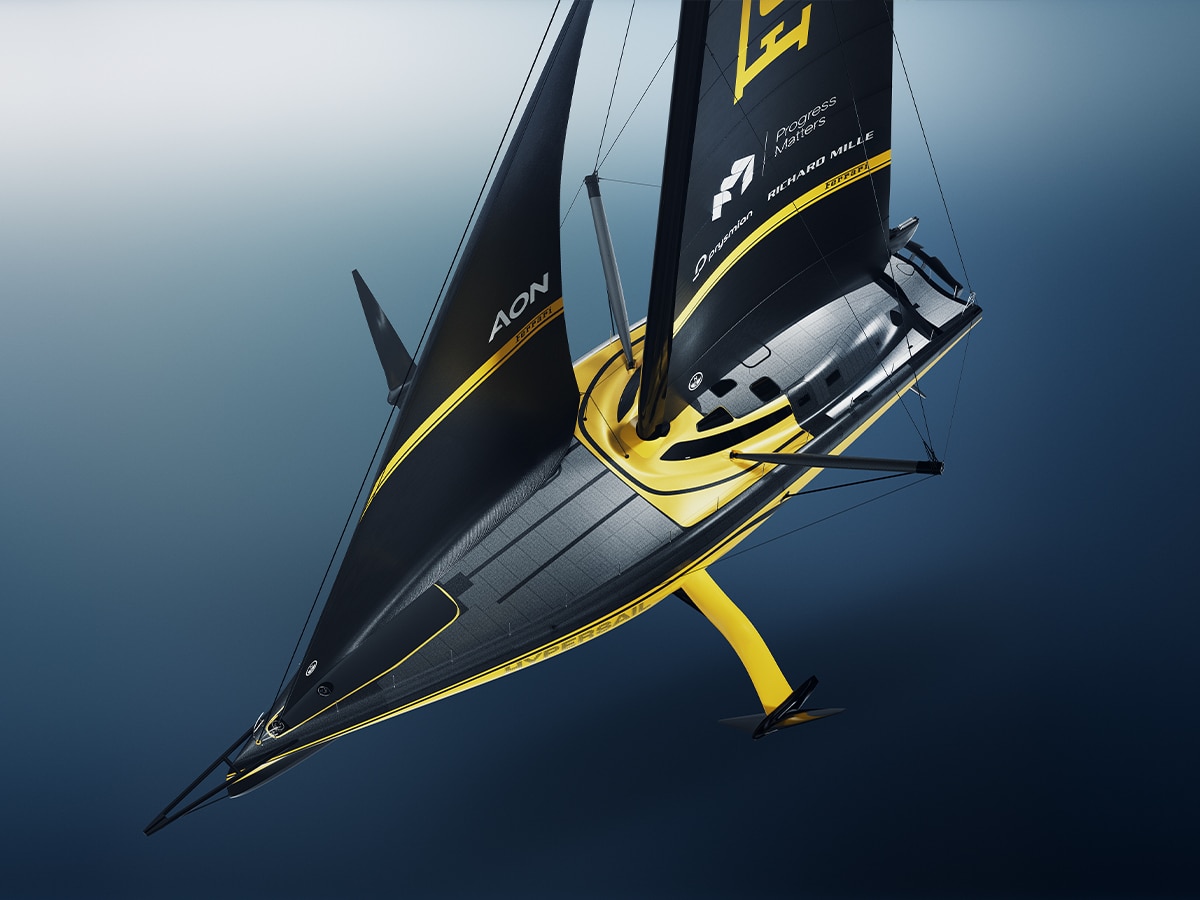
The pedestals are powered by the same high-torque electric motors used in the active suspension systems of the Ferrari Purosangue and the F80 hypercar. When the crew cranks the pedestals, the motors act as generators, converting human movement into electricity with minimal mechanical loss. This system removes the "spikes" in resistance, allowing the crew to maintain a constant, optimal cadence. The generated electricity is then distributed via the central grid to electric winches that can manage loads exceeding 9 tonnes. This setup not only increases safety and efficiency but also allows a smaller crew to manage a vessel of this magnitude.
The 800V Flight Controller and the Ferrari Luce Influence
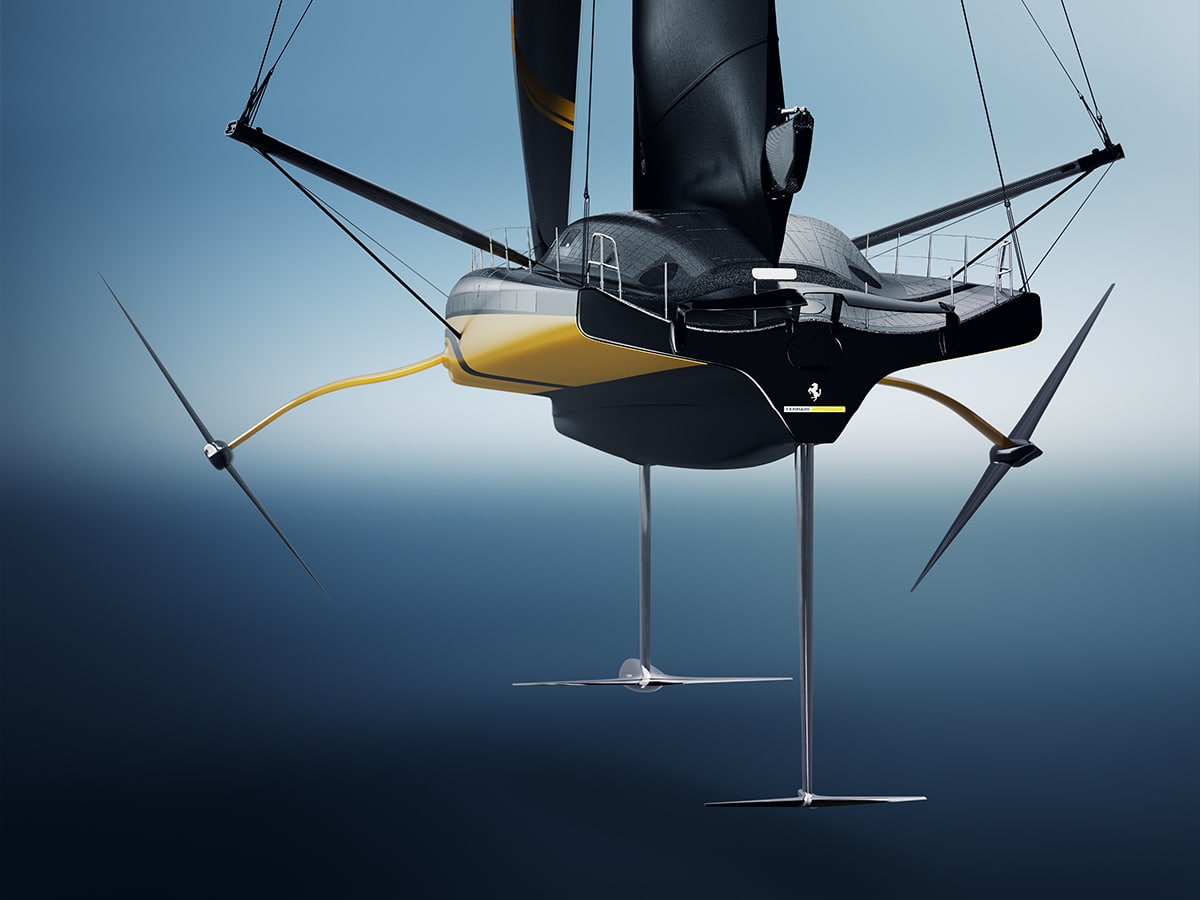
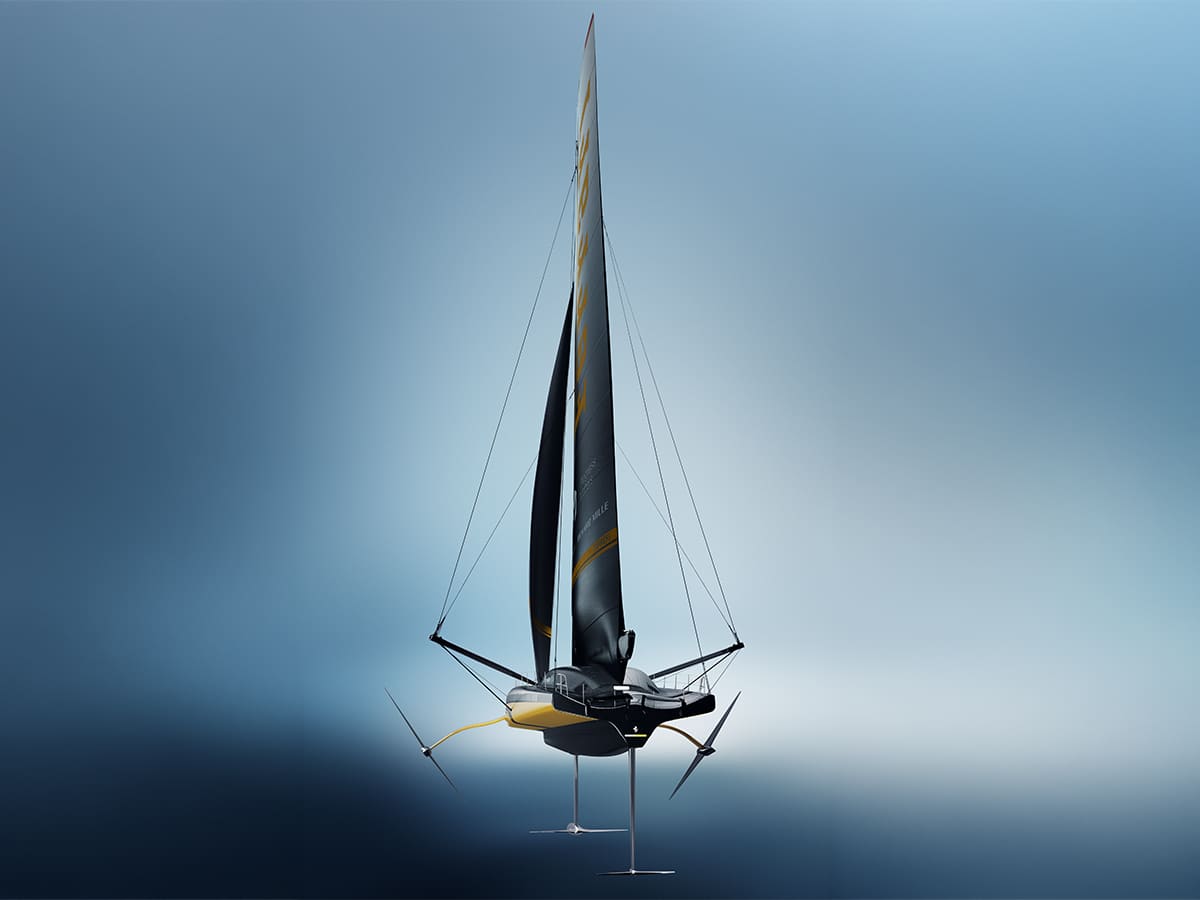
To maintain stability while foiling—a state where the hull lifts out of the water to reduce drag—the Hypersail requires a level of precision usually reserved for aerospace or Formula 1 suspension. The vessel’s "Flight Controller" is governed by an ECU architecture that manages four distinct voltage levels, peaking at 800V. This system is heavily influenced by the powertrain of the Ferrari Luce, the brand’s foray into all-electric performance.
The Flight Controller operates in two primary modes:
- High-Performance Mode: This mode maximizes the frequency of hydraulic adjustments to the foils, ensuring the vessel remains at the optimal pitch and ride height for maximum velocity. It utilizes the full discharge capability of the 800V batteries to drive high-speed actuators.
- Safe-Return/Economy Mode: In less favorable conditions or when energy conservation is paramount, the system reduces the frequency of adjustments and optimizes the foil angle for stability rather than pure speed, ensuring the vessel can maintain flight with minimal energy expenditure.
This dual-tier approach ensures that the Hypersail can handle the unpredictable nature of the open ocean while maintaining the redundancy required for long-distance racing.
Environmental Energy Harvesting: Solar and Wind Integration
The Hypersail does not rely solely on its crew for power. Ferrari’s engineers conducted extensive solar mapping simulations, analyzing typical oceanic racing routes to determine the most effective placement for solar collectors. The resulting 100-square-meter array is integrated into the deck using a specialized non-slip grip surface, allowing the crew to move safely across the panels. By placing panels only in high-yield zones, the team avoided the weight penalties associated with covering the entire hull.
Complementing the solar array are configurable wind turbines located at the stern. These turbines were designed using Ferrari’s aerodynamic expertise to ensure that they generate significant power without creating excessive drag that would hinder the boat’s sailing performance. The turbines are retractable and can be adjusted based on the wind’s intake angle, a direct application of the active aerodynamics used on Ferrari’s track-focused road cars.
Design Philosophy: The Giallo Fly Livery and Aerodynamics
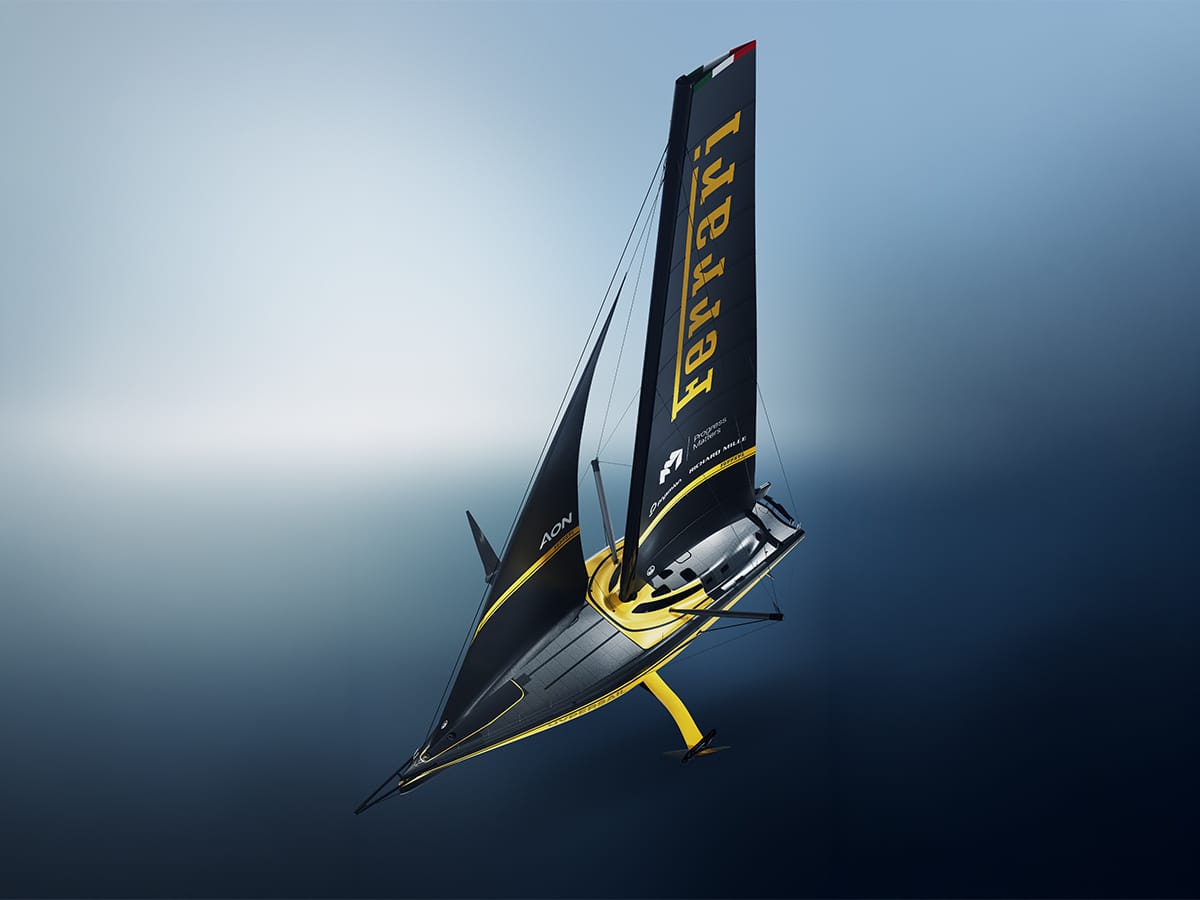
While the Hypersail is an engineering marvel, its aesthetic remains deeply rooted in Ferrari’s heritage. The design is performance-driven, with every curve of the carbon-fiber hull shaped by the interaction of wind and water. The vessel features several stylistic cues from the Maranello stable, including a "S-Duct" inspired by the 488 Pista and F80, which optimizes airflow around the cockpit area.
Departing from the traditional Rosso Corsa (Racing Red), Ferrari finished the Hypersail in "Nuovo Giallo Fly." This shade of yellow holds significant historical value for the brand, having first appeared on the 275 GTB and being the color of the city of Modena. In the maritime context, the name "Fly" serves as a dual reference to the vessel’s foiling capabilities. The yellow is contrasted by "Grigio Hypersail," a grey tone that highlights the raw, lightweight carbon fiber of the hull, echoing the classic livery of the 512 BB.
Strategic Impact and Industry Implications
The launch of the Ferrari Hypersail is a clear signal to the maritime industry that the boundaries between automotive and naval engineering are blurring. By utilizing the Hypersail as an "open innovation platform," Ferrari is effectively crowdsourcing data from the most extreme environments on Earth to refine its future road car technologies.
Industry analysts suggest that the Hypersail could influence several sectors:
- Sustainable Luxury: The success of the 100% energy autonomy system proves that high-performance luxury vessels do not need to rely on fossil fuels, setting a new standard for the yachting industry.
- Foiling Technology: As monohull foiling is notoriously difficult to stabilize, Ferrari’s use of 800V active control systems could provide a blueprint for future competitive racing classes.
- Materials Science: The use of advanced carbon fiber composites and specialized coatings developed for the Hypersail will likely find their way back into Ferrari’s road-going hypercars, focusing on weight reduction and durability.
Ferrari’s entry into the high-performance sailing world with the Hypersail is not merely a marketing exercise; it is a declaration of engineering intent. By successfully translating the complex systems of the Purosangue, the 12Cilindri, and the Luce EV into a maritime context, Maranello has proven that its technological prowess is not limited by the shoreline. The Hypersail stands as a testament to Ferrari’s commitment to self-sufficiency and innovation, positioning the Prancing Horse as a dominant force on both land and sea.



 Yuyun Lusiyani
 Joko Widodo
 Eva Lovia
 Pevita Pearce
 admin
admin