
 Eva Lovia
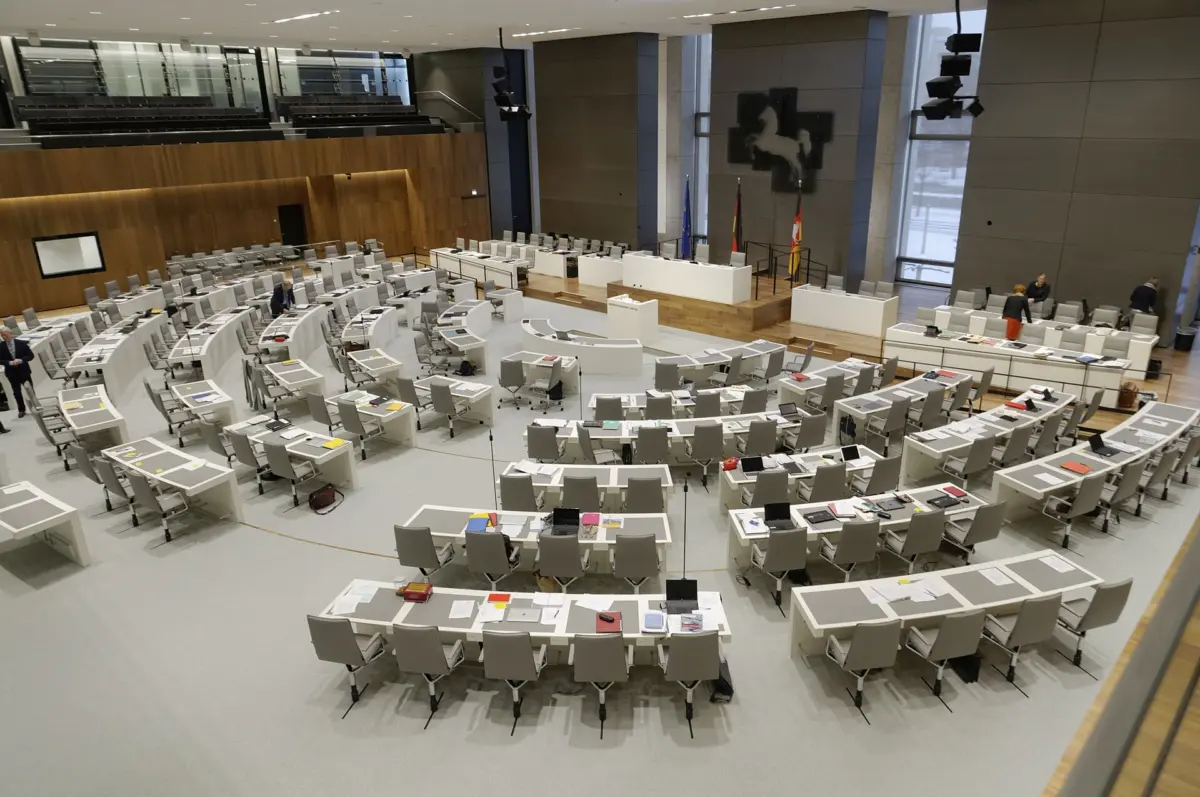
In a move that has ignited significant debate about democratic principles and the balance of power within the principality, Hereditary Prince Alois of Liechtenstein has exercised his constitutional authority to block a proposed reform of the nation’s abortion laws. The legislation, which had garnered approval from the Liechtenstein Parliament (Landtag) and was supported by a public campaign, was ultimately vetoed by the Prince, effectively preventing it from becoming law. This unprecedented action for a generation raises profound questions about the role of unelected heads of state in modern democracies and the extent to which their personal or constitutional prerogatives should supersede the will of elected representatives and a segment of the populace.
The Constitutional Framework and the Prince’s Prerogative
Liechtenstein’s political system, while parliamentary, retains unique elements derived from its constitutional monarchy. The Landtag, comprising 25 members elected for four-year terms, serves as the legislative body, debating and voting on proposed laws. Complementing this representative democracy are mechanisms of direct democracy, allowing citizens to initiate legislation through popular initiatives and to challenge existing laws or proposed reforms via referendums. However, the final step in the legislative process for any bill to acquire legal force is the sanction of the reigning Prince.
This requirement is enshrined in Article 9 of Liechtenstein’s constitution, which stipulates that laws must receive the Prince’s sanction. Article 65 further details the prerequisites for legislation to become valid, including parliamentary approval, princely sanction, a countersignature from the government, and subsequent publication. The Prince’s approval, therefore, is not a mere formality but a critical constitutional hurdle.
The Prince’s veto power is not a new concept in Liechtenstein. In 2012, a referendum was held on whether to remove these veto powers. The proposal was rejected by the electorate, indicating a constitutional consensus at that time to retain this aspect of the sovereign’s authority. However, the recent exercise of this power, particularly on a socially sensitive issue like abortion, has brought the implications of this retained prerogative under intense scrutiny, both domestically and internationally.
A Timeline of the Proposed Reform and its Veto
The journey of the abortion law reform began with a citizen-led initiative, gathering thousands of signatures to propose a liberalization of the existing laws. This public expression of support for change paved the way for the legislation to be presented to the Landtag. After extensive debate and deliberation, the Parliament ultimately voted in favour of the proposed reform. This parliamentary endorsement signified that, within the elected body, there was sufficient consensus to move forward with updating the legal framework surrounding abortion.
Following parliamentary approval, the proposed law was presented to Hereditary Prince Alois for his sanction. On [Date of Veto – if known, otherwise state "a recent date"], the Prince exercised his constitutional right to withhold this sanction. This action effectively halted the reform, leaving the existing legal restrictions on abortion in place. The decision came as a significant blow to campaigners and many parliamentarians who had worked towards what they viewed as a necessary modernization of the law, bringing it more in line with contemporary European standards and addressing the practical challenges faced by women in Liechtenstein.

Background and Context: Abortion Law in Liechtenstein
Liechtenstein’s current abortion laws are among the most restrictive in Europe. Abortion is generally prohibited and considered a criminal offense. Exceptions are permitted under strictly defined circumstances, primarily when a medical professional determines that the pregnancy poses a serious risk to the physical or mental health of the pregnant woman, or in cases of rape. These narrow exceptions mean that women seeking abortions outside these limited conditions are compelled to travel to neighbouring countries, such as Switzerland or Austria, where abortion is legal under more liberalised terms.
The proposed reform sought to expand the window during which abortions could be legally performed. While specific details of the proposed liberalization were not fully elaborated in the original text, the aim was generally understood to be a move towards allowing abortions within the first 12 weeks of pregnancy, a standard practice in many European nations. The defeat of this reform means that women in Liechtenstein will continue to face the financial, logistical, and emotional burdens associated with seeking such procedures abroad. This includes costs for travel, accommodation, childcare, and navigating unfamiliar healthcare systems, all while dealing with the personal distress of an unwanted pregnancy.
The Principle of Power and Accountability
The core of the controversy lies not solely in the issue of abortion itself, but in the fundamental question of who holds ultimate decision-making power in a modern democratic state. The author of the original article rightly points out that "This is not simply a debate about abortion. It is about power, accountability and whether one hereditary ruler should have the final say over decisions made by elected representatives."
The exercise of the Prince’s veto power, while constitutionally permissible, challenges the principle of representative democracy, where the will of the people, as expressed through their elected officials, is intended to be paramount. Critics argue that allowing an unelected individual to overturn legislation passed by a democratically elected parliament undermines the very foundation of representative governance. They pose the rhetorical question: "What is the point of a parliament if one unelected individual can prevent its decisions from becoming law?"
Supporters of the Prince’s action, conversely, may emphasize his constitutional duty to uphold the existing legal framework and potentially to act on deeply held moral or religious convictions, which are often intertwined with the historical and cultural identity of monarchies. They might argue that the 2012 referendum result, which affirmed the Prince’s veto powers, represents the ultimate democratic endorsement of this system. However, the argument against the exercise of such power, even if lawful, persists, highlighting the distinction between legality and democratic defensibility.
International Comparisons and Historical Precedents
Liechtenstein’s situation is not unique in the context of European monarchies grappling with the intersection of royal prerogatives and legislative progress. Similar scenarios have played out in other principalities and kingdoms, offering precedents and potential pathways for constitutional evolution.
Belgium: In 1990, King Baudouin of Belgium famously refused to sign legislation that would have liberalized abortion laws. In response, the Belgian government invoked a constitutional mechanism whereby the King was declared temporarily unable to reign. This allowed the legislation to become law without his personal signature, demonstrating a creative constitutional solution to overcome a monarch’s objection without fundamentally altering the monarchy itself.
Luxembourg: More recently, in 2008, Grand Duke Henri of Luxembourg faced a similar dilemma with legislation concerning euthanasia. His refusal to approve the bill led to a constitutional amendment that removed the sovereign’s role in sanctioning laws. Instead, the Grand Duke is now required to countersign laws passed by Parliament, effectively transferring the ultimate sanctioning authority to the elected government.
Monaco: The parallels with Monaco are particularly striking. In 2025, Prince Albert II reportedly refused to approve legislation aimed at liberalizing abortion in his principality, mirroring the situation in Liechtenstein. These cases collectively underscore a recurring tension between the symbolic and executive powers of hereditary rulers and the evolving social and legal norms of modern European societies.
These historical examples suggest that while a sovereign’s objection can temporarily halt legislative progress, it does not necessarily represent a permanent impediment. Constitutional frameworks can be adapted or interpreted to find resolutions that respect both tradition and democratic principles.
Implications for Liechtenstein and Beyond
The decision by Hereditary Prince Alois to veto the abortion law reform carries significant implications for Liechtenstein.
- Democratic Legitimacy: The immediate consequence is a challenge to the perceived democratic legitimacy of the principality’s governance. For those who advocate for greater alignment with international democratic standards, the Prince’s veto raises concerns about whether Liechtenstein’s political system truly reflects the will of its citizens.
- Women’s Rights and Healthcare Access: The most direct impact is on women in Liechtenstein, who will continue to face restricted access to abortion services. The necessity of traveling abroad for these procedures highlights potential inequalities in healthcare access based on economic means and personal circumstances.
- Constitutional Debate: The event is likely to reignite debates about constitutional reform, particularly regarding the extent of the Prince’s veto powers. While the 2012 referendum upheld these powers, the current controversy might spur renewed calls for a review or amendment of the constitution to further democratize the legislative process.
- International Perception: Liechtenstein, as a small but prosperous European nation, is often observed for its unique political structure. Such events can shape international perceptions of its commitment to democratic values and human rights.
The argument extends beyond the specific issue of abortion. The principle at stake – the power of one unelected individual to overrule legislative decisions – is applicable to any future legislation. Critics emphasize that the concern is not with the outcome of this particular decision, but with the power itself. If a hereditary prince can prevent legislation approved by an elected parliament on one issue, the precedent is set for similar interventions on other matters, regardless of whether one agrees with the specific legislative proposal.
In conclusion, Hereditary Prince Alois’s decision to veto the abortion law reform in Liechtenstein is a pivotal moment that transcends the immediate legislative debate. It forces a confrontation with fundamental questions about the nature of democracy, the distribution of power, and the evolving role of hereditary monarchs in contemporary European society. While the Prince acted within his constitutional rights, the exercise of that power has ignited a crucial dialogue about accountability and whether a modern democracy should permit an unelected individual to hold the final word on matters decided by elected representatives. The response to this challenge will undoubtedly shape the future constitutional landscape and democratic identity of Liechtenstein.




 Nila Kartika Wati

 Lina Irawan

 Yuyun Lusiyani

 Ana Megawati

 Joko Widodo
