
 Pevita Pearce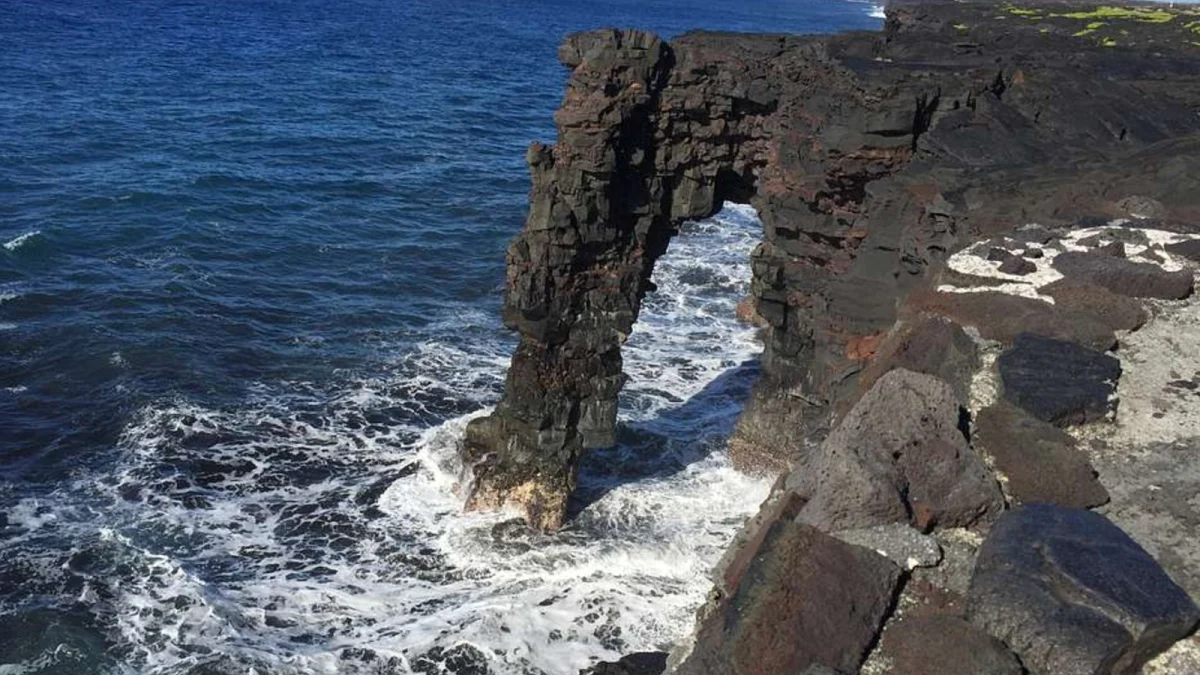
The landscape of the Island of Hawaiʻi has undergone a significant and permanent transformation following the collapse of the Hōlei Sea Arch, a towering 90-foot natural limestone and basalt structure that has long served as a symbol of the raw, erosive power of the Pacific Ocean. Officials at Hawaiʻi Volcanoes National Park confirmed that the landmark, which was formed approximately 550 years ago by ancient lava flows, has succumbed to the relentless battering of waves and the inevitable progression of coastal erosion. The collapse, while anticipated by geologists for decades, marks the end of an era for one of the most photographed features along the rugged Puna coastline.
Discovery and Timeline of the Collapse
The exact moment the Hōlei Sea Arch fell into the sea remains a matter of speculation, as the event occurred during a period of restricted access to the park. National Park Service (NPS) personnel last confirmed the arch was intact on September 23, 2026. However, by the morning of September 27, routine coastal monitoring revealed that the massive bridge of rock had vanished, leaving only the jagged stumps of its base and a debris field beneath the churning surf.
The timing of the collapse coincided with the passage of Tropical Storm Nolo, which brought high-energy swells and gale-force winds to the southern shores of the Big Island. During the storm, the park was temporarily closed to visitors to ensure public safety, meaning there were no eyewitnesses to the final failure of the structure. Park officials suggested that the increased hydraulic pressure from the storm surge likely acted as the final catalyst for the arch’s structural failure.
The U.S. Department of the Interior formally acknowledged the loss on October 2, 2026, releasing a statement via social media that described the event as the "latest transformation of the park’s remote and rugged coastline." The collapse serves as a stark reminder of the transient nature of volcanic landforms in an environment defined by constant geological activity.
Geological Origins and the Process of Differential Erosion
The Hōlei Sea Arch was not a permanent fixture of the Hawaiian landscape but rather a fleeting moment in a much longer geological cycle. It was carved from a lava flow that reached the sea roughly five and a half centuries ago, during a period of high volcanic activity from Kīlauea. As the lava cooled and hardened into basalt, it formed a solid platform extending into the ocean.
The creation of the arch was the result of a process known as differential erosion. Over centuries, the Pacific Ocean’s waves exploited cracks, joints, and less dense layers within the basalt. As the water hammered against the cliff face, it compressed air within these fissures, creating a pneumatic effect that slowly pried the rock apart. Eventually, the waves cut completely through a section of the cliff, leaving a bridge of harder, more resilient rock suspended over the water.
At its peak, the arch stood 90 feet tall, a testament to the scale of the volcanic events that built the island. However, the same forces that created the arch were also responsible for its eventual destruction. For more than a decade, the U.S. Geological Survey (USGS) had monitored the site, noting that the "bridge" of the arch was thinning and that deep fractures were migrating toward the center of the span.
A History of Instability and Seismic Impact
While the sea was the primary architect of the arch’s demise, seismic activity played a crucial secondary role. The stability of the Hōlei Sea Arch was significantly compromised during the 2018 eruption and summit collapse of Kīlauea. During that summer, the island was rocked by thousands of earthquakes, many of which were powerful enough to trigger rockfalls and cliff collapses along the coastline.
Following the 2018 events, NPS rangers observed new, widening cracks in the ground near the arch. These observations led to the permanent closure of the original visitor viewing area in January 2020. Geologists determined that the entire coastal shelf in the Hōlei area was "slumping," a process where large blocks of land slowly slide toward the ocean due to gravity and the lack of underlying support.
The 2020 closure was a proactive measure based on data showing that the cliffs were no longer structurally sound. In the years following, the park established a secondary viewing point further back from the edge, but even that area was subject to frequent reassessment as the coastline continued to retreat.
Official Responses and Public Safety Warnings
In the wake of the collapse, the National Park Service has issued urgent warnings to the public, emphasizing that the area remains extremely hazardous. Despite the disappearance of the arch, some visitors have been observed crossing safety barriers and entering the restricted zone to photograph the site where the landmark once stood.
"The cliffs surrounding the former Hōlei Sea Arch are incredibly unstable," a park spokesperson stated. "The loss of the arch indicates that the integrity of the entire cliff face has been compromised. Rockfalls can occur without any warning, and anyone standing near the edge risks falling into deep, turbulent waters with no means of rescue."
The NPS has reinforced its "stay back" policy, noting that the coastal basalt is brittle and prone to "undercutting," where the waves erode the base of a cliff while the top remains intact, creating a deceptive and dangerous overhang. The park is currently evaluating whether further sections of the Chain of Craters Road will need to be restricted to prevent accidents.
The Broader Impact on Park Tourism and Culture
The loss of the Hōlei Sea Arch is a significant blow to the tourism infrastructure of Hawaiʻi Volcanoes National Park. Located at the terminus of the Chain of Craters Road, the arch was a primary destination for the hundreds of thousands of visitors who travel the 19-mile winding route each year. Its absence removes a major visual highlight of the coastal drive, which takes visitors from the summit of Kīlauea down to the sea level.
Beyond its value as a tourist attraction, the arch held cultural significance. In Hawaiian tradition, the landscape is the domain of Pele, the goddess of fire and volcanoes. The creation and destruction of land are seen as natural expressions of her power. The collapse of Hōlei is viewed by many in the local community not as a tragedy, but as a natural transition in the life cycle of the island—a process of huli, or change.
The arch also served as an outdoor classroom for students and researchers. It was a textbook example of coastal geomorphology, demonstrating how volcanic islands are reshaped by the elements. Educational programs that once used the arch as a focal point will now pivot to discussing the lifecycle of sea arches and the speed at which geological changes can occur in a volcanic environment.
Environmental Implications and the Future of the Coastline
The collapse of the Hōlei Sea Arch is indicative of a broader trend of coastal retreat affecting the Hawaiian Islands. While sea arches are inherently temporary, the rate of their disappearance is being monitored closely in the context of rising sea levels and increased storm intensity.
Data from the National Oceanic and Atmospheric Administration (NOAA) indicates that the frequency of high-energy wave events in the Central Pacific has increased over the last several decades. Higher sea levels allow waves to strike higher up on the cliff faces, accelerating the erosion of features like Hōlei. As the Pacific continues to reclaim the land, other features along the Puna coast, including sea caves and smaller arches, are likely to face similar fates in the near future.
However, the loss of one feature often paves the way for the creation of another. As the cliffs retreat, new caves are being hollowed out, and in another few centuries, a new arch may emerge from the basalt. This "conveyor belt" of geological formation ensures that while specific landmarks may vanish, the rugged beauty of the Hawaiian coast remains a dynamic and evolving spectacle.
Conclusion: A Landmark Remembered
The Hōlei Sea Arch now joins a list of lost natural wonders, such as the Azure Window in Malta or London Arch in Australia, which succumbed to the same inevitable forces of nature. For those who had the opportunity to stand before it, the arch represented the intersection of the island’s fiery birth and its watery boundaries.
While the physical structure is gone, its legacy persists in the millions of photographs and memories held by visitors from around the world. For the National Park Service, the focus now shifts from preservation to education and safety. The collapse of the arch serves as a powerful reminder that in Hawaiʻi, the earth is never truly still, and the only constant is change. As the dust settles and the Pacific continues to wash over the site of the former arch, the island continues its slow, majestic transformation, guided by the same forces that first brought it forth from the depths of the ocean floor.




 Jia Lissa
 Yuyun Lusiyani
 Joko Widodo
 Eva Lovia
