
 Lina Irawan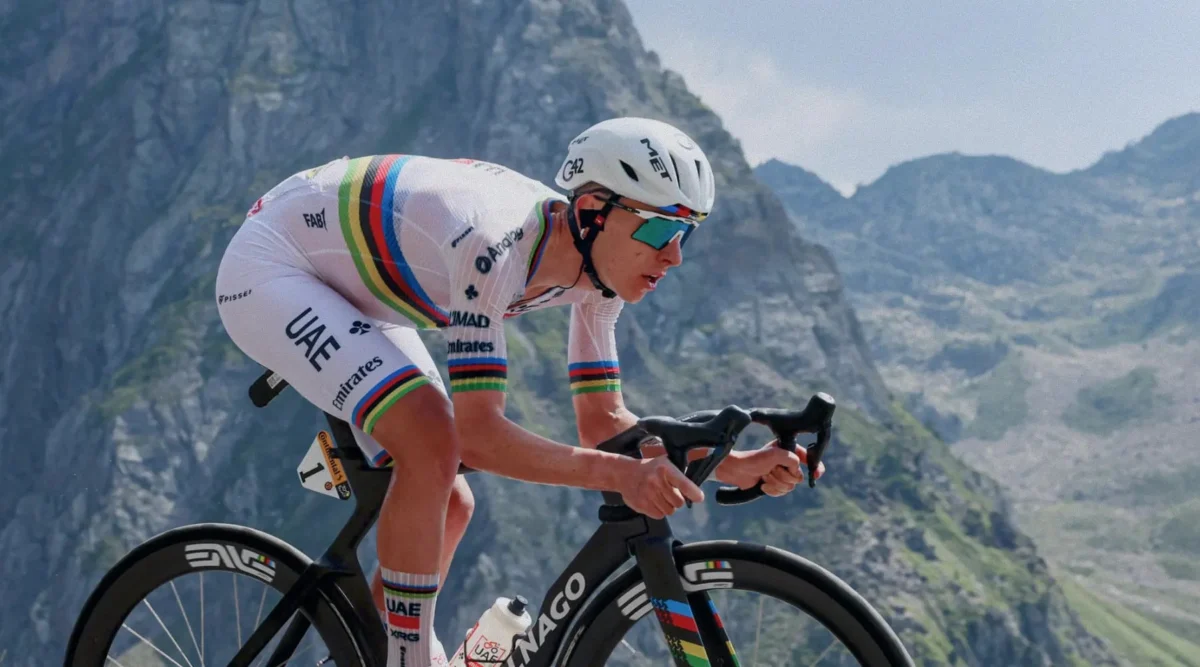
On July 26, 2026, the cycling world witnessed a historic milestone as Tadej Pogačar rolled into Paris to claim his fifth Tour de France title, cementing his status among the pantheon of the sport’s greatest legends. Finishing six minutes and 26 seconds ahead of his closest rival, Remco Evenepoel, Pogačar’s performance was characterized by a level of dominance rarely seen in the modern era. While his five stage wins during the three-week odyssey across France were visible to millions of spectators, the underlying physiological engine that powered this feat remained largely a matter of speculation until now. In an unprecedented release of athletic data, WHOOP has provided a comprehensive analysis of Pogačar’s season, offering a window into the training, recovery, and biological stability of the Slovenian champion and six of his UAE Team Emirates XRG teammates.
The data set is exhaustive, covering approximately 1,400 rider-nights between January 1 and July 20, 2026. By wearing the WHOOP biometric tracker nearly every night of the year, Pogačar and his squad provided analysts with a near-continuous stream of information regarding their physiological responses to the extreme stressors of professional cycling. The findings reveal a profile of an athlete who is not only a "superhuman" when compared to the general population but who possesses a unique capacity for adaptation and stability that sets him apart even from his elite peers.
Historical Context: Joining the Five-Win Club
Pogačar’s 2026 victory is more than just another trophy; it represents his entry into one of the most exclusive circles in all of professional sports. By winning his fifth Tour de France, he equals the record held by four of the most iconic figures in cycling history: Jacques Anquetil, Eddy Merckx, Bernard Hinault, and Miguel Indurain. Unlike some of his predecessors, who relied on specialized time-trialing or defensive mountain climbing, Pogačar’s 2026 campaign was marked by an aggressive, multi-terrain dominance that saw him attacking in both the high Alps and on punchy transition stages.
The margin of victory—six minutes and 26 seconds—is particularly striking in an era defined by "marginal gains," where podium spots are often decided by seconds. To understand how such a gap was possible, sports scientists have looked toward the biometric data to identify the "X-factor" in Pogačar’s physiology.
The Physiology of a Champion: VO2 Max and Biological Age
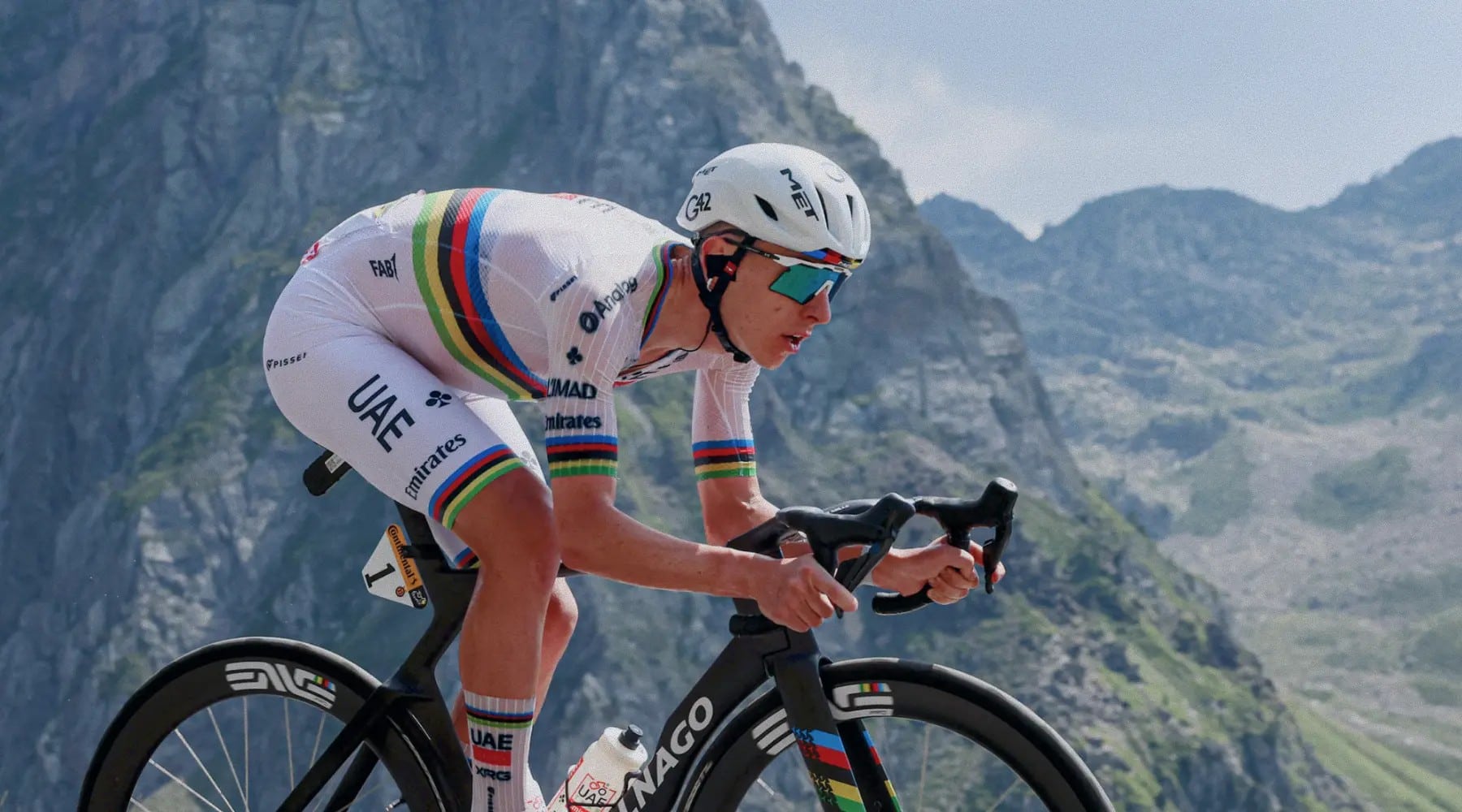
When compared to age-matched members of the general public, Pogačar’s data suggests he is functioning on a different biological plane. One of the most significant metrics surfaced by the analysis is his "WHOOP Age," a calculation based on cardiovascular efficiency and recovery capacity. Despite his actual age, Pogačar’s biological metrics consistently trend roughly 12 years younger. This discrepancy is driven primarily by an elite VO2 Max—the maximum rate of oxygen consumption measured during incremental exercise.
However, the analysis notes a crucial "twist": when Pogačar is compared to his UAE Team Emirates XRG teammates, the raw physiological numbers begin to converge. At the WorldTour level, almost every rider possesses a massive aerobic engine and a resting heart rate that would be considered bradycardic in a non-athlete. The data suggests that Pogačar’s dominance is not merely the result of having a "bigger engine" than his teammates, but rather how he manages that engine through two specific factors: the precision of his peaking process and his remarkable physiological stability under duress.
The Rebound: A Masterclass in Tapering
The 2026 season for UAE Team Emirates XRG was built around a meticulously planned "overload and rebound" strategy. The squad engaged in a heavy training block followed by the Tour de Suisse in mid-June, which served as the final high-intensity tune-up. Pogačar won the Tour de Suisse, but the effort took a significant toll on his body. By the end of that race, his Heart Rate Variability (HRV)—a key indicator of autonomic nervous system balance—dropped to 88ms, and his recovery score fell to 43 percent. This represented his lowest physiological ebb of the entire season.
What happened next is what performance experts believe decided the Tour de France. During the subsequent taper period leading up to the Grand Départ, Pogačar’s body underwent a "super-compensation" phase. While his teammates also saw improvements during the taper, Pogačar’s rebound was exponential. By the time he reached the starting line in July, his HRV had surged to 121ms, his resting heart rate had dropped to a staggering 38.2bpm, and his recovery score sat at 78 percent.
The data shows that Pogačar’s recovery rebounded by 79 percent from his post-Suisse low, nearly double the 44 percent average rebound seen in his teammates who followed the exact same program. This ability to absorb massive amounts of stress and adapt more efficiently than other elite athletes is a hallmark of his 2026 form. Dr. Jeroen Swart, the head of performance for UAE Team Emirates XRG, describes this as "durability"—the capacity to maintain high power output late in a race or late in a three-week tour as if the athlete were still fresh.

Stability Amidst the Chaos of the Peloton
In the high-pressure environment of a Grand Tour, consistency is often more valuable than raw power. The WHOOP data highlights that Pogačar’s day-to-day HRV variability during the Tour de France was significantly lower than his teammates. His variability sat at 13.4 percent, compared to a team average of 19.4 percent.
While other riders experienced "yo-yoing" metrics—where a hard stage would result in a massive physiological crash the following day—Pogačar remained metronomic. This stability allowed him to take calculated risks. On the stages he won, the data shows he spent approximately 89 minutes above his functional threshold power (FTP). This is 2.6 times the duration spent above threshold by his teammates on the same roads. Despite this extreme exertion, his body rarely signaled a state of overtraining or exhaustion.
A prime example of this resilience occurred following his victory on Stage 14. After a brutal mountain finish and the subsequent podium ceremonies and media obligations, Pogačar’s sleep was interrupted, leaving him with only four hours of rest. For most riders, such a combination of extreme physical exertion and sleep deprivation would result in a "red" recovery score (below 33 percent). However, Pogačar woke up with a 62 percent recovery score, with his HRV remaining above his baseline. This capacity to "absorb" a bad night and a hard win without physiological degradation is what allowed him to maintain his lead throughout the final week.
The Role of Sleep and Performance Management
The 2026 data also sheds light on Pogačar’s disciplined approach to rest. Throughout the Tour, he averaged 8.1 hours of sleep per night, a significant increase from his average of 6.9 hours during the pre-race taper. By prioritizing sleep "banking," he was able to maintain an average sleep performance of 88 percent despite the logistical hurdles of moving between hotels every night.
Dr. Jeroen Swart emphasized that the team’s strategy was to ensure Pogačar arrived at the race with something in reserve. "If you go in at 101%, you’re gonna do way worse than if you go in at 95%," Swart noted, referring to the danger of overtraining before a three-week race. The data confirms that Pogačar managed his "strain" perfectly, never pushing into the red zone during the training build-up so that he could maximize his output when it mattered most in July.
Broader Implications for Sports Science
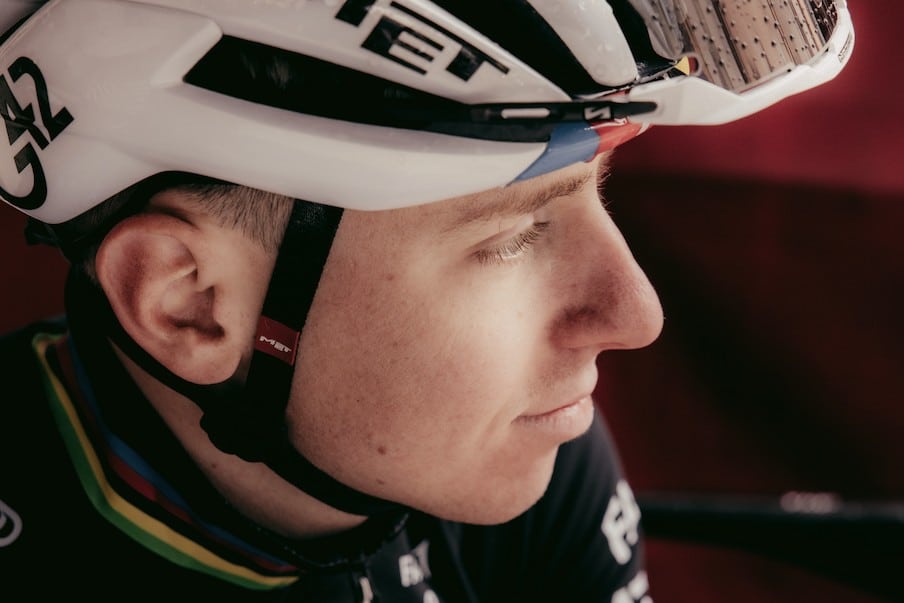
The release of this data is a landmark moment for transparency in professional cycling, a sport historically guarded about its performance metrics. The ability to track real-time recovery and strain has transformed how teams manage their riders. For UAE Team Emirates XRG, the use of wearable technology like WHOOP serves as a "dashboard" for the human body, allowing coaches to adjust intensity based on how a rider is actually recovering rather than how they are "supposed" to feel.
Furthermore, the analysis provides a roadmap for what it takes to win at the highest level of endurance sports. It suggests that while high-end power is the price of entry, the ultimate victor is the athlete who can remain the most stable and recover the most rapidly over 21 days of competition.
Conclusion: A Legacy Defined by Data
Tadej Pogačar’s fifth Tour de France victory will be remembered for the panache with which he rode, but the WHOOP data ensures it will also be remembered as a triumph of modern sports science. The numbers paint a picture of a rider who has mastered the art of the "rebound," turning the fatigue of June into the dominance of July.
As the cycling world looks toward the 2027 season, the question is no longer just about who has the highest wattage, but who can match Pogačar’s metronomic stability and supernatural recovery. For now, the Slovenian remains in a league of his own, backed by a season of data that proves he is as much a marvel of physiology as he is a master of the bicycle. With five titles secured, the pursuit of a record-breaking sixth now seems not just possible, but, based on the metrics, entirely within his physical reach.




 Yuyun Lusiyani
 Joko Widodo
 Eva Lovia
 Pevita Pearce
 admin
admin