
 Yuyun Lusiyani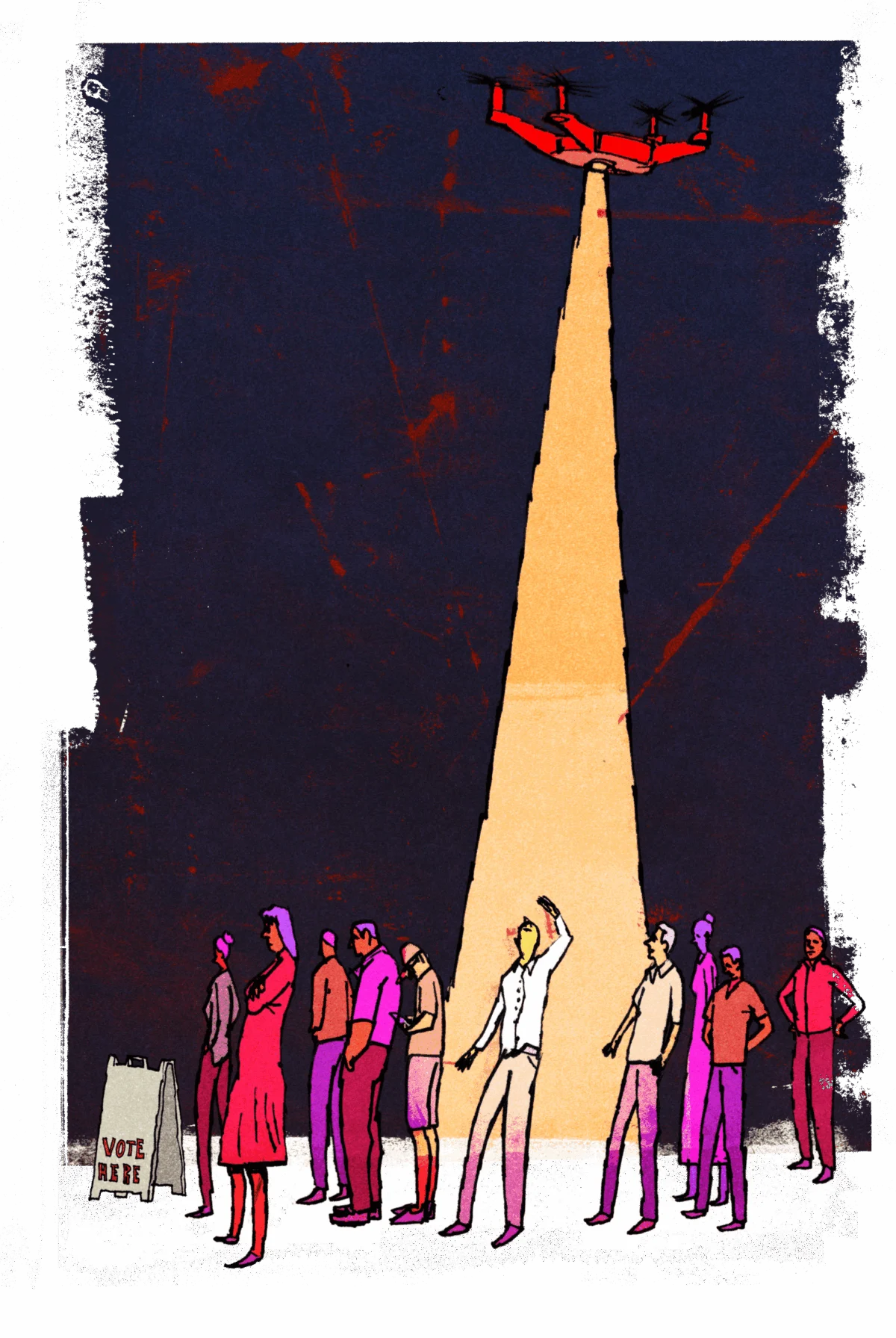
In late March, Joe Teirab, the second-in-command at Minnesota’s U.S. attorney’s office, found himself confronting an urgent directive from Washington. The federal government, driven by President Donald Trump’s unsubstantiated assertions of widespread illegal voting by noncitizens swaying American elections, was in a frantic scramble to unearth criminal cases. Homeland Security Investigations (HSI), a formidable federal law enforcement agency, had deployed agents nationwide, including hundreds across Minnesota, to pursue leads.
Teirab was already under considerable pressure. An earlier communication from Nick Davis, a high-ranking Justice Department appointee spearheading the election fraud initiative, had underscored the critical priority of these cases, stipulating that Teirab and his team could not decline them without explicit approval from higher departmental echelons. On March 24, Davis issued a peremptory demand for a status report, allowing mere hours for a response.
Teirab, a former Marine and a Harvard Law alumnus who had previously run for Congress as a Republican, responded with an unvarnished assessment. "Bottom line up front," he wrote in an email reviewed by ProPublica, "After subpoenaing records on about 130 people, only one had been referred for prosecution." He further detailed that agents had inundated local election offices with calls and demands for voting histories, exhibiting "a complete lack of understanding" of illegal voting investigations. Teirab concluded that the "HSI task force has been disjointed and disorganized" and the entire process "dysfunctional."
This internal dissent illuminates a broader investigation by ProPublica, revealing for the first time the full extent to which the Trump administration leveraged HSI’s personnel, advanced technology, and sweeping legal authority to advance its election agenda. Despite the prodigious resources poured into this campaign, the results have been meager, marked by significant internal pushback, privacy concerns, and a demonstrable lack of actionable cases.
The President’s Unprecedented Campaign Against Noncitizen Voting
Since regaining the White House, the Trump administration has launched a series of initiatives unprecedented in scope and aggression to identify and prosecute noncitizen voting. This push is rooted in President Trump’s long-standing, yet consistently unsubstantiated, claims that illegal voting by noncitizens is rampant and threatens the integrity of American elections.
The intensity of this campaign has escalated in recent weeks. In a nationally televised address, President Trump asserted that the American election system was "so vulnerable that no one can possibly defend it." To bolster this claim, the Department of Homeland Security (DHS), HSI’s parent agency, released documents purporting to have identified over 250,000 noncitizens on voter rolls in just four states, all led by Democrats. Crucially, these documents offered no methodological explanation for how this substantial figure was calculated, drawing immediate skepticism from election experts and state officials.
It has been publicly known that HSI—an agency established in the aftermath of 9/11 to combat transnational criminal enterprises such as drug cartels, terrorism, and human trafficking—was tasked with leading this domestic campaign to uncover election fraud. However, the ProPublica investigation delves deeper, exposing the internal machinations, the initial reluctance of career professionals, and the ultimate, largely fruitless outcome of this strategic repurposing of a federal law enforcement agency.

Internal Warnings and Methodological Flaws
The internal emails and interviews obtained by ProPublica reveal a pattern of disregarded warnings from career staffers within the Justice Department. These professionals cautioned that transferring voter rolls wholesale to HSI for the purpose of identifying noncitizen voters could violate federal privacy laws. Similarly, seasoned HSI insiders expressed concerns that utilizing the agency’s sophisticated databases and tools to cross-reference these lists would inevitably generate mismatches and wildly inflated results due to the inherent limitations of publicly available data. Despite these expert opinions, the administration pressed forward.
The genesis of HSI’s involvement in the election fraud hunt dates back to at least summer 2025. It began with a proposal from a midlevel agent, Frank Quiñones, who had publicly echoed President Trump’s election claims. Quiñones, who had been transferred to Washington to oversee a unit redirected to voting investigations, approached the HSI Innovation Lab with an idea: use the agency’s powerful databases and tools to find noncitizens on state voter lists, even those from which confidential information had been redacted. The Justice Department, under Trump, had already collected numerous public voter rolls as part of a controversial effort to compel states to surrender unredacted versions.
The Innovation Lab, a facility equipped with access to some of the government’s most sensitive databases—ranging from suspicious activity reports to arrest records—was tasked with developing software tools to analyze this data. Lab staff, however, viewed Quiñones’s proposal as "a little insane," recognizing it as both unreliable and improper. A key issue was the absence of unique identifiers, such as partial Social Security numbers, in public voter rolls. Linking these incomplete records to HSI’s comprehensive data was guaranteed to produce an "ungodly" number of false positives, a phenomenon widely documented in similar data-matching efforts. Furthermore, the lab team harbored serious ethical and legal concerns about violating longstanding safeguards designed to protect private citizen data. "They didn’t want to touch this," one staffer recalled, noting Quiñones’s repeated retort: "The president wants this!"
Undeterred, Tom Hodge, an HSI data analyst, proposed running the voter information through the Athena Toolbox, an analytical platform developed by Sandia National Laboratories with access to all of HSI’s databases. Over the next six weeks, Hodge and the Sandia team worked on the project. Their initial findings, according to a former HSI official, suggested they had found "5,000 high-confidence illegal voters" in just a single New Jersey county. This figure was immediately challenged by New Jersey election officials as impossibly high, even accounting for a known administrative error that had mistakenly registered 6,600 noncitizens (of whom fewer than 400 had voted).
This apparent "breakthrough" came at a critical juncture for the administration, as other avenues for identifying noncitizens on state voter rolls were encountering roadblocks. Many states refused to use the Systematic Alien Verification for Entitlements (SAVE) system for citizenship checks or to provide unredacted voter rolls to the Justice Department. Courts had also largely stymied the DOJ’s attempts to compel states to hand over records, citing constitutional provisions granting primary control over elections to the states.
By August 2025, Quiñones was actively promoting the "HSI Tool" as a superior alternative to SAVE, touting its potential to fuel both criminal and immigration investigations. Top election-related officials at DHS and the Justice Department, including Heather Honey, a prominent election denier appointed as a senior counselor at DHS, swiftly endorsed the tool. In November, J. Brian Sikma, special assistant to the president, expressed excitement over the New Jersey trial results, noting the identification of a "very significant number" of "potential non-citizens." He stressed the "paramount importance" of expeditiously reviewing public voter rolls obtained from other states.
Running "Roughshod" Over Privacy Laws
As momentum for using HSI’s technology to scrutinize voter information grew, significant legal and privacy concerns escalated within the Justice Department. Career attorneys, including specialists in privacy law, voiced unease that the wholesale transfer of voter rolls from the DOJ to DHS might be illegal. These rolls contained sensitive personal information on millions of Americans, even public versions including addresses, birth dates, and party affiliations. For the 16 states that had complied with DOJ requests, unredacted lists included partial Social Security numbers or driver’s license information.

Federal laws, notably the Privacy Act of 1974, strictly govern the collection, use, sharing, and protection of data by government agencies. They require advance disclosure of data plans, public comment, and generally prohibit sharing information without consent, save for limited exceptions. The Trump administration’s broader efforts to combine data across federal agencies had already faced repeated criticism from courts and whistleblowers for failing to adhere to these privacy restrictions. In June, a judge prohibited the government from using SAVE for mass searches, ruling that DHS had violated federal privacy laws by accessing Social Security data without proper authorization.
In July 2025, as rumors of the DOJ handing over voter data to DHS circulated, a half-dozen career attorneys reassigned to the voting section conveyed their profound discomfort to supervisors. Their concerns were dismissed, leading most to resign. The DOJ’s Office of Legal Counsel, however, pushed forward, asserting that a Privacy Act exception allowed HSI to receive such data without public notice for law enforcement purposes, provided DHS submitted an official request.
Nikhel Sus, chief counsel for Citizens for Responsibility and Ethics in Washington (CREW), which has litigated against the administration on privacy grounds, argued that this exception was intended for obtaining information on individual criminal suspects, not for mass access to data on people not suspected of wrongdoing.
Peter Winn, a 29-year Justice Department veteran and former acting privacy chief, drafted a letter outlining a data-sharing agreement. In a February 12 email to top DOJ officials, Winn stated he had rewritten an initial draft to "make the information sharing arrangement far easier to defend, if and when it is challenged in court." He proposed a more cautious approach, with DHS requesting "pertinent and relevant" information about specific individuals, rather than receiving a "huge amount of raw unprocessed voter registration data." Winn explicitly warned that the initial idea involved "far too much unnecessary legal risk, given that 99% of the data would implicate the privacy and civil liberties of United States Citizens, and would risk adding to the false narrative in the establishment press of DOJ and DHS being unconcerned with the privacy and civil liberties of Americans."
Winn’s suggested restrictions were quickly abandoned. A second draft, dated March 4, altered the language to allow the voter information to be "transferred" to HSI, with only a nominal exception for redacting party affiliation if possible. The final letter, signed by Todd Lyons, then acting director of ICE, and sent to the DOJ just two days later, eliminated even that limitation. This three-paragraph document granted HSI broad authority to use the voter rolls for any "appropriate investigation of potential violations of federal election law."
A Justice Department spokesperson defended these actions, asserting that "no one should oppose intergovernmental data sharing and coordination that enable swift investigations and prosecution of illegal alien voting." DHS echoed this, calling such sharing "essential to protecting America’s election process by keeping noncitizens off voter rolls" and "an easy step to secure our elections."
However, critics like Sus contend that by pooling sensitive personal identifiers, along with party and voting histories, the administration has "run roughshod" over privacy laws, creating a "1984-style database" capable of surveilling political participation. CREW filed a lawsuit in April on behalf of Common Cause, arguing the law enforcement exception cannot justify such mass sharing. Eric Balliet, a high-level HSI manager who retired in 2024, called it "a mass data-collection effort by the government against its own citizens in a non-criminal setting," warning of increased risks of identity theft for law-abiding citizens.
Collapsing Claims and Minimal Prosecutions
By January 2026, scores of HSI agents were fanning out across the country, tasked with investigating thousands of leads on suspected illegal voting. Approximately 25,000 leads originated from SAVE identifications of potential noncitizens on voter rolls. Another 15,000 were directed to HSI’s cross-border financial crimes unit, which was instructed to prioritize them over traditional money laundering and fraud cases. Quiñones’s unit initiated a separate effort, reviewing individuals who had recently become citizens to determine if they had voted before naturalization and subsequently lied during their naturalization interviews. Further leads emerged from running public voter rolls through the HSI lab’s databases, including those of New Jersey and Pennsylvania. DHS claimed these efforts identified "as many as" 35,152 potential noncitizens in New Jersey and 14,576 in Pennsylvania.

Yet, once federal investigators commenced their on-the-ground inquiries, these cases frequently collapsed. A ProPublica analysis of Justice Department data shows that between January 2025 and May 2026, fewer than 150 alleged noncitizen voters were referred for prosecution nationwide. Of these, a mere 41 were actually charged with illegal voting or other election-related crimes. To put this in perspective, over 150 million people cast ballots in the most recent presidential election.
The largest cluster of cases, eight convictions and seven pending, emerged from the Southern District of Florida, led by Jason Reding Quiñones (no relation to the HSI agent), a staunch Trump ally known for investigating the president’s political opponents. In the four states where DHS claimed to have found over a quarter-million noncitizens on the rolls—collectively representing more than 40 million registered voters—only seven noncitizen voting cases had been initiated by May.
A ProPublica review of records obtained by advocacy groups like the Campaign Legal Center and Democracy Forward corroborates the difficulties HSI investigators faced. Emails between agents and local election officials in Texas and Ohio revealed that much of the federal information on purported noncitizens was inaccurate, stemming from flawed data matching. Agents frequently discovered that individuals were not registered in the counties HSI believed them to be, or had been mistakenly added to voter rolls after disclosing their noncitizen status. Many identified individuals had never even voted.
Most HSI agents, whose expertise lies in complex international crimes, possessed no experience in election fraud investigations. Joe Teirab’s email from Minnesota vividly described the ensuing chaos when the state and six counties received subpoenas for voter records. "An unknown number of agents are constantly arriving in Minnesota without any knowledge of the investigation, the issues already discussed and decided, and the processes they need to follow," Teirab lamented. "Instead of getting up to speed and learning, they have demanded many calls and subpoenas, most of which demonstrate a complete lack of understanding of the investigation." In Stearns County, HSI agents subpoenaed voting histories for 13 individuals; only six actually lived there.
Minnesota Secretary of State Steve Simon, a Democrat, criticized the federal investigators’ "ignorance about the nuance of elections administration," asserting that purposeful election crime is "microscopic." He added, "The very human errors that can happen are not some sort of plot or scheme to dirty up the voting rolls, but are just everyday human beings making mistakes, not intending at all to violate any law." As of May, only one illegal voting case has been referred for prosecution in Minnesota, a state with over 3.8 million registered voters.
Even Republican-led states like Ohio, which shared unredacted voter rolls with the DOJ and utilized the SAVE system, struggled to meet the administration’s demands. In October, the Ohio secretary of state referred over 1,000 voters identified as possible noncitizens, claiming 167 had voted since 2018. At least nine HSI agents in Cincinnati and Cleveland began investigations, bombarding local election officials with requests for decades-old records. Mohamed Al-Hamdani, a Democratic member of Montgomery County’s Board of Elections, described these inquiries as "witch hunts" that drained staff time. Despite an email from Nick Davis in February pressing for an "election integrity" update, only two voting cases had been referred for prosecution in Ohio by May, and no one had been charged, out of nearly 8 million voters.
Historically, federal prosecutors rarely pursued charges against noncitizen voters who genuinely misunderstood the law, particularly without evidence of a coordinated plot. However, U.S. attorneys’ offices are now adopting a different approach, pursuing prosecutions that carry severe penalties, including prison terms or deportation. For instance, in May 2025, federal prosecutors in Florida filed illegal voting charges against a Ukrainian mother and daughter who had registered after obtaining green cards and voted in the 2024 election. They have pleaded not guilty, with the mother stating she believed her green card permitted her to vote. Their trial is scheduled for September.
"Far-Reaching Consequences": Impact on National Security and Democratic Trust
Experts in both elections and national security warn of profound longer-term costs associated with unleashing federal investigative and prosecutorial power to validate presidential claims about noncitizen voting. Current and former HSI agents report that critical investigations—including task forces targeting drug rings, human trafficking, and money laundering—have languished due to the agency’s pivot toward noncitizen voting and immigration enforcement.

In one stark example from February 2026, an HSI agent in Ohio, who had been leading a multistate child sex abuse investigation, was abruptly reassigned to pursue dozens of leads on suspected noncitizen voters. This work consumed months, delaying an arrest in the child sex abuse case until May. Prosecutors subsequently filed child exploitation and pornography charges against the 38-year-old suspect, linked to acts involving at least five 14-year-old girls. "Cases like this don’t just stop," stated Eric Balliet, the 23-year HSI veteran. "When you pull people off them for an extended period of time, those criminal networks will adapt, and people get killed and kidnapped."
Federal data underscores a broader slowdown in HSI’s most urgent work. An annual government report indicated that the number of wiretaps obtained by DHS—frequently used in drug trafficking investigations—plummeted to 23 in 2025, down from 133 the previous year. DHS attributed this decline to "changes in administration enforcement and prosecutorial priorities." John Tobon, a high-ranking HSI official who retired in early 2025, grimly observed, "It’s never been a better time to be involved in transnational organized crime."
In its official statement, DHS denied neglecting its core mission, asserting that HSI had increased efforts against criminal cartels, gangs, and drug traffickers in response to multiple Trump executive orders.
Despite the paltry number of prosecutions resulting from HSI’s voting-related investigations, voter advocacy groups express deep concern that the Trump administration will leverage these efforts to justify even more extreme interventions. Recent tactics include threatening to withhold funds from states that refuse to check voter rolls for noncitizens and stating intentions to prosecute state election officials who "knowingly" fail to remove noncitizens. President Trump has also continued to advocate for the "SAVE America Act," which would mandate proof of citizenship for voter registration—a measure critics decry as a barrier to voting. Democrats are reportedly preparing for the possibility of federal troops being deployed to polling places, raising fears of voter intimidation.
Dax Goldstein, a director at the States United Democracy Center, a nonprofit dedicated to building confidence in elections, summarized the gravity of the situation: "Those concerns are playing out in real time, with far-reaching consequences. When federal agencies are misused and weaponized, people lose trust in government itself." The campaign, while failing to prove its initial claims, has arguably succeeded in diverting critical resources, undermining privacy, and fostering distrust in the foundational processes of American democracy.



 Joko Widodo
 Eva Lovia
 Pevita Pearce
 admin
admin
 Lina Irawan