
 Yuyun Lusiyani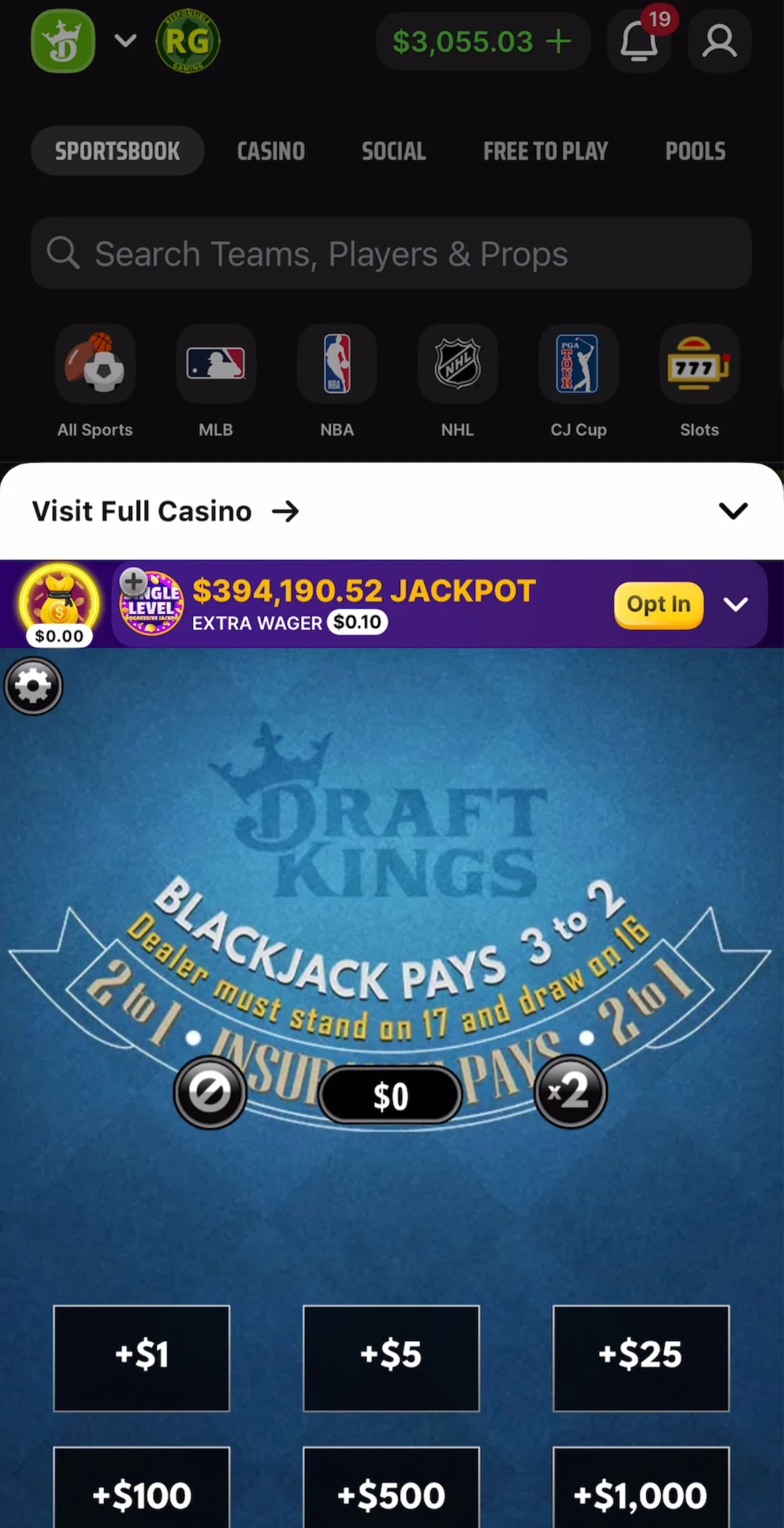
Late May found a reporter immersed in the high-stakes world of the French Open, not as a spectator, but as an active participant in a two-hour betting spree on DraftKings. A "BET & GET" promotion, complete with a cartoon stack of cash, pinged on the phone, a clear invitation to boost profits by wagering on tennis. This was just one instance in a six-week-long experiment designed to test the efficacy of "responsible gaming" guardrails on one of America’s most popular — and controversial — online sports betting products. During this intense period, the reporter placed 64 wagers from an office chair in New York City, demonstrating a rapid descent from a casual $40 bettor to a "degen," or degenerate gambler, casually risking $1,500 on a single game. The spree involved jumping from playoff basketball to live Czech table tennis, and even doubling down at online blackjack tables, often chasing losses with further bets. This pattern ultimately led to $4,500 in losses within 24 hours and a cumulative total of $12,500 over several weeks – equivalent to six months of mortgage payments.
The Paradox of "Responsible Gaming" Features
As the reporter’s losses mounted, transferring funds directly from a bank account to DraftKings, the company’s system appeared to register a problem. An in-app notification advised, "Take a loss? Now take a beat." Following this prompt, the reporter navigated to the site’s "responsible gaming" center, where limits were set: two hours per day on the app and a maximum deposit of $100 within a 24-hour period. This pause is ostensibly a core component of DraftKings’ business model, aiming to maximize revenue from sports bettors while ostensibly preventing gambling addiction. The company explicitly states these limits are a cornerstone of their strategy.
However, the apparent concern for user well-being quickly dissolved. Just 30 minutes after setting these limits, the phone buzzed with the first of four promotional alerts that day, each signaling new "betting opportunities." This "wink-and-a-nod" dynamic, where cautionary advice is immediately followed by aggressive promotion, lies at the heart of a burgeoning public policy debate concerning online gambling, addiction, and consumer protection.

Explosive Growth and Mounting Concerns
Since the U.S. Supreme Court’s 2018 decision to allow states to legalize sports betting, the landscape of American gambling has been transformed. Over $600 billion has been wagered by Americans, with sports betting now legal in 39 states and Washington, D.C. This expansion, coupled with the rise of prediction markets like Kalshi and Polymarket, means more individuals are engaging in sports betting than ever before.
This explosive growth has not been without significant social and economic consequences. A recent survey by the Siena Research Institute revealed that approximately a quarter of active sportsbook account holders reported losing enough money to struggle with meeting their financial obligations. These alarming statistics have prompted regulators and lawmakers, from Colorado to Massachusetts, to question the current trajectory and propose stricter consumer protections.
Major operators like DraftKings, however, defend their existing responsible gaming systems as adequate safeguards. Lori Kalani, the company’s chief responsible gaming officer, stated, "I think as a business, as an industry, we’re doing a good job of educating people, of raising awareness, of making tools and resources available, of monitoring accounts." She claimed the company proactively closes accounts exhibiting too many "red flags," yet DraftKings declined to provide data on how often this actually occurs. This lack of transparency underscores the growing scrutiny from consumer advocates and policymakers.
The Methodology of the Investigation
To empirically test DraftKings’ commitment to its responsible gaming policies, the reporter embarked on a 10-week investigation, bankrolled by ProPublica. An account was opened under the reporter’s real name, linked to a debit card, and the profession "reporter" was disclosed. A panel of addiction specialists, recovering gamblers, and professional sports bettors was assembled to identify the telltale wagering habits of someone spiraling out of control. The experiment aimed to determine if DraftKings would intervene, even if it meant sacrificing potential revenue.

Over the ensuing weeks, the reporter meticulously mimicked these problematic patterns, observing the extent to which DraftKings encouraged reckless behavior and the minimal resistance encountered during a simulated descent into problem gambling.
The Allure of High-Stakes Wagers
The NBA playoffs served as the initial launchpad for the experiment, with the reporter "all in" on the Knicks. After a week of moderate betting, the first "red flag" was intentionally waved during Game 3 of the Knicks vs. Atlanta Hawks series, involving significant loss chasing.
Psychologists and addiction experts emphasize that a relatively small segment of highly active, consistently losing bettors accounts for a substantial portion of sportsbooks’ revenue. Matthew Gaskell, a British psychologist specializing in gambling addiction, highlighted this at a symposium on online gambling, citing a 2024 Connecticut study where 1.8% of problem gamblers generated 51% of sports betting revenue. Darragh McGee, a researcher at the University of Bath, noted that companies leverage sophisticated technology and machine learning, much like social media platforms, to maximize engagement from these vulnerable users. The New York Times previously reported that DraftKings employs data scientists to identify losing customers and entice them with promotions, despite the risk of fostering addiction. DraftKings maintains that its marketing practices are not unfair or improperly targeted.
To keep users loyal, operators like DraftKings and FanDuel offer VIP programs, mirroring loyalty schemes in other industries. These tiers offer escalating perks, from free bets and merchandise to premium event tickets and exclusive dinners. A FanDuel VIP in Pennsylvania even received a personalized video message from MLB slugger Bryce Harper, illustrating the lengths companies go to cultivate high-value customers. The reporter, advised by professional sports bettor and policy expert Isaac Rose-Berman, aimed to achieve VIP status by demonstrating loss-chasing and other problem gambling indicators.

VIP Status: A Reward for Recklessness?
The VIP invitation arrived sooner than anticipated. At 5:01 p.m. the day after losing nearly $1,800 on basketball, during the closing remarks of the gambling addiction symposium, an email proclaimed: "Welcome to the DraftKings VIP Showcase." The reporter’s night of aggressive loss-chasing was being rewarded.
The VIP showcase functioned as a three-week trial, offering weekly promotions as DraftKings assessed whether the reporter was a "whale" (a big spender) or a "sharp" (a professional bettor who exploits mispriced odds). Sharps, armed with mathematical models, are often limited by betting apps due to their profitability, but "squares" – consistent losers like the reporter – face no such restrictions. The fine print of the VIP loyalty program explicitly revealed an incentive structure: more spending on long-odds wagers directly accelerated the accumulation of credits needed to advance through tiers (Bronze, Silver, Gold, Diamond, Onyx) and unlock increasingly desirable perks. The implicit message was "full send every time."
Before fully embarking on the VIP journey, the reporter received the first in-app responsible gaming prompt not related to a specific incident. This alert, triggered by New York state law requiring notification at $2,500 in total deposits, informed the user of the spending threshold and offered tools for safer play. However, the prompt was "tepid," offering a green button to "Set Deposit Limit" or a black button to simply click "I Understand." Eager to continue, the reporter clicked "I Understand," and the warning was dismissed. This state-mandated notification, the only one of its kind, highlighted the minimal proactive intervention beyond regulatory requirements. DraftKings’ problem-gaming plan, required by New York, remains confidential, further obscuring the specific triggers for intervention.
Advisers like Joshua Grubbs, a gambling disorders researcher at the University of New Mexico, predicted that a user on this trajectory would increase betting frequency, prolong app sessions, jump between sports for "fast action," and experiment with "exotic" betting products such as parlays and prop bets. Following this advice, the reporter embraced parlays.

Parlays link multiple events into a single wager, drastically decreasing the probability of winning while significantly increasing the potential payout. Grubbs aptly termed them "sucker’s bets." DraftKings heavily promotes parlays with "profit boosts." While companies argue these bets enhance game viewership, they also exploit the "near miss" effect, a psychological phenomenon that tricks the brain into believing skill is involved after almost winning. Mathematically, hitting three out of four legs of a parlay is four times more likely than hitting all four, creating a dangerous illusion of skill.
Prop bets, wagers on specific player statistics or in-game events, detach betting from overall game outcomes. Microbets, a particularly controversial form, offer rapid action, such as betting on the next point in tennis or the next pitch in baseball. Natasha Schull, an anthropologist and author of "Addiction by Design: Machine Gambling in Las Vegas," likened microbetting to slot machines, widely considered one of the most addictive forms of gambling.
Comparing Operators: DraftKings vs. FanDuel
To provide a comparative analysis, the reporter replicated the same high-risk betting behavior on FanDuel. One night, after losing $529 on playoff basketball, the reporter chased losses with a $750 hockey wager, followed by a $500 deposit to bet on a cricket match between Indonesia and Malaysia, a sport entirely unfamiliar to the reporter. FanDuel initially declined the full $500 wager, forcing a reduction to $200, but did not specify if this was due to risk management or responsible gaming. The bet, like many others, was lost.
FanDuel did, however, implement "Reality Check" reminders six times throughout that night, displaying the time spent on the app and total amount wagered. Crucially, unlike DraftKings, the week of aggressive betting on FanDuel did not result in a VIP invitation. A FanDuel spokesperson emphasized their responsible gaming tools, stating their program is "designed to identify potential risk early and empower customers with real-time information about their play." They also mentioned "trained specialists" who intervene for some customers, though specifics on triggers and frequency were not disclosed. The New York Times reported that FanDuel utilizes third-party firms to assess problem gambling risk, a practice not adopted by DraftKings, which claims to have its own internal tools.

Back on DraftKings, the reporter’s escalating activity saw quick-tap deposit buttons increase to $500, $750, and $950, facilitating frictionless transfers of large sums. Computer scientists refer to this user interface design as a "dark pattern," subtly manipulating users into actions they might not otherwise take. The reporter, with open notification settings, was "pummeled" with push alerts—sometimes six a day—offering "BOOSTS," with the in-app tagline "BOOSTS DON’T STOP."
The Expansion of iGaming
Beyond sports, DraftKings and FanDuel offer casino games like blackjack and roulette in states where iGaming is legal. DraftKings CEO Jason Robins expressed confidence in iGaming’s expansion, stating, "I do think it’s a when, not if, that a lot of these states are going to legalize iGaming."
During a Memorial Day weekend trip to New Jersey, where iGaming is permitted, the reporter accessed DraftKings from the beach. After bypassing another responsible gaming prompt, a direct shortcut to the card table appeared on the main page. The casino offerings included "baseball blackjack" and "basketball blackjack," regular card games with sports-themed backgrounds, subtly cross-promoting iGaming to sports bettors. These suggestions appeared prominently under a "Suggested For You" section on bet receipts, actively drawing users back to the casino.
Over the holiday weekend, the reporter played approximately 500 rounds of blackjack, accounting for over half of the total betting activity in 10 weeks, losing nearly $3,000 on casino gambling. Despite requesting to disable casino access, the VIP representative stated it was not possible, though DraftKings later informed the reporter they were working on this feature. The "responsible gaming" prompts during casino play, such as a "time reminder" pop-up, were minimal and easily dismissed, lasting only a second. In contrast, the blackjack game design actively facilitated loss-chasing by offering a "x2" button to instantly double bets between hands, another instance of a "dark pattern." Rob Minnick, a recovering gambling addict and industry watchdog, criticized this approach, calling it "an entire system that’s just built to appear to be doing something good while giving them basically like a free pass to do everything bad by saying, ‘Hey, we told you, you know, you have a responsibility, it’s your fault.’" DraftKings disputes this characterization, asserting that responsible gaming is embedded across its business.

Regulatory Frameworks Under Scrutiny
By late May, the reporter exhibited all the red flags of a compulsive gambler: loss chasing, regular depositing, use of exotic betting products, long app sessions, and increasing bet size and frequency. Yet, DraftKings’ "pushback" consisted solely of responsible gaming prompts requiring user opt-in. The company stated it sent 32 such notices over 10 weeks, including emails, but in-app notifications appeared on only 14 of the 71 days the reporter gambled.
Lori Kalani explained that her 51-person team manually reviews accounts suspected of problem gambling, but the reporter’s account never triggered such a review. Kalani suggested the reporter wasn’t playing during the "wee-est hours" (1:30 a.m. to 5:30 a.m.). This response was revealing: despite depositing $21,600 in under eight weeks and exhibiting nearly every sign of compulsive gambling identified by experts, the account did not warrant a manual review by DraftKings’ metrics. Kalani maintained that "the system worked the way it was supposed to," and the company does cut off customers based solely on betting history, but again declined to provide specific numbers.
Sportsbooks demonstrably possess the ability to identify and restrict specific betting behaviors, as evidenced by their treatment of "sharp" bettors. Massachusetts gaming regulators found that only 0.64% of gamblers in the commonwealth were limited as of December 2024, and winning bettors were more likely to face bet maximum reductions than losing ones. The New York Times also reported that DraftKings data scientists developed a tool to identify customers heading towards problem gambling, but the company opted not to implement it, with Kalani asserting their existing system was a "better methodology."
Gambling reform advocates, like Brianne Doura-Schawohl of the Campaign for Fairer Gambling, argue that the current system’s reliance on users to opt into responsible gaming tools is flawed, especially given research showing gambling impairs decision-making. They propose an "opt-out" model, where limits are default and users must actively choose to remove them. This broader public policy question is complicated by the fact that states derive billions in revenue from legalized sports betting, even as research indicates a more than 60% rise in gambling disorder diagnoses in these states. This revenue stream makes it difficult for lawmakers to impose stricter regulations on high-revenue products like VIP programs and microbets. While other countries have taken aggressive steps to curb problematic industry practices, the U.S. industry actively opposes such reforms, having seeded a political action committee with $41 million to influence elections.

The Unexpected Win and Its Dangers
Mid-June brought an unimaginable turn: the Knicks won the NBA championship. This historic victory, from a betting perspective, was immensely profitable for the reporter. The initial $100 bet on the Knicks to win the championship, combined with a $10,000 wager on Game 5—five times the reporter’s previous largest bet—resulted in an account balance of $25,350, erasing all previous losses and netting a couple of thousand dollars in profit. This unexpected outcome was not unique; New York sportsbooks collectively reported a $48.5 million loss for the week following the Knicks’ championship, marking the first time operators incurred a statewide loss since legalization.
This presented a "wrinkle" in the experiment: what does a consistent loser do when they suddenly come out ahead? The expert panel’s unanimous answer: "He keeps on going." As Minnick texted, "Congrats on becoming a huge world cup fan."
The World Cup, a major betting event, saw DraftKings immediately re-engage the reporter with push notifications for "BOOSTS" and betting opportunities, having previously paused them during the cool-off period. Within hours, five alerts prompted betting on various matches. The reporter embraced World Cup betting with enthusiasm, initially winning significantly, accumulating $16,000 in profit on top of the initial investment. This "astronomical height" instilled a false confidence, prompting the reporter to wonder about a hidden talent for gambling.
The experts, however, understood this phenomenon as a common and dangerous phase for problem gamblers: big wins validate problematic behavior and reinforce the belief that the "initial upside" will continue, despite the "asymmetric downside" that inevitably follows. The reporter escalated betting, placing between $3,000 and $7,000 daily—well above average monthly rent for most people—on lucrative, unlikely parlays. Yet, despite this lavish spending, responsible gaming prompts appeared on only one of 10 World Cup betting days. DraftKings, in fact, "egged on" the behavior, increasing qualifying bet amounts for profit BOOSTS from $250 to $500 and even $1,000 as the reporter’s spending grew.

Having reached "gold tier" VIP status without receiving any truly "cool perks," the reporter’s request for World Cup tickets was denied. This proved to be an omen, as fortune soon turned. The reporter ultimately lost $10,702, deciding "enough was enough" and withdrawing the remainder to return to ProPublica. Before concluding the experiment, a hypothetical $25,000 deposit match was proposed to the VIP representative. The response: "If I deposited more, my rep said, he could ‘look into the account and see what is available to add in.’"
Conclusion: A System Designed for Engagement
The investigation revealed a stark contrast between DraftKings’ stated commitment to "responsible gaming" and its aggressive strategies to maximize user engagement and spending. The "responsible gaming" prompts, easily dismissed and often immediately followed by promotional offers, proved no match for product designs that actively encouraged high-stakes, frequent, and impulsive gambling. While DraftKings maintains its system is robust and that problem gambling detection did not trigger for this account, the reporter’s experience, backed by expert analysis, painted a picture of a system optimized for profit rather than genuine consumer protection. The industry’s framework for safeguarding consumers, Minnick argued, cannot be entrusted to publicly traded companies whose primary mission is revenue generation. The call for regulatory reform, including default deposit limits, reconsideration of microbets, and restrictions on aggressive advertising and VIP programs, continues to gain momentum amidst mounting evidence of increased gambling disorder diagnoses in legalized states.



 Ana Megawati
 Joko Widodo
 Eva Lovia
 Jia Lissa
 Pevita Pearce