
 Yuyun Lusiyani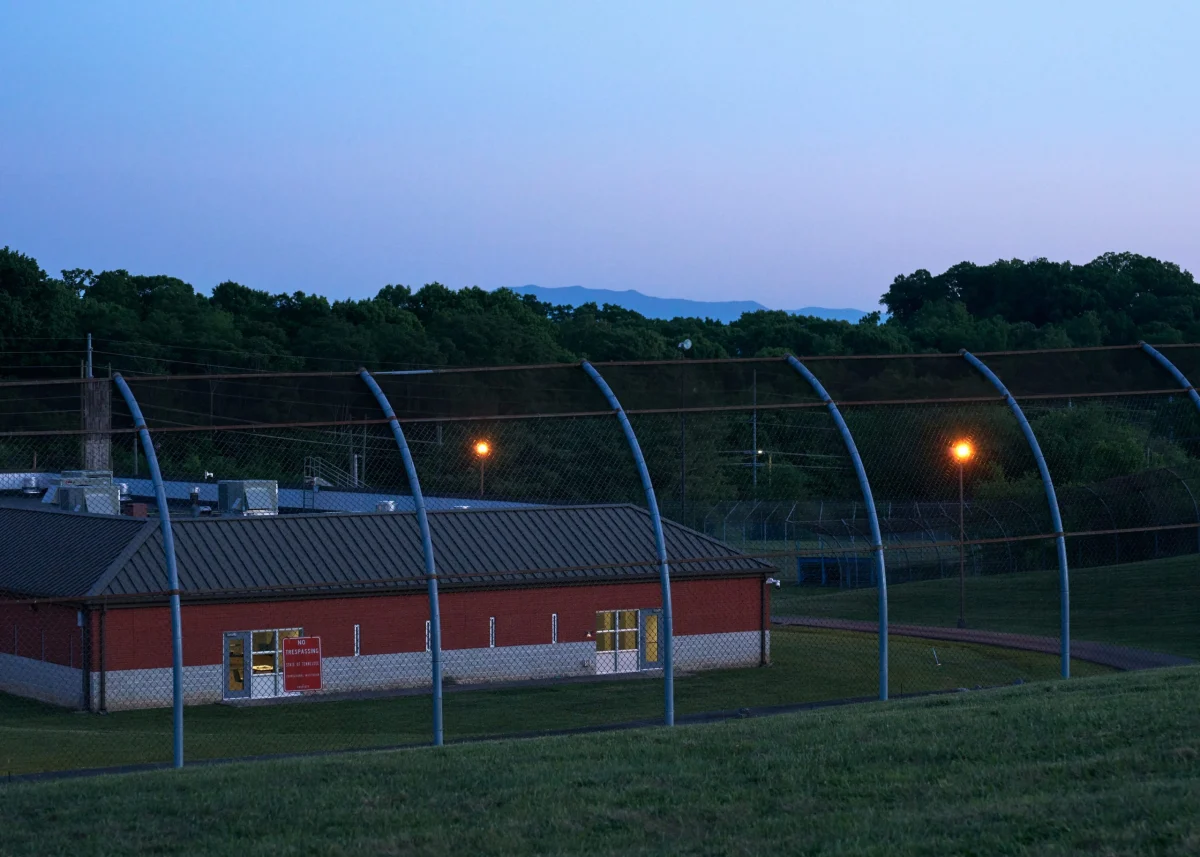
Across the United States, states have progressively been dismantling their youth prison infrastructure, driven by a national decline in juvenile crime and a growing body of research demonstrating the ineffectiveness of large, carceral facilities in rehabilitating young offenders. Federal data from the Office of Juvenile Justice and Delinquency Prevention (OJJDP) reveals a stark trend: from 2000 to 2022, the number of the highest-security facilities for youth plummeted by over 40%. This shift reflects a broader consensus among juvenile justice experts and policymakers that community-based, rehabilitative programs offer more effective and humane alternatives. However, Tennessee stands in stark contrast to this national trajectory, with its Department of Children’s Services (DCS) earmarking a staggering $360 million to construct two new high-security youth facilities, projected to add up to 256 new beds. Construction is slated to commence this fall, with anticipated opening dates in 2028 and 2029, a decision that has ignited a heated debate among advocates, experts, and state officials regarding the optimal approach to juvenile justice in the Volunteer State.
Tennessee’s Justification: A Perceived Capacity Crisis
Tennessee officials assert that the state’s existing infrastructure is insufficient to house youth whom courts have found responsible for crimes. In recent years, DCS has reportedly resorted to holding dozens of teenagers overnight in temporary, often inappropriate locations, including, at one point, office buildings. In an emailed response to inquiries from WPLN and ProPublica, the agency attributed the critical lack of bed space to a confluence of factors. These include the specialized mental health service needs of a significant portion of the youth in its care, temporary staffing challenges within its current facilities, and an overall demand for specific types of secure placements. DCS leadership has firmly stated that national trends, while noted, "do not determine" whether Tennessee possesses adequate youth bed capacity for its unique population.
Despite these claims of a capacity crisis, data reveals that juvenile crime in Tennessee has also experienced a downward trend, mirroring the national pattern. This discrepancy has fueled a vigorous pushback from juvenile justice advocates and experts, who contend that the state’s substantial investment in new prisons is fundamentally misaligned with both current crime statistics and the proven needs of the young people under its supervision.
Josh Rovner, a senior research analyst at The Sentencing Project, a nonprofit research and advocacy group dedicated to reducing incarceration rates nationwide, sharply criticizes the prevailing narrative. "The argument that’s made is that [juvenile crime is] worse than ever, right? Or the kids are out of control," Rovner observed. "The data doesn’t back that up."
Divergent Data: Reported Crimes Versus System Entry
To substantiate its perceived need for expanded capacity, Tennessee’s DCS frequently references a recent state-commissioned study. This report indicates an increase in police-reported violent juvenile crimes in Tennessee since 2013, encompassing offenses such as murder, aggravated assault, motor vehicle theft, and crimes involving firearms. The emphasis on these statistics aims to paint a picture of escalating youth violence requiring a more robust carceral response.
However, a closer examination of the same state-commissioned study reveals a more nuanced reality. Not every police report of a crime culminates in an arrest, for various reasons, including duplicate reports for the same incident or insufficient evidence. Crucially, the data from the report demonstrates that the number of youth arrested and subsequently entering the juvenile justice system, even for violent crimes, has decreased over the same period. The singular exception to this trend was murder arrests, which saw a modest increase from 15 cases in 2013 to 26 in 2024. Even this elevated figure remains below its peak in 2018, challenging the notion of an unprecedented surge in violent juvenile offending.
Tennessee’s juvenile justice system manages a spectrum of facilities, ranging from less restrictive group homes to high-security prisons encircled by barbed wire. DCS leaders have publicly stated in legislative hearings that the agency has reached maximum capacity in its highest-security facilities, experiencing a critical shortage of beds. In a recent statement, DCS reiterated that while overall arrests might decline, the daily demand for specific types of secure placements can remain consistently high, contributing to the perceived bed shortage.
Further complicating the issue, a 2024 lawsuit filed against Tennessee’s juvenile justice system by an advocacy group and several unnamed youth alleges that the state is failing to appropriately utilize its existing bed space. The lawsuit contends that children are often placed in the highest-security facilities without adequate consideration of their individual needs, particularly regarding mental health treatment and other essential services. Due to stringent juvenile privacy laws, publicly available data detailing the specific charges that lead youth to particular facility settings is unavailable, making independent verification of placement criteria challenging. In its legal response, DCS acknowledged that placement decisions are sometimes influenced by capacity limitations but vehemently denied improperly housing youth in high-security facilities. The lawsuit remains ongoing, casting a shadow over the state’s current and future juvenile justice strategies.
The Rehabilitation Paradox: Facility Size and Effectiveness
A cornerstone of the juvenile justice system, unlike its adult counterpart, is its foundational commitment to rehabilitation rather than punitive measures. This principle is rooted in decades of neurological and psychological research highlighting the developmental plasticity of adolescent brains and their greater capacity for change. Tennessee’s DCS has affirmed its dedication to this rehabilitative mission, telling WPLN and ProPublica that the new facilities are being designed with "trauma-informed care" at their core. These designs reportedly include dedicated spaces for education, job training, recreation, and specialized rooms for mental health staff, including "calming rooms" for youth in distress.
DCS also characterizes its existing high-security facilities as rehabilitative. All three of the state’s current highest-security youth prisons are operated by Tennessee businessman Jason Crews and his company, Wayne Halfway House. Their contracts with the state, along with state policy, mandate the provision of mental health treatment, education, and other rehabilitative services to incarcerated youth.
However, the 2024 lawsuit paints a grim picture, directly challenging these claims of rehabilitation. The lawsuit, brought by an advocacy group and multiple unnamed youth, argues that the department frequently places youth in facilities that are inherently more punitive than rehabilitative. It specifically alleges that some teenagers confined in these prisons should not be there at all, given their individual needs and the nature of their offenses.
Disturbingly, the lawsuit also claims that Tennessee’s juvenile justice facilities, particularly those run by Wayne Halfway House, have actively obstructed youth access to essential education and mental health treatment. It cites policies at two Wayne Halfway House facilities that allegedly barred youth from attending school as a form of behavioral punishment. One particularly poignant account details a teenager diagnosed with post-traumatic stress disorder, anxiety, and other mental health conditions who allegedly received no individual therapy for months while in a Crews facility and only a few hours of education daily. The lawsuit references several other contractors’ jails and treatment centers across the state, detailing similar alleged systemic failures.
In its legal filings, DCS stated it lacked sufficient information to respond to all specific allegations concerning individual youth but broadly pushed back against claims of inadequate education or mental health treatment. While denying the specific instances of a teen being kept from therapy or education in a Crews prison, the department did acknowledge that some youth in the juvenile justice system might temporarily "receive minimal educational services."
Further scrutiny came from a recent WPLN/ProPublica investigation, which uncovered several serious incidents at Crews’ facilities that allegedly went unreported to the state, a clear violation of contractual obligations. Wayne Halfway House, in a statement, "vehemently denies" that Crews or his company has ever discouraged staff from reporting serious or life-threatening incidents. The company also stated that it disputes the allegations in the lawsuit, directing newsrooms to "numerous state audits and/or reports" that purportedly refute these claims, though it declined to provide specific documents. "Wayne Halfway House programs are compliant with state policies and law," the company maintained.
Experts, however, remain deeply skeptical of the rehabilitative potential of large-scale facilities. Daniel Macallair, executive director of the Center on Juvenile and Criminal Justice, a nonpartisan, nonprofit organization dedicated to reducing reliance on incarceration, unequivocally states, "These institutions are not humane places. They’re not rehabilitative. They never have been." Macallair, with over four decades of experience in juvenile justice reform, argues that any facility housing more than 10 children becomes inherently unwieldy, shifting its focus from individualized rehabilitation to correctional management. Research consistently demonstrates that larger facilities are often associated with harsher treatment of youth, including higher rates of sexual abuse and the more frequent implementation of detrimental practices such as solitary confinement. One of the new prisons planned by DCS would house up to 160 beds, positioning it to become the largest youth facility in Tennessee, raising significant concerns among reform advocates.
The Power of Community: Lessons from Missouri and Beyond
In stark contrast to Tennessee’s expansion plans, programs globally recognized for their effectiveness in helping youth avoid future crimes are typically small-scale and deeply embedded within the communities from which the youth originate. Missouri serves as a nationally lauded example, having implemented a model that emphasizes small, therapeutic facilities dispersed throughout the state. This approach ensures that youth, even those who have committed violent crimes, remain close to their families and communities, facilitating their engagement in therapeutic programs. Research consistently shows that these community-based models are not only more effective in reducing reoffending rates but also more affordable and contribute to higher rates of high school graduation among participants.
Tennessee’s DCS states that it does provide community-based services for youth who can safely remain at home. However, state data indicates that the vast majority of youth involved in the system were not afforded the opportunity to stay in their communities last year, suggesting a systemic bias towards institutionalization. A critical barrier to assessing the actual rehabilitative success of Tennessee’s youth prisons is the state’s acknowledged inability to comprehensively or accurately measure recidivism. Tennessee officials admit they lack a centralized system for tracking when a youth commits a new crime after release, leaving a significant gap in accountability and data-driven policy making.
The Struggle for Independent Oversight: A Critical Reform Blocked
The question of who will operate Tennessee’s new facilities remains open, with DCS indicating a future bid process. Currently, two private providers, Wayne Halfway House and Youth Opportunity Investments (which runs lower-security facilities), manage all of the state’s private youth prisons. Wayne Halfway House declined to comment on its business plans for the new facilities but reiterated that the facilities it currently operates for youth in state custody are classified by the state as "residential treatment centers," not "youth prisons." While states use varied terminology, federal law mandates that such facilities provide treatment. However, they are also secure, often featuring barbed-wire fences and locking cells, holding youth long-term after court findings, functionally akin to adult prisons.
Experts universally agree that robust, independent oversight is paramount for ensuring the safety and well-being of youth within juvenile justice facilities. Tennessee, however, lacks such a mechanism. Its current system includes an agency that assists families in navigating the system but possesses no enforcement authority. A newly established Juvenile Justice Review Commission is tasked with issuing its first set of recommendations in 2028, a timeline that critics argue is far too slow given the urgency of the situation.
Michele Deitch, a leading criminal and juvenile justice expert at the University of Texas at Austin, underscores the necessity of external scrutiny: "The main goal is to bring more transparency to what’s going on inside these facilities, to make that information public, to make recommendations about ways it can improve." She emphasizes, "You really need the external body that is independent."
In 2024, a bipartisan coalition of Tennessee lawmakers attempted to address this oversight deficit by introducing a bill that would grant an independent organization significant oversight and enforcement powers, moving beyond the limited scope of DCS. This proposed legislation would have empowered the independent body to mandate that DCS suspend a facility’s license or cease placements until identified violations were rectified. Lawmakers advocating for the bill highlighted a clear conflict of interest within DCS, which is responsible both for securing beds for children and for sanctioning providers who fail to adhere to rules and regulations.
The proposed bill faced significant opposition, particularly from Wayne Halfway House, which employs a legislative lobbyist and is a donor to political campaigns in the state. One of the bill’s sponsors reported that a lobbyist for the company actively pushed for an amendment that would exempt privately run facilities from the bill’s purview, an amendment that was subsequently filed in the House. A lobbyist for Wayne Halfway House stated at the time that the company harbored concerns about how the bill would "affect accountability in the governance of youth corrections in Tennessee." In a more recent statement, the company asserted its support for the state’s existing policies and laws, claiming they "rigorously oversee organizations like ours and hold us to high standards for operational performance." Ultimately, despite bipartisan support and critical necessity, the bill failed to pass, leaving Tennessee’s youth prisons largely without independent, empowered oversight.
Financial and Human Costs of Divergence
Tennessee’s decision to invest $360 million in expanding its youth prison system represents a significant financial commitment to a model increasingly viewed as outdated and ineffective nationwide. This substantial investment not only diverts resources that could be allocated to proven community-based programs but also risks perpetuating a cycle of incarceration that has long-term detrimental effects on youth, families, and communities. The lack of robust recidivism data makes it challenging to quantitatively assess the return on this investment in terms of public safety and youth rehabilitation.
The broader implications extend beyond economics, touching upon fundamental questions of justice, human rights, and the future of vulnerable youth. By diverging from national best practices and resisting independent oversight, Tennessee faces the potential for continued legal challenges, ethical dilemmas, and a failure to provide the rehabilitative care that its juvenile justice system is constitutionally mandated to deliver. The ongoing lawsuit, the delayed recommendations of the Juvenile Justice Review Commission, and the continued debate among stakeholders underscore the profound challenges and critical choices that lie ahead for Tennessee’s approach to its most vulnerable population.




 Ana Megawati
 Joko Widodo
 Eva Lovia
 Jia Lissa
 Pevita Pearce