
 Jia Lissa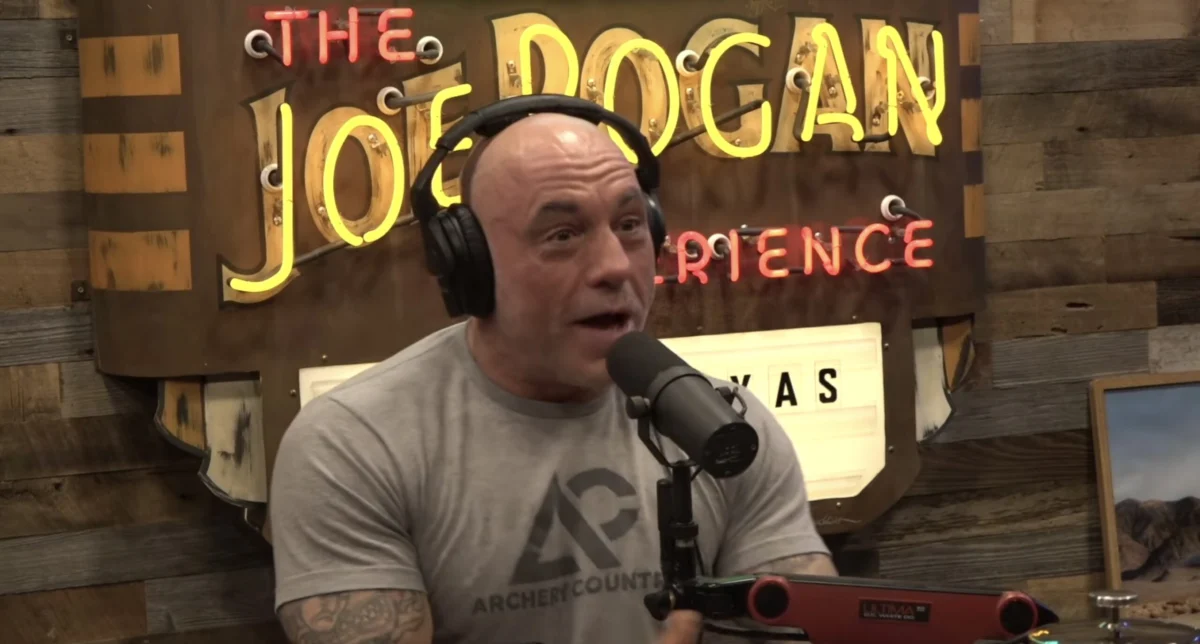
During a Tuesday broadcast of the widely influential podcast The Joe Rogan Experience, host Joe Rogan and guest Andy Stumpf, a retired Navy SEAL, engaged in a pointed critique of former President Donald Trump’s recent social media activity. The conversation centered on a controversial image posted by Trump that appeared to depict him as a messianic figure, a move that triggered significant backlash from religious and political circles. Rogan, who has recently navigated a complex and at times adversarial relationship with the former president, found humor in Trump’s subsequent attempt to rebrand the image as a depiction of a medical professional rather than a religious savior.
The controversy began late Sunday night when Trump shared an image on his Truth Social platform showing himself in a role traditionally associated with Jesus Christ, appearing to heal a bedridden man. The post followed a series of aggressive statements directed at Pope Leo XIV, further complicating the religious optics of the weekend. By Monday morning, following an outcry from both critics and members of his own political base, Trump deleted the post. His subsequent explanation—that he believed the AI-generated image portrayed him as a doctor or a Red Cross worker—became the focal point of Rogan’s Tuesday segment.
The Podcast Exchange and the AI God Narrative
The discussion between Rogan and Stumpf emerged from a broader conversation regarding the rapid advancement and societal implications of artificial intelligence. Rogan referred to the current state of the technology as an "AI God," highlighting its ability to generate hyper-realistic and often provocative imagery. He specifically linked this phenomenon to the Trump meme, jokingly attributing the creation to this "AI God."
Stumpf interrupted Rogan with a sarcastic reminder of the former president’s defense, stating, "Joe, I told you, he explained it, he was a doctor." This remark prompted immediate laughter from Rogan, who quipped that if Jesus is now viewed as a doctor by AI, it represents a significant shift in theological interpretation. The exchange highlighted the skepticism with which media figures and commentators viewed Trump’s damage-control efforts.
Rogan’s reaction is particularly noteworthy given his massive platform. With millions of listeners per episode, The Joe Rogan Experience serves as a major cultural touchstone, often influencing the political discourse among younger, independent-leaning voters. By framing Trump’s excuse as a source of comedy, Rogan signaled a continued willingness to distance himself from the former president’s narrative, despite their recent public interactions.
Chronology of the Controversy: From Post to Deletion
The timeline of the incident illustrates the rapid cycle of social media controversy and political pivoting. On Sunday evening, the former president’s social media activity was dominated by a "searing rant" against Pope Leo XIV. In the immediate aftermath of this verbal assault on the papacy, Trump shared the image in question. The visual composition featured a long-haired, robed figure with features resembling Trump, placing hands on a sick individual in a manner synonymous with New Testament accounts of divine healing.
The reaction was swift. Throughout Sunday night and early Monday morning, pundits, religious leaders, and political opponents accused the former president of blasphemy. Perhaps more significant was the "rare rebuke" from within the MAGA movement itself. Die-hard supporters expressed discomfort with the messianic comparison, labeling the imagery as "gross blasphemy" and "unacceptable."
By Monday morning, the post had been removed. Trump later addressed the deletion by offering a "bonkers" explanation, as described by various media outlets. He claimed the image was intended to show him as a medical professional working in conjunction with the Red Cross. "I did post it, and I thought it was me as a doctor—and had to do with Red Cross, as a Red Cross worker there, which we support," Trump stated. He went on to blame the "fake news" for misinterpreting the image, asserting that his intention was to show himself "making people better," adding, "I make people a lot better."
Historical Context: The Rogan-Trump Relationship Dynamics
The mockery on the podcast occurred just days after a highly publicized encounter between Rogan and Trump at UFC 327 in Miami. During the event, Trump entered the arena to a significant ovation and approached the announcer’s table where Rogan was working. The two shared a warm handshake and a brief, chummy conversation. Video footage showed Rogan smiling and leaning in as Trump spoke into his ear, leading many to speculate that the tension between the two had dissipated.
However, Rogan’s recent commentary suggests a much more fractured relationship. While Rogan officially endorsed Trump during the 2024 election cycle and hosted him for a three-hour interview just weeks before the vote, his rhetoric has shifted sharply in recent weeks. Rogan recently declared himself "politically homeless," expressing frustration with both major political parties and calling for a more logical, centrist approach to governance.
Furthermore, Rogan has become a vocal critic of Trump’s foreign policy, specifically the initiation of hostilities in Iran under "Operation Epic Fury." Rogan argued that this military action could be the catalyst for "World War III" and claimed that Trump’s base feels "betrayed" by the escalation of conflict. This criticism persists despite polling data suggesting that approximately 80% of Trump’s core voters support his stance on the Iranian conflict. Rogan even went as far as to speculate that the war might have been launched as a tactical distraction from the recent release of the "Epstein Files," a theory that underscores the host’s increasing distrust of the administration’s motives.
Supporting Data: Public Perception and AI in Politics
The use of AI-generated imagery in political campaigning has introduced a new layer of complexity to public perception. According to recent digital media studies, AI-generated content can often blur the lines between satire and official messaging, leading to confusion among the electorate. In Trump’s case, the "Jesus meme" represents a recurring theme in his digital ecosystem where supporters often use religious iconography to characterize his political struggle.
Data regarding religious voters indicates that while the evangelical base remains a cornerstone of Trump’s support, the threshold for what is considered "blasphemous" remains a sensitive boundary. The backlash to the Sunday night post suggests that even among loyalists, there is a limit to the messianic branding of political figures. The incident highlights a potential vulnerability in Trump’s strategy of using provocative, AI-driven content to engage his followers.
Broader Impact and Implications for the 2024 Cycle
The interaction between Rogan’s podcast and Trump’s social media habits points to a larger trend in the 2024 political landscape: the power of the "manosphere" and independent media to shape candidate narratives. Rogan’s decision to mock Trump’s "doctor" excuse, despite their recent handshake, suggests that the former president cannot rely on personal rapport to insulate himself from criticism by influential commentators.
The incident also raises questions about the former president’s communication strategy. By offering an explanation that many, including Rogan, found implausible, Trump may be risking his credibility with independent voters who are sensitive to perceived gaslighting. The shift from a messianic image to a "Red Cross doctor" narrative was seen by many as an unforced error that allowed critics to highlight a perceived lack of sincerity.
As the 2024 campaign continues, the friction between Trump’s traditional political base and the populist influencer class represented by Rogan will likely intensify. While the former president maintains high approval ratings within his party, the "politically homeless" sentiment expressed by figures like Rogan could indicate a growing fatigue among voters who were previously aligned with the MAGA movement.
The "Jesus vs. Doctor" controversy serves as a microcosm of the current political environment: a mixture of high-stakes religious symbolism, the unpredictable influence of AI technology, and the shifting loyalties of media powerbrokers. Whether Trump’s explanation will satisfy his base or continue to serve as a punchline for Rogan and his peers remains to be seen, but the incident has undeniably added a new layer of tension to the relationship between the former president and one of the world’s most popular podcasters.


 Yuyun Lusiyani
 Joko Widodo
 Eva Lovia
 Pevita Pearce
 admin
admin
 Lina Irawan