
 Jia Lissa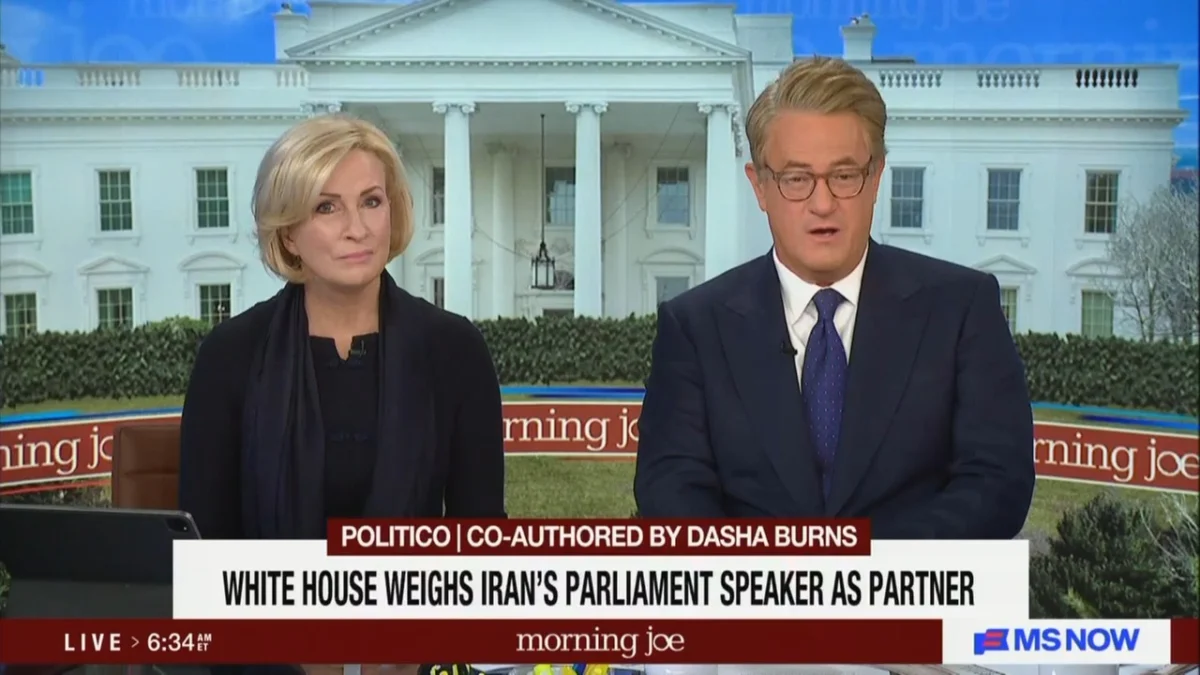
The political landscape surrounding United States foreign policy toward the Islamic Republic of Iran has reached a critical juncture following reports that the Trump administration is seeking a high-level "backchannel" to facilitate a diplomatic or structural breakthrough. During a recent broadcast of MSNBC’s Morning Joe, host Joe Scarborough issued a stark and detailed warning to President Donald Trump regarding the administration’s apparent strategy of identifying a "moderate" or "pragmatic" partner within the Iranian regime. Scarborough’s analysis centered on the fundamental differences between the political infrastructure of Iran and that of Venezuela, cautioning that any attempt to replicate the recent strategy used in Caracas could result in lethal consequences for the individuals involved and a total collapse of diplomatic efforts.
The discussion was prompted by new reporting from Politico’s White House Bureau Chief Dasha Burns, who revealed that the administration has identified Mohammad Bagher Ghalibaf, the current Speaker of the Iranian Parliament, as a potential negotiating partner. This revelation follows a period of intense speculation after President Trump told reporters that his administration was engaging in talks with a "top person" within the Iranian government. While the administration appears to view Ghalibaf as a "power broker" capable of navigating the complexities of the Tehran regime, Scarborough and other analysts argue that this perception ignores the brutal internal security dynamics of the Islamic Revolutionary Guard Corps (IRGC) and the office of the Supreme Leader.
The Ghalibaf Connection and the Search for a Partner
Mohammad Bagher Ghalibaf is a figure of significant complexity within Iranian politics. Unlike traditional "reformists" who seek to liberalize the country’s social or political structures, Ghalibaf is a quintessential "principlist" with deep roots in the military establishment. He is a former commander of the IRGC Air Force and served as the national police chief before becoming the Mayor of Tehran and eventually the Speaker of the Parliament.
Politico’s reporting suggests that the Trump administration views Ghalibaf as a "hot option" for negotiations because of his reputation as a technocrat and a pragmatic operator. However, Dasha Burns noted that Ghalibaf is far from a moderate in the Western sense. His history includes a controversial role in the suppression of student protests in 1999 and 2003, where he famously boasted about his willingness to use "pliers" to deal with demonstrators. Despite this, his position as a regime "power broker" makes him an attractive target for a White House looking to bypass the more ideological factions of the Iranian government.
The rumors of Ghalibaf’s involvement gained momentum after an Israeli newspaper identified him as the mysterious "top person" Trump had alluded to in public remarks. Ghalibaf, cognizant of the dangers such a label carries in Tehran, has publicly and vehemently rejected these claims. The denial is seen by many as a necessary survival tactic within a system that views unauthorized contact with the United States as an act of high treason.
The Venezuela Comparison: The Delcy Rodriguez Model
A central theme of the Morning Joe discussion was the comparison between the current situation in Iran and the Trump administration’s recent maneuvers in Venezuela. In January 2026, the administration successfully navigated a transition in Venezuela by partnering with Delcy Rodriguez, the former Vice President under Nicolás Maduro. Rodriguez, once a staunch loyalist, emerged as a pivotal figure who facilitated the removal of Maduro in exchange for a role in the acting government and the leveraging of oil deals to stabilize the Venezuelan economy.
Co-host Willie Geist noted that the White House appears to be looking for an "Iranian Delcy Rodriguez"—a high-ranking official willing to break ranks or act as a bridge to a new political reality. In the Venezuelan context, the transition was made possible by a combination of extreme economic pressure, internal fracturing within the United Socialist Party of Venezuela (PSUV), and a military that was ultimately unwilling to engage in a prolonged civil war to protect Maduro.
Joe Scarborough, however, rejected this comparison as fundamentally flawed and dangerous. He argued that the institutional discipline and ideological fervor of the IRGC make it impossible for a "Delcy Rodriguez" figure to survive in Tehran. "That is not Delcy Rodriguez," Scarborough said, referring to an image of Ghalibaf. "There is not a Delcy Rodriguez in Iran. And if someone tried to play Delcy Rodriguez in Iran, the Revolutionary Guard would put a bullet in the back of their head. And they know that."
Historical Context: The Myth of the Iranian Moderate
Scarborough’s skepticism is rooted in decades of failed U.S. attempts to find a "moderate" faction within the Islamic Republic. He specifically cited the Reagan administration’s "Iran-Contra" affair as a cautionary tale. In the mid-1980s, National Security Advisor Robert "Bud" McFarlane traveled to Tehran with a Bible and a cake shaped like a key, believing he could empower moderates who would help release American hostages and shift the country’s trajectory.
The mission was a catastrophic failure that led to one of the biggest political scandals in U.S. history. Scarborough noted that the search for moderates has been a recurring theme in American foreign policy since the 1979 Revolution, and it has consistently yielded little more than disappointment and increased leverage for the hardliners.
"We have been looking since 1979," Scarborough remarked. "I understand the White House wants to find… the moderates in Iran… there are no moderates in Iran." His argument suggests that the Iranian political system is designed to purge anyone who demonstrates a genuine willingness to compromise on the regime’s core anti-American tenets. In Scarborough’s view, the regime’s survival is predicated on its resistance to "Westoxification" and its refusal to engage in the kind of pragmatic power-sharing seen in other authoritarian states.
The Role of the IRGC and Internal Security
To understand why Scarborough believes a "bullet in the head" is the more likely outcome for a would-be negotiator, one must look at the structure of the IRGC. The Revolutionary Guard is not merely a military wing; it is a state-within-a-state that controls vast sectors of the Iranian economy, including construction, telecommunications, and oil. The IRGC’s intelligence wing is tasked with monitoring high-ranking officials for any sign of "sedition" or unauthorized contact with foreign intelligence agencies.
Unlike the Venezuelan military, which has a history of political shifting, the IRGC is an ideological army sworn to protect the Velayat-e Faqih (the Guardianship of the Islamic Jurist). The cost of betrayal in this system is not exile or political rebranding; it is often death or life imprisonment. This internal discipline creates a "prisoner’s dilemma" for officials like Ghalibaf. Even if they recognize the need for economic relief and normalized relations, the risk of being labeled a traitor by the IRGC or the Supreme Leader’s inner circle prevents them from taking the first step toward a backchannel.
Timeline of Recent Developments
The current tension follows a specific sequence of events that have heightened the stakes for U.S.-Iran relations:
- Monday: President Trump tells reporters that the administration is talking to a "top person" in Iran, suggesting a breakthrough in backchannel diplomacy.
- Tuesday: Reports emerge in Israeli media identifying Mohammad Bagher Ghalibaf as the primary contact for these discussions.
- Wednesday Morning: Ghalibaf issues a public statement denying any contact with the U.S. administration, reaffirming his loyalty to the Supreme Leader.
- Wednesday Afternoon: Politico publishes an investigation detailing the White House’s internal deliberations, confirming that Ghalibaf is indeed the focus of their diplomatic "outreach" efforts.
- Thursday: Media outlets, including MSNBC, analyze the feasibility of this strategy, with veteran commentators expressing deep skepticism about the administration’s understanding of Iranian internal dynamics.
Implications for U.S. Foreign Policy
The administration’s focus on Ghalibaf suggests a shift toward "personality-driven" diplomacy, a hallmark of the Trump era. By attempting to identify a single "strongman" or "power broker," the administration hopes to bypass the bureaucratic and ideological gridlock of the Iranian Foreign Ministry. However, this approach carries significant risks:
- Assassination or Purge: As Scarborough noted, identifying an Iranian official as a U.S. partner can serve as a death warrant. If the IRGC perceives Ghalibaf as a threat to the status quo, they may move to neutralize him, further radicalizing the regime.
- Misreading Power Structures: In Iran, the Parliament Speaker has significant influence but does not control foreign policy or the nuclear program. Those powers reside with Supreme Leader Ali Khamenei and the Supreme National Security Council. Negotiating with a "backchannel" that lacks the authority to deliver on promises could lead to a repeat of the failed diplomacy of the past.
- Strengthening Hardliners: If the backchannel is exposed and fails, it provides hardliners with the evidence they need to argue that any engagement with the West is a trap, leading to increased repression at home and aggression abroad.
Broader Impact and Expert Reactions
While the White House remains optimistic about the potential for a "grand bargain" with Iran, foreign policy experts remain divided. Some argue that Ghalibaf’s military background actually makes him the only person who could realistically sell a deal to the IRGC. They point to the "Nixon to China" precedent, suggesting that only a hardliner has the domestic credibility to negotiate with an enemy.
Conversely, skeptics like Scarborough argue that the Iranian regime is not a rational actor in the Western sense. They believe the regime’s primary goal is survival through ideological purity, and that any "pragmatism" shown by figures like Ghalibaf is a tactic to buy time rather than a genuine desire for reform.
Scarborough concluded his warning by expressing a hope for the regime’s eventual collapse, comparing it to the fall of the Soviet Union in 1989. However, he emphasized that such a collapse must come from internal pressure and the weight of the regime’s own contradictions, rather than a flawed U.S. strategy of seeking "moderates" where none exist.
"I hope the regime collapses overnight like the Soviets did," Scarborough said. "But I just don’t know how we get from here to there as far as negotiating." His repeated mantra—"There is no Delcy Rodriguez in Iran"—serves as a reminder that in the world of high-stakes geopolitics, misidentifying a partner can be just as dangerous as ignoring an enemy. As the Trump administration continues its pursuit of a "top person" in Tehran, the ghost of Bud McFarlane’s birthday cake looms large over the proceedings, serving as a testament to the enduring difficulty of bridging the gap between Washington and the Islamic Republic.

 Yuyun Lusiyani
 Joko Widodo
 Eva Lovia
 Pevita Pearce