
 Jia Lissa
The intersection of high-stakes financial speculation and frontline war reporting reached a dangerous flashpoint this month as Emanuel Fabian, a veteran military correspondent for The Times of Israel, became the target of a coordinated intimidation campaign orchestrated by disgruntled gamblers. The incident, which involves death threats against the journalist and his extended family, stems from a $14.1 million wager on the decentralized prediction platform Polymarket regarding an Iranian missile strike on Israeli soil. What began as a routine report on a military engagement quickly devolved into a harrowing case study of how the burgeoning industry of "event-based betting" can incentivize the harassment, and potentially the corruption, of independent media.
The Spark: A Missile Strike in Beit Shemesh
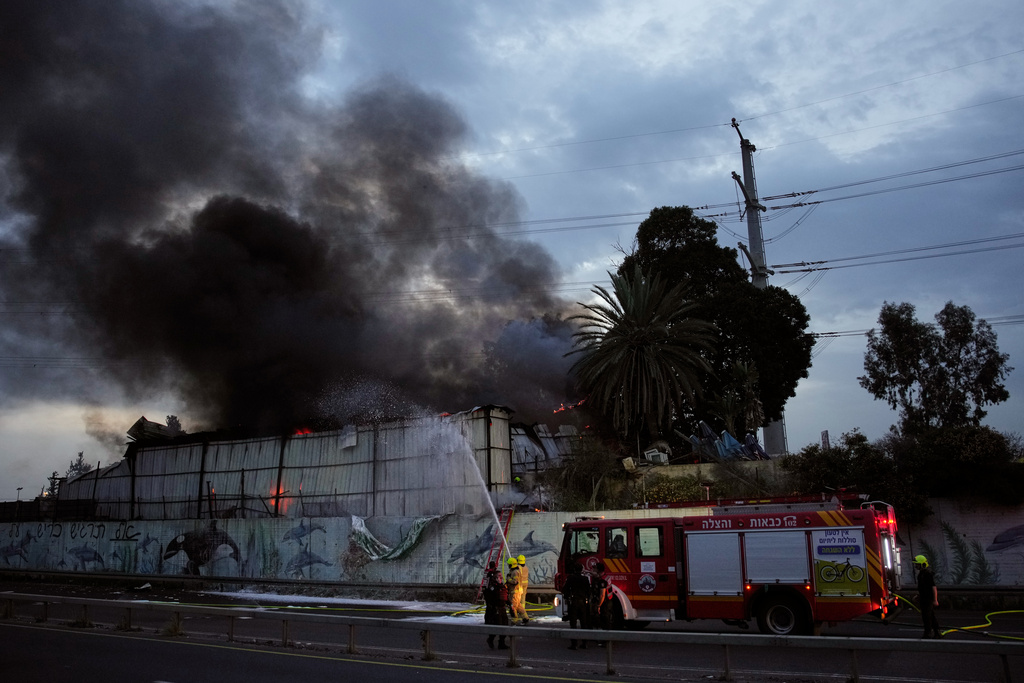
The events leading to the crisis began on March 10, 2026, during a period of heightened regional tension between Israel and the Islamic Republic of Iran. According to official military reports and Fabian’s subsequent coverage, an Iranian ballistic missile evaded portions of the Israeli air defense umbrella and landed in an open area near the city of Beit Shemesh. At the time of the impact, Fabian characterized the event as a "minor incident," noting that while the missile had successfully traversed into Israeli territory, it resulted in no casualties and minimal property damage.
For a military correspondent accustomed to the volatile nature of Middle Eastern geopolitics, the report was standard procedure. However, unbeknownst to Fabian, the specific phrasing of his report—identifying the object as a "missile strike" rather than an "interceptor fragment"—held massive financial implications for a global pool of anonymous bettors.
The High-Stakes Gamble: $14.1 Million on the Line
The catalyst for the harassment was a specific "market" on Polymarket, a popular blockchain-based prediction platform where users bet on the outcomes of real-world events. The wager in question asked whether Iran would successfully strike Israel on March 10. By the time the deadline for the bet approached, the total volume of the pool had reached a staggering $14.1 million.
The complexity of the situation lay in the "fine print" of the bet’s resolution criteria. The Polymarket contract stipulated that for a "strike" to be confirmed, a missile must land on Israeli territory. Crucially, the clause added that the landing of "intercepted missile fragments" or "interceptor debris" would not be sufficient to trigger a payout for those betting on a successful strike. Because Fabian’s reporting for The Times of Israel is often cited as a primary source for the "Umpire" or "Oracle" services that resolve these bets, his words became the definitive factor in determining who walked away with millions and who lost their entire stake.
Chronology of an Escalating Threat
The campaign against Fabian began with subtle attempts at persuasion before rapidly escalating into criminal coercion.
On the afternoon of March 11, Fabian received an email from an individual identifying himself only as "Aviv." Writing in Hebrew, Aviv adopted a tone of feigned concern, suggesting that Fabian’s reporting was factually inaccurate. "I’d appreciate it if you could update your article, as in its current form it does not reflect reality," Aviv wrote, claiming that the object that hit Beit Shemesh was merely an interceptor fragment rather than a full missile. He offered Fabian an "opportunity" to be corrected, framing the request as a matter of journalistic integrity.
Fabian, relying on direct confirmation from the Israel Defense Forces (IDF) and his own military sources, stood by his reporting. He informed the sender that his information was verified. This refusal to alter the narrative triggered a secondary, more aggressive wave of communication.
The second phase involved a man identifying himself as "Haim," who contacted Fabian via WhatsApp. Haim’s messages moved past technical disputes and into the realm of financial desperation and physical threats. He claimed that Fabian’s reporting had personally cost him and his associates nearly $900,000.
"You have no idea how much you’ve put yourself at risk," Haim wrote. "Today is the most significant day of your career. You have two choices: either believe that we have the capabilities, and after you make us lose $900,000 we will invest no less than that to finish you. Or end this with money in your pocket, and also earn back the life you had until now."
Targeted Harassment and Family Surveillance
The most disturbing aspect of the ordeal involved the revelation that the gamblers had conducted "doxxing" and surveillance on Fabian. To prove their reach, the harassers sent Fabian specific, private details regarding his parents, his siblings, and his residential neighborhood.
The messages detailed Fabian’s daily routines and the frequency with which he visited his family. "They know who you are, you don’t know who they are," Haim warned. "It took them less than 5 minutes to find out exactly where you live… how often you see your lovely parents… and exactly who your brothers and sisters are."
The logic presented by the gamblers was one of "market manipulation." They argued that by reporting the missile strike as a success, Fabian was "stealing" from wealthy investors worldwide. They framed their threats not as a crime, but as a form of "recouping losses" from a journalist they accused of being a biased arbiter.
The Rise of Prediction Markets and Journalistic Risks
The Fabian case highlights a burgeoning ethical and security crisis in the digital age. Prediction markets like Polymarket, Kalshi, and others have grown exponentially in popularity, offering users the ability to bet on everything from election results and Federal Reserve interest rate hikes to the outbreak of war.
While proponents of these markets argue they provide a more accurate "wisdom of the crowd" than traditional polling or punditry, critics point to the "perverse incentives" they create. When millions of dollars depend on the specific wording of a news report, journalists—who are often underpaid and overworked—become high-value targets for bribery or coercion.
In his account of the event published by The Times of Israel, Fabian expressed grave concern for the future of the profession. "The attempt by these gamblers to pressure me to change my reporting so that they would win their bet did not and will not succeed," he stated. "But I do worry that other journalists may not be as ethical if they are promised some of the winnings."
The financial incentive to "buy" a journalist’s phrasing is significant. In the Beit Shemesh incident, a minor correction in a single paragraph could have swung millions of dollars from one group of anonymous crypto-investors to another.
Official Responses and Legal Action
Emanuel Fabian has since filed a formal complaint with the Israel Police, providing them with the transcripts of the WhatsApp messages, email headers, and the identifying information used by "Haim" and "Aviv." Law enforcement authorities in Israel have confirmed that an investigation is underway, focusing on charges of extortion, criminal threats, and harassment.
While the anonymity provided by platforms like Polymarket and the use of encrypted messaging apps like WhatsApp make such investigations difficult, the police are reportedly working with cybercrime units to trace the digital footprint of the individuals involved.
The Times of Israel issued a statement standing firmly behind Fabian, reaffirming that their editorial process is governed by factual accuracy and military sourcing, not by the fluctuations of external financial markets. Media advocacy groups have also weighed in, calling for better protections for journalists who find themselves in the crosshairs of "financialized" news cycles.
Broader Implications: The Intersection of Finance and Information
The Fabian incident is likely a harbinger of a new era of "information warfare" where the combatants are not just state actors or political ideologues, but speculative investors. As decentralized finance (DeFi) continues to integrate with real-time news, the pressure on the "arbiters of truth" will only intensify.
There are several key takeaways from this event that policy makers and media organizations must address:
- The Oracle Problem: Prediction markets rely on "oracles" (data sources) to settle bets. When those oracles are individual journalists or specific news outlets, those entities become vulnerable to external pressure. There is a growing need for diversified or decentralized resolution mechanisms that do not rely on a single human reporter.
- Physical Security for Digital Risks: Newsrooms must begin treating financial retaliation as a physical security threat. The transition from a digital bet to a physical stakeout of a journalist’s parents’ home shows that the barrier between online speculation and offline violence is thinning.
- Regulatory Oversight: While platforms like Polymarket operate in a regulatory gray area in many jurisdictions, the Fabian case may accelerate calls for stricter oversight of "event markets" that bet on violent conflict or sensitive military operations.
Emanuel Fabian’s refusal to yield to the "deranged gamblers" serves as a testament to journalistic integrity under extreme duress. However, the ordeal serves as a stark warning: in a world where every headline has a price tag, the cost of telling the truth may soon include the safety of the storyteller. For now, Fabian continues his work, while the Israel Police attempt to track down the individuals who believed that $900,000 was a sufficient reason to threaten a family’s life.




 Yuyun Lusiyani
 Joko Widodo
 Eva Lovia
 Pevita Pearce
 admin
admin
 Lina Irawan