
 Jia Lissa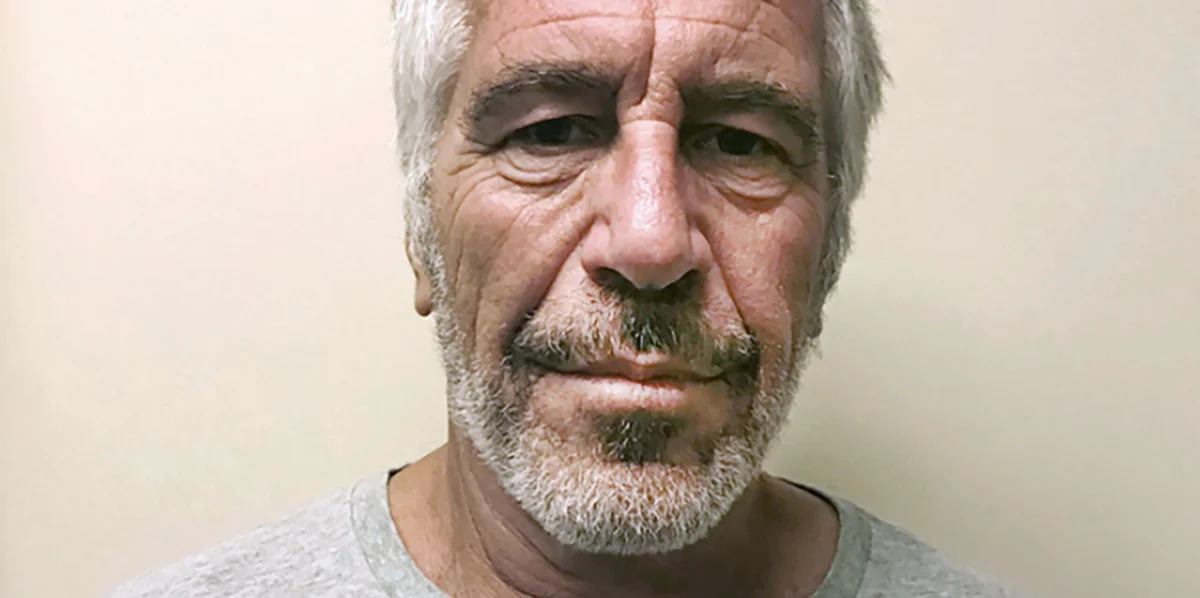
The digital landscape has been set ablaze following the emergence of a high-definition video captured in South Florida, featuring an individual whose physical characteristics bear an uncanny resemblance to the deceased financier and convicted sex offender Jeffrey Epstein. The footage, which first surfaced on Friday, March 13, 2026, was initially recorded and shared by a Florida resident identified as Andrew Posey. It subsequently gained massive traction after being featured on the prominent regional social media aggregator "OnlyInFlorida" on Sunday. The visual evidence has reignited a complex web of public discourse, skepticism, and the persistent conspiracy theories that have surrounded Epstein since his reported death in federal custody nearly seven years ago.
In the brief but clear clip, an unidentified man is seen operating a luxury convertible with the top down, navigating the bright streets of what appears to be the Palm Beach or Boca Raton area. The subject is observed wearing a white baseball cap turned backward, paired with dark sunglasses—a casual aesthetic common among the affluent demographic of the Florida coast. However, it is the man’s facial structure, shock of silver-white hair, and distinctive profile that have led thousands of viewers to draw immediate comparisons to Epstein. The overlay text on the viral video succinctly captured the internet’s sentiment: "Epstein out here in South Florida."
The Anatomy of a Viral Sighting
The video’s rapid ascent to viral status underscores the enduring grip that the Epstein case holds on the collective American psyche. Within hours of its reposting by "OnlyInFlorida," the footage garnered tens of thousands of likes and thousands of comments, ranging from humorous dismissals to earnest speculation. The engagement metrics suggest that despite the passage of time, the public’s interest in Epstein’s life, crimes, and the circumstances of his death remains high.
Commentary on the post highlighted two primary schools of thought. One segment of the audience pointed toward the demographic realities of the region. "Pretty much every middle-aged guy in Boca and West Palm [looks like this]," one commenter noted, suggesting that the "Epstein look"—characterized by silver hair, a specific tan, and high-end casual wear—is a regional archetype rather than a biological anomaly. Another observer empathized with the unidentified man in the video, stating, "Dude has to get this constantly. Time to grow a beard."
Conversely, a more skeptical segment of the digital audience leveraged the video to revisit long-standing theories regarding Epstein’s death. Since the New York City Medical Examiner ruled his August 2019 death a suicide, a significant portion of the public has remained unconvinced, fueled by lapses in prison security and Epstein’s high-level connections to global elites. For these individuals, a sighting in Florida—the site of Epstein’s first major legal battle and one of his primary residences—serves as fuel for the "witness protection" or "faked death" narratives that proliferate in online forums.
Historical Context: The Epstein Legacy in Florida
To understand why a look-alike in South Florida carries such weight, one must examine Epstein’s historical ties to the region. Long before his 2019 arrest in New York, Epstein was a fixture of the Palm Beach social scene. His sprawling estate on El Brillo Way was the epicenter of a multi-year investigation by local police and the FBI.
In 2008, Epstein entered into a controversial non-prosecution agreement (NPA) orchestrated by the U.S. Attorney’s Office for the Southern District of Florida. This deal allowed him to plead guilty to state charges of soliciting a minor for prostitution while avoiding federal sex trafficking charges that could have resulted in life imprisonment. He served 13 months in a county jail with extensive work-release privileges, a sentence that has since been widely criticized as an egregious failure of the justice system.
The fact that this recent sighting occurred in the same geographical area where Epstein maintained his most notorious residence adds a layer of irony and discomfort for the community. Florida remains the home of many of his victims, for whom any reminder of his presence—even in the form of a doppelgänger—can be deeply unsettling.
Chronology of the Epstein Case and Posthumous Developments
The fascination with Epstein "sightings" is rooted in the perceived lack of closure surrounding his criminal enterprise. The following timeline outlines the key events that continue to inform public reaction to such media:

- June 2008: Epstein signs the non-prosecution agreement in Florida, sparking a decade of legal scrutiny over the deal’s leniency.
- July 6, 2019: Epstein is arrested at Teterboro Airport in New Jersey and charged by federal prosecutors in Manhattan with sex trafficking of minors.
- August 10, 2019: Epstein is found dead in his cell at the Metropolitan Correctional Center (MCC) in New York. The death is later ruled a suicide by hanging.
- November 2019: The "Epstein Didn’t Kill Himself" meme becomes a global phenomenon, signaling widespread public distrust of the official narrative.
- December 2021: Ghislaine Maxwell, Epstein’s long-time associate, is convicted on five counts of sex trafficking and conspiracy, later receiving a 20-year prison sentence.
- January 2024: A massive trove of court documents, previously sealed in a civil lawsuit involving Virginia Giuffre, is released, naming dozens of high-profile associates and once again thrusting the case into the headlines.
- March 2026: The current viral video surfaces, demonstrating that the public’s vigilance and suspicion have not waned nearly seven years after the closing of the criminal case against Epstein himself.
Psychological and Sociological Implications
Sociologists suggest that the "sightings" of deceased figures like Epstein are a modern manifestation of "pareidolia"—the human tendency to perceive meaningful images or patterns where none exist. In the context of high-profile criminals or celebrities, this is often compounded by a psychological phenomenon known as "collective cognitive dissonance." When a public figure’s death is perceived as suspicious or premature, the public often seeks visual evidence to reconcile their distrust of official reports.
Furthermore, the rise of "deepfake" technology and sophisticated AI-driven image manipulation has made the public both more skeptical of real footage and more susceptible to fabricated content. While the Andrew Posey video appears to be an authentic, unfiltered recording of a bystander, the speed with which it was interpreted as a "sighting" reflects a broader erosion of trust in institutional media and government findings.
The "OnlyInFlorida" Instagram account, which served as the primary vehicle for the video’s virality, often highlights the eccentricities of the Sunshine State. By framing the man as an Epstein look-alike, the account tapped into a specific brand of "Florida Gothic" humor that blends the mundane with the macabre. However, for legal experts and victims’ advocates, the levity of social media often masks the ongoing struggle for accountability regarding Epstein’s associates.
Official Responses and Expert Analysis
While no official law enforcement agencies have commented on the video—largely because "looking like a deceased person" is not a criminal offense—security experts note that the likelihood of a high-profile individual faking their death and then driving an open-top convertible in a high-traffic area is statistically negligible.
"High-value targets who disappear from the public eye, whether through witness protection or other means, do not typically frequent the exact neighborhoods where they were previously famous or infamous," says Michael Standish, a retired federal investigator. "The individual in the video is almost certainly a private citizen who happens to share physical traits with Epstein. In a state with a high population of retirees and wealthy individuals, these visual overlaps are inevitable."
From a legal perspective, the continued obsession with Epstein serves as a reminder that the "Epstein list" and the identities of his co-conspirators remain a point of intense public interest. The release of documents in early 2024 satisfied some of the public’s hunger for information, but many feel that the full scope of the trafficking network has yet to be exposed.
The Broader Impact on Media Consumption
The viral nature of the Epstein look-alike video serves as a case study in modern news cycles. What began as a casual Instagram post by a local resident was transformed into a national talking point within 48 hours. This progression highlights the power of social media aggregators to set the news agenda, often bypassing traditional editorial filters.
For news outlets, the challenge lies in reporting on such phenomena without validating unfounded conspiracy theories. The objective facts remain: Jeffrey Epstein was pronounced dead in 2019, his estate has been largely liquidated to compensate victims, and his primary accomplice is serving a lengthy prison sentence. Yet, the "man in the convertible" illustrates that in the digital age, the image of a person can be just as influential as the person themselves.
As the video continues to circulate, it serves as a testament to the unresolved tension between the public and the systems of justice that handled the Epstein case. Whether the man in the white hat is aware of his fleeting internet fame remains unknown, but for a few days in March 2026, he became the face of a mystery that America refuses to let go.


 Joko Widodo
 Eva Lovia
 Pevita Pearce
 admin
admin
 Lina Irawan