
 Eva Lovia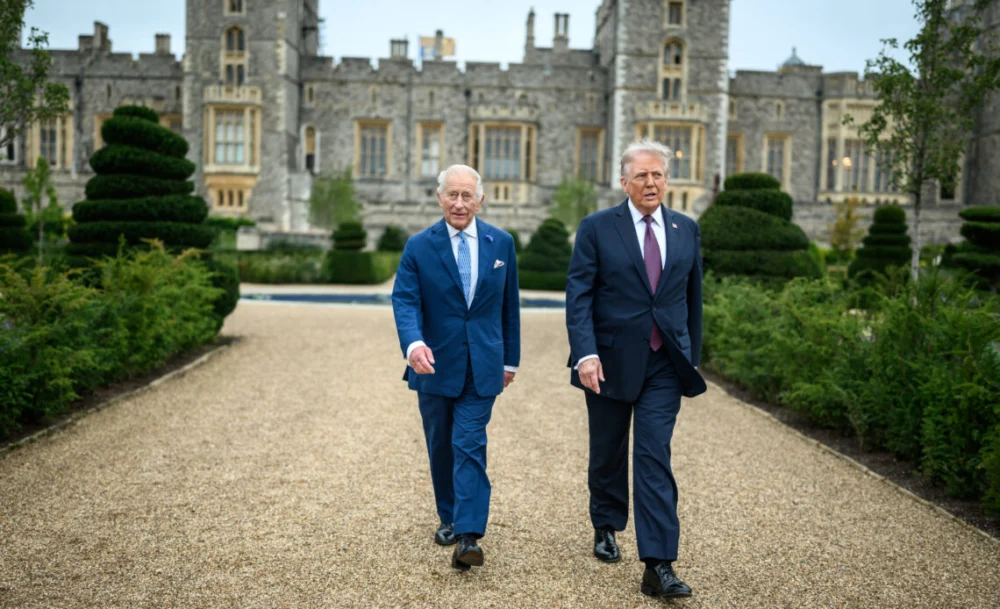
Liberal Democrat leader Sir Ed Davey has called for Prime Minister Sir Keir Starmer to advise King Charles III to cancel his upcoming state visit to the United States, citing concerns over what he describes as an "illegal war" being waged in the Middle East. The monarch’s planned April visit, intended to commemorate the 250th anniversary of American independence, has become entangled in a growing diplomatic disagreement between London and Washington concerning the escalating conflict involving Iran.
Sir Ed’s intervention marks a significant political challenge to the government’s handling of the crisis, urging the Prime Minister to prioritize de-escalation and regional stability over diplomatic engagements that could be perceived as endorsements of current military actions. The Liberal Democrat leader articulated his position via social media, arguing that the ongoing conflict has already contributed to regional instability and a significant rise in energy costs impacting British households.
"At a time when Trump has launched an illegal war that is devastating the Middle East and pushing up energy bills for British families, it’s clear this visit should not go ahead," Sir Ed stated. He further contended that a state visit, under the current circumstances, would effectively grant the U.S. President a substantial diplomatic victory. He expressed his belief that such an honour should not be bestowed upon a leader who "repeatedly insults and damages our country." This statement directly addresses the perceived adversarial relationship between the current U.S. administration and the United Kingdom, even as official diplomatic channels remain active.
The controversy arises from a week of increasingly pointed exchanges between the leaders of the United Kingdom and the United States. President Trump has been critical of Sir Keir Starmer’s initial reluctance to grant permission for American forces to conduct their initial strikes against Iran from British military bases. President Trump notably remarked that the Prime Minister was "not Winston Churchill," a pointed historical reference designed to imply a lack of decisive leadership.
Following these exchanges, Downing Street eventually granted approval for the use of UK facilities for operations described by officials as defensive in nature. The United States has since utilized key strategic locations, including RAF Fairford in Gloucestershire and the U.S. naval support facility at Diego Garcia in the Indian Ocean, to bolster efforts aimed at deterring Iranian missile attacks in the region. The presence of four American bombers at RAF Fairford over the weekend underscored the operational tempo and the critical role of these British facilities in the ongoing military posture.
Despite these evident tensions and public disagreements, official sources confirmed that Prime Minister Starmer and President Trump engaged in a telephone conversation on Sunday. The call, which lasted approximately 20 minutes, focused on the evolving situation in the Middle East and the nature of military cooperation between the two allied nations. According to a statement released by Downing Street, Prime Minister Starmer conveyed condolences following the reported deaths of six U.S. soldiers. The leaders reportedly agreed to maintain ongoing communication as the crisis continues to develop.
Sir Keir Starmer has publicly defended his initial decision to withhold authorization for the first wave of U.S. strikes, articulating that such a move could have potentially contravened international law. This stance highlights a delicate balancing act for the UK government, which seeks to maintain its crucial alliance with the United States while also upholding its commitment to international legal principles and avoiding direct entanglement in potentially escalatory actions.
In parallel, His Majesty’s Secretary of State for Foreign Affairs, Yvette Cooper, has emphasized the government’s commitment to a measured and deliberate approach. She stated that ministers would steer clear of "rhetoric or hyperbole," insisting that the focus would remain on calm and considered decision-making as the crisis unfolds. This diplomatic posture suggests an effort to de-escalate public and international anxiety while ensuring a strategic and responsible response to the unfolding geopolitical situation.
Background and Chronology of the Middle East Crisis
The current diplomatic and military tensions are rooted in a complex and long-standing regional geopolitical landscape. For decades, the Middle East has been a theatre of proxy conflicts, ideological disputes, and competition for influence among regional and global powers. The recent escalation, however, appears to be directly linked to heightened actions by Iran and retaliatory measures from the United States and its allies.
Key Events Leading to the Current Situation:
- Preceding Months: A period of heightened rhetoric and intermittent skirmishes, often involving Iran-backed groups in neighboring countries, has been observed. This has included attacks on shipping in the Persian Gulf and missile exchanges in other regional hotspots.
- Recent Escalation: The immediate catalyst for the current diplomatic dispute appears to be a series of Iranian actions, culminating in a direct military response from the United States. Specific details of these initial Iranian provocations have been varied, but intelligence reports and official statements from the U.S. have cited significant threats to regional security and allied interests.
- U.S. Strike Authorization (Early April): The U.S. sought to utilize British military facilities for initial strikes against Iranian targets. This request triggered a period of intense deliberation within the UK government.
- Prime Minister’s Initial Hesitation: Sir Keir Starmer, citing concerns over international law and potential escalation, initially withheld consent for the strikes. This decision led to public criticism from President Trump.
- Downing Street Approval (Mid-April): Following further discussions and assurances regarding the defensive nature of the operations, Downing Street granted permission for the use of RAF Fairford and Diego Garcia.
- Deployment of Assets: The arrival of U.S. bombers at RAF Fairford demonstrated the operationalization of this agreement and the UK’s direct involvement in supporting U.S. military operations.
- Diplomatic Engagements (Late April): The phone call between Prime Minister Starmer and President Trump, alongside Sir Ed Davey’s public statement, highlights the ongoing diplomatic fallout and the domestic political ramifications of the crisis.
Supporting Data and Contextual Information
The implications of a conflict in the Middle East extend far beyond regional stability, with significant global economic repercussions.
- Energy Markets: The Middle East is a critical hub for global oil and gas production. Disruptions to supply routes or production facilities can lead to sharp increases in energy prices. In the past, even the threat of conflict in the region has been sufficient to drive up crude oil prices by several dollars per barrel. For example, a surge in oil prices of 10-15% has been observed historically during periods of acute geopolitical tension in the Persian Gulf. This directly impacts household energy bills, transportation costs, and the broader inflation rate for nations like the UK.
- Global Trade and Shipping: The Strait of Hormuz, a vital chokepoint for global oil shipments, is located in the region. Any disruption to maritime traffic through this strait can have immediate and severe consequences for international trade. Approximately 30% of the world’s seaborne oil trade passes through this waterway.
- Refugee Flows and Humanitarian Concerns: Escalating conflicts invariably lead to displacement and humanitarian crises. The potential for large-scale refugee movements can place significant strain on international aid organizations and neighboring countries, and potentially impact European nations.
- Allied Commitments: The UK’s involvement, even in a supporting role, signifies a commitment to its alliance with the United States and its strategic interests in regional security. This can have implications for future defense cooperation and diplomatic relationships.
Official Responses and Reactions
The differing perspectives from key political figures underscore the complex domestic and international considerations at play.
- Sir Ed Davey (Liberal Democrat Leader): His call for the cancellation of the state visit is a direct challenge, framing the U.S. military actions as illegitimate and detrimental to British interests. His focus on "illegal war" and increased energy bills aims to resonate with public concerns.
- Sir Keir Starmer (Prime Minister): His administration’s actions demonstrate a commitment to both alliance obligations and legal adherence. The approval of defensive operations, coupled with his call with President Trump, indicates a desire to manage the crisis collaboratively but cautiously. His defense of his initial decision highlights a commitment to international law.
- Yvette Cooper (Foreign Secretary): Her emphasis on calm and measured decision-making signals a strategic approach to communication and policy, aiming to avoid inflaming tensions while maintaining diplomatic engagement.
- Donald Trump (U.S. President): His public criticism of Sir Keir Starmer and his assertive stance on military action reflect his characteristic approach to foreign policy, prioritizing decisive action and challenging perceived hesitancy from allies. His administration views the operations as necessary for deterring Iranian aggression.
Broader Impact and Implications
The decision regarding King Charles III’s state visit carries significant symbolic and diplomatic weight.
- Diplomatic Signaling: A state visit is one of the highest forms of diplomatic recognition, typically reserved for close allies and occasions of mutual celebration. Cancelling such a visit in response to military actions or perceived policy disagreements sends a strong signal about the state of the bilateral relationship. Conversely, proceeding with the visit could be interpreted as tacit approval of current U.S. foreign policy in the region, potentially alienating other international partners and exacerbating regional tensions.
- Relationship Dynamics: The controversy highlights the ongoing evolution of the "special relationship" between the UK and the U.S. under different leaderships and in response to evolving global challenges. It underscores the challenges of maintaining alliance cohesion when national interests and approaches to international law diverge.
- Public Opinion and Domestic Politics: Sir Ed Davey’s intervention taps into potential public anxieties about the cost of living and the UK’s involvement in foreign conflicts. The government’s handling of the crisis will undoubtedly be scrutinized by the electorate, and any perceived missteps could have domestic political consequences.
- International Law and Norms: The debate over the legality of the U.S. military actions and the UK’s role in facilitating them raises important questions about the interpretation and application of international law in contemporary conflicts. This could have long-term implications for global governance and the role of international institutions.
The coming weeks will be critical in determining the trajectory of both the Middle East crisis and the bilateral relationship between the United Kingdom and the United States. The decision on whether King Charles III’s state visit proceeds will be a key indicator of the prevailing diplomatic climate and the UK government’s strategic priorities.



 Jia Lissa
 Yuyun Lusiyani
 Joko Widodo

 Pevita Pearce