
 Ana Megawati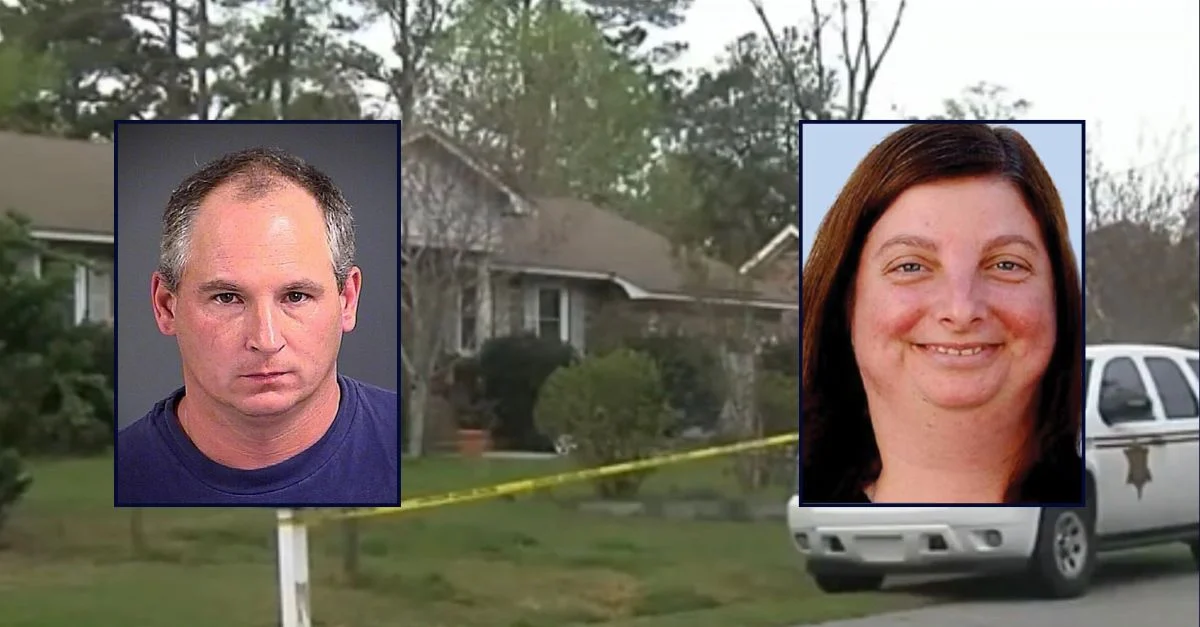
A 54-year-old North Carolina man, previously implicated and convicted of obstruction of justice in connection with his wife’s 2012 disappearance, has been apprehended and charged with the brutal 1990 murder of a New Jersey woman. Robert William McCaffrey Jr. was taken into custody last week, facing grave allegations including first-degree murder, first-degree kidnapping, and second-degree burglary in the death of 27-year-old Lisa Marie McBride. Authorities allege McCaffrey abducted McBride from her Vernon Township home before killing her and burying her remains in a secluded wooded area. This significant development in a decades-old cold case underscores the relentless pursuit of justice by law enforcement and the transformative power of advanced forensic science.
The Unfolding of a Decades-Old Mystery: The 1990 Murder of Lisa Marie McBride
The grim narrative surrounding Lisa Marie McBride’s disappearance began in the early morning hours of June 23, 1990, in the quiet community of Vernon Township, New Jersey. McBride, a vibrant 27-year-old, was last seen alive after returning to her residence following an evening out with friends. She reportedly arrived home shortly before 2 a.m., entering her residence, a moment that tragically marked the last time she was observed. The following morning, her absence and silence raised immediate concerns. When McBride failed to answer repeated phone calls, a worried co-worker reached out to her brother. His subsequent visit to her home unveiled a scene that shattered the tranquility of the suburban neighborhood and immediately signaled foul play.
Responding officers were met with disturbing evidence consistent with a violent intrusion and struggle. The crime scene bore the hallmarks of a forced entry, including a damaged window screen, and inside, signs of a significant disturbance were evident. A telephone line had been cut, a deliberate act often associated with isolating a victim or preventing calls for help. Items within the home were in disarray, and chillingly, McBride’s bed had been stripped of its linens. She was nowhere to be found, initiating an extensive search and a complex criminal investigation that would span more than three decades.
The initial investigation into McBride’s disappearance was exhaustive, involving hundreds of interviews and extensive searches by various law enforcement agencies. Despite these concerted efforts, the case remained stubbornly unsolved, slowly transitioning into a cold case that haunted the community and McBride’s family. The search for McBride herself culminated months later, on October 20, 1990, when a hunter stumbled upon skeletal remains in a remote wooded section of the Delaware Water Gap National Recreation Area. The location, known for its rugged terrain and dense forests, presented significant challenges for forensic recovery and investigation. Dental records later confirmed the identity of the remains as Lisa Marie McBride. While her death was officially ruled a homicide, the advanced decomposition of her remains limited the amount of forensic evidence available to investigators at the time, posing a formidable obstacle to identifying a perpetrator using the investigative techniques prevalent in the early 1990s.
A Breakthrough Forged by Science and Persistence
The long-dormant case of Lisa Marie McBride found its critical turning point thanks to significant advancements in DNA technology and the unwavering commitment of a dedicated multi-agency task force. This renewed investigative effort involved detectives from the New Jersey State Police, the Sussex County Prosecutor’s Office, and the Vernon Township Police Department. Their collaborative persistence, combined with the evolution of forensic science, ultimately provided the crucial evidence needed to identify a suspect.
In 2022, recognizing the potential of modern forensic techniques, authorities made the decision to exhume McBride’s remains. This painstaking process allowed for the collection of additional evidence that could be subjected to cutting-edge DNA analysis, techniques that were unimaginable at the time of her murder. While officials have not publicly disclosed the specific nature of the DNA evidence, they have characterized it as a "critical breakthrough" that directly identified Robert William McCaffrey Jr. as the alleged perpetrator. This exhumation and subsequent advanced testing highlight a growing trend in cold case investigations, where previously untestable samples or limited genetic material can now yield definitive results through methods like touch DNA analysis, mitochondrial DNA sequencing, or even investigative genetic genealogy. The successful application of these techniques often provides families, who have endured decades of uncertainty, with the first tangible hope for justice.
The impact of this breakthrough was conveyed directly to the family of McCaffrey’s estranged wife, Gayle McCaffrey, who also went missing years later. Helen Banach, Gayle McCaffrey’s sister, shared the family’s reaction to the news, stating, "They said the case against him is very strong. Evidently, his DNA was found in the house and on her person, so that is wonderful. It’s horrible, but it’s wonderful for her family. They can finally get some closure after 30-some-odd years." This poignant statement underscores the profound relief and complex emotions experienced by victims’ families when long-awaited answers finally emerge.
Robert William McCaffrey Jr.: A Troubling History
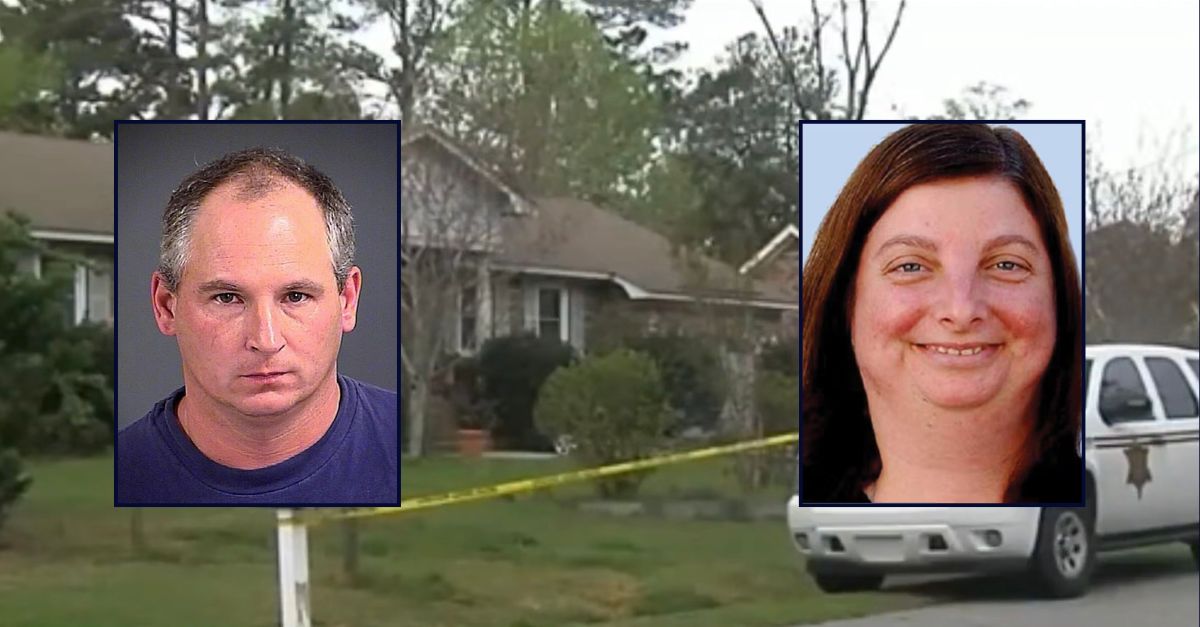
McCaffrey’s arrest in the McBride cold case adds another layer of complexity to an already troubling personal history, marked by his prior entanglement in the disappearance of his wife, Gayle McCaffrey, in 2012. The two cases, while separate geographically and chronologically, paint a disturbing picture and have naturally drawn comparisons from the public and investigators alike.
In March 2012, McCaffrey reported his wife, Gayle McCaffrey, missing from their home in Charleston County, South Carolina. He initially claimed that after an argument, he had left their residence and returned to find her gone, along with a typed "farewell" letter indicating she had voluntarily departed. However, investigators quickly found inconsistencies in his account. Forensic analysis determined that the "farewell" letter had been fabricated, and McCaffrey was found to have provided false and misleading statements during the subsequent investigation. This deception ultimately led to his conviction for obstruction of justice. He was handed the maximum sentence of 10 years in prison for his role in hindering the investigation into his wife’s disappearance. Despite extensive searches and continuous efforts by her family and law enforcement, Gayle McCaffrey’s body has never been found, and she was officially declared dead in 2018. Robert McCaffrey was released from prison in 2023, having served his sentence for obstruction, only to be arrested less than a year later for a murder committed decades prior.
Authorities have been careful to emphasize that the New Jersey homicide case is distinct from the disappearance of Gayle McCaffrey, which remains an open and active investigation. However, the uncanny parallel of a man accused of violent crimes against two women, both of whom disappeared and one of whom remains unfound, presents a chilling coincidence that is difficult to ignore. The fact that McCaffrey was once the primary suspect in his wife’s disappearance and is now formally charged in another woman’s murder will undoubtedly fuel public scrutiny and intensify the focus on the ongoing South Carolina investigation.
The Arrest, Extradition, and Legal Road Ahead
Robert William McCaffrey Jr. was apprehended on Friday evening in Manteo, North Carolina, by a multi-state task force comprising federal, state, and local law enforcement agencies. Manteo, a town on Roanoke Island in Dare County, North Carolina, is located a considerable distance from both the crime scene in Vernon Township, New Jersey, and the McCaffreys’ former residence in Charleston County, South Carolina. He was arrested without incident and is currently being held in Dare County, North Carolina, pending extradition proceedings back to New Jersey to face the charges related to Lisa Marie McBride’s murder.
Extradition is a formal legal process by which a person accused or convicted of a crime in one jurisdiction is transferred to another jurisdiction for trial or punishment. Given the severity of the charges, McCaffrey is expected to contest extradition, which could prolong his transfer to New Jersey. However, such challenges are often overcome when the requesting state provides sufficient documentation to establish probable cause. Once extradited, McCaffrey will make his first court appearance in Sussex County, New Jersey, where he will formally hear the charges against him and likely enter a plea. The legal process that follows will be extensive, involving discovery, potential pre-trial motions, and ultimately, a trial. The case will hinge on the strength of the newly acquired DNA evidence, coupled with any other corroborating evidence unearthed during the renewed investigation.
Broader Implications: Cold Cases and the Promise of DNA
The arrest of Robert William McCaffrey Jr. in the 1990 Lisa Marie McBride cold case serves as a powerful testament to the enduring commitment of law enforcement agencies and the revolutionary impact of forensic science, particularly DNA technology, on solving previously intractable crimes. This case is not an isolated incident; across the United States, law enforcement agencies are revisiting thousands of cold cases, often utilizing advancements that did not exist when the crimes were originally committed. The National Institute of Justice estimates that there are over 250,000 unsolved murders in the U.S. dating back to 1965, with approximately 6,000 added each year. The success rate for solving homicides has declined since the 1960s, making breakthroughs in cold cases even more critical.
The ability to exhume remains and re-test evidence with superior sensitivity and specificity, as demonstrated in the McBride case, offers a renewed sense of hope for countless families awaiting justice. Techniques like Low Copy Number (LCN) DNA analysis, which can generate profiles from minute amounts of genetic material, and forensic genetic genealogy, which uses public DNA databases to identify suspects through their relatives, are transforming cold case investigations. These methods not only provide leads but can also exonerate wrongly accused individuals, reinforcing the integrity of the justice system.
For the family of Lisa Marie McBride, this arrest, after more than three decades, represents the beginning of a long-awaited journey toward closure. For Gayle McCaffrey’s family, while the New Jersey case is separate, it offers a disturbing pattern that may, in time, provide new avenues for investigation into her own disappearance. The pursuit of justice, though often slow and arduous, continues to demonstrate that time does not diminish the gravity of violent crime, and that technological innovation, coupled with human perseverance, can ultimately bring answers to even the most enduring mysteries. The legal proceedings against McCaffrey in New Jersey will be closely watched, not only by the families directly affected but also by a broader public that continues to seek accountability for crimes committed long ago.

 Yuyun Lusiyani
 Joko Widodo
 Jia Lissa
 Pevita Pearce
 admin
admin
