
 Ana Megawati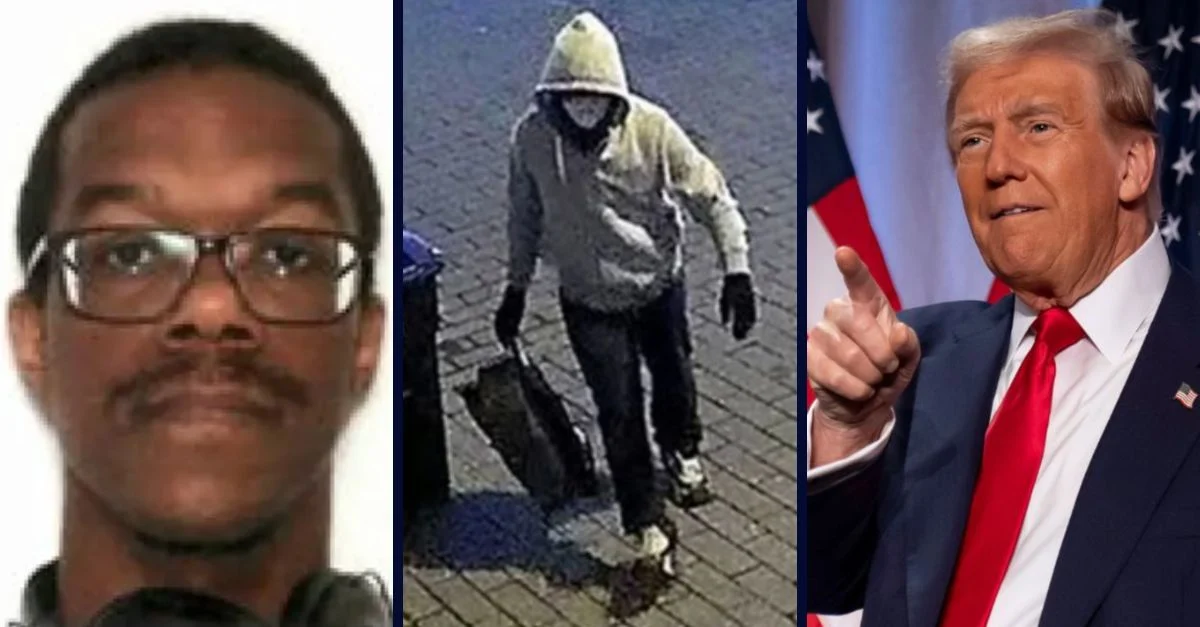
A Virginia man, Brian Cole Jr., currently facing federal charges for allegedly planting viable pipe bombs outside the Democratic National Committee (DNC) and Republican National Committee (RNC) headquarters in Washington, D.C., on January 5, 2021 – the day before the Capitol attack – is seeking to have his case dismissed. Cole’s legal team contends that the charges against him should be covered by former President Donald Trump’s "Jan. 6 pardon proclamation," a claim the Department of Justice (DOJ) has vehemently rejected as "unavailing" and "devoid of common sense." This legal maneuver has ignited a significant debate over the scope and interpretation of presidential pardons, particularly concerning the tumultuous events surrounding January 6, 2021.
The core of the dispute centers on the precise wording of the pardon proclamation Cole’s defense cites, which, according to the DOJ’s own filings, applies only to "offenses related to events that occurred at or near the United States Capitol on January 6, 2021." Federal prosecutors argue that Cole’s actions — planting explosive devices at distinct locations hours before the Capitol breach — fall outside this defined scope, despite his alleged political motivations stemming from election grievances. The case highlights the complex legal landscape emerging from the Jan. 6 aftermath and the ongoing efforts to prosecute individuals involved in related criminal activities.
Chronology of a Pre-Insurrection Threat
The timeline of events leading to Brian Cole Jr.’s arrest and subsequent legal challenge is critical to understanding the current dispute. On January 5, 2021, as Washington D.C. braced for a massive protest against the certification of the 2020 presidential election results, Cole allegedly drove from his home in Woodbridge, Virginia, to the nation’s capital. His objective, as later confessed to federal investigators, was not merely to participate in demonstrations but to plant improvised explosive devices (IEDs) at the nerve centers of America’s two major political parties.
Under the cover of darkness, Cole allegedly placed two pipe bombs. One was positioned outside the RNC headquarters, located at 310 First Street Southeast, and the other near the DNC headquarters, situated at 430 South Capitol Street Southeast. Both locations are mere blocks from the U.S. Capitol building, though distinct from the immediate perimeter where the subsequent riot unfolded. According to prosecutors, these devices were equipped with 60-minute timers, indicating an intent for them to detonate on the night of January 5. However, due to unknown factors, the timers failed, and the bombs did not explode as intended.
The presence of these dangerous devices remained undetected overnight. It was not until approximately 1:00 PM on January 6, 2021, as the joint session of Congress convened to certify the Electoral College votes and crowds began to converge on the Capitol, that the pipe bombs were discovered. A passerby first reported the device at the RNC headquarters, prompting an immediate law enforcement response. Shortly thereafter, a similar device was located at the DNC headquarters. The discovery triggered a frantic and widespread response from the Secret Service, FBI, and local law enforcement, diverting critical resources and personnel just as the situation at the Capitol was rapidly escalating into a full-blown riot. The FBI explosives examiner later assessed that both pipe bombs were constructed with all necessary components and were viable, capable of causing significant harm or destruction had they detonated.
The Extensive Investigation and Cole’s Arrest
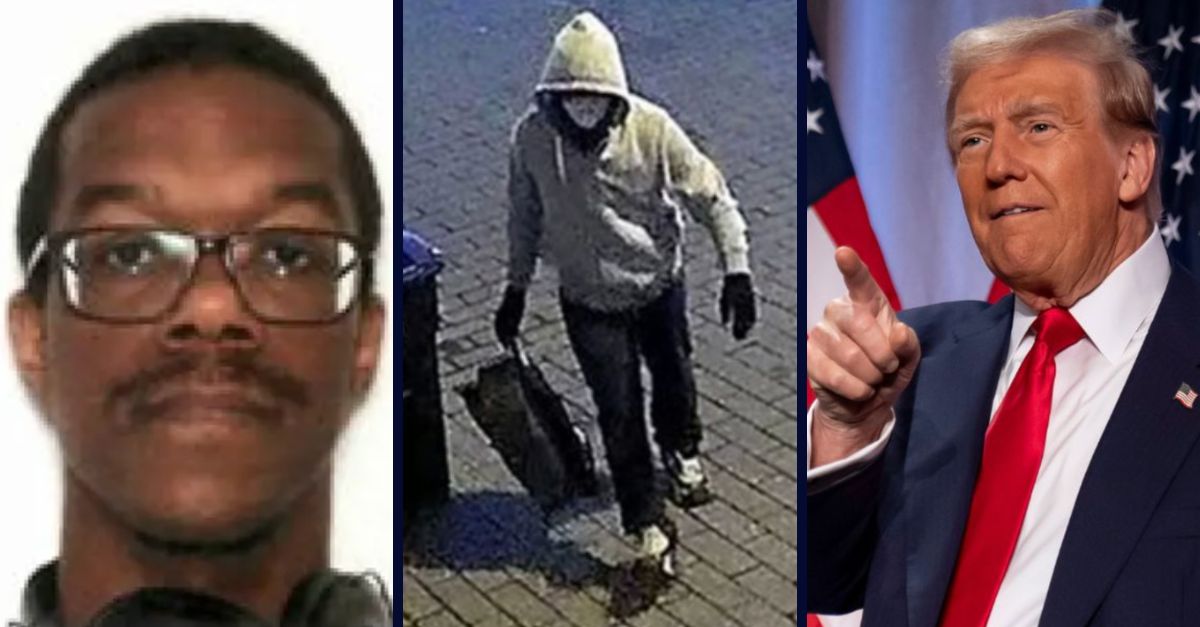
The discovery of the pipe bombs initiated one of the most intensive manhunts in FBI history. For over three years, federal agents meticulously sifted through thousands of hours of surveillance footage, analyzed forensic evidence from the devices themselves, and pursued countless leads. The individual responsible for planting the bombs became a significant focus of the broader Jan. 6 investigation, given the grave potential for violence and disruption just hours before the Capitol attack. The FBI released numerous images and videos of the suspect, depicted wearing a grey hooded sweatshirt, a face mask, and distinctive Nike Air Max Speed Turf sneakers, carrying a backpack.
The breakthrough in the investigation came from a combination of advanced forensic analysis and digital evidence. Investigators eventually identified Cole through cell phone data, tracing his movements to and from the locations where the bombs were planted. Further evidence, including surveillance footage, corroborated his presence. He was ultimately arrested in early March 2024 in Woodbridge, Virginia.
Upon his arrest, Cole, 30, allegedly confessed to planting the bombs. Federal prosecutors detailed his confession in a memorandum filed in support of pretrial detention. Cole reportedly told investigators he had learned how to construct the explosive devices by playing video games. He admitted to being a supporter of Donald Trump but expressed disillusionment with both major political parties. His stated motivation was a desire to "go after the RNC and DNC" because he was frustrated with "election deniers being called ‘conspiracy theorists’ and other ‘bad’ things."
According to the DOJ memorandum, Cole articulated a sense of grievance, stating that "the people up top," including "people on both sides, public figures," should not "ignore people’s grievances" or call them "conspiracy theorists," "bad people," "Nazis," or "fascists." He reportedly felt that "if people feel that their votes are like just being thrown away, then . . . at the very least someone should address it." Cole allegedly told federal investigators that "something just snapped" after "watching everything, just everything getting worse." He explicitly stated he planted the bombs at night "because he did not want to kill people," suggesting a desire to make a statement rather than cause mass casualties, though the viability of the devices clearly presented a significant risk.
The Legal Battle: Cole’s Pardon Claim
Brian Cole Jr. now faces serious federal charges in the District of Columbia, including transporting an explosive device in interstate commerce with the intent to kill, injure, or intimidate any individual or unlawfully to damage or destroy any building, vehicle, or other real or personal property, and attempted malicious destruction by means of fire and explosive materials. In a March motion, his legal team moved to dismiss these charges, arguing that his actions are "inextricably and demonstrably tethered" to the events of the Jan. 6 Capitol riot and should therefore be covered by former President Trump’s Jan. 6 pardon proclamation.
The defense’s argument hinges on the idea that Cole’s motivations and the proximity in time and location link his actions directly to the broader political unrest that culminated in the Capitol attack. They contend that without the context of Jan. 6 and the preceding political climate, Cole’s actions would not have occurred. Therefore, they argue, his offenses should be considered "related to" the events at or near the Capitol on January 6, 2021, as specified in the pardon proclamation.
The specific reference to a "January 2025 pardon proclamation" in the original filing raises questions, as President Trump left office in January 2021 and has not issued a formal pardon proclamation since then. While he has repeatedly discussed the possibility of pardoning Jan. 6 defendants if re-elected, and has issued general statements of support, a formal proclamation dated "January 2025" that is currently actionable would be highly unusual. It is possible this refers to an interpretation of a broader statement by Trump, a hypothetical future pardon Cole’s team believes applies, or a clerical error in the original reporting. Regardless of the date’s exact interpretation, the legal argument centers on the text of any such proclamation that grants pardons for offenses "related to events that occurred at or near the United States Capitol on January 6, 2021."
DOJ’s Vehement Opposition and Legal Rationale
The Department of Justice, in its Friday memorandum opposing Cole’s motion, forcefully rejected his claims as "unavailing" and lacking legal merit. Federal prosecutors laid out multiple reasons why Cole’s argument is flawed, focusing primarily on the precise wording and intent of any such pardon proclamation.
First, the DOJ emphasized the "plain terms" of the proclamation, asserting that it applies only to "offenses related to events that occurred at or near the United States Capitol on January 6, 2021." Prosecutors meticulously highlighted that Cole planted the pipe bombs on January 5, under the cover of darkness, at the RNC and DNC headquarters – locations distinct from the immediate vicinity of the Capitol where the riot occurred. While these locations are within Washington D.C., the DOJ argues they are not "at or near the United States Capitol" in the context of the proclamation’s intent to cover direct involvement in the Capitol breach.
Furthermore, the DOJ underscored that Cole’s offenses were "separate from the events of Jan. 6." His devices were intended to detonate on the night of January 5, hours before the Capitol attack began to unfold. It was "only happenstance" that the bombs, having failed to detonate as planned, remained idle until they were discovered in the early afternoon of January 6, just as the Capitol events were starting. The department argued that Cole’s actions represented a distinct criminal enterprise, targeting specific political party headquarters, rather than direct participation in the Capitol riot itself.
"While the events of January 6 provide some relevant factual context to this prosecution, the defendant’s crimes on January 5 were not ‘related to’ the events at or near the United States Capitol on January 6 under the terms of the proclamation," the DOJ stated in its filing. They further noted that Cole’s alleged confession focused on his grievances with "the parties" and his desire to target the RNC and DNC, not specifically Congress or the Capitol building. This distinction in target and timing, prosecutors argue, fundamentally separates his actions from those intended to be covered by a Jan. 6-specific pardon.
Background to Jan. 6 and the Political Climate
The events of January 6, 2021, were the culmination of months of escalating political tension following the 2020 presidential election. Fueled by former President Trump’s repeated and unsubstantiated claims of widespread voter fraud, a significant segment of his supporters believed the election had been stolen. The "Stop the Steal" movement gained considerable traction, culminating in a rally in Washington D.C. on January 6, intended to pressure Vice President Mike Pence and Congress to reject the certification of Electoral College votes.
The atmosphere in Washington D.C. on January 5 and 6 was highly charged. Thousands of Trump supporters had converged on the city, many expressing deep anger and frustration over the election results. Law enforcement agencies were on high alert, anticipating large-scale protests, but the precise nature and scale of the violence that would erupt at the Capitol were largely unforeseen. The discovery of viable pipe bombs just blocks from the Capitol, amidst this volatile environment, significantly heightened fears of widespread coordinated attacks.
Brian Cole Jr.’s alleged motivations, as described in his confession, align with the broader narrative of grievances that permeated the "Stop the Steal" movement. His frustration with being dismissed as a "conspiracy theorist" and his belief that "votes are like just being thrown away" echo the sentiments expressed by many who participated in the Jan. 6 events. However, his choice of target – the RNC and DNC headquarters – and the timing of his actions – the night before – suggest a premeditated act of political violence aimed at the party structures rather than a spontaneous act within the Capitol riot itself.
The Nature of the Threats: Pipe Bombs and Domestic Extremism
The pipe bombs allegedly planted by Brian Cole Jr. represented a grave and deliberate threat. The FBI’s assessment that they were "viable explosive devices" underscores the serious intent behind Cole’s actions. Pipe bombs are crude but effective IEDs, capable of causing severe injury, death, and significant structural damage. Their use in a densely populated urban environment, particularly near sensitive political targets, indicates a high level of dangerous intent.
The targeting of both Republican and Democratic headquarters, despite Cole’s self-identification as a Trump supporter, also provides insight into a particular strain of domestic extremism characterized by disillusionment with the entire political establishment. This "anti-establishment" sentiment, which views both major parties as complicit in perceived wrongs, can drive individuals to acts of violence against a broader range of targets. Cole’s alleged statement that he "didn’t like either party" and wanted to do something "to the parties" because "they were in charge" exemplifies this perspective.
The lengthy and complex investigation into the pipe bombs highlights the challenges law enforcement faces in identifying and apprehending individuals engaged in such clandestine acts of domestic terrorism. The successful identification and arrest of Cole, three years after the event, demonstrate the persistent commitment of federal agencies to hold perpetrators accountable, regardless of the time elapsed.
Presidential Pardons: Legal Context and Interpretation
Presidential pardons are broad powers granted by Article II, Section 2 of the U.S. Constitution, allowing the President to grant reprieves and pardons for offenses against the United States, except in cases of impeachment. While the power is extensive, its application is not without legal boundaries and requires careful interpretation, especially when a pardon proclamation specifies particular conditions or scopes.
The central legal question in Cole’s case revolves around the interpretation of "offenses related to events that occurred at or near the United States Capitol on January 6, 2021." The DOJ’s argument hinges on a strict, textual reading of this phrase, asserting that "at or near the United States Capitol" refers to the physical location of the Capitol building and its immediate surroundings during the riot, and "on January 6, 2021" refers to the specific day the riot occurred. Cole’s actions, occurring on January 5 and at distinct locations, are thus argued to fall outside this narrow definition.
Legal precedents generally support the idea that presidential pardons, while powerful, are interpreted based on their explicit terms. If a pardon proclamation specifies certain offenses, dates, or locations, those limitations are typically upheld. Cole’s legal team is attempting to argue for a broader, more contextual interpretation of "related to," suggesting that his actions, though spatially and temporally distinct, were intrinsically linked by motive and overarching political context to the Jan. 6 events. The court will have to weigh these interpretations, considering the intent of the proclamation and the specific facts of Cole’s case.
Implications for Justice and Domestic Extremism
The outcome of Brian Cole Jr.’s motion to dismiss carries significant implications for the broader legal landscape surrounding the Jan. 6 Capitol attack and future interpretations of presidential pardons. If Cole’s argument were to succeed, it could potentially broaden the scope of who might claim coverage under any future or existing Jan. 6-related pardons, potentially extending to individuals whose actions were peripheral in time or location but motivated by the same political grievances. This could set a precedent for a more expansive reading of pardon proclamations, potentially complicating future prosecutions of politically motivated crimes.
Conversely, a rejection of Cole’s motion would reinforce the DOJ’s position that specific language in pardon proclamations must be strictly adhered to, particularly when dealing with serious criminal acts like attempted bombings. It would reaffirm the principle that even if an individual shares a political motivation with participants in a larger event, their distinct actions, targets, and timing can preclude them from being covered by pardons specifically tailored to that larger event.
The case also underscores the ongoing challenge of combating domestic extremism and political violence in the United States. Cole’s alleged journey from political disillusionment to learning bomb-making from video games and targeting national political institutions highlights the pathways some individuals take towards radicalization and violent action. The successful prosecution of individuals like Cole, regardless of their claims for pardon, sends a clear message that acts of political violence will be met with the full force of the law.
Conclusion and Outlook
The legal battle over Brian Cole Jr.’s pardon claim is a critical juncture in the ongoing efforts to address the aftermath of January 6, 2021. The Department of Justice’s firm stance against his motion underscores the gravity with which federal authorities view his alleged actions and their commitment to ensuring accountability for serious crimes, regardless of the political climate or potential pardon claims.
As the court deliberates on Cole’s motion to dismiss, the focus will remain on the specific language of any relevant pardon proclamation and whether his actions — planting viable pipe bombs at the RNC and DNC headquarters on January 5 — can genuinely be considered "related to events that occurred at or near the United States Capitol on January 6, 2021." The outcome will not only determine the trajectory of Cole’s own prosecution but also contribute to the evolving legal framework for addressing political violence and the limits of executive clemency in the United States. The proceedings will continue to be closely watched by legal experts, political observers, and the public as the nation grapples with the lingering legal and societal impacts of that tumultuous period.

 Yuyun Lusiyani
 Joko Widodo
 Jia Lissa
 Pevita Pearce
 admin
admin
