
 Yuyun Lusiyani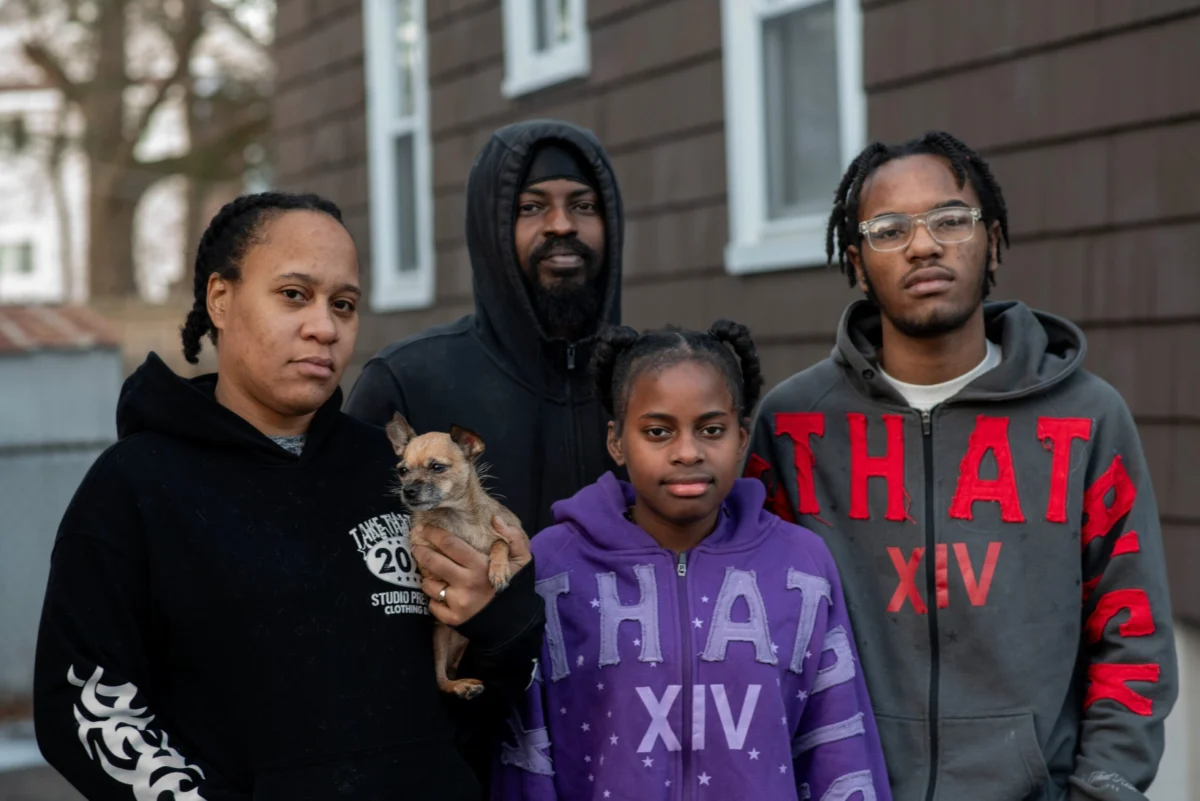
New York State, uniquely bound by a constitutional mandate to provide "aid, care and support for the needy," is once again embroiled in a high-stakes legal battle, facing accusations that it is failing this fundamental commitment. For at least the fourth time in nearly 40 years, the state finds itself in court, challenged by advocates who argue its current welfare provisions for housing are woefully inadequate, pushing impoverished families and individuals dangerously close to or into homelessness.
The latest lawsuit, filed by the Legal Aid Society and Empire Justice Center, two prominent nonprofit legal organizations, contends that the state’s shelter allowance — the financial assistance designated for housing — has remained stagnant for decades, bearing little resemblance to New York’s notoriously high rental market. The plaintiffs are seeking a judicial order that would compel the state to significantly increase these allowances, ensuring that financial aid genuinely supports stable housing for its most vulnerable residents.
A Constitutional Imperative Challenged by Economic Reality
The core of the legal challenge lies in Article XVII, Section 1 of the New York State Constitution, which explicitly states, "The aid, care and support of the needy are public concerns and shall be provided by the state and by such of its subdivisions, and in such manner and by such means, as the legislature may from time to time determine." This clause, interpreted by courts as a positive obligation rather than a mere discretionary power, places a unique responsibility on New York’s government to actively prevent destitution. However, critics argue that the state’s actions, or lack thereof, directly contradict this constitutional promise.
The current shelter allowance structure starkly illustrates this disconnect. For families with children, the monthly allowance has not been adjusted since 2003, when it was set at a mere $450 for a family of four residing in New York City. For adult-only households, the allowance has seen virtually no change since 1988. These figures stand in stark contrast to New York’s housing market, which boasts some of the highest rents in the nation. An independent analysis by New York Focus and ProPublica, corroborated by the lawsuit, reveals that the state’s shelter allowance is insufficient to cover the rent for even modest private housing anywhere within the state.
Minerva Pacumio, a 54-year-old plaintiff in the lawsuit, epitomizes the desperate situation many New Yorkers face. She receives a paltry $250 monthly allowance to cover her one-bedroom apartment in Queens, which costs $1,900 a month. Pacumio lives with her two adult daughters, one of whom has a disability requiring her full-time care five days a week, and the other struggles with mental health issues, preventing her from finding employment. The enormous gap between her allowance and her rent has left her thousands of dollars in arrears, staring down the barrel of eviction. "I don’t want to sleep in the street. I don’t want to go to the shelter," Pacumio pleaded, "I don’t want to lose everything."
Decades of Disparity: A Troubling Timeline
This current legal action is not an isolated incident but rather the latest chapter in a protracted struggle spanning four decades. The Legal Aid Society has been a consistent litigant, repeatedly challenging the state’s failure to adequately fund welfare assistance for rent.
The most notable precedent is the landmark Jiggetts case, filed in the late 1980s. Barbara Jiggetts, a single mother of three in Queens, was receiving just $270 a month to cover a $381 rent bill — approximately 70% of her monthly obligation. Legal Aid argued then, as now, that the state was shirking its constitutional duty to ensure she and her children remained safely housed. The court sided with Jiggetts, ordering the state to temporarily cover rent for New York City families with children facing eviction until a "lawful" shelter allowance could be established. However, the state’s response was glacially slow, taking until 2003 – five years past the court’s original deadline – to finally raise the shelter allowance.
In response to the Jiggetts ruling, the state also created a permanent supplement designed to bridge the gap between the allowance and actual rent costs. However, this supplement came with severe limitations: it was only available to families with children in New York City. The consequences of this narrow eligibility are dire for many. Minerva Pacumio, for instance, lost the majority of her housing assistance when her youngest daughter turned 18, illustrating how arbitrary age cutoffs can sever vital lifelines. Outside New York City, the supplement remains optional, adopted by only 15 of the 57 counties, leaving countless families and individuals vulnerable statewide.
Pavita Krishnaswamy, a supervising attorney for the Legal Aid Society’s Civil Practice Law Reform Unit, articulated the severity of the state’s inaction: "When you don’t change your shelter allowance amounts for 40 years for single people and 20 years for families, I think there’s a reasonable argument that could be made that you’re not even really trying to meet your constitutional obligations to provide aid and care to the needy in New York State."
The Human Cost and Economic Burden of Inaction
The immediate consequence of insufficient shelter allowances is a tragic surge in homelessness. When people cannot afford rent, they are often forced into the state’s emergency shelter system, which is increasingly overwhelmed. A previous investigation by New York Focus and ProPublica revealed that nearly half of New York’s unhoused families and individuals outside New York City are placed in hotels, often with minimal support to help them transition back into permanent housing. Paradoxically, the state frequently expends more resources to house individuals in these temporary hotel accommodations than it would cost to cover rent for modest, stable housing. This reactive approach, critics argue, is not only less humane but also fiscally irresponsible.
The Office of Temporary and Disability Assistance (OTDA), the agency responsible for setting shelter allowances, has historically deflected responsibility, claiming that any increase would require additional funding allocated by the Legislature in the state budget. This argument, however, often overlooks the downstream costs of homelessness, including increased demands on healthcare, emergency services, social work, and the criminal justice system. The state’s budget is indeed projected to face multibillion-dollar deficits in the coming years, but advocates contend that investing in preventive housing solutions is ultimately more cost-effective than managing a spiraling homelessness crisis.
Legislative Stalemates and Political Impasse
Attempts to address the shelter allowance crisis through legislative means have repeatedly failed. Over several past legislative sessions, state lawmakers have sponsored bills aimed at pegging the allowance to "fair market rent," a federal government estimate of the cost of modest private housing. These initiatives, however, have consistently stalled. Assemblymember Linda Rosenthal, a Democrat who chairs the housing committee and a consistent sponsor of such legislation, attributes these failures to a lack of gubernatorial support. "The governor controls — any governor of New York state controls — the budget process. We can’t just fund things that the governor would not agree to," Rosenthal explained.
The office of Governor Kathy Hochul, also a Democrat, has remained notably silent on the issue. Multiple requests for comment and written questions from news organizations went unanswered. Similarly, an OTDA spokesperson declined to comment on the pending litigation and did not respond to inquiries about whether the agency had ever formally requested additional funding for shelter allowances. In past litigation, the state has consistently argued that the constitution does not mandate it to meet all of poor families’ needs, setting the stage for a contentious legal battle over the interpretation of its core responsibilities.
The new lawsuit seeks a comprehensive remedy: either a direct increase in the shelter allowance or a mandatory, statewide expansion of the housing supplement, regardless of household composition, or both. This broad approach aims to address the systemic inequities that have left many vulnerable New Yorkers without adequate support.
A "Kafka-esque Situation" for the Needy
The systemic nature of the problem creates what Susan Antos, the managing attorney for public benefits at Empire Justice Center, describes as a "cruel Dickensian or Kafka-esque situation." Individuals poor enough to qualify for public assistance find themselves in an impossible bind: the shelter allowance is too low to secure even a modest apartment, yet under existing rules, recipients risk having their benefits cut if they cease actively searching for housing. This creates a bureaucratic trap where the very system designed to help the needy instead penalizes them for the system’s own failings.
During its last mandated five-year review in 2023, OTDA received over 100 comments, many of them impassioned pleas to increase the benefit. These included personal stories from unhoused New Yorkers detailing how the allowances were insufficient to prevent homelessness. Pleas also came from county officials, such as Michael Iapoce, the social services commissioner for Ulster County, who wrote that there wasn’t a single habitable apartment available for rent that could be covered by the existing shelter allowance. Iapoce’s comments, attached as an exhibit to the lawsuit, declared the allowance "totally irrational and arbitrary," arguing there was "no reasoned justification to keep the shelter allowance and supplements so low."
The precise cost of increasing the shelter allowance is difficult to quantify due to the fluctuating nature of public assistance caseloads. As of June 2025, nearly three-quarters of a million people were receiving public assistance in New York, underscoring the scale of potential impact.
Kimberly Maldonado, 55, another plaintiff in the lawsuit, embodies the struggle of many New Yorkers living on the edge. Having lived in the same rent-stabilized apartment in Brooklyn since she was 22, Maldonado was forced to stop working last June due to ongoing health issues. Now living alone, she relies on her daughter to help cover her $1,114 monthly rent. Maldonado receives only $215 a month in state assistance, and because she does not have minor children, she does not qualify for the state supplement, leaving her with no other housing aid from the state.
Maldonado voiced her profound fear and determination to New York Focus and ProPublica: "As long as people are quiet and we don’t try to speak up and get help and get them to change the laws, the rules, or whatever it may be, we’re never going to get help, we’re never going to get nothing changed." Her words underscore the plaintiffs’ hope that this renewed legal challenge will finally force New York State to honor its constitutional pledge and provide meaningful "aid, care and support" to its most vulnerable citizens, ensuring that stable housing is a right, not an unattainable luxury. The outcome of this lawsuit will undoubtedly have far-reaching implications for social welfare policy and the lives of hundreds of thousands of New Yorkers.

 Jia Lissa
 Joko Widodo
 Eva Lovia

 Pevita Pearce