
 Eva Lovia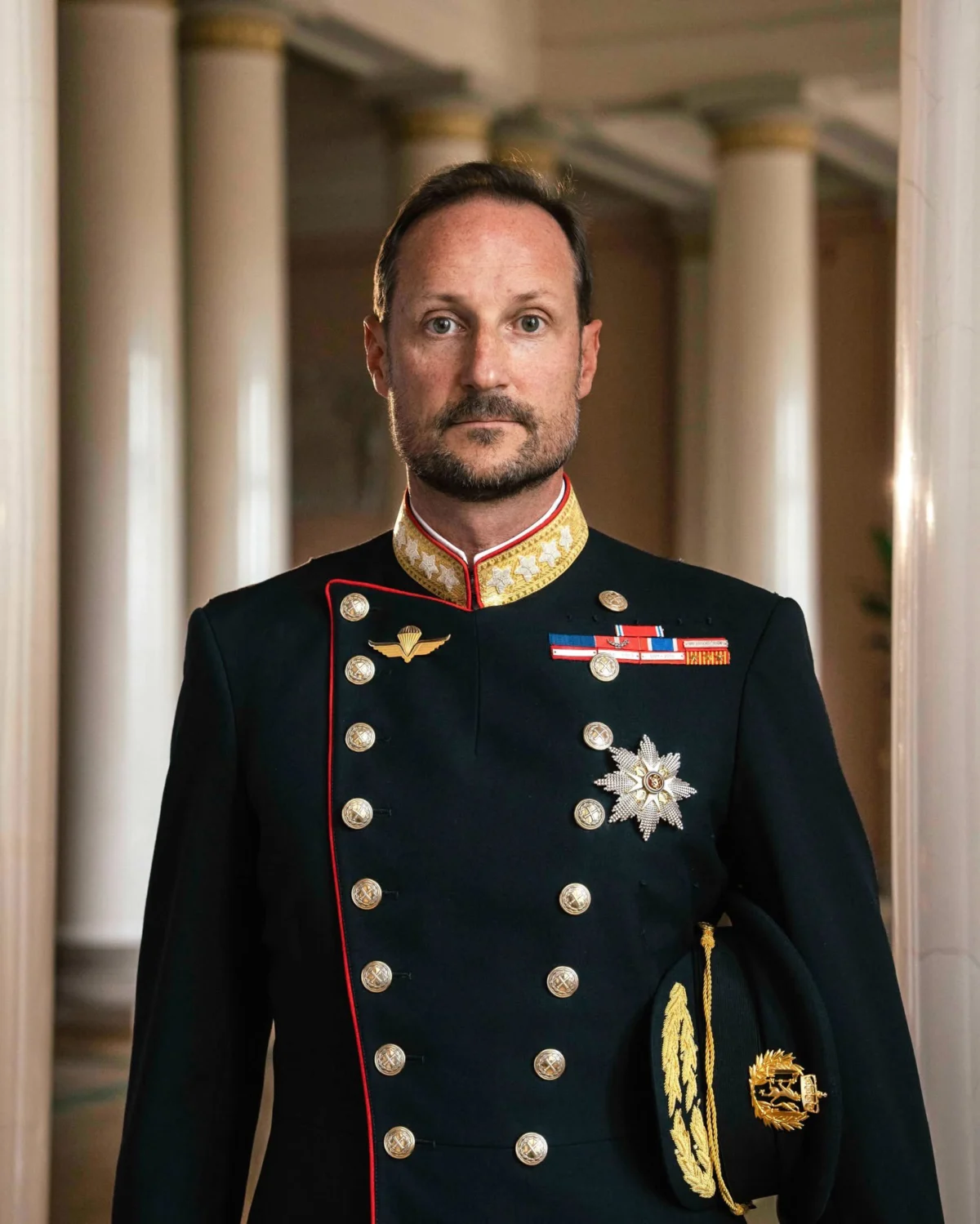
Norway has entered a period of profound national mourning following the passing of His Majesty King Harald V, who died at the age of 89. The Norwegian government officially declared the commencement of mourning on August 28th, a solemn period that will extend until the conclusion of the King’s state funeral. In a poignant display of respect and remembrance, mourning flags have been unfurled across the Royal Palace in Oslo, and solemn gun salutes have echoed throughout the nation, marking the end of a significant reign.
The transition of power was swift and marked by deep personal loss. Crown Prince Haakon, who had spent the night at the Rikshospitalet in Oslo at his father’s bedside, was present at King Harald’s side as he passed away. In the early hours of his reign, the new monarch made his way to the Royal Palace, immediately assuming the responsibilities of the sovereign. This moment of accession, though constitutionally mandated, was underscored by the palpable grief of a nation and a family united in sorrow.
A New Reign Begins: King Haakon VIII Assumes the Throne
The newly crowned King Haakon VIII, having endured a night of vigil and immense personal strain, was called upon to convene an Extraordinary Council of State. This crucial meeting comprised the Prime Minister of Norway, Jonas Gahr Store, the President of the Storting (Parliament), and other distinguished political figures. His Majesty greeted each member individually, a gesture of respect and continuity, before taking his place at the head of the table, assuming the symbolic seat of the monarch. At his side, poised to inherit the future, was the new heir to the throne, Crown Princess Ingrid Alexandra.
It fell to the young King Haakon VIII to make the solemn public announcement of his father’s death. Addressing the assembled council with evident sadness, he declared that his father, King Harald V, had passed away and that he, Haakon VIII, now ascended to the throne. In a moment that resonated with historical weight, the new King confirmed that he would reign under the regnal name Haakon VIII, a choice that echoes the lineage of Norwegian royalty. Furthermore, he pledged to uphold the enduring motto of his father, grandfather, and great-grandfather: "Alt for Norge" – "All for Norway." This commitment signifies a deep respect for the past and a dedication to the nation’s future, drawing strength from the legacy of those who have served before him.
National Grief and Royal Continuity
The passing of King Harald V, a beloved figurehead for over three decades, has cast a somber shadow over Norway. His reign, which began on January 17, 1991, following the death of his father, King Olav V, was characterized by a steadfast commitment to constitutional monarchy, a deep connection with his people, and a dedication to representing Norway on the international stage. King Harald was known for his approachable demeanor, his passion for sports, and his extensive philanthropic work. His reign spanned periods of significant social and economic change in Norway, and he navigated these transitions with grace and wisdom, earning widespread respect and affection.
The immediate aftermath of the King’s death saw the Royal Palace in Oslo become a focal point of national mourning. The unfurling of mourning flags is a deeply ingrained tradition, symbolizing the collective sorrow of the nation. The gun salutes, fired at designated salute stations across Norway by the Norwegian Armed Forces, served as a somber tribute, marking the solemnity of the occasion and the transition of leadership. These ceremonial acts, while steeped in tradition, serve to unify the nation in shared grief and remembrance.
The New King and the Royal Family
The first official portrait of King Haakon VIII as monarch has been released, offering a poignant glimpse into the weight of his new responsibilities. The image captures a monarch bearing the visible signs of grief, a testament to the personal loss he has endured alongside his constitutional duties. This image, stark in its portrayal of sorrow, underscores the human element within the royal institution.
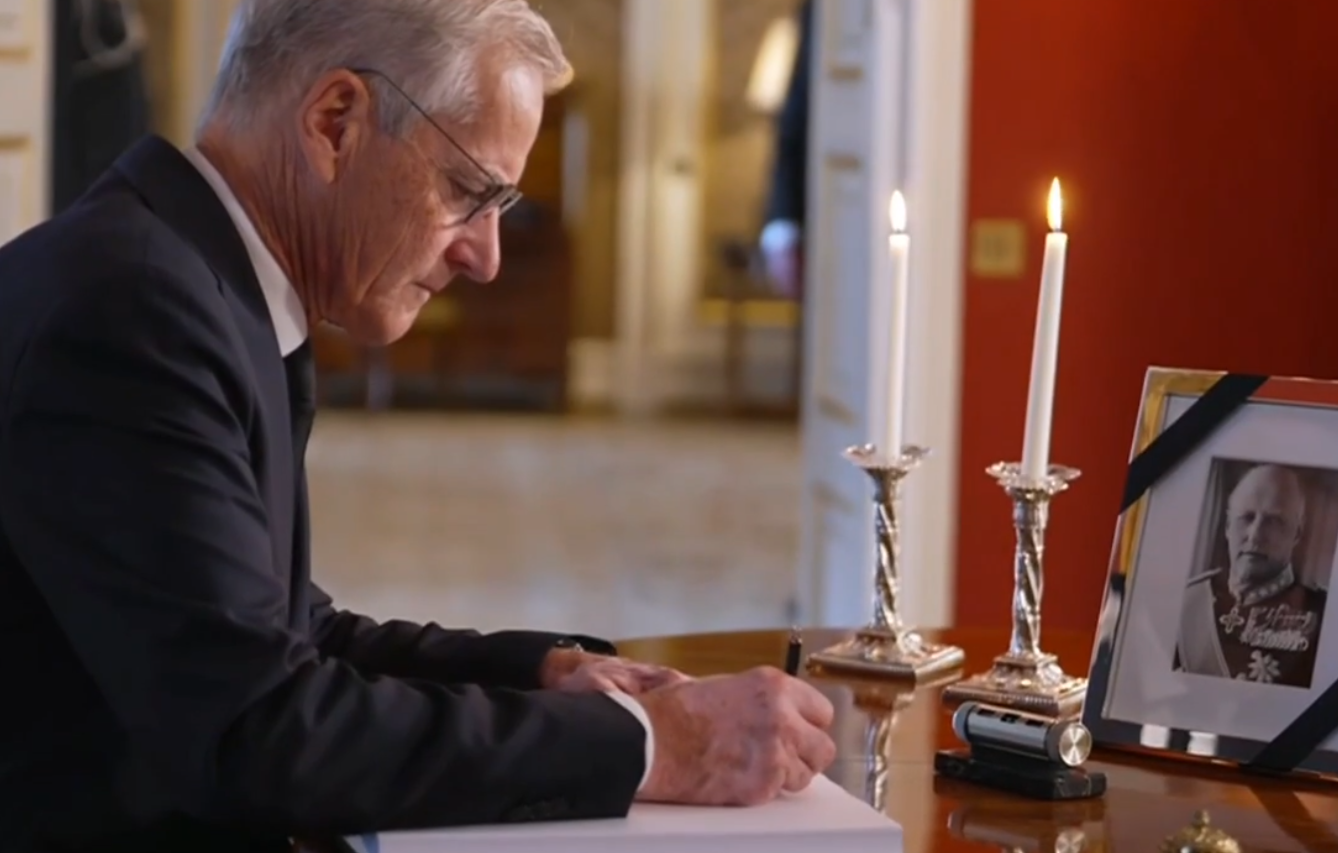
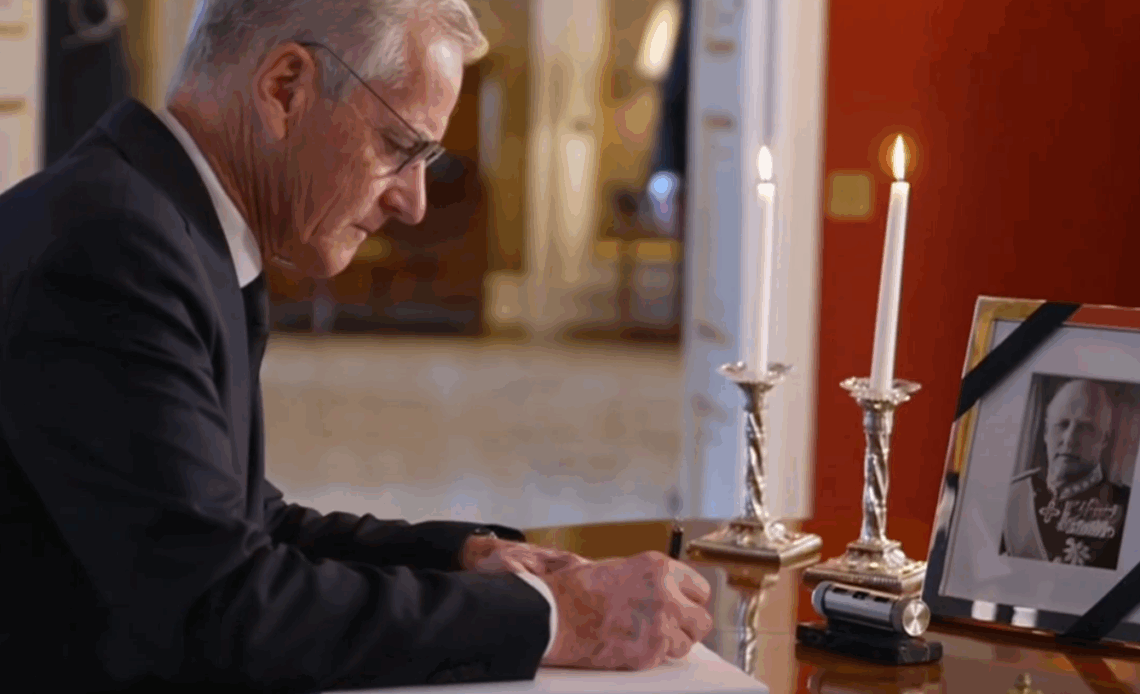
Meanwhile, the Prime Minister, Jonas Gahr Store, was among the first to sign the official book of condolences, offering words that encapsulated the nation’s sentiment: "We are a nation in mourning, we are a people in sorrow. Thank you for a lifetime of service." His poignant message concluded with the traditional proclamation, "The King is dead. Long live The King," a phrase that signifies the seamless continuation of the monarchy.
Queen Sonja, who has been married to King Harald for 58 years, also experienced profound personal loss. She had been at the Rikshospitalet, spending many hours with her husband as his health declined. Her presence at his side in his final moments highlights the deep personal bond they shared. The couple were due to celebrate their 58th wedding anniversary on August 29th, a milestone that now carries an unbearable poignancy. The Queen’s quiet strength and dedication in this time of personal tragedy have been a source of comfort and inspiration to many.
Historical Context and Royal Succession
The accession of King Haakon VIII marks a significant moment in Norwegian royal history, continuing a lineage that has guided the nation for generations. The House of Glücksburg, to which the Norwegian royal family belongs, has been on the Norwegian throne since 1905. King Haakon VII, the first monarch of modern Norway, was instrumental in establishing the monarchy after the dissolution of the union with Sweden. His son, King Olav V, continued this legacy, and King Harald V, his grandson, further solidified the monarchy’s place in the hearts of Norwegians.
The succession of King Haakon VIII to the throne is in line with the Norwegian Constitution, which establishes hereditary succession. Crown Princess Ingrid Alexandra, now the heir presumptive, is the elder of King Haakon VIII’s two children. Her position as heir, solidified by her father’s ascension, signifies the future of the Norwegian monarchy. The public is already looking towards her as the future monarch, and her upbringing and education have been geared towards preparing her for this eventual role.
Broader Implications and National Unity
The passing of King Harald V and the subsequent accession of King Haakon VIII will undoubtedly have broad implications for Norway. The monarchy serves as a crucial symbol of national identity, unity, and continuity. In times of national crisis or celebration, the King and the Royal Family often act as a unifying force, transcending political divides.
King Haakon VIII inherits a nation that is deeply proud of its heritage and its democratic values. His reign will be watched closely, as he navigates the evolving social and political landscape of the 21st century. The continuity of the motto "Alt for Norge" suggests a commitment to the foundational principles that have guided Norway through its history.
The period of mourning will allow the nation to reflect on the legacy of King Harald V and to embrace the dawn of a new royal era. The state funeral, a solemn occasion that will draw international dignitaries, will provide an opportunity for the world to pay its respects to a respected monarch and for Norway to demonstrate its resilience and unity in the face of loss. The transition, though marked by sadness, is a testament to the enduring strength of the Norwegian monarchy and its integral role in the nation’s identity. The coming months will be a period of adjustment and remembrance, as Norway bids farewell to a beloved King and welcomes its new sovereign.



 Yuyun Lusiyani
 Joko Widodo
 Jia Lissa
 Pevita Pearce
 admin
admin
