
 Eva Lovia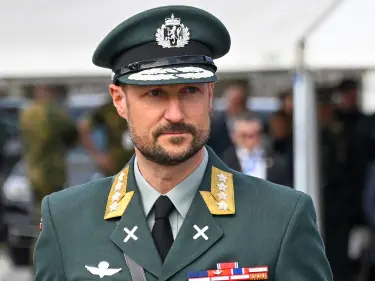
Norway’s Royal Family is set to resume its official public engagements on October 9th, marking a significant return to duty following a period of profound national mourning. The unexpected passing of His Majesty King Harald V on August 28th, at the age of 89, led to the immediate suspension of all royal activities. This hiatus, while necessary for the grieving family, has ushered in a new era for the Norwegian monarchy, characterized by a reshaped roster of working royals and a recalibrated approach to royal duties. The resumption of public life will see King Haakon, who ascended to the throne immediately upon his father’s death, at the forefront of royal responsibilities, supported by his mother, Queen Sonja. However, the absence of other key figures will undoubtedly influence the scope and nature of future royal engagements.
A Nation in Mourning: The Passing of King Harald V
King Harald V, a beloved and respected monarch who reigned for 32 years, passed away peacefully at the Royal Hospital in Oslo. His death sent ripples of grief across Norway and internationally, prompting widespread tributes to his dedicated service and his role in modernizing the monarchy. The official mourning period saw the suspension of all public appearances by the Royal Family, a customary response to the loss of a sovereign. This period of quiet reflection allowed the family to grieve privately while the nation collectively mourned its king. King Harald was known for his down-to-earth demeanor, his passion for sailing, and his unwavering commitment to his constitutional duties, often acting as a unifying figure for the nation. His reign coincided with significant social and economic changes in Norway, and he navigated these with grace and a deep understanding of his people.
Resumption of Duties: A New Chapter for the Royal House
The confirmation from the Royal Court that official duties will recommence on October 9th signals a step towards normalcy, albeit a significantly altered one. King Haakon, now at the helm, will carry the primary burden of royal responsibilities. His mother, Queen Sonja, a strong pillar of the Royal Family, will also actively participate in public engagements. This partnership between father and son, and mother and son, highlights a continuity of service and a commitment to upholding the traditions of the monarchy.
King Haakon, who was born Crown Prince Haakon Magnus on July 20, 1973, has been groomed for this role throughout his life. He has undertaken numerous public duties alongside his father and has consistently demonstrated his readiness to assume greater responsibilities. His coronation, a formal ceremony that will officially present him to the nation as King, is anticipated in the coming months, following a period of established reign. He has already sworn his oath in the Norwegian Parliament, a crucial constitutional step.
Queen Sonja, born Sonja Haraldsen, has been a steadfast presence beside King Harald for decades. Her experience and wisdom will be invaluable as the Royal Family navigates this transition. She has often been a champion for arts and culture in Norway, and her continued public engagements will likely reflect these passions.
Key Figures and Evolving Royal Landscape
The current period is marked by notable absences from the active royal roster, significantly reshaping the operational capacity of the monarchy.
Queen Mette-Marit’s Continued Recuperation: Her Majesty Queen Mette-Marit, wife of King Haakon, will not be undertaking public engagements for the foreseeable future. This decision stems from her recent lung transplant in June. The Queen has been undergoing a period of recuperation and is not yet medically cleared to resume her public duties. The Royal Court has indicated that she is not expected to return to public life until at least the summer of next year, emphasizing the importance of her full recovery. Queen Mette-Marit has been a prominent advocate for various charitable causes, particularly those related to global health and chronic illness, and her absence will be keenly felt in these areas. Her illness has been a source of public concern and support, with many wishing her a swift and complete recovery.
Crown Princess Ingrid Alexandra’s Academic Pursuits: The heir presumptive to the Norwegian throne, Crown Princess Ingrid Alexandra, who will be King Haakon’s successor, is preparing to continue her higher education abroad. Following a brief relocation of her university course to Oslo during her mother’s hospitalization, she is set to recommence her studies in Sydney, Australia, in February. This move signifies a new stage in her life, balancing her royal destiny with the pursuit of academic knowledge and personal growth. Crown Princess Ingrid Alexandra, born on January 21, 2004, has been increasingly visible in public life, undertaking a growing number of engagements that prepare her for future leadership. Her studies in Australia will provide her with a broader international perspective, which will undoubtedly be beneficial to her future role.
Prince Sverre Magnus’s Studies Abroad: The second in line to the throne, Prince Sverre Magnus, aged 20, is currently studying in Lisbon. His academic pursuits in Portugal further illustrate the Royal Family’s commitment to providing its younger members with diverse educational experiences. Prince Sverre Magnus, born on December 3, 2005, has also been participating in select royal events, gradually becoming more acquainted with his public role.
The Passing of Princess Astrid: Adding to the recent losses within the Royal Family, Princess Astrid, the sister of the late King Harald V, passed away in September at the age of 94. Her death occurred just two days after her brother’s funeral, marking a period of profound personal grief for the family. Princess Astrid was a cherished member of the Royal Family and an active participant in public life for many years, supporting various charitable organizations and cultural initiatives. Her passing further underscores the significant changes the monarchy has experienced in a short span of time.
Implications for the Royal Agenda
The current composition of the working Royal Family necessitates a recalibration of the royal agenda. With fewer active members available for public engagements, the scope of royal activities will likely be more focused.
Absence of State Visits: The Royal Court has already announced that there will be no State Visits for the foreseeable future. These high-profile events, which involve hosting foreign heads of state and their delegations, require significant logistical planning and the availability of senior royals. Their postponement suggests a strategic prioritization of core constitutional duties and a period of consolidation for the monarchy.
Focus on Core Constitutional Duties: King Haakon will be primarily responsible for overseeing essential constitutional functions, including Councils of State and government meetings. These are vital to the functioning of Norway’s parliamentary democracy, and his diligent execution of these duties will be paramount. The demands of these responsibilities mean that extensive travel, a common feature of royal tours, is unlikely to be a significant part of his immediate plans.
A Different Royal Calendar: The overall royal calendar will undoubtedly reflect these adjustments. The emphasis will likely be on domestic engagements that are essential for the monarchy’s role as a symbol of national unity and continuity. The Royal Family’s ability to engage with communities across Norway, support national events, and represent the country on the international stage will be managed with a reduced workforce.
A Look Ahead: Continuity and Adaptation
The Norwegian Royal Family has a long history of adapting to changing times while upholding its core values and responsibilities. The current period of transition, marked by loss and the emergence of a new sovereign, presents both challenges and opportunities. King Haakon’s reign begins at a moment of significant national reflection, and his leadership, alongside the enduring support of Queen Sonja, will be crucial in guiding the monarchy through this new chapter.
The commitment to public service remains at the heart of the monarchy’s mission. While the operational landscape has shifted, the core purpose of the Royal Family—to serve the people of Norway, uphold constitutional traditions, and act as a symbol of national identity—endures. The coming months will be a testament to the resilience and adaptability of the Norwegian Royal Family as it navigates this period of profound change and continues its service to the nation. The public’s understanding and support will be vital as the Royal Family redefines its presence and role in the years to come.


 Yuyun Lusiyani
 Ana Megawati
 Joko Widodo
 Jia Lissa
 Pevita Pearce