
 Eva Lovia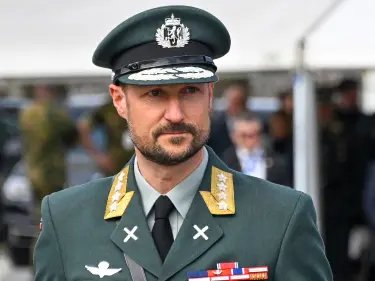
Norway’s Royal Family is set to gradually resume their official duties following a period of profound national mourning for the late King Harald V, who passed away on August 28th at the age of 89. The immediate suspension of all public engagements by the Royal House underscored the deep grief felt across the nation and within the family itself. However, as the country moves forward, the royal calendar, and indeed the very composition of the working royal family, has undergone significant shifts. The Royal Court has confirmed that while official duties are recommencing, the operational landscape for the monarchy has been irrevocably altered by recent events.
Resumption of Duties and a Streamlined Royal Presence
King Haakon, who ascended to the throne upon his father’s death, is scheduled to resume his official engagements on October 9th. He will be joined by his mother, Queen Sonja, who, despite her advanced age of 86, will also recommence her public duties. This dual presence highlights the immediate need to maintain the continuity of royal representation. Their combined efforts will be crucial in shouldering the responsibilities previously distributed among a larger group of active royals.
However, the absence of Queen Mette-Marit from immediate public duties marks a significant change. Her ongoing recuperation following a lung transplant in June means she will not be undertaking any engagements until at least the summer of next year. This period of convalescence, while essential for her health, reduces the active working contingent of the Royal Family.
Further altering the operational capacity of the monarchy is the upcoming departure of Crown Princess Ingrid Alexandra, the heir to the throne. The 20-year-old Princess is set to recommence her university studies in Sydney, Australia, in February. Her course had been temporarily relocated to Oslo to accommodate her mother’s hospitalization, but she will now return to her international academic pursuits. Meanwhile, her younger brother, Prince Sverre Magnus, the second in line to the throne, is currently studying in Lisbon.
The practical implication of these absences and the passing of King Harald’s sister, Princess Astrid, in September at the age of 94, is that King Haakon will largely be the primary figurehead for royal engagements. This places a considerable burden on the new King, who will be managing the majority of the royal agenda, either independently or with the support of his mother, Queen Sonja.
A New Era for the Norwegian Monarchy
The period following King Harald’s death has been one of reflection and reorganization for the Norwegian Royal Family. The suspension of engagements was a necessary period of grief, allowing the family to mourn privately and collectively. The resumption of duties signifies a return to normalcy, albeit a new kind of normalcy shaped by loss and circumstance.
King Haakon’s accession to the throne on August 28th marked a pivotal moment in Norwegian history. He has already taken the constitutional oath in Norway’s parliament, the Storting, a formal step in assuming his sovereign responsibilities. While he will eventually participate in an official enthronement service, the immediate focus has been on the practicalities of governance and representation.
The shift in the composition of the working royal family has already necessitated a recalibration of the royal calendar. The announcement that there will be no State Visits for the foreseeable future is a clear indicator of the reduced capacity for high-profile international engagements. State Visits are complex events requiring extensive planning and significant royal participation, both domestically and internationally. Their deferral signals a period of consolidation for the monarchy.
King Haakon’s immediate responsibilities will include overseeing Councils of State and government meetings, alongside fulfilling his official public duties. The nature of his role will likely involve a greater emphasis on domestic affairs and routine ceremonial functions. Travel, a significant component of royal duties in the past, may feature less prominently in his initial plans as he focuses on establishing his reign and managing the existing workload.
Background and Chronology of Events
The passing of King Harald V on August 28th brought an end to a reign that spanned over two decades. He ascended to the throne in 1991, succeeding his father, King Olav V. King Harald was a popular and respected figure, known for his approachable demeanor and his commitment to modernizing the monarchy. His reign was marked by periods of national prosperity and significant global events, during which he served as a steady hand and a unifying symbol for the nation.
His death triggered a period of national mourning, with flags flown at half-mast and public events scaled back. The Royal Family, as is customary in such circumstances, suspended all public engagements to allow for private grief and to honor the late monarch. This period of mourning lasted until the confirmed resumption of duties.
The timeline leading up to this new phase is significant:
- June: Queen Mette-Marit undergoes a lung transplant, necessitating a period of recuperation and a reduction in her public engagements.
- August 28th: King Harald V passes away at the age of 89. His son, Haakon, becomes King Haakon. The Royal Family suspends all public duties.
- September: Princess Astrid, the King’s sister and a dedicated working royal, passes away at the age of 94, just two days after King Harald’s funeral. This further reduces the number of active senior royals.
- October 9th: King Haakon and Queen Sonja are scheduled to resume their official duties.
- February (following year): Crown Princess Ingrid Alexandra is set to return to her studies in Sydney, Australia.
This chronological sequence underscores the rapid succession of significant events that have reshaped the operational capacity and public face of the Norwegian Royal Family.
Supporting Data and Broader Implications
The Norwegian monarchy, while constitutional, plays a vital role in national identity, diplomacy, and ceremonial functions. The Royal Family’s public engagements serve multiple purposes, including representing Norway internationally, supporting charitable causes, and acting as a symbol of national unity.
The reduction in the number of active working royals, particularly senior members, has direct implications for the monarchy’s ability to fulfill these roles comprehensively. The Norwegian Royal Family is relatively small compared to other European monarchies, making each working member’s contribution particularly important.
- Reduced Public Profile: With fewer royals undertaking engagements, the overall visibility of the monarchy in public life will likely decrease. This could potentially impact public engagement with royal activities and initiatives.
- Increased Workload on King Haakon and Queen Sonja: The new King and his mother will be the primary faces of the monarchy for the foreseeable future. This will require a significant commitment of their time and energy, potentially impacting their personal lives and the pace at which they can undertake new initiatives.
- Focus on Domestic and Essential Duties: The deferral of State Visits suggests a strategic prioritization of essential governmental and domestic ceremonial duties. This allows the monarchy to manage its resources effectively during a period of transition.
- Impact on Youth Royal Engagement: While Crown Princess Ingrid Alexandra and Prince Sverre Magnus are active and will eventually play larger roles, their current focus on education means their direct contributions to the daily royal agenda are limited. This generational transition is a natural part of any long-standing institution, but it creates a temporary gap in immediate operational capacity.
Official Responses and Future Outlook
While direct statements from the Royal Court have been factual and focused on the resumption of duties, the underlying message is one of resilience and adaptation. The Norwegian Royal Family has a history of navigating change and maintaining public trust through periods of transition.
The decision to continue with official duties, albeit in a modified capacity, demonstrates a commitment to serving the nation. The Royal Court’s communication has been clear and direct, informing the public of the changes and the reasons behind them.
The future of the Norwegian monarchy will undoubtedly be shaped by King Haakon’s reign. His approach to modernizing the institution, balancing tradition with contemporary expectations, and effectively managing the reduced working team will be key. The continued education of Crown Princess Ingrid Alexandra and Prince Sverre Magnus suggests a long-term strategy for succession, ensuring the monarchy’s continuity for generations to come.
The passing of King Harald V and the subsequent adjustments within the Royal Family represent a significant chapter in Norway’s modern history. As King Haakon steps fully into his role, supported by his mother and with the future of the monarchy in the hands of his children, the nation watches with a mixture of sorrow for what has been lost and anticipation for what is to come. The Royal Family’s commitment to their constitutional role remains unwavering, even as the landscape of their service evolves.


 Yuyun Lusiyani
 Ana Megawati
 Joko Widodo
 Jia Lissa
 Pevita Pearce