
 Pevita Pearce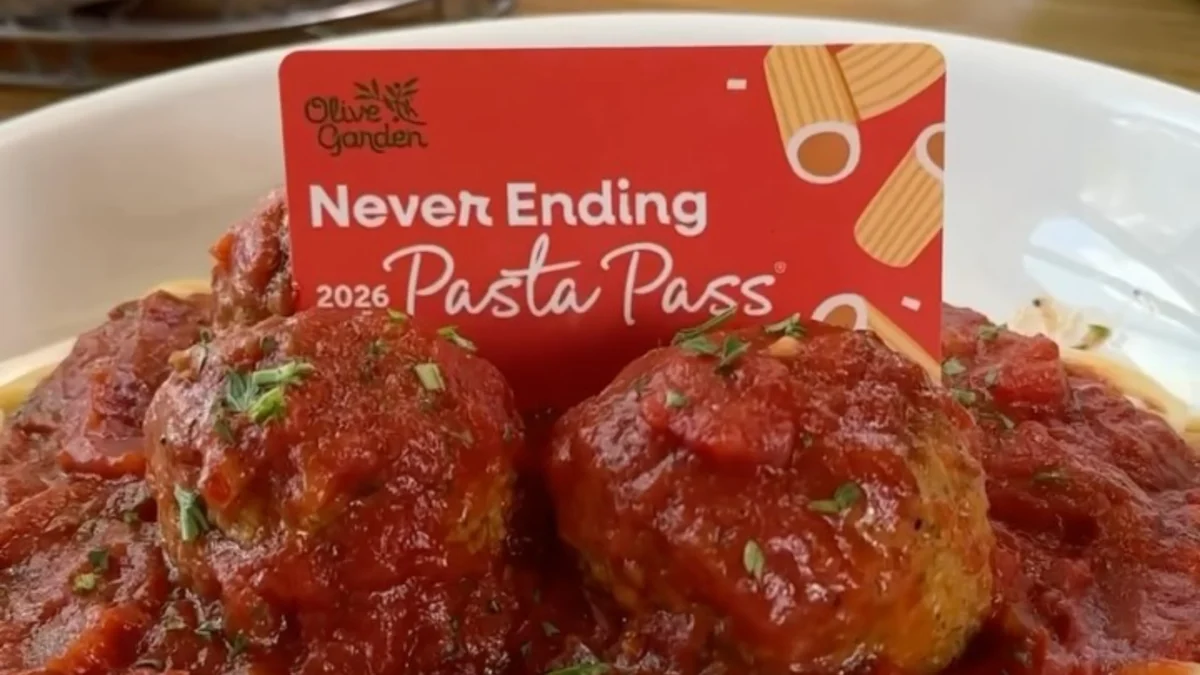
The rapid exhaustion of inventory for Olive Garden’s highly anticipated Never-Ending Pasta Pass has sparked a wave of consumer frustration and allegations of automated interference, prompting an official response from the restaurant chain regarding its security measures and anti-scalping protocols. On July 16, 2026, the Darden Restaurants-owned subsidiary released 10,000 of the coveted passes for the first time in seven years, only to see the entire stock vanish within minutes of the 2:00 p.m. ET launch. The overwhelming demand left tens of thousands of hopeful diners in a digital queue, many of whom voiced suspicions that professional scalpers and sophisticated "bot" programs had bypassed the system to secure the passes for resale.
The Never-Ending Pasta Pass, priced at $100 plus applicable taxes, offers holders 13 weeks of unlimited access to the restaurant’s signature pasta dishes, sauces, and toppings, along with unlimited soup or salad and breadsticks. Given the current economic climate and the rising costs of dining out, the pass represents a significant value proposition for frequent guests, potentially paying for itself in fewer than seven visits. However, the scarcity of the offer—limited to just 10,000 units for a nationwide audience—created a high-pressure environment that mirrors the frantic nature of concert ticket sales or limited-edition sneaker drops.
A Timeline of the Never-Ending Pasta Pass Evolution
The concept of the Never-Ending Pasta Pass was first introduced in 2014 as a way to generate social media "buzz" and drive foot traffic during the late summer and autumn months. In its inaugural year, the chain offered only 1,000 passes, which sold out in less than one second. Recognizing the massive demand, Olive Garden gradually increased the volume of passes in subsequent years, reaching a peak of 24,000 passes in 2018 and even introducing a "Lifetime" Pasta Pass in 2019 for a select few.
Following the 2019 promotion, the program was placed on an indefinite hiatus. This period coincided with the global pandemic and subsequent shifts in the hospitality industry, including labor shortages and supply chain disruptions that forced many casual dining chains to reconsider high-volume, low-margin promotions. The announcement of the pass’s return in 2026 was met with significant fanfare, as it signaled a return to "pre-pandemic" marketing strategies aimed at rewarding loyal customers and recapturing market share in the competitive Italian-American dining segment.
The 2026 iteration of the sale was structured as a purely digital event. Prospective buyers were instructed to join an online waiting room prior to 2:00 p.m. ET. Once the clock struck the hour, users were randomly assigned a place in line. Despite these efforts to organize the traffic, the sheer volume of users caused significant lag for some, while others reported being kicked out of the queue entirely.
Addressing Allegations of Automated "Bot" Interference
As the "sold out" notification appeared on the official website roughly two hours after the queue opened—though most users reported the inventory was gone within the first few minutes—social media platforms were flooded with complaints. Users pointed to the speed of the sell-out as evidence that automated scripts had been used to "scrape" the site and complete transactions faster than any human could type.
In a series of statements released via official social media channels and direct responses to customer inquiries, Olive Garden defended the integrity of its sales platform. The company emphasized that it had anticipated high traffic and had implemented multi-layered technical safeguards to ensure a level playing order.
"We’ve built safeguards into the process to help ensure a fair experience," the company stated in a public post. "The system was designed to manage traffic, limit purchase quantities, and prevent behaviors like repeated refreshing from impacting access."
Technical experts note that such safeguards typically include CAPTCHA challenges, IP address monitoring to detect multiple requests from a single source, and "waiting room" logic that prevents users from bypassing the queue via direct URLs. Despite these measures, the "arms race" between retailers and bot developers remains a persistent challenge in the e-commerce landscape.
Anti-Scalping Measures and the Personalized Pass Policy
One of the primary concerns among disappointed fans was the potential for these passes to appear on secondary markets such as eBay or Facebook Marketplace at inflated prices. To combat this, Olive Garden reiterated a strict policy regarding the use and ownership of the Never-Ending Pasta Pass. Unlike concert tickets, which are often easily transferable, the Pasta Pass is tied to a specific individual’s identity.

According to the official terms and conditions, the Never-Ending Pasta Pass is non-transferable and must be used only by the individual whose name is printed on the card. Olive Garden clarified that "Passholders must present a valid photo I.D. along with the Pass at the time of ordering." This requirement serves as a powerful deterrent against scalping, as a pass purchased from a third party would be rendered useless at the restaurant without a matching identification card.
The company further confirmed that the names on the passes are finalized at the point of purchase and cannot be changed later. This "locked-in" identification system is designed to ensure that the 10,000 individuals who secured the passes are the ones actually benefiting from the 13 weeks of unlimited dining.
Supporting Data and Economic Implications
The decision to price the pass at $100 reflects a strategic move by Darden Restaurants. With the standard "Never-Ending Pasta Bowl" promotion starting at $14.99 per meal, a Passholder reaches the "break-even" point on their eighth meal. For the restaurant, the $100 upfront payment provides immediate liquidity and guarantees 13 weeks of consistent foot traffic.
Industry analysts suggest that the true value for Olive Garden lies not in the $1 million in immediate revenue generated by the sale, but in the "halo effect" of the promotion. Passholders rarely dine alone; they often bring family and friends who pay full price for their meals, appetizers, and alcoholic beverages. Furthermore, the massive social media engagement generated by the "Pasta Pass" hype serves as a low-cost marketing campaign that keeps the brand at the forefront of consumer consciousness as the school year begins and the holiday season approaches.
The 13-week window for the 2026 pass runs from August 24 through November 22. This period covers several key dining holidays and the transition into the busy autumn season. By securing 10,000 "power users," Olive Garden ensures that its dining rooms remain active during weekday lunch and dinner shifts that might otherwise see lower occupancy.
Broader Impact on the Casual Dining Sector
The return and subsequent sell-out of the Pasta Pass highlight a growing trend in the casual dining sector: the "subscription" model. From Panera Bread’s "Sip Club" to Taco Bell’s "Taco Lover’s Pass," major chains are increasingly looking for ways to lock in consumer loyalty through pre-paid or recurring fee structures.
However, the Olive Garden model differs in its extreme scarcity. By limiting the offer to 10,000 people in a country of over 330 million, the company creates an "exclusive" club, which paradoxically enhances the brand’s mass-market appeal. The "fear of missing out" (FOMO) serves as a psychological trigger that drives consumers to participate in the event, even if their actual likelihood of winning is low.
The controversy surrounding bots and scalpers is a byproduct of this manufactured scarcity. As more restaurants adopt high-stakes digital drops, the pressure on IT infrastructure and consumer-facing transparency will only increase. For Olive Garden, the challenge moving forward will be balancing the marketing benefits of a "sell-out" with the potential brand erosion caused by frustrated customers who feel the system is "rigged."
Alternatives for Disappointed Consumers
For the thousands of diners who were unable to secure a $100 pass, Olive Garden has offered a secondary option. The traditional "Never-Ending Pasta Bowl" promotion—the nationwide event that does not require a special pass—is scheduled to return on August 31, 2026. This promotion allows any guest to enjoy unlimited pasta starting at $14.99 per visit.
Additionally, the company teased upcoming opportunities for fans to engage with the brand. "All 10,000 Never-Ending Pasta Passes have been sold!" the company announced. "But don’t fear, more pasta goodness awaits. Stay tuned to our IG the next couple of weeks… you never know what saucy secrets are up our sleeves."
This suggests that while the primary sale has concluded, Olive Garden may engage in smaller-scale giveaways or secondary promotions through its social media channels to appease those who were left empty-handed on July 16. As the August 24 start date for Passholders approaches, the focus will likely shift from the mechanics of the sale to the in-restaurant experience, where the chain must now deliver on the promise of 13 weeks of "unlimited pasta goodness" for its 10,000 lucky winners.




 Yuyun Lusiyani
 Joko Widodo
 Eva Lovia
 admin
admin
 Lina Irawan