
 Jia Lissa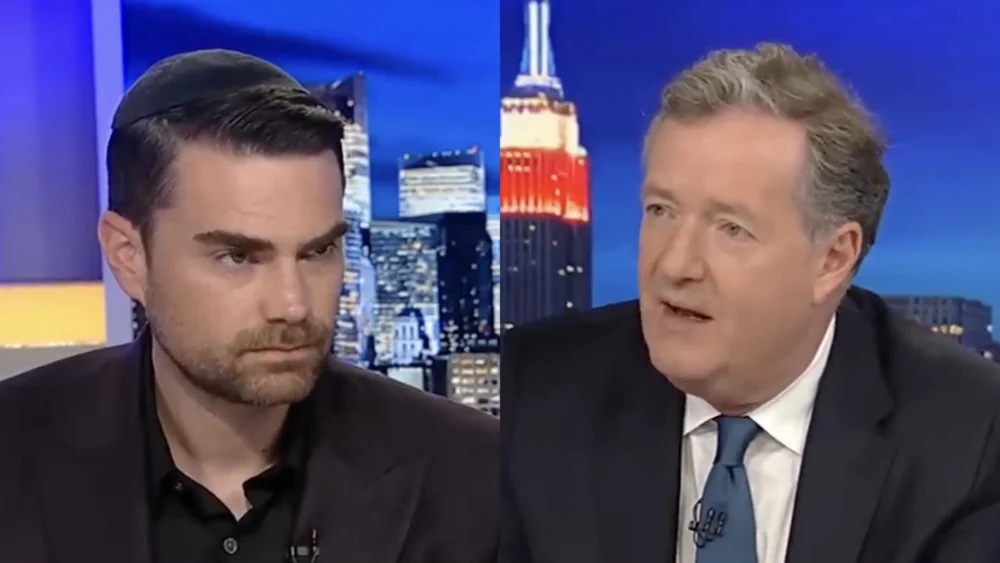
The longstanding professional animosity between television host Piers Morgan and Daily Wire co-founder Ben Shapiro reached a new level of public intensity this week, as the two media figures engaged in a high-profile exchange regarding journalistic integrity and the geopolitical complexities of the Israel-Hamas conflict. The confrontation, which played out across social media platforms on Thursday, March 5, 2026, highlighted a widening ideological and personal rift between two of the most influential voices in the modern digital media landscape.
The latest escalation began when Shapiro publicly criticized Morgan’s recent programming choices on his global show, Piers Morgan Uncensored. Shapiro characterized Morgan as the “Jerry Springer of political television,” an accusation aimed at the host’s penchant for hosting high-octane, often volatile panel debates. Shapiro further alleged that Morgan was “making a mockery of the entire industry” by providing a platform to what he described as the “dregs” of political discourse. Central to Shapiro’s grievance was Morgan’s decision to repeatedly host Dave Smith, a prominent libertarian commentator and vocal critic of the Israeli government’s military actions.
Morgan, known for his combative interviewing style and defense of free-speech absolutism, responded swiftly to Shapiro’s critiques. In a series of posts on X (formerly Twitter), Morgan suggested that Shapiro’s sudden hostility was rooted in an inability to tolerate dissent regarding Israeli state policy. “The guy just can’t take anyone criticizing Israel’s government,” Morgan wrote, suggesting that his own shift toward a more critical stance on the humanitarian situation in Gaza had led to him being “completely frozen out” by Shapiro.
The Catalyst: Dave Smith and the Debate Over Deplatforming
The immediate spark for this confrontation appears to be the inclusion of Dave Smith on Piers Morgan Uncensored. Smith, a comedian and political commentator who hosts the Part of the Problem podcast, has become a polarizing figure for his non-interventionist foreign policy views and his sharp critiques of Zionism. For Shapiro, a staunch supporter of Israel and a key figure in American conservative media, Smith’s presence on a major news platform represents a degradation of serious political analysis.
Shapiro’s “Jerry Springer” comparison refers to the late daytime talk show host whose program was synonymous with sensationalism and physical altercations. By using this label, Shapiro implied that Morgan prioritizes viral moments and conflict over substantive policy discussion. Shapiro argued that by hosting “America-haters,” Morgan was validating extremist views for the sake of ratings.
Morgan, however, leaned into the comparison rather than retreating from it. He described Springer as a “great friend” and a “successful star,” noting that, unlike Shapiro, Springer possessed a passionate belief in the necessity of hearing all viewpoints, however controversial. Morgan’s defense centers on the concept of the “Big Tent” of discourse, where he argues that even the most contentious views should be interrogated in a public forum rather than suppressed.
A Decade of Conflict: From CNN to the Digital Frontier
To understand the depth of the Morgan-Shapiro rivalry, one must look back to January 2013, a pivotal moment in both of their careers. At the time, Morgan was the host of Piers Morgan Live on CNN, and the United States was embroiled in a fierce debate over gun control following the Sandy Hook Elementary School shooting. Shapiro appeared on the program to defend the Second Amendment, and the ensuing segment became one of the most-watched cable news clips of the year.
During that 2013 interview, Shapiro accused Morgan of “standing on the graves of the children of Sandy Hook” to promote a political agenda. The moment was a catalyst for Shapiro’s rise to national prominence, establishing him as a formidable debater capable of taking on established media titans. For Morgan, it was a moment of intense professional friction that signaled the beginning of a contentious relationship that would span more than a decade.
Following the CNN era, the two occasionally crossed paths with a degree of professional respect, but the tone shifted significantly following the events of October 7, 2023. As the conflict in the Middle East intensified, Morgan’s program became a central hub for debates involving pro-Palestinian activists, Israeli officials, and independent journalists. While Morgan initially expressed strong support for Israel’s right to defend itself, his subsequent interviews highlighting the civilian death toll in Gaza appeared to create a fracture with Shapiro and other conservative allies who maintain a more unilateral support for the Israeli military campaign.
The 2024 Rachel Corrie Interview and Shifting Alliances
A significant turning point in the relationship occurred in early 2024 during an interview on Piers Morgan Uncensored. Morgan questioned Shapiro regarding past comments he had made about Rachel Corrie, an American activist who was killed by an Israeli armored bulldozer in 2003 while protesting the demolition of Palestinian homes. Shapiro had previously referred to Corrie as one of the “great idiots of history.”

When asked by Morgan if he had any regrets about those remarks, Shapiro replied, “Not particularly.” He acknowledged the tragedy of her death but maintained that she was acting as a “useful idiot” for terror groups. This exchange underscored the fundamental difference in their approaches: Morgan’s focus on the human cost and the optics of the conflict versus Shapiro’s focus on ideological consistency and the strategic realities of the region.
Morgan later claimed that after this interview and several others where he challenged the Israeli narrative, Shapiro and other members of the Daily Wire circle became less accessible, eventually leading to what Morgan described as a total "freeze out."
Fact-Based Analysis: The Business of Viral Confrontation
The feud between Morgan and Shapiro is not merely a clash of personalities; it reflects a broader shift in the media economy. Both figures operate in an environment where engagement—likes, shares, and views—is the primary currency. Piers Morgan Uncensored, which moved from traditional linear television to a YouTube-first model, thrives on long-form, confrontational interviews that can be sliced into viral clips.
Ben Shapiro’s Daily Wire is a vertically integrated media empire that relies on a loyal subscriber base. For Shapiro, maintaining ideological clarity and protecting his audience from what he perceives as "bad faith" actors is essential to his brand. When Morgan hosts figures like Dave Smith or Mohammed Hijab, Shapiro views it as a betrayal of journalistic standards. Conversely, Morgan views Shapiro’s refusal to engage with certain critics as a form of intellectual cowardice.
The "Comical Ali" nickname Morgan applied to Shapiro in his latest post is a reference to Muhammad Saeed al-Sahhaf, the former Iraqi Information Minister known for making wildly optimistic and factually incorrect claims during the 2003 invasion of Iraq. By using this moniker, Morgan is accusing Shapiro of being a propagandist who ignores inconvenient facts to protect a specific political narrative.
Broader Implications for Media and Political Discourse
The fallout between Morgan and Shapiro serves as a microcosm of the current state of political discourse in the West. It highlights the difficulty of maintaining a "middle ground" or a "neutral platform" in an era of extreme polarization. Morgan’s attempt to position himself as a neutral arbiter who "talks to everyone" is increasingly being viewed by the right as a pivot toward sensationalism and by the left as a platforming of dangerous rhetoric.
Furthermore, the dispute signals a potential realignment within the conservative and centrist media spheres. For years, Morgan and Shapiro were seen as allies in the fight against "woke" culture and cancel culture. However, the issue of foreign policy—specifically regarding Israel and the role of the United States in the Middle East—has proven to be a wedge issue that transcends the traditional left-right divide.
As of Thursday afternoon, representatives for The Daily Wire had not issued a formal statement regarding Morgan’s latest comments, though Shapiro’s supporters on social media have been vocal in their defense, arguing that Morgan’s shift is a transparent attempt to capture a younger, more anti-establishment audience. Morgan, meanwhile, continues to promote his upcoming episodes, leaning into the controversy as proof of his show’s commitment to "uncensored" debate.
Conclusion and Chronology of Key Events
The trajectory of the Morgan-Shapiro relationship suggests that a reconciliation is unlikely in the near future. The conflict has moved beyond a simple disagreement over policy and into the realm of professional insults and accusations of propaganda.
Timeline of the Morgan-Shapiro Feud:
- January 2013: Shapiro appears on Piers Morgan Live (CNN) to debate gun control; accuses Morgan of "standing on the graves" of Sandy Hook victims.
- May 2013: Shapiro reappears on Morgan’s show, accusing him of "hating America" during a segment on civil liberties.
- 2021–2022: The two find common ground in their opposition to "cancel culture" and certain COVID-19 mandates.
- Early 2024: Morgan interviews Shapiro on Uncensored; they clash over the death of Rachel Corrie and the conduct of the IDF in Gaza.
- January 2025: Morgan publicly notes he has been "frozen out" by Shapiro and the Daily Wire after becoming more critical of the Israeli government.
- March 5, 2026: Shapiro labels Morgan the "Jerry Springer of political television." Morgan responds by calling Shapiro "Comical Ali" and accusing him of being unable to handle criticism of Israel.
As the digital media landscape continues to evolve, the battle between Morgan’s "Big Tent" sensationalism and Shapiro’s "Ideological Fortress" will likely define how political news is consumed and debated for years to come. For now, the two titans of the industry remain at an impasse, with the rhetoric only continuing to sharpen.


 Yuyun Lusiyani
 Joko Widodo
 Eva Lovia
 Pevita Pearce
 admin
admin
 Lina Irawan