
 Eva Lovia
Princess Eleonore of Belgium has reached a significant milestone, marking her eighteenth birthday on April 16th. The youngest child of King Philippe and Queen Mathilde, her coming-of-age has been accompanied by the release of new official portraits, offering a glimpse into her transition into adulthood. This personal celebration also coincides with a notable period for the Belgian Royal Family, as it follows closely behind King Philippe’s own sixty-sixth birthday on April 15th, creating a dual occasion of familial joy and royal reflection. The Belgian Royal Palace has traditionally shared such moments with the public, and the release of these images signifies the princess’s growing public role and the continuing evolution of the monarchy.
A Royal Coming-of-Age: New Portraits Unveiled
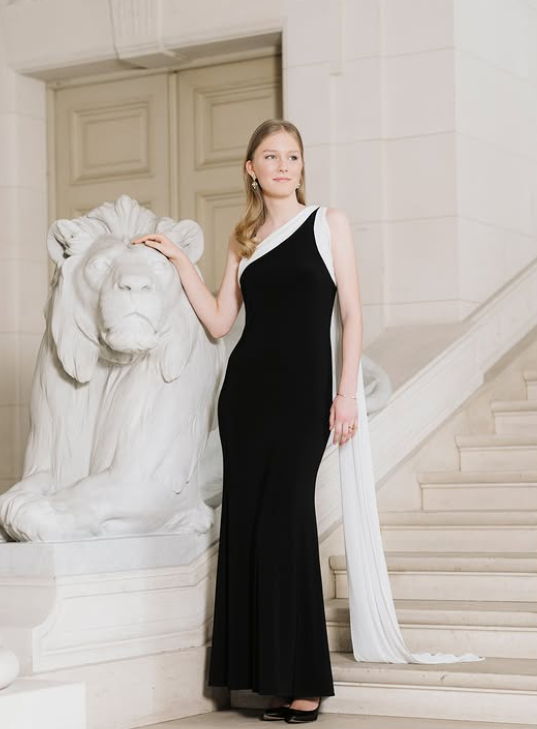
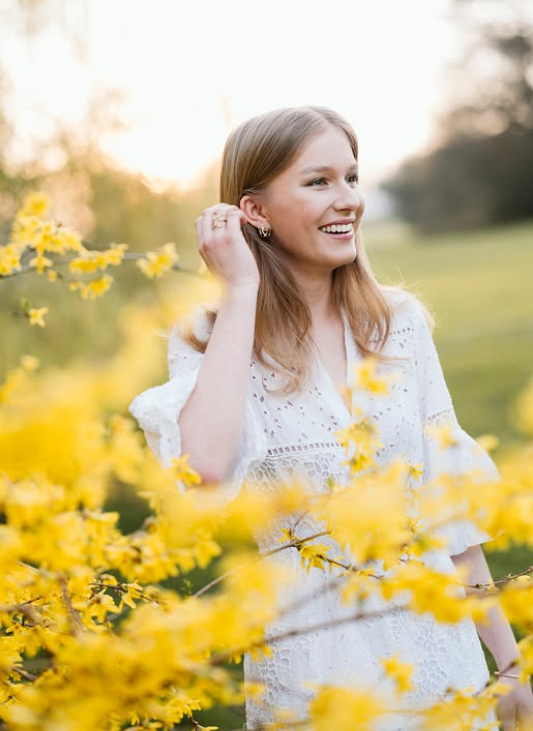
As Princess Eleonore officially entered adulthood, the Belgian Royal Palace shared three new official photographs that capture her at this pivotal moment. The images showcase a young woman poised for the future, reflecting both her royal heritage and her individual development. One portrait features Princess Eleonore in a sophisticated black and white evening gown, standing regally on a marble staircase, evoking a sense of timeless elegance and the grandeur associated with royal residences. Another captures her in a more relaxed, yet equally elegant, setting, enjoying a country walk, suggesting a connection to nature and a balanced approach to her public and private life. A third image portrays her amidst a field of yellow flowers, dressed in white, radiating a youthful and serene aura. These carefully curated photographs are not merely celebratory but also serve to introduce Princess Eleonore to the public in her capacity as a young royal stepping further into the spotlight.
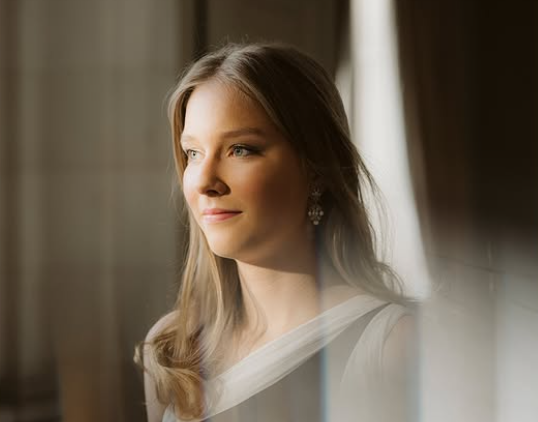
Princess Eleonore, born on April 16, 2008, in Anderlecht, is the fourth child of King Philippe and Queen Mathilde. Her full name, Eleonore Fabiola Victoria Anne Marie, reflects a lineage of royal tradition and familial honour. Her position within the line of succession places her fourth in line to the Belgian throne, following her elder sister, Crown Princess Elisabeth, Prince Gabriel, and Prince Emmanuel. While her elder siblings are more prominently positioned in the direct line of succession, Eleonore’s eighteenth birthday marks a point where she, like any adult member of a royal family, begins to assume a more defined role and responsibilities.
A Double Celebration: King Philippe’s Birthday Precedes Daughter’s Milestone
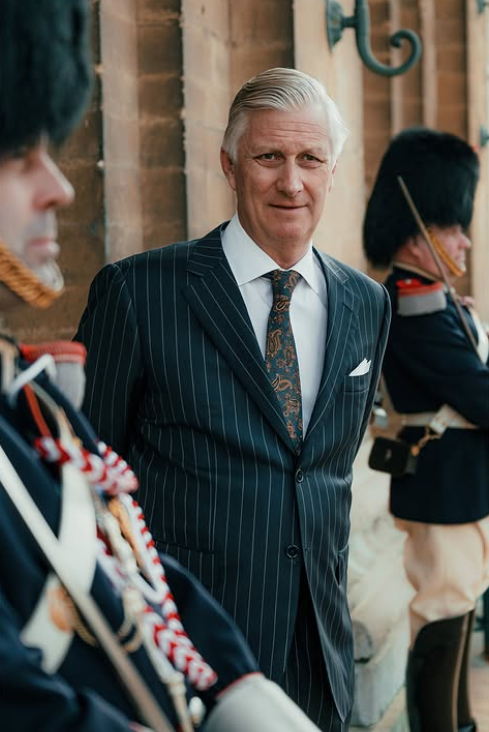
The timing of Princess Eleonore’s eighteenth birthday creates a special "double celebration" for the Belgian Royal Family, as it occurs just one day after King Philippe’s own birthday. King Philippe celebrated his sixty-sixth birthday on April 15th. The King, who ascended to the throne in 2013, has also marked his birthdays with official portraits, underscoring the continuity and tradition within the monarchy. In 2016, a particularly poignant photograph of King Philippe and a young Princess Eleonore, taken in a garden to commemorate their respective birthdays, gained considerable attention. This year, to mark Eleonore’s eighteenth birthday, father and daughter have recreated that cherished image, offering a touching visual testament to their enduring bond and the passage of time. This recreated photograph, shared as part of the birthday tributes, serves as a symbolic link between past and present, highlighting the familial aspect of royal life alongside their public duties.
Historical Context and Royal Lineage
The Belgian monarchy, established in 1830, has played a crucial role in the nation’s history and identity. King Philippe, as the current head of state, carries the weight of this legacy, and his daughter’s eighteenth birthday signifies the continuation of this lineage. Princess Eleonore’s christening took place at Ciergnon Castle, a royal residence often used for significant family events. Among her godparents was Crown Princess Victoria of Sweden, a testament to the strong diplomatic and personal ties between European royal houses. The presence of a foreign royal godparent underscores the interconnectedness of European monarchies and the international dimension of royal upbringing.
Princess Eleonore’s education is currently taking place at the International School of Brussels, a prestigious institution that caters to a diverse student body and often serves the children of diplomats and international professionals. This choice of schooling reflects a modern approach to royal education, preparing her for an increasingly globalized world. Beyond her academic pursuits, Princess Eleonore is known to be a talented musician, with a particular passion for playing the violin. This artistic inclination adds another dimension to her profile, showcasing her as an individual with diverse interests and talents beyond her royal status.
Future Prospects and Emerging Responsibilities
As Princess Eleonore completes her studies, attention will undoubtedly turn to her future role within the Belgian Royal Family and the nation. While her elder sister, Princess Elisabeth, is the Crown Princess and heir to the throne, having already undertaken rigorous military training, the path for Princess Eleonore is less clearly defined. The Belgian monarchy has historically adapted to evolving societal expectations, and the roles of younger royal family members are often shaped by individual aptitudes and the needs of the monarchy.
The coming weeks are anticipated to bring further announcements regarding Princess Eleonore’s post-secondary plans. The Belgian royals are expected to outline how she will contribute to public life and royal engagements. While some royal heirs undertake extensive diplomatic tours or dedicate themselves to specific charitable causes, others may pursue careers in fields that allow them to bring unique perspectives and skills to their public service. The precedent set by Princess Elisabeth, with her comprehensive preparation for the throne, suggests a commitment to thorough training for all members of the immediate royal family who may eventually take on more prominent public roles. However, the specific trajectory for Princess Eleonore remains a subject of keen interest, as it will likely reflect the contemporary approach to royal duties, balancing tradition with modern relevance.
The Evolving Role of European Princesses
Princess Eleonore’s eighteenth birthday places her within the broader context of the changing roles of young princesses in European monarchies. In recent decades, there has been a discernible shift towards greater emphasis on education, professional development, and active engagement in societal issues. Monarchies are increasingly seeking to demonstrate their relevance and responsiveness to contemporary challenges, and this often involves the younger generation taking on visible roles in areas such as environmental sustainability, social justice, and cultural preservation.
The release of official portraits at such a milestone birthday is a strategic communication tool for royal houses. It allows them to manage public perception, showcase the maturity and readiness of younger royals, and reinforce the continuity of the monarchy. The imagery chosen—ranging from formal poses to more informal, natural settings—contributes to a carefully crafted narrative about the individual and their place within the royal institution. For Princess Eleonore, these portraits signal her transition from a child princess to a young woman poised to embark on her adult life, with all the potential and responsibilities that entails.
Broader Implications for the Belgian Monarchy
The coming-of-age of Princess Eleonore is more than just a personal celebration; it is a moment that subtly underscores the enduring nature of the Belgian monarchy. As King Philippe continues his reign, the presence of his children, each at different stages of their development, signals the long-term future of the institution. The public’s interest in these milestones is a reflection of their engagement with the royal family and their role in the national narrative.
The Belgian Royal Family, like many others across Europe, navigates a delicate balance between maintaining tradition and adapting to the demands of a modern society. The focus on education and the development of individual talents among the younger royals, as exemplified by Princess Eleonore’s musical pursuits, suggests a strategy of preparing them for diverse contributions. The anticipation surrounding her future role reflects the ongoing public fascination with the inner workings of royalty and the ways in which these institutions continue to evolve. As Princess Eleonore steps into her adult years, her journey will undoubtedly be watched with interest, offering insights into the future direction of the Belgian monarchy and the evolving roles of its youngest members. Her eighteenth birthday marks not an end, but a significant beginning, on a path that will continue to shape her public life and her contribution to Belgium.


 Jia Lissa
 Yuyun Lusiyani
 Joko Widodo

 Pevita Pearce