
 Eva Lovia
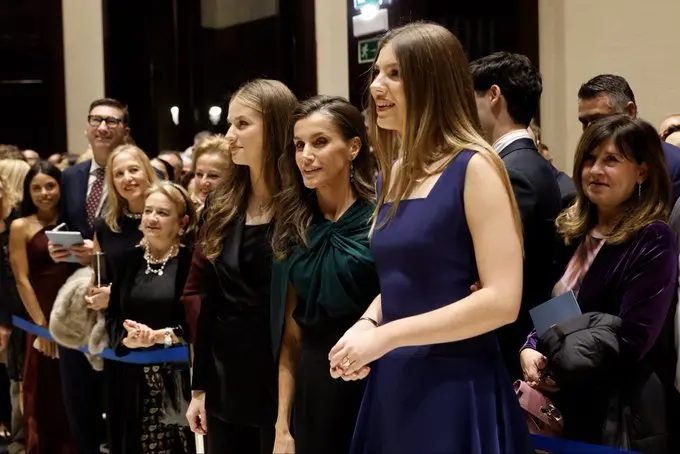
Princess Leonor and Infanta Sofia of Spain, the kingdom’s beloved royal siblings, have marked a significant moment of reunion in Oviedo, the Asturian capital. Their coming together for the esteemed Princess of Asturias Awards signifies a harmonious convergence of their burgeoning individual paths, each embarking on pivotal stages of their lives. This annual celebration of excellence, deeply embedded in the cultural fabric of Spain, provides a distinguished platform for the sisters to fulfill their royal duties side-by-side, underscoring their enduring bond amidst separate academic and professional pursuits.
A Harmonious Convergence of Royal Duties and Personal Milestones
The autumn has been a period of profound transition for both Princess Leonor and Infanta Sofia. Princess Leonor, at 20 years of age and the heir presumptive to the Spanish throne, has commenced her university education in Madrid. This academic pursuit follows the rigorous completion of three years of intensive military training, a foundational experience designed to equip her with the discipline and leadership skills essential for her future role. Meanwhile, her younger sister, Infanta Sofia, aged 19 and second in line to the throne, has established her new student residence in Paris. Her move to the French capital represents a continuation of her academic journey, building upon a successful year spent studying in Portugal.
Despite their geographical separation and distinct personal trajectories, the sisters’ shared commitment to their royal responsibilities has brought them back to Oviedo. Their participation in the Princess of Asturias Awards serves as a powerful symbol of their united front and dedication to upholding the values represented by these prestigious accolades. The awards, now in their 43rd year, have become a cornerstone of Spain’s cultural calendar, recognizing outstanding contributions across a diverse spectrum of human endeavor, including the arts, sciences, sports, and social sciences.
The Princess of Asturias Awards: A Tradition of Excellence and Royal Patronage
The Princess of Asturias Awards, established in 1981, are bestowed annually upon individuals and organizations whose work has made a significant and positive impact on a global scale. The awards are divided into eight categories: Arts, Concord, Research in Social Sciences, Sports, Technical and Scientific Research, International Cooperation, Arts, and The Prince of Asturias Award (now Princess of Asturias Award for Concord). The selection process is meticulous, involving nominations from esteemed institutions and individuals worldwide, followed by rigorous evaluation by specialized juries.
The significance of the awards extends beyond their international prestige. They serve as a powerful platform for promoting excellence, fostering dialogue, and celebrating human achievement. The presence of the royal family, particularly Princess Leonor and Infanta Sofia, lends considerable weight and visibility to the event, reinforcing its importance within Spain and on the international stage. This year’s ceremony, spanning three days, commenced with a traditional concert in Oviedo, a customary prelude to the main awards ceremony.
A Grand Reaffirmation of Sisterly Bonds and Royal Duty
The initial public appearance of the sisters together was at the traditional concert held on the eve of the awards ceremony. Joined by their parents, King Felipe VI and Queen Letizia, Princess Leonor and Infanta Sofia were present as the concert paid homage to the profound musical legacy of Felix Mendelssohn. This shared cultural experience provided a poignant backdrop for their reunion, allowing them to reconnect amidst the grandeur of their royal duties.
Princess Leonor, embodying the poise and maturity befitting an heir, was elegantly attired in a sophisticated black evening suit. Her younger sister, Infanta Sofia, complemented the occasion with a striking midnight blue dress. Their visible delight in each other’s company after weeks of pursuing their individual academic endeavors was palpable, underscoring the genuine warmth and closeness of their relationship. This public display of affection and unity is not merely ceremonial; it is a carefully curated aspect of their royal upbringing, designed to project an image of stability and familial harmony to the nation and the world.
The Awards Ceremony: A Milestone for Princess Leonor
The day of the prize-giving itself marked a significant personal milestone for Princess Leonor. For the first time, she took a leading role in a series of audiences with the award recipients, an important step in her progression towards assuming greater responsibilities. While her parents, King Felipe and Queen Letizia, were present, Princess Leonor independently led some of these engagements, demonstrating her growing confidence and preparedness for her future role as head of state. This delegation of authority, even in a symbolic capacity, signals a deliberate strategy to gradually immerse her in the practicalities of royal governance.
Later in the day, the family was joined by Queen Sofia, the grandmother of Princess Leonor and Infanta Sofia, and the former Queen consort of Spain. Queen Sofia took her place in a balcony overlooking the main auditorium, a vantage point that allowed her to witness her granddaughters participating actively in such a significant national event. Meanwhile, King Felipe and Queen Letizia occupied their seats on the dais alongside Princess Leonor and Infanta Sofia, creating a powerful tableau of generational continuity and royal solidarity.
A Significant Month for the Heir Apparent
This period in Oviedo is particularly momentous for Princess Leonor, who has held the position of heir to the throne for twelve years. Her 21st birthday, which falls on October 31st, looms as a significant personal and symbolic marker. This upcoming milestone signifies her formal transition into full adulthood and, in the context of Spanish law, her eligibility to ascend to the throne should the circumstances arise. The Princess of Asturias Awards, therefore, serves as a prelude to this important personal anniversary, allowing her to further solidify her public image and demonstrate her readiness for the responsibilities that lie ahead.
The Broader Implications: Royal Succession and National Identity
The reunification of Princess Leonor and Infanta Sofia for the Princess of Asturias Awards holds broader implications for the Spanish monarchy and national identity. Their visible unity and shared commitment to royal duties project an image of stability and continuity at a time when monarchies worldwide are navigating evolving societal expectations. Princess Leonor’s increasing public engagements, particularly her leading role in some of the award ceremonies, are indicative of a carefully planned succession strategy. This gradual introduction to her future responsibilities aims to ensure a smooth and well-prepared transition when the time comes for her to assume the crown.
The Princess of Asturias Awards themselves serve as a potent symbol of Spain’s cultural diplomacy and its commitment to recognizing global excellence. By associating the monarchy with such prestigious international accolades, the royal family reinforces Spain’s position on the world stage and champions the values of innovation, creativity, and humanitarianism. The presence of both sisters, each embarking on her own distinct path, highlights the evolving nature of royal roles, where personal development and public service are increasingly intertwined.
Furthermore, the sisters’ distinct educational paths—Leonor in Spain and Sofia in Paris—reflect a modern approach to royal upbringing. This allows them to gain diverse perspectives and experiences, preparing them for a complex and interconnected world. Their ability to seamlessly transition between their personal academic lives and their public royal duties showcases their adaptability and dedication, qualities that will undoubtedly serve them well in their future roles within the Spanish monarchy. The Princess of Asturias Awards week in Oviedo, therefore, represents not just a family reunion and a celebration of achievement, but a strategic moment in the continued evolution of the Spanish Crown.



 Nila Kartika Wati

 Lina Irawan

 Yuyun Lusiyani

 Ana Megawati

 Joko Widodo
